Rangoon, Burma

8%

Seventh-day Adventist Publishing Association · Battle Creek, Mich. · Oct 7, 1902

FromReview and Herald, Vol. 79, No. 40.

Read the full edition

Rangoon, Burma

J. L. SHAW
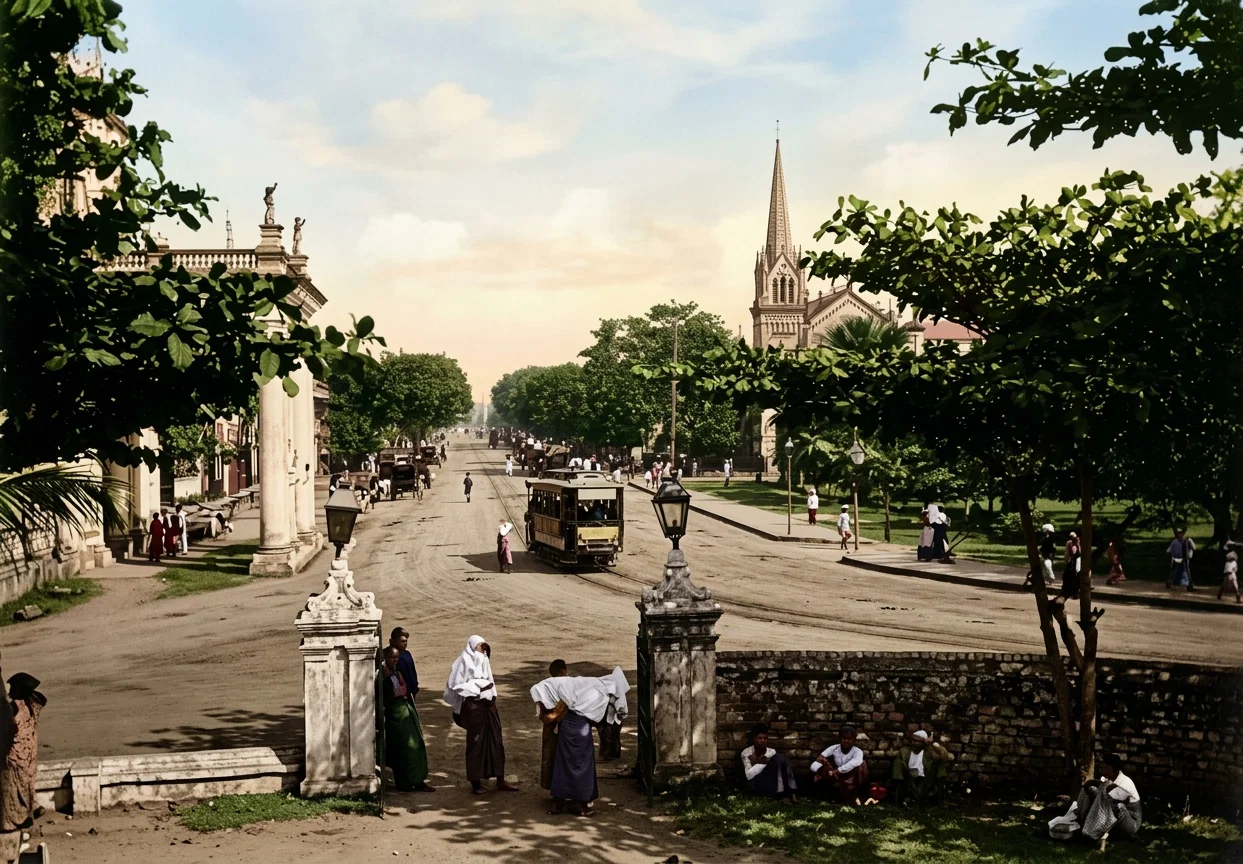
After a three days’ voyage across the Bay of Bengal, I reached Rangoon, Burma, eight hundred miles from Calcutta. In pleasant weather this is an enjoyable trip, and the mild sea breeze offers a welcome change from the stifling heat of the Indian plains. Rangoon, the largest city of Burma, has a population of about two hundred and fifty thousand, and is situated twenty-one miles from the sea, on the left bank of the Rangoon River. The Burmese claim that it was founded in 585 B. C., or during the Babylonish captivity, but have no proof save a legend for their assumption. Up to 1852 it was very small, but since that time it has been in British possession, and has grown rapidly. The streets differ from most Oriental roadways, being broad, and running at right angles. The houses are mostly made of teak, a wood resembling walnut, which grows in abundance in Burma, and forms one of the chief exports of the country.
The awful plague of India has never obtained a foothold in Rangoon, owing to the stringent regulations enforced. Upon the arrival of our boat in the river, a gentleman and a lady doctor came on board and examined every passenger. All natives of India, of whom there were about seven hundred, were sent to a segregation camp to remain ten days. I, with other European passengers, was allowed to land, but was required to report for examination daily for ten days, at the Municipal Health Office. It affords a source of relief to be outside of the area infected by plague.
The Burmese differ from the Indians in race, religion, language, and color, belonging as they do to the Mongolian race. They have a slight Chinese resemblance, though they differ from them in habits and customs. The caste prejudice, so strong in India, is far less perceptible in Burma. The people are open-hearted and very liberal. It is said on good authority that a traveler can go from one end of Burma to the other without a pice (a half cent). They gladly share with others, thinking little of the morrow. Generosity is a part of their religion, and to turn a hungry stranger from their door is thought by them a great sin. The Buddhist priests, of whom there are many, receive all their food from the people. Every morning dressed in their yellow robes, and with their bowls for food strapped in front of them, the priests may be seen passing by the houses. They do not ask for food, but are supposed to confer a great favor upon the giver by allowing him to give them food. Buildings called monasteries are also built for the priests and for others who need shelter.
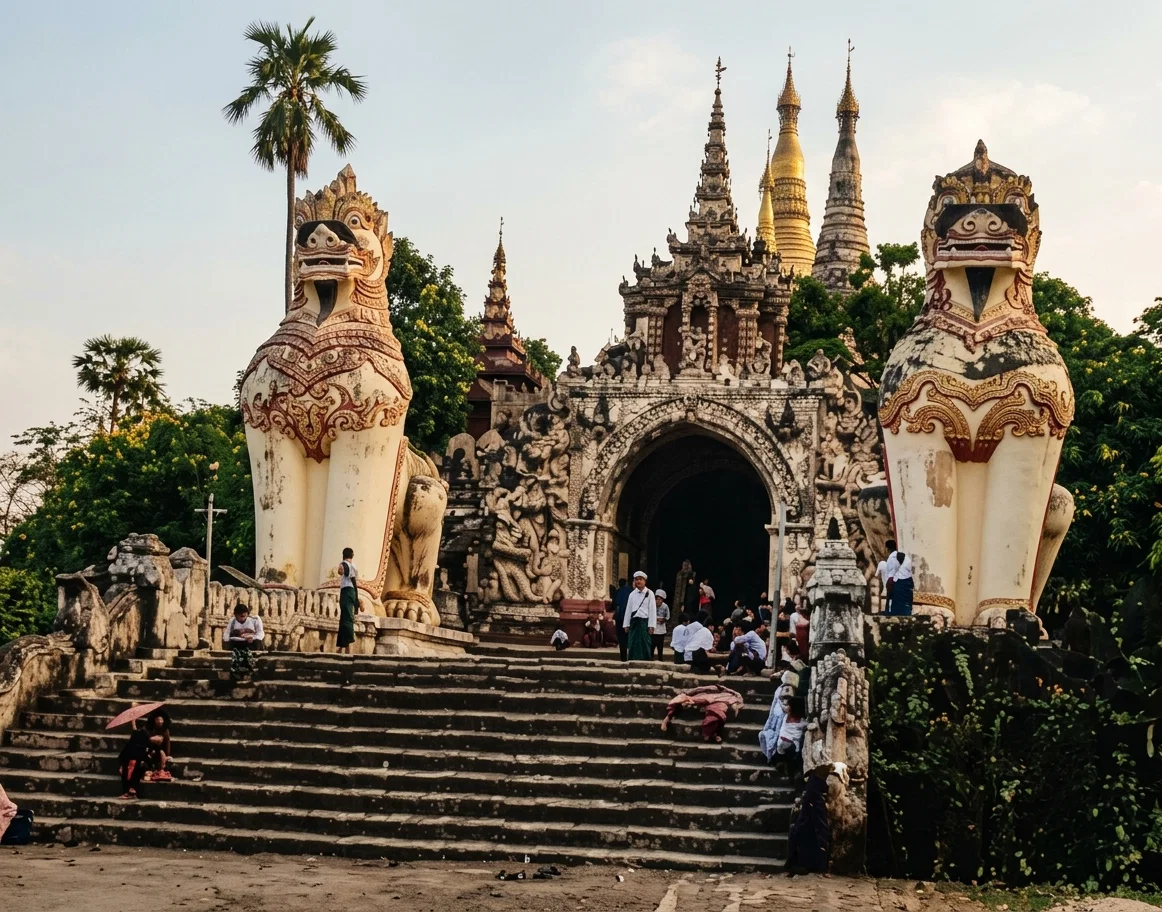
In different parts of the city are high spire-shaped monuments called pagodas. To these the Burmese go to worship Buddha. Some of these are over three hundred feet in height, and are covered wholly or in part with gold leaf, which glistens in the sunlight. It is said that every village in Burma has one or more large or small pagodas. In the foundation of each, some of the personal remains of Buddha are supposed to be buried; and like the popish relics of the cross, there are probably enough so-called remnants from Buddha to make many Buddhas. I visited one of these shrines called Shway Dagohn Payah, the largest in Burma, being three hundred and seventy feet in height, a little higher than St. Paul’s Cathedral in London, with a perimeter at the base of thirteen hundred and fifty-five feet. In the massive foundations are said to be one tooth and a few of Buddha’s hairs, placed there at the time of its erection, which took place in 588 B. C., according to the claims of Buddhists. The larger part of this structure is covered with gold leaf. One of the kings of Burma, toward the end of the eighteenth century, used his own weight in gold toward this purpose. Around the base of the pagoda are many images of Buddha, which mostly represent him in a sitting posture, with legs and arms folded, devoutly meditating. Many of these are covered and recovered with gold. My guide, to show how lavish his people are with their gold upon their god, rubbed from off a gold-be-daubed idol an appreciable amount, and placed it in my hand.
Before these idols are a multitude of people repeating prayers and counting beads, and offering sacrifices, which usually are candles. These are lighted and placed before the image; and being many, the odor and the appearance are very unpleasant. By itself is a large chest to hold gifts. On some occasions it is said that Buddha’s followers fairly rain their gifts of gold into this receptacle. When heathens pour out their offerings with such a lavish hand, what ought Christians to do?
I found Brethren Meyers and Watson of good courage in the work. They have sold a large number of books, and taken a goodly number of subscriptions for The Oriental Watchman. This literature has been having an effect upon the people, and so keen was the interest that meetings were started, and Brother Meyers soon found his time occupied in explaining the truth. I do not know that I ever saw people who were more anxious to study the Bible than were those I met at Rangoon. They never seemed to tire of the Word, and often our studies continued till eleven and twelve o’clock at night.
A STREET IN RANGOON
A STREET IN RANGOON
Among other interesting cases was that of a Burmese sister who has been keeping the Sabbath for two years. She has for years been a Bible student, and becauseof the plain instruction found in the Word, began keeping the Sabbath. She tried in vain to get her family and friends to join her in obeying God, but they would not give heed. She told us that she determined to die rather than give up, though she did not know but that she was the only Sabbath keeper in the world. When she learned that we were teaching the same thing, she came to us with glad heart to listen, and drank in the truth eagerly. Though not able to express herself in English, she understands what is said to her; and being familiar with the Bible, she can turn from one place to another, and find words to express her ideas. She asked us whether we gave the servants rest on the Sabbath, and referred to the commandment; and she also wished to know whether we built a fire or did any cooking on the Sabbath, referring us to Ex. 16:23. Her mother was a convert of Judson’s, and she herself was baptized about thirty years ago. Since then she has given most of her time to Bible study and work for others, preferring an unmarried life that she might be entirely free to study the Word and teach it to others. With her knowledge of the Bible, her warm heart of love for others, and the influence she has among those who know her, she may be a great blessing to the Burmese in imparting to them the knowledge of the truth. Thus we see that the Lord is going ahead of us to prepare the way, and is raising up Sabbath keepers before we get into the field.
Burma, with its eight million souls, is open for the third angel’s message. In many respects the outlook is more favorable than in India. The caste prejudice is less; the women are free from the seclusion of the zenanas, and the language is said to be far more simple. A worker should go to this field at once to learn the language and assist the laborers there in pressing forward the work laid down by Judson so many years ago.
ENTRANCE TO SHWAY DAGON PAYAH