A Trip Through Sumatra

8%

Seventh-day Adventist Publishing Association · Battle Creek, Mich. · Jul 15, 1902

FromReview and Herald, Vol. 79, No. 28.

Read the full edition

A Trip Through Sumatra

E. H. GATES
AFTER nearly a week's stay at Singapore, I started for Padang, West Sumatra, to visit Brother Munson. As there is no railroad across Sumatra, I had to go across to Batavia, Java, opposite the southeast point of Sumatra, and then sail along the southwest coast of Sumatra to Padang.
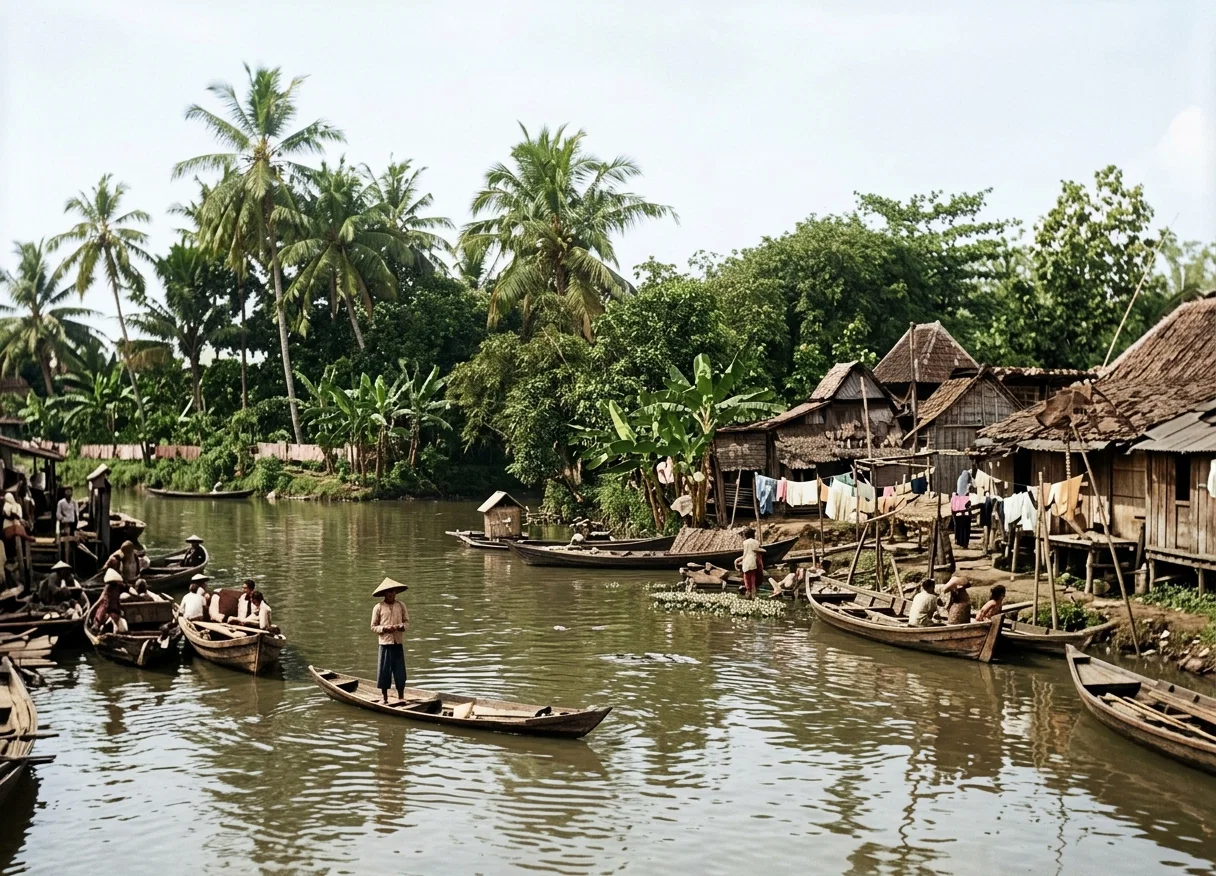
RIVER SCENE, BATAVIA, JAVA
Java, where I spent two days, is one of the most densely populated parts of the earth. This island is six hundred miles long, and probably does not average much more than one hundred miles wide, but it has a population of more than twenty-five million. The natives are of the Malay race, and are mostly Mohammedans. This island, like many of the East Indies, is under the government of Holland.
From Batavia to Padang, the passage was made in a Dutch steamer. I have had great difficulties in different parts of the world to get hygienic food, but never before the experience that I had in these Eastern islands. There being no lodging houses, I was obliged, when on shore, to stop at hotels. While these were very fine, and the accommodations high priced, there was scarcely a thing that a vegetarian cares to eat. A meat eater could get a great variety; but take away the flesh food, and there was little left. My first trouble was to make myself understood. Not being able to speak the language of the country, I had to take what was on the table, or go hungry. My next trouble was the time of the meals. The heavy meal of the day, and the one that furnished the best variety from which to select, was the dinner, which was served between eight and nine in the evening. I could not think of eating at that unreasonable hour. In the morning I had a good appetite; but of course the people who had the night before overloaded their stomachs with half a dozen kinds of meat, pickles, rice, and curry (which was like liquid fire), and had drunk two or three bottles of beer, had little or no appetite. For this reason the breakfast was but a mockery, there being generally nothing on the table but some exceedingly white, white bread, strong butter, cold meat, a cup of tea, with perhaps occasionally some jam or jelly. And as a rule, even this was not served till eight or nine o'clock. Occasionally, however, I obtained some soft-boiled eggs.
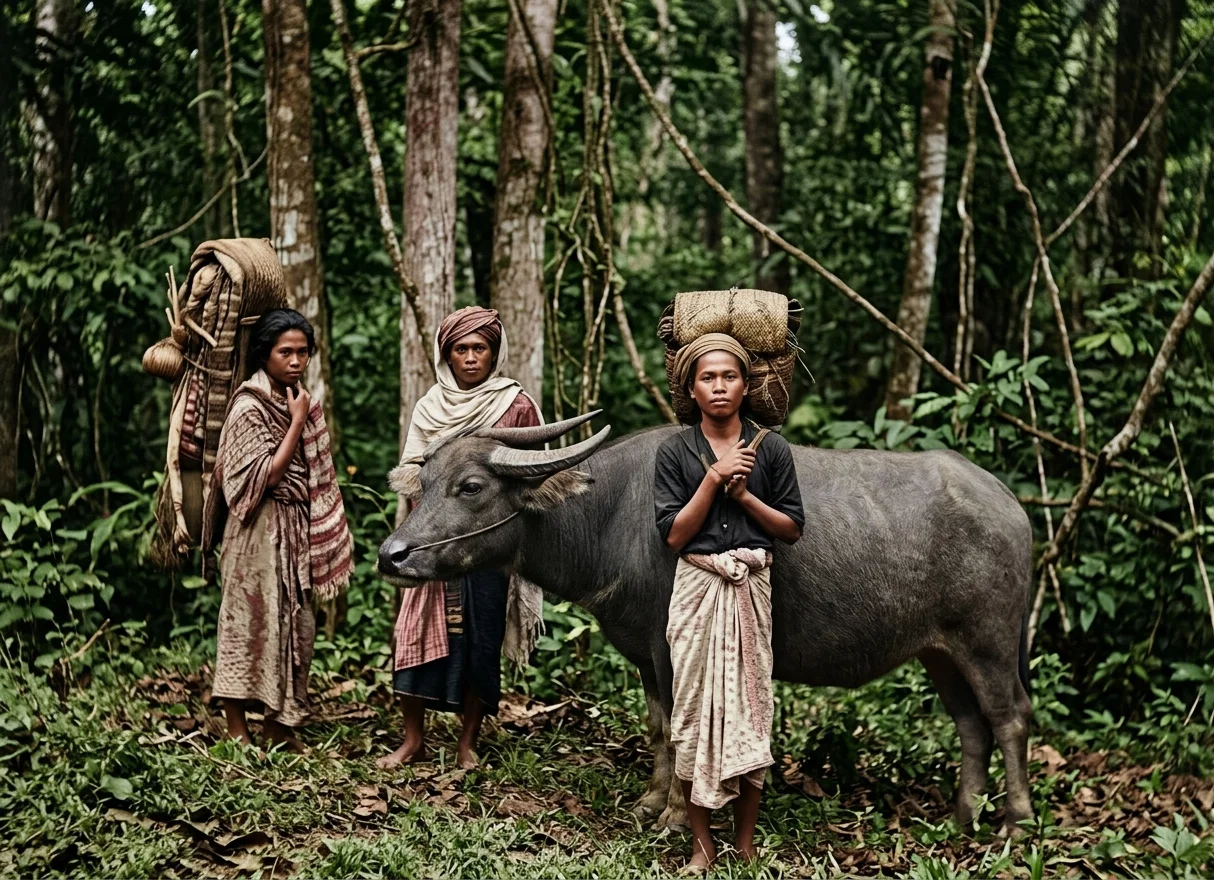
MALAYS AND WATER BUFFALO, SUMATRA
The second meal, or tiffin as it was called, was served from 12 to 1. Of course the poor stomach had not finished its work of digesting the breakfast; but this meal must be taken now, or a person must wait till the next morning. Outside of the hotels nothing could be obtained except at Chinese shops, which were not to be even thought of. Many times I made my second meal of bananas, there being often no other fruit to be purchased.
In all these Eastern countries food is prepared and eaten with most fiery condiments, the very taste of which drew floods of tears from my eyes. When I saw the wretched trash eaten by the people, I ceased to wonder that their poor, illy nourished bodies clamored for stimulants—tea, coffee, and alcoholic liquors. And when I saw all their health-destroying habits, I ceased to wonder that the people were morally bad. And never before did I see as now the value of the blessed health reform which God has committed to us.
After leaving Batavia, we sailed along the southwest coast of Sumatra, stopping at different points to discharge cargo. The general appearance of Sumatra is not unlike that of tropical islands in other parts of the world. The island is one thousand miles long, its greatest width being two hundred and fifty miles. The population is three million. The inhabitants are principally Malays and Bataks. The latter are wild and fierce pagans, and reside in Batakland, toward the northern part of the island, and in the small islands off the west coast. I am told that German missionaries are doing a good work among them. As the missions were in the interior, I was not able to visit them without heavy expense and much loss of time.
The Malays, who make up the great bulk of the population, are Mohammedans. Their religion was first introduced here in the beginning of the thirteenth century, and has since spread over a large part of the East Indies. Wherever there is a collection of Malays,there is a prayer house, or, as the larger ones are called, a musjid, or mosque. The British and Foreign Bible Society is doing commendable work in placing the Holy Scriptures among them, but with little apparent result. Very few Mohammedans ever accept Christianity; but after seeing the treatment they receive from professed Christians, I am not surprised at their slowness to receive it. In their estimation, Christianity is synonymous with idolatry, greed, cruelty, and bloodshed. But God's last message will find some adherents even from among this people. At one place I was told by an intelligent man that the Mohammedans have a tradition that when the Turks leave Constantinople, then Christ will come to earth again.
The products of Sumatra are varied. Of minerals there are gold, tin, lead, coal, marble, and slate. Vast forests of valuable timber, including teak, are found. Gutta-percha, rattan, and kapok are exported in considerable quantities. Among the articles of consumption are rice, coffee, sugar, copra, tobacco, quinine, vanilla, pepper, ginger, nutmeg, and cloves. There are several native fruits which are peculiar to the East Indies, as the durian, mangosteen, rambutan, pomelo, rambah, jamboo, etc., etc.
In the jungles, a little back from the coast, are found lions, tigers, elephants, rhinoceroses, tapirs, bears, orang-outangs, monkeys, wild pigs, and the water buffalo. The latter is tamed and used by the natives to haul their two-wheeled wagons.