Progress in Raratonga

10%

Seventh-day Adventist Publishing Association · Battle Creek, Mich. · Jul 15, 1902

FromReview and Herald, Vol. 79, No. 28.

Read the full edition

Progress in Raratonga

A. H. PIPER
Last November it seemed that the time had come for us to make another effort to secure land in Titikaveka on which to build a meetinghouse. After seeking the Lord for wisdom, I went to a chief who owned the land, and talked with him about it. He seemed to be afraid, and asked me if the secretary of the government knew that we wanted the land. I told him that I did not know, but would call upon him. I did so a day or two later, and asked him plainly if the government was opposed to our securing land in Titikaveka. He said that he did not think so, although the late secretary had been much opposed to us. I told him that I thought the chief was afraid to let us have the land, although I did not know why, and he told me that he thought it would be all right, that they wanted the natives to lease their land, and he was quite sure I would be able to get what I wanted.
THE CLOSED CHURCH
THE CLOSED CHURCH
The next time I went to the chief, he was quite ready to let us have the land, and asked me to have the lease made out. He first wanted thirty dollars a year; but when I told him for what purpose it was to be used, he finally gave it to us for ten dollars a year for the first thirty years, after that fifteen dollars a year for a further period of thirty years. Now we must have a church; but we cannot erect it alone.
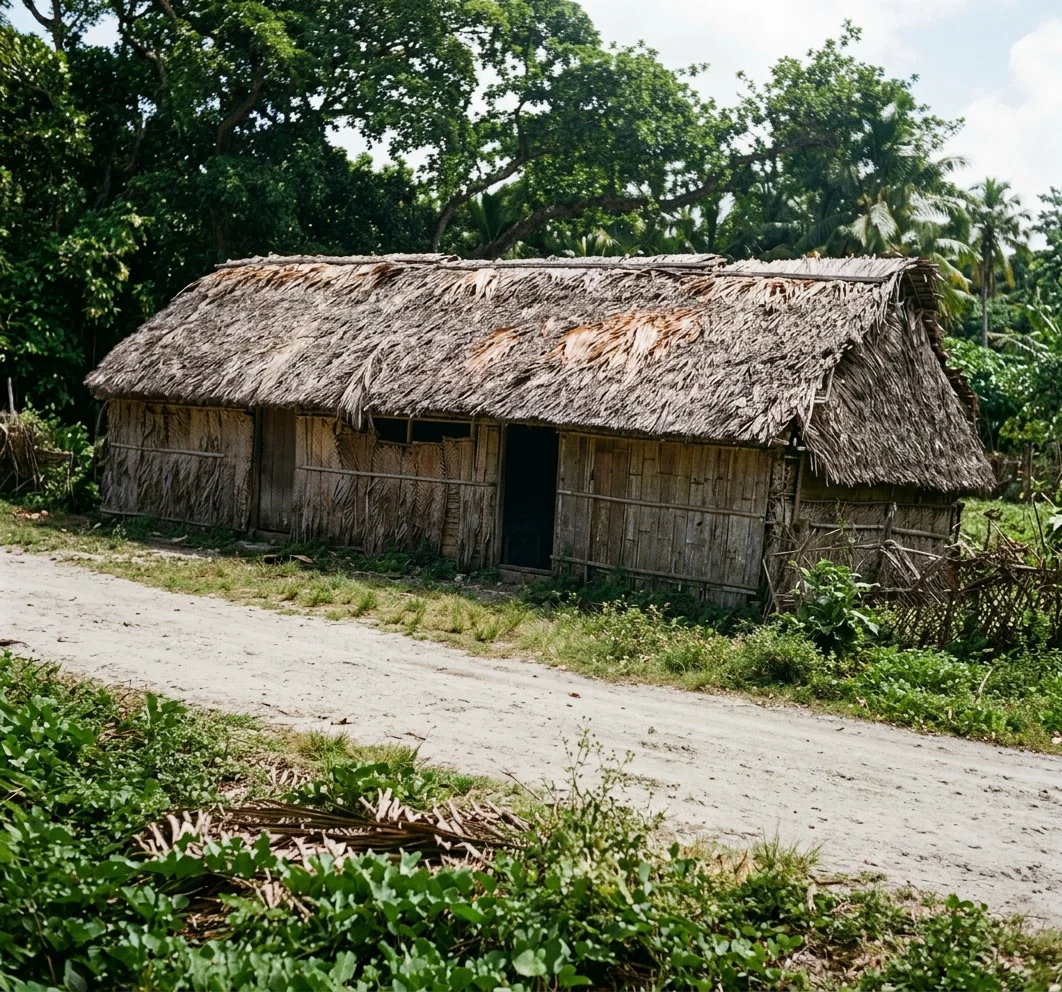
Our brethren here have been driven from pillar to post. First they built a primitive native house in which to worship; but it was taken from them and shut up. Then they have had to lease two private houses, one after the other, because the owners were threatened with the loss of their homes if they continued to harbor the meetings. Next we had the loan of a piece of land upon which to build a temporary house; but as soon as we began the work, the brethren were called upon to resume work on the roads as common prisoners.
The brethren here will do all they can to erect the church. They will carry stone from the sea, and wood from the mountain, but they cannot do all. I believe the Lord wants us to erect a good, durable house. We have asked the Sabbath schools in Australia to assist us some. We will do all we can with the money that is furnished.
It is very cheering to have Sister Gooding, of Australia, with us. We have opened a small boarding school at Arorangi. This seems the best plan. To do the children good, they must be taken out of their evil surroundings. All that we might accomplish during school hours would be more than offset by the evil that the children would come in contact with out of school. All our native brethren wish their children taken away from the influence of the other children; and, too, if we simply have a day school, we cannot accommodate the children that we have been asked to take from other islands. Our own little native boy is growing in grace, and there is much in him to encourage us in our work for the children. Already he reads the English Bible with us at worship, and gets along very nicely, only having to be helped with some of the harder words. He looks after the horses, cuts the wood, and does all those little things that the American calls “chores.”
We are having an increased attendance at our Sabbath meetings in Titikaveka. However, they do not ask for baptism, and we are not in a hurry to baptize some of them. The tobacco habit is one of the hardest for the natives to overcome. We know that there is power in Jesus to help them, and we try to be faithful in presenting this power to them. I feel persuaded that the Lord helps me every day in undertaking to speak, and I am surprised that I have been enabled to use the language so freely.
We are well, and of good courage.