A Mission to the Santals/

7%

Seventh-day Adventist Publishing Association · Battle Creek, Mich. · Jul 8, 1902

FromReview and Herald, Vol. 79, No. 27.

Read the full edition

A Mission to the Santals/

W. A. SPICER
By pictures recently received from India, I see that Brother W. A. Barlow has been blessed in his efforts to make a garden in the wilderness. He has established a mission especially for the Santal people, at Simultala, a station about thirty miles from our Karmatar orphanage and school.
The Santals are one of the largest of the aboriginal peoples who roamed over India two thousand years ago, before the Aryan conquerors filled the land. They were driven into the hilly country of western Bengal, where they have preserved many of the old ways and traditions. Little was known of them until, a generation ago, the whole tribe went on a strike against money lenders and the administration of the land laws.
Simultala station has a few European houses and a few score of native dwellings. Brother Barlow went into the country a mile and a half from the village, and procured a few acres from the native proprietor, on a very desolate-looking slope of land. It had only the merit of being near the peasant settlements in the surrounding country. But with water available for irrigation, and by the art of the native builders working under his supervision, our brother has established very homelike headquarters for evangelistic work in that region.
Brother Barlow went to India under a Church of England organization, and later became associated with an independent Baptist Mission in the Santal country. Thus he obtained a knowledge of the Santali language. Later he came in contact with our work, and accepted the truths presented. After a short experience in the canvassing work, he felt that he should start a mission among the Santals. By touring among the various towns of India, collecting funds from those interested in such an effort, he has been enabled to gather sufficient to put up a few mud-walled buildings, and establish his work. We have helped him in his enterprise also from our own mission funds to some extent.
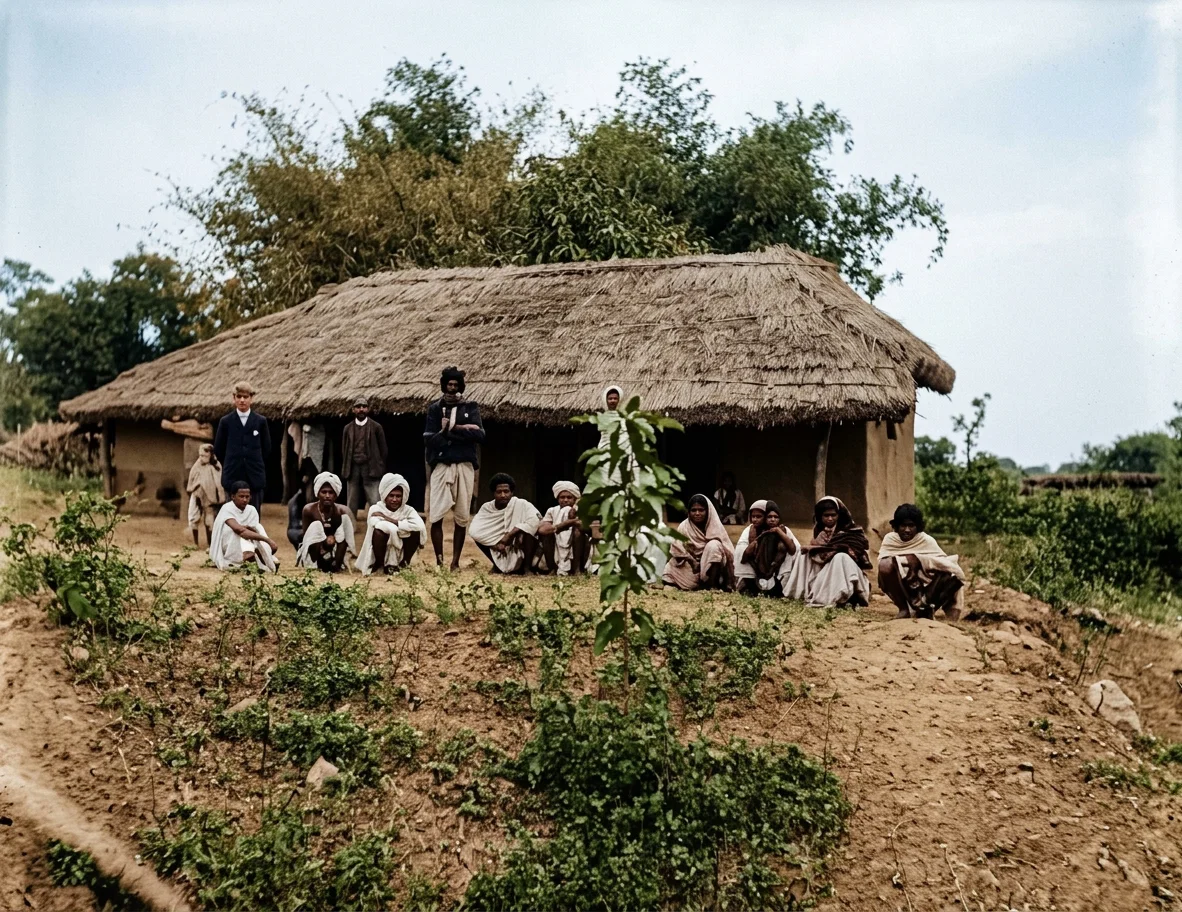
Brother Barlow first camped in a tent under a large banyan tree by the side of his plot. Here, while getting his grounds in shape and evangelizing among the villages, he contracted the cholera, which delayed him for a time. Later the house now used as a church building was put up, and his family joined him. Here I visited them several times, and watched with interest the building of a mission station in the wilds, with limited facilities.
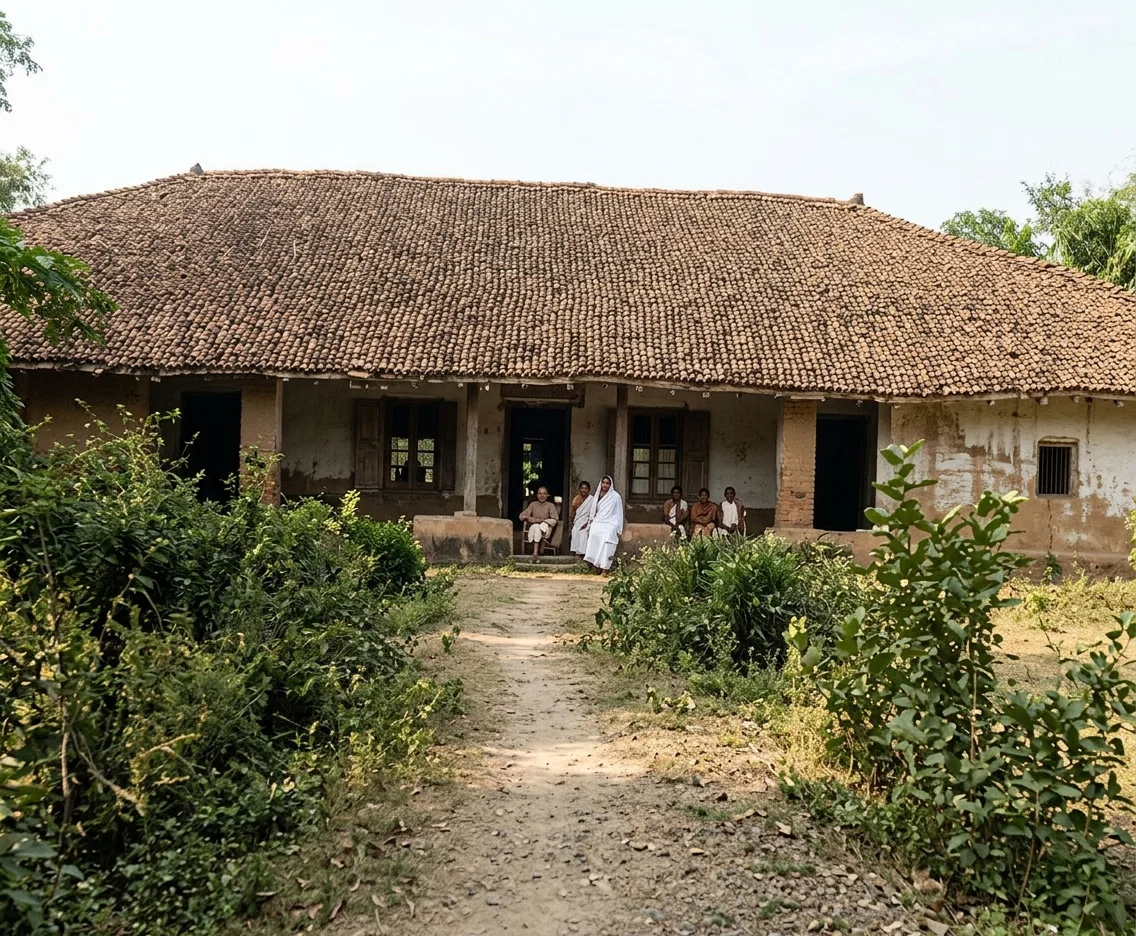
MISSIONARY’S BUNGALOW, SIMULTALA
The larger building, or bungalow, now his home, was reared amidst difficulties. Delayed by having to go out to solicit funds for building, the rains overtook the workmen before the roof was up. The mud walls were practically ruined, and the work stopped until after the rainy season. Then the workmen were again rallied, and the very habitable bungalow shown in the illustration has been carried to completion. The thick walls of mud are built up, layer upon layer, and allowed to dry in the hot sun and air. While white ants and other earth workers can bore through mud walls, they are really firm and substantial.
A native barber proved the master and leader of the workmen engaged on the wall. The bamboo roof frame was tied together with cords, not a nail, I suppose, being driven in it. The potter set up his wheel on the veranda of the house, and turned the tiles for the roof on the spot. Brother Barlow intended burning some brick for lining their living room to a certain height, in order to shut out dampness, and to protect against the invasion of enemies that might burrow in the walls.
Sister Barlow has spent some time at our Calcutta Sanitarium, getting acquainted with our methods of helping the sick and with the principles of healthful cookery. As Brother Barlow has toured in the interests of his mission collections, he has distributed thousands of our English tracts over India, and I hear that one or two Eurasian people in the Simultala railway station village have accepted the Sabbath truth. It is a pleasant sight to see a crowd of Santals sitting on the ground around Brother Barlow, singing our familiar gospel hymns in their native tongue, keeping time with slightly swaying bodies to the sound of clapping hands.
It is not altogether pleasant to live apart from those of our own tongue and habits, especially for the mother of the house, who must look after the place, and be all things to the native community while her husband is on a tour. Such a life has few of the conveniences and comforts to which we get accustomed in the home land. But it has its compensations. We are glad Brother Barlow has been led to join us in carrying this truth through India. His efforts to plant a station among the Santals has shown what can be done where there is a will to work. He has appealed for help from railway men and officials of every class, and the result shows that we need not fear to ask help for a worthy cause from men of the world. We need to learn that lesson, and to use it within bounds. Too often we take it for granted that people of the world will not help our enterprises, and so do not ask them.
CHURCH BUILDING, SIMULTALA’ MISSION
As the work goes on in these great mission fields, we expect to find many more missionaries already having the languages, whom God is preparing to join with us in publishing the message in every tongue. As we are ready to support with prayers and means a really world-wide crusade that shall quickly finish the work, the Lord will surely raise up laborers.