J. W. WESTPHAL

6%

Seventh-day Adventist Publishing Association · Battle Creek, Mich. · Jul 1, 1902

FromReview and Herald, Vol. 79, No. 26.

Read the full edition

J. W. WESTPHAL

Chile

J. W. WESTPHAL

The extreme length of Chile, following its southern curve to the east, is not far from three thousand miles, and in a direct line from north to south, about twenty-eight hundred miles, extending into the torrid zone to within eighteen degrees of the equator, and reaching south to the fifty-sixth degree. Its average width is little, if any, more than one hundred miles. The Andes Mountains run nearly the entire length of the eastern border, and the Pacific Ocean washes its entire western shore. Between the Andes and the sea are the Coast Cordilleras Mountains, in many cases being only an extension of the Andes.
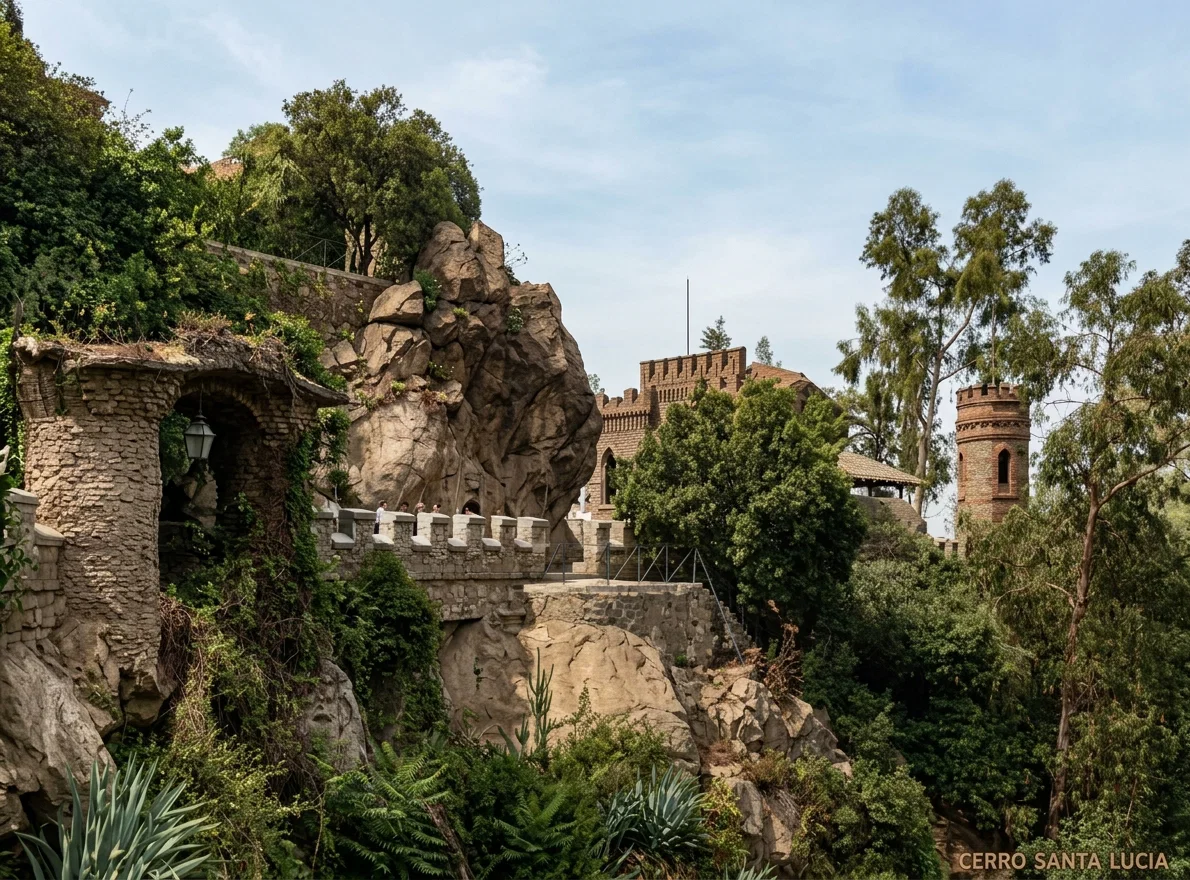
A VIEW IN A SOUTH AMERICAN CITY
Stretching over such a distance from north to south, her climate is varied. The extreme south is uninhabited. Punta Arenas (Sandy Point), her most southern city, and the southernmost city of the world, is more than one hundred and eighty miles from the southern border. Farther north, extending beyond Valparaiso, are fertile valleys. Over this region there are two seasons,—a rainy and a dry season,—varying in length according to the location north or south. About five hundred miles south of Valparaiso it is said to rain “thirteen months in the year.” In point of fact, it rains about eleven months. In the north it is never known to rain. It is a great, mountainous, sandy desert region, there being an entire absence of vegetation. In this quarter the borders of Chile have been considerably extended since the writer studied geography in school. Bolivia has been driven back from the sea, and Peru has lost quite a good slice of her territory.
Next to Argentina, Chile is probably the most enterprising of the South American republics. She has been most aggressive in extending her power. Her mines have for many years been open for development by foreigners, a thing by no means true of some of the other countries. The first railroad of South America, and, it is said, of the southern hemisphere also, was built in Chile. It was projected in 1846, built with Chilean capital, under the direction of Wm. Wheelwright, an engineer from the United States, and was opened up for traffic in 1851. It is about four hundred miles north of Valparaiso, and runs from Caldero on the Pacific to Copiapo, and on into the mountains to some silver and copper mines. It is now controlled largely by English capital. Most of the railroads are owned and controlled by the government, and over all such roads travel is cheap.
Mining is the leading industry in the north. Copper, silver, and saltpeter are the principal minerals. There are large beds of saltpeter which are extensively worked, this substance constituting the chief export of the country. The duties on saltpeter exports from Iquique are said to be more than all other duties throughout Chile.
In the more fertile parts the climate is probably not materially different from that of the most fertile parts of California, and the products are much the same. Plums, apricots, peaches, pears, figs, grapes, lemons, oranges, strawberries, cherries, quinces, and other fruits, also walnuts, grow abundantly, and without much care. Wheat and vegetables do well. The fruits are of a good quality, and very cheap. Had it not been that the United States consul to Paraguay had told me that that country was the cheapest place in the world in which to live, I would have concluded that this was true of this part of Chile. A vegetarian can live well. In some parts irrigation is resorted to.
As far as my observation goes, much more strong drink is used in South America than in the States. Chile is no exception to this. One sees it everywhere. Probably three fourths of the stores have liquors. When the people sit down to their meals, they must have liquor to make the bill of fare complete.
Their last course is coffee and a smoke. This is the almost invariable custom before rising from the table.
As the natives cook all their food on open fires, they are seldom supplied with as great variety as we are accustomed to in the States. Meats, onions, and pepper are staple articles in their bill of fare. Chilean peppers are eaten like pickles or onions in the States. To try them I touched one to my tongue, and it took about fifteen minutes to recover from its effects. How they can eat them is a mystery to me.
The houses are mostly built of adobe. The better buildings are plastered both inside and out. The houses of the poorer people have only dirt floors, or at best, floors made of brick. Many of the houses of the wealthy are grand. The sewerage of some of the cities, beingopen, is bad, and likely to breed pestilence.
The population of Chile is about 3,500,000. The Chilean is of Spanish descent, frequently mixed with more or less Indian blood. There are several hundred thousand foreigners in the country, mostly from Germany, England, France, Italy, and Spain. The Germans predominate. Nearly all large business enterprises are owned by foreigners. It is said that the native generally has not the faculty to keep his money or to carry on a large business. However, they like to do business, and many of them are engaged in traffic of some kind, even though it may be only selling fruit on the street corner. To one from the States it seems strange that so many should be able to make a livelihood from such traffic, when so few are engaged in agriculture and other enterprises that go to build up the material wealth of the country.
Roman Catholicism is the state religion, and is supported by the government; but other religions are tolerated, and of late little difficulty is experienced in propagating them. While the laws permit the erection of church buildings by such religionists, they prohibit the addition of church spires and bells to all but the Catholic. This is practically a dead letter now, both being seen on many Protestant churches. A good work has been done by Bible colporteurs in circulating the Bible. The Presbyterians, Methodists, and others have secured several thousand members, and organized some churches; but for the majority of the people nothing has been done. Communities of Protestant foreigners have been formed, and churches organized, but such have seldom felt a burden to bring the gospel to the natives.
This is indeed a sad phase of the situation. Thousands of Europeans have come to the different South American republics for business purposes, and many of them are engaged in lucrative employment. Such may be found in many places, sometimes forming a suburb of a city, and sometimes scattered among the natives; but many of them have forgotten the faith of their fathers. They take no interest in religious things, and their children are growing up without the advantages their parents enjoyed in the home land. Nowhere, perhaps, is 1 Tim. 6:9, 10, more literally fulfilled: “They that will be rich fall into temptation and a snare, and into many foolish and hurtful lusts, which drown men in destruction and perdition. For the love of money is the root of all evil; which while some coveted after, they have erred from the faith, and pierced themselves through with many sorrows.” They have secured the South American gold, but at the sacrifice of the “pearl of great price,” while the native has neither.
Chile needs the gospel. She needs the whole gospel. She needs it applied to the whole man. The gospel of spiritual and physical health will help her children creditably to fill the exalted position of sons and daughters of God. Chile must have the gospel.