FOR THE TRUTH'S SAKE

7%

Seventh-day Adventist Publishing Association · Battle Creek, Mich. · Dec 17, 1901

FromReview and Herald, Vol. 78, No. 51.

Read the full edition

FOR THE TRUTH'S SAKE.

Some Jamaican Sketches.
F. J. RICHARDSON. (Kingston, Jamaica.)
In the first chapters of Nehemiah we read that Sanballat and his colleagues took great pains to discourage the Jews from building the wall of Jerusalem, laying special stress on their being a feeble people. The same spirit has often been shown in this island, especially when our people were about to begin the erection of a church building. “You are too few and too poor, you cannot build a church,” is the argument. But the Jews, contrary to all the prophesyings, and to the great surprise of their enemies, did succeed in building the wall under very trying circumstances, because they sought the Lord for His blessing, and then went about the work with a determination to accomplish it. Even thus has it been in the building of some of the churches here. The following is one instance:—
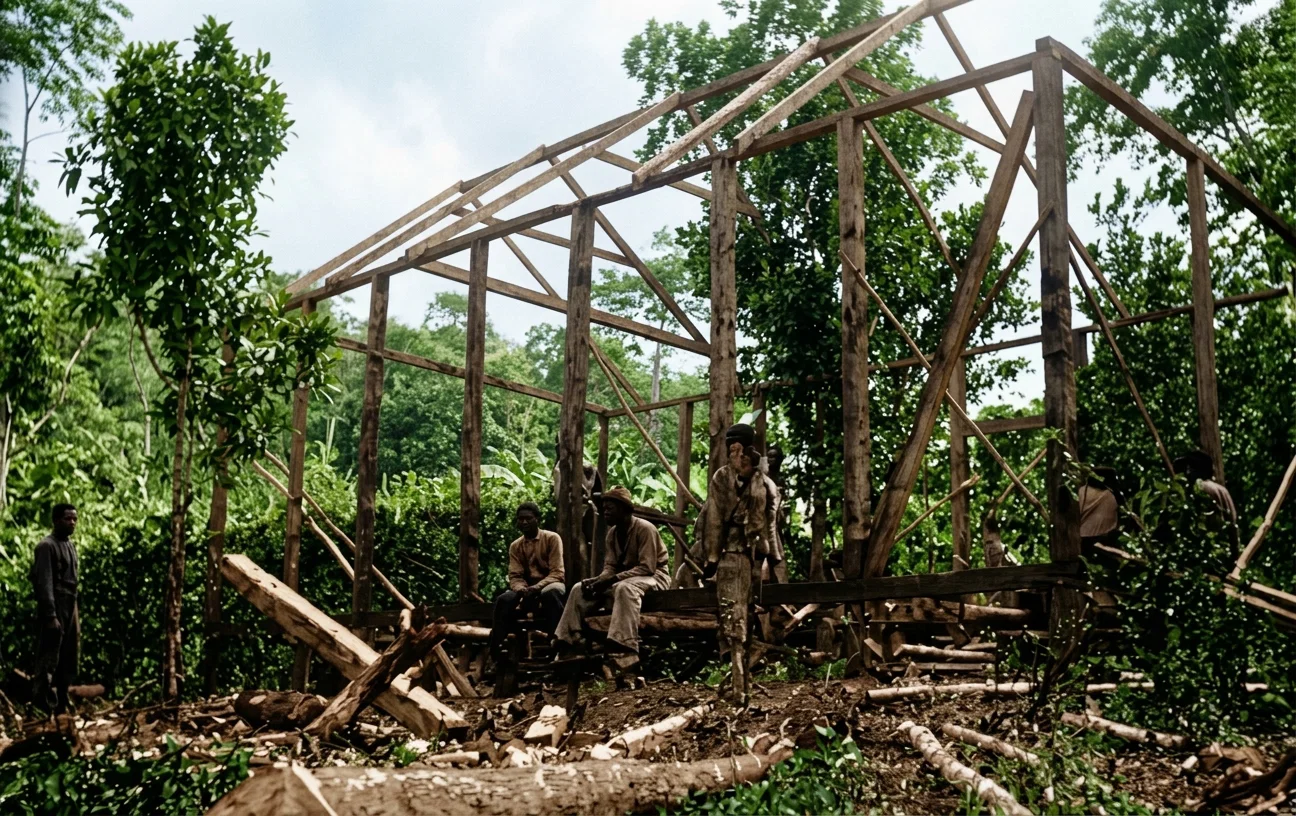
BUILDING A MEETING-HOUSE IN JAMAICA.
In building the church at Swift River, the first step was to burn the lime. Two brethren began cutting the wood. The next day both came down with the fever, which swept through the district, lasting two months. Not one of the brethren escaped. They are all poor, and what little money they had was nearly consumed in paying doctors’ bills. The rain was almost continuous for months; yet, as soon as any of the brethren got up from the fever, and there was a lull in the storm, they would go to work on the kiln, although so weak they were scarcely able to handle the ax. They had barely recovered from the fever, and the weather had become a little more settled, when a hurricane destroyed their bananas, on which they had depended to raise the money for the church.
Opposition to their work was as determined as was Sanballat’s to Nehemiah. This was especially true of the ministers, who not only talked against them from the pulpit, but went from house to house threatening those who had taken hold of the truth, and bringing them up for trial before the church they had left, subjecting them at such times to taunt and ridicule before those present. At one time five ministers assembled, and counseled long together, devising a plan to stop the nefarious work. Nevertheless, the little band persevered, and in one year from the time they began, a good substantial building was completed and dedicated.
One sister did the washing three weeks for a family, for which she received the sum of one dollar. She gave it to Brother Enoch for the church, saying, “You must take it, or I shall be tempted to use it for myself and child, for I have nothing ahead even to eat.” He tried to dissuade her from giving all of it, but she persisted.
Brother W. J. Tanner related a circumstance in connection with the building of the church at Grove Town, which we give in his own words:—
“Brother — has given all his cash, as well as a kiln of lime and much time, to the church. At the same time he is denying himself in several ways. For instance, I found him one day sitting in the bush making his dinner on nothing but sugar cane.”
We read of the devotion of Paul, who, among many other persecutions, was five times subjected by angry mobs to the cruel lash, and still more cruel rods, until his back was lacerated and bleeding. And it must stir our hearts, when the same devotion and love for Jesus is seen in the person of a young and helpless girl, as is shown by the following circumstance, of which I recently learned from one of the young lady’s friends:—
At a series of meetings, a young lady about twenty years of age became interested, and when the invitation was given for those who had decided to obey to come forward, she with others did so. As soon as her parents heard of it, they told her she must give up that silly nonsense, and strictly forbade her attending any more meetings. But the seed sown had taken root. When the next Sabbath came, she attended services. While there, she received word that her father awaited her return, with whips to flog her. Instead of going home, she went to her grandmother’s, and from there wrote her father, telling him that she must obey the Lord at whatever cost. He sent for her to come home, which she did, and told her that she should neither leave home nor keep the Sabbath. But she continued to slip away and attend the meetings. One Sabbath, on returning, her father flogged her until her body was badly bruised, then struck her several blows in the face, declaring he would compel her to give up the Sabbath.
Some of her friends advised her to leave home, but she told them that she had always been at home, and did not understand the ways of the world; and, she said, “Perhaps if I remain at home, I may be the means of winning father and mother yet to this good way.” So it has gone on. After a fierce outburst of anger, usually ending with a terrible flogging for the poor girl, there would be a respite for a little time.
One year and four months have passed, and the conditions remain unchanged. How much longer is the poor girl to be tried? Will she hold out; or will tired nature give way, and the enemy triumph? God only knows. We are praying that she may be faithful.