THE FULLNESS OF THE GOSPEL IS THE ONLY SALVATION FROM MODERN BABYLON

4%

Seventh-day Adventist Publishing Association · Battle Creek, Mich. · Sep 18, 1900

FromReview and Herald, Vol. 77, No. 38.

Read the full edition
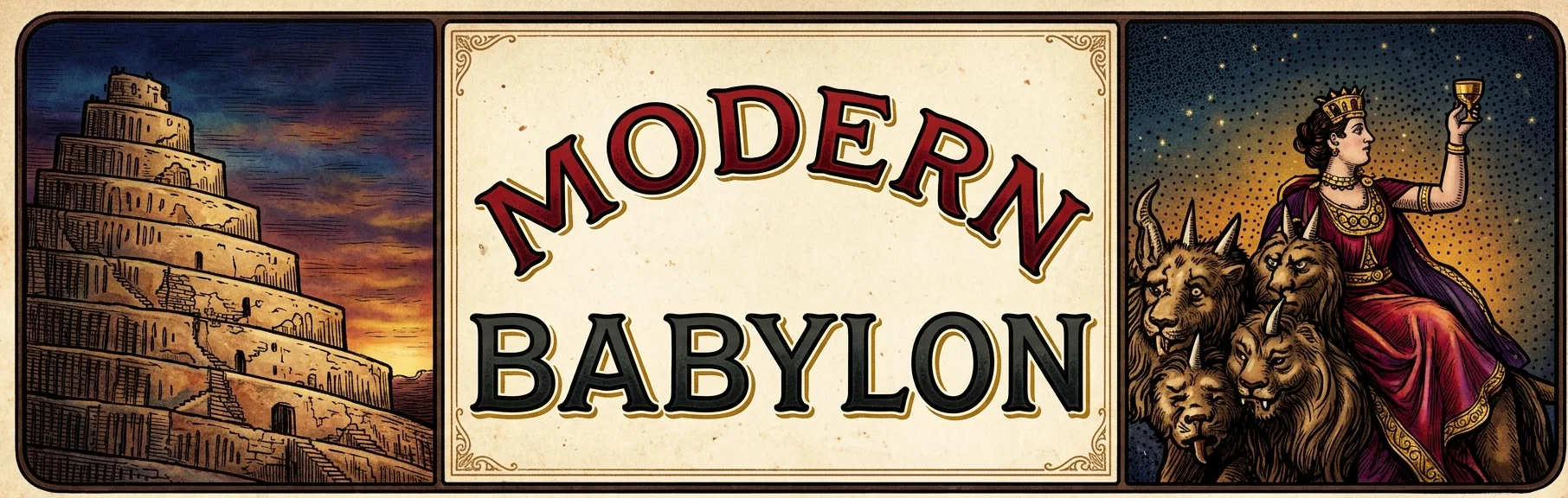
THE FULLNESS OF THE GOSPEL IS THE ONLY SALVATION FROM MODERN BABYLON.

In previous studies we have considered some phases of the work of the papacy in its opposition to the gospel of the kingdom, in fulfillment of the prophecy in this seventh chapter of Daniel. We have seen the spirit of pride, of self-exaltation, and of arbitrary power, the marked characteristics of Babylon of the Chaldees, again revealed in this modern Babylon. We have seen how that paganism which had its rise in Babylon of old when they built the tower of Babel, took the place of Christianity, and the human was substituted for the divine. Thus in this system known as the papacy, this prophecy has undoubtedly had its definite fulfillment.
It is important to note, however, that these same principles are often found showing themselves outside of this organization. In order, therefore, that we may be saved from the sure results which will attend this departure from the gospel, we must keep clear, not only of the organization known as the papacy, but also of the principles which make the papacy what it is.
The purpose of the gospel of the kingdom is to reveal the principles of the kingdom of heaven in opposition to the principles of the kingdom of this world. This work is not accomplished in organizations, nor by teaching mere forms and creeds. It is a question of the relation of each individual with God, and this is determined by the fruits seen in the life, rather than by a mere connection with some outward organization, whether that organization be the papacy or the true church.
Whenever an effort is made either by the individual or by an organization to discard Babylonish principles and to accept the principles of the gospel, then the god of this world, who is the inspiration of all the ways of Babylon, seeks to defeat this effort; or, failing in this, to introduce the same old principles under new names, and thus to accomplish the same result in another way. This has been the history of nearly all the movement for the restoration of the pure gospel.
In the Reformation of the sixteenth century a protest was made against the perversion of the gospel in the papal system, and a work of reform was inaugurated, which, if it had been carried to its full extent, would have restored a pure gospel, and prepared a people to stand in the great day of the Lord. But this great movement soon ceased to make further progress in bringing the people back to the old paths, because it began to crystallize the teachings of the Reformers into a creed, and to look to these teachings for light, rather than to follow the principles which the Reformers had adopted in seeking light direct from the Scriptures for themselves. This was simply to put man in the place of God again, the difference now being that it was another man instead of the pope. Whenever any revelation of truth from the Scripture is rejected because it is not in harmony with a creed previously accepted, then the papal principle isadopted, and even that which was formerly light becomes darkness.
It was just this departure of Protestantism from its original principles which has made necessary another world-wide message to reveal the full light of the truth of the gospel, which will deliver the people not only from the papacy as a system, but also from all the principles of the papacy wherever found.
Adopting the Bible, and the Bible alone, as the sufficient rule of faith and practice, and taking for its keynote the fundamental principle of the Reformation,—justification by faith alone,—this new reformation has sent forth fresh rays of light and hope in many parts of the earth. For the last half-century it has been calling the attention of the people to the true Sabbath of the Lord, the seventh day of the week, the sign of genuine sanctification through faith which is in Christ Jesus; and urging a complete reform from all the methods and principles of the papacy, whether found in the Roman Catholic or Protestant churches.
The foundation principle of the everlasting gospel, that God the Creator is alone to be worshiped, the results of following in the ways of Babylon, and the fearful punishment awaiting all those who obey the dictates of the papacy as set forth in Rev. 14: 6-11,—these are the truths to be proclaimed “to every nation, and kindred, and tongue, and people,” in order that a people may be brought out who shall not be partakers of the sins of Babylon, and so shall not receive of her plagues.
Every individual is thus called upon to decide whether he will follow papal principles in opposing God and changing the law of faith into the law of works, thus himself becoming a part of the mystery of iniquity; or whether he will accept the gospel message, “Fear God and give glory to him,” and thus become a part of the mystery of godliness.
“Choose ye this day whom ye will serve.” “If the Lord be God, follow him: but if Baal, then follow him.”
In the further consideration of this prophecy we must notice the definite time allotted to this little horn, during which, by divine permission, it was to reveal in its completeness the working of the mystery of iniquity. “He shall speak words against the Most High, and shall wear out the saints of the Most High; and he shall think to change the times and the law; and they shall be given into his hand until a time and times and half a time.”
We have already seen, in the study of the experience of Nebuchadnezzar related in the fourth chapter of Daniel, that a “time” is a year. The basis for this interpretation is seen in Dan. 11:13 and margin. A time and times (two times) and a half would therefore be three and one-half years, or forty-two months. Following the Bible mode of reckoning thirty days to the month (see Gen. 7:11; 8:3, 4), this period would be twelve hundred and sixty days. But in symbolic prophecy a day represents a year, as will be seen by reading Num. 14:34 and Eze. 4:4-6.
The time covered by this expression, “a time and times and half a time” would therefore be twelve hundred and sixty years. The beginning of this period is determined by the facts stated in the twenty-fourth verse. Ten kings were to arise, “and another shall rise after them: . . . and he shall subdue three kings.” The time and the manner of the appearance of the little horn are here given. What was here foreseen was wrought into history when the Heruli, the Vandals, and the Ostrogoths were “plucked up by the roots,” in order to complete the establishment of the papacy. The last of these kingdoms was overthrown in A. D. 538, and this would therefore be the time from which to reckon, the time mentioned in the prophecy, and the twelve hundred and sixty years would extend to A. D. 1798. In that very year the French general, Berthier, entered Rome with his troops, took as his prisoner Pope Pius VI, and carried him away into foreign territory, where he afterward died in exile. And thus was the prophecy exactly fulfilled.
In the prophecies in the book of Revelation this same period is again mentioned. In the twelfth chapter, where the persecution of the church is described, it is stated that she is nourished in the wilderness “for a time, and times, and half a time,” and in the same chapter the stay in the wilderness is declared to be “a thousand two hundred and threescore days.” In the thirteenth chapter this same blasphemous power is again described, and it is said that “power was given unto him to continue forty and two months,” which would be twelve hundred and sixty days, or years. These four instances in which this same period is mentioned serve to explain one another, and to make it clear beyond doubt that the same experience is under consideration in each case.
It is evident that the twelve hundred and sixty years do not extend to the time of the complete destruction of the papacy; for the very next verse speaks of the sitting of the Judgment, and declares that “they shall take away his dominion, to consume and to destroy it unto the end.” The exact duration of the time during which saints, times, and the law were “given into his hand” is stated; but the final overthrow will be at the second coming of Christ after the revealing of that Wicked, “whom the Lord shall consume with the spirit of his mouth, and shall destroy with the brightness of his coming.”
The closing scene in the vision presents the final settlement of the kingdom question, when “dominion, and glory, and a kingdom” were given to “one like the Son of man,” thus teaching that in the union of the divine with the human is the secret of that gospel power which makes it possible for “the weak things of the world to confound the mighty.” And this Son of man, to whom the kingdom was given, was the same one of whom Zacharias, “filled with the Holy Ghost,” prophesied: “Blessed be the Lord God of Israel; for he . . . hath raised up an horn of salvation [not one that destroys] for us in the house of his servant David; . . . to perform the mercy promised to our fathers, and to remember his holy covenant.” He it is of whom it is written: “Forasmuch then as the children are partakers of flesh and blood, he also himself likewise took part of the same.” So also Isaiah prophesied of him: “For unto us a child is born, unto us a Son is given: and the government shall be upon his shoulder: . . . of the increase of his government and peace there shall be no end, upon the throne of David, and upon his kingdom, to order it, and to establish it with judgment and with justice from henceforth even forever.” Isa. 9:6, 7. But this union of divinity with humanity was made in order that humanity might share with divinity in all the blessings that are insured by a righteous character, the kingdom of God within. And so the kingdom which was given to the Son of man belongs also to all who “are partakers of Christ.”
Thus the final triumph of the gospel, “Christ in you, the hope of glory,” is seen in the fact that “the saints of the Most High shall receive the kingdom, and possess the kingdom forever, even forever and ever.” He who receives the kingdom and then loses it, never really had it at all. “Darius the Mede received the kingdom,” but he did not retain it, and so it has been with all the rulers of the world. He who would “possess the kingdom forever” must know in his own flesh “the exceeding greatness of his power to us-ward who believe, according to the working of his mighty power, which he wrought in Christ, when he raised him from the dead, and set him at his own right hand in the heavenly places, far above all principality, and power, and might, and dominion, and every name that is named, not only in this world, but also in that which is to come.” Eph. 1:19-21.
This is the gospel of the kingdom, and this gospel experience by which “the life also of Jesus might be made manifest in our mortal flesh,” the sinless life in the sinful flesh, brings to humanity overcoming power. “Ye are of God, little children, and have overcome them: because greater is he that is in you, than he that is in the world.” And to all such the promise is made: “To him that overcometh will I grant to sit with me in my throne, even as I also overcame, and am set down with my Father in his throne.” Rev. 3:21. And thus was the gospel of the kingdom preached in this vision given to Daniel the prophet.
The final result of this long controversy between the two kingdoms is the same as already brought out in the previous chapters of the book of Daniel. It will then be seen that the “saints of the Most High,” the very ones who were worn out by the persecutions of the papacy, are rewarded with the gift of the kingdom, even the everlasting kingdom which shall stand forever, and all rulers shall serve and obey the Most High. This is the triumph of the gospel.
After centuries of apostasy, during which every means which satanic wisdom could devise was employed to crush out the truth and to substitute a lie in its place, the power of a genuine gospel, the power of the kingdom of God within, wins an eternal victory over every other king or kingdom. Well may those who have a part in the closing scenes of this great controversy and in the “victory over the beast, and over his image, and over his mark, and over the number of his name,” join in that triumphant chorus, “Great and marvelous are thy works, Lord God Almighty; just and true are thy ways, thou King of ages.” “Alleluia: for the Lord God omnipotent reigneth.”
How wonderful the promise, “To him that overcometh will I grant to sit with me in my throne”! “Now thanks be unto God, which causeth us to triumph in Christ.” What a wonderful gospel is the gospel of the kingdom! W. W. P.