KNOWING GOD

11%

Pacific Press Publishing Company · Oakland, California · Oct 14, 1897

FromSigns of the Times, Vol. 23, No. 40.

Read the full edition

KNOWING GOD.

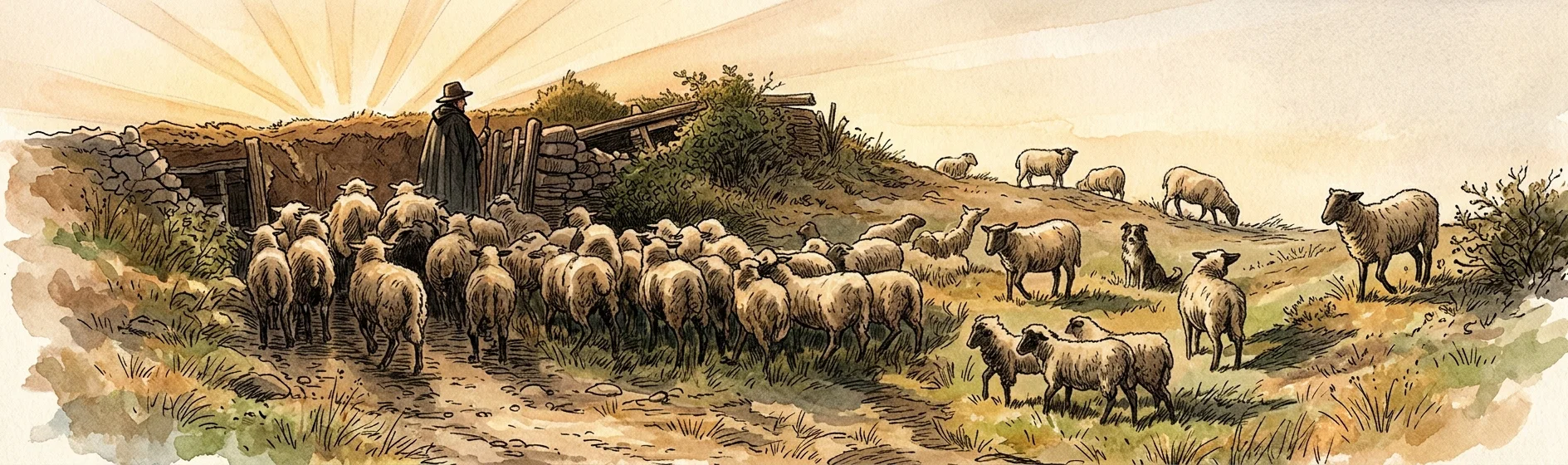
In the beautiful word picture of the sheep and shepherd, contained in the tenth chapter of John, representing the closeness of the relationship existing between God and his children, our Saviour says, “I am the Good Shepherd, and know my sheep, and am known of mine.”
There is so much embraced in this idea. There is comfort and strength in the thought that God knows us. He knows our trials, our difficulties, our temptations, our weaknesses. He knows our power of endurance. He knows just how hot to make the furnace, just how deep to send the arrow of affliction, just how heavy to make the load.
A gentleman passing along the street saw a little boy with a hod of brick on his shoulder, in which his father was placing a load for him to carry to the building above. The little boy was asked, “Are you not afraid your load will be too heavy?” The little fellow replied, “Father knows how heavy to make the load.” And our heavenly Father knows. His knowledge is infinite, his power is infinite; and the infinitude of his love and tenderness for us equal the greatness of his power and wisdom. He is too wise to err, too good to be unkind. Knowing that he knows, we may safely trust the leadings of his providence. To us the way may seem dark; no star of hope may light the sky of our experience; but if we do not understand, God does, and with perfect confidence we may place our hands in his and resign ourselves to his leadership and guidance, trusting him to give us that experience that will be for our highest good.
“He calleth His own sheep by name, and leadeth them out. When He hath put forth all His own, He goeth before them. And the sheep follow Him; for they know His voice.” John 10:4, 5, R. V.
Yes, God knows us, and, O blessed thought, we also may come to know him! “I know my sheep, and am known of mine.” We may know God as we know our dearest, closest friend, and with even a deeper knowledge than we can know any earthly friend may we come to understand him. There is a vast difference between knowing of God, knowing about God, and knowing God. I have a dear, kind friend, who, by his constancy in many experiences and trials, has proved the strength of his friendship. With him I have come to commune as with a brother. There is no secret between us. He knows my virtues and failings, and I know his. Before I met that friend I knew of him. I knew something about him, but now I know him. I know his habits of life, his disposition, his likes, his dislikes, his tastes. I know him as he actually is in all his characteristics and attributes; but, O, I may know God with even a deeper knowledge than this! I may read about him in his Word; I may hear of him through others’ experience; I may hear him represented as a compassionate Saviour, as a merciful Redeemer, as a comforting Friend, but deeper and broader than all this I may know him in my actual experience as a loving Father, as a Comforter, as a Sympathizer in all my trials, as “a Friend that sticketh closer than a brother.” And when one comes to know God in this closeness and tenderness of relationship, then it is, and not before, that he can enjoy loving communion with him. Then can he come to the Lord Jesus in fulness of confidence in every great trial and in every small trial, knowing that God is equally interested in both causes of concern to one of his own.
And in knowing God, and in knowing that he knows us, the independence of our relationship to him is strengthened. Our faith will not rest upon the experience of others, but upon the individual experience which God has given to us. Others may prove disloyal, we will prove true; others may falter, we will stand firm; indifference and coldness may possess those around us, but the love of God shed abroad in our hearts will keep aglow the fervor of our devotion and piety. Factions may split the church, false doctrines may be presented, and in the midst of the jargon of strife and confusion it may seem to us, viewing the matter from a human standpoint, that the work of God is coming to ruin. At such times this personal relationship, this knowledge of God, will save us from rout and disaster. Friends may prove false, and the finger of scorn may point us out to the mocking, jeering multitude, but none of these things will move us, because we have come to know in whom we have believed, and we have come to know not only in whom we have believed, but we have come to know him in whom we have believed. And this knowledge of him is the knowledge of power, enabling us to prove loyal to One ever so loyal to us.
May we, as the sheep of the heavenly fold, know the voice of the True Shepherd; and knowing that voice, may we follow where it leads. F. M. WILCOX.