THE SANCTUARY

4%

Seventh-day Adventist Publishing Association · Battle Creek, Mich. · Jan 20, 1876

FromReview and Herald, Vol. 47, No. 3.

Read the full edition

THE SANCTUARY.

Third Paper—Exposition of Dan. 8.

The preceding article closed with the inquiry upon our hands, Did the 2300 days end in 1844? The answer to this question involves an answer to two other questions already noticed; namely, 1. Are the seventy weeks of Dan. 9, a part of the 2300 days of Dan. 8? and, 2. Are they rightly dated from B. C. 457? To determine these points it will be necessary to look briefly at the prophecy of Dan. 8, in which the mention of the 2300 days is found.
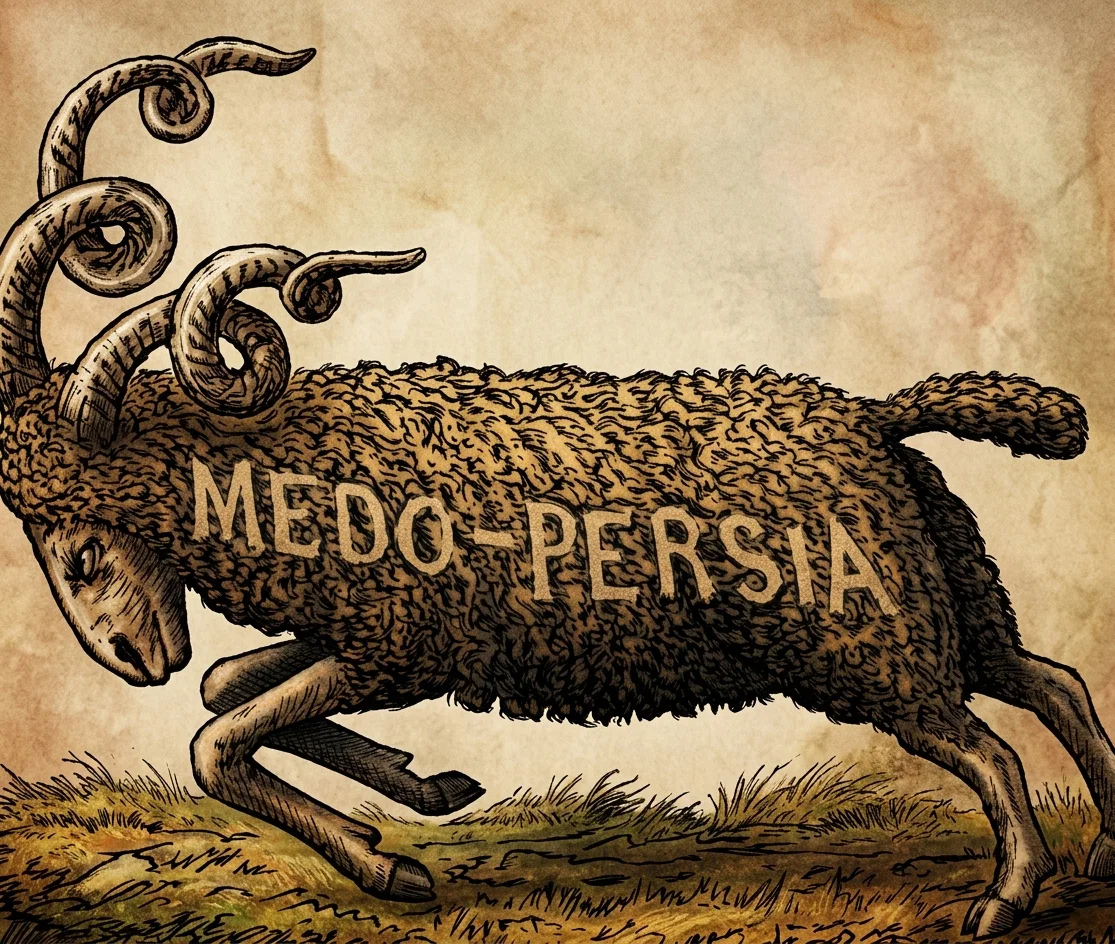
The first object presented to the eye of the prophet was a ram standing before the river, having two horns, one higher than the other. He saw this ram pushing westward, northward, and southward, with such vigor that no beast could stand before him, and he did according to his will, and became “great.”
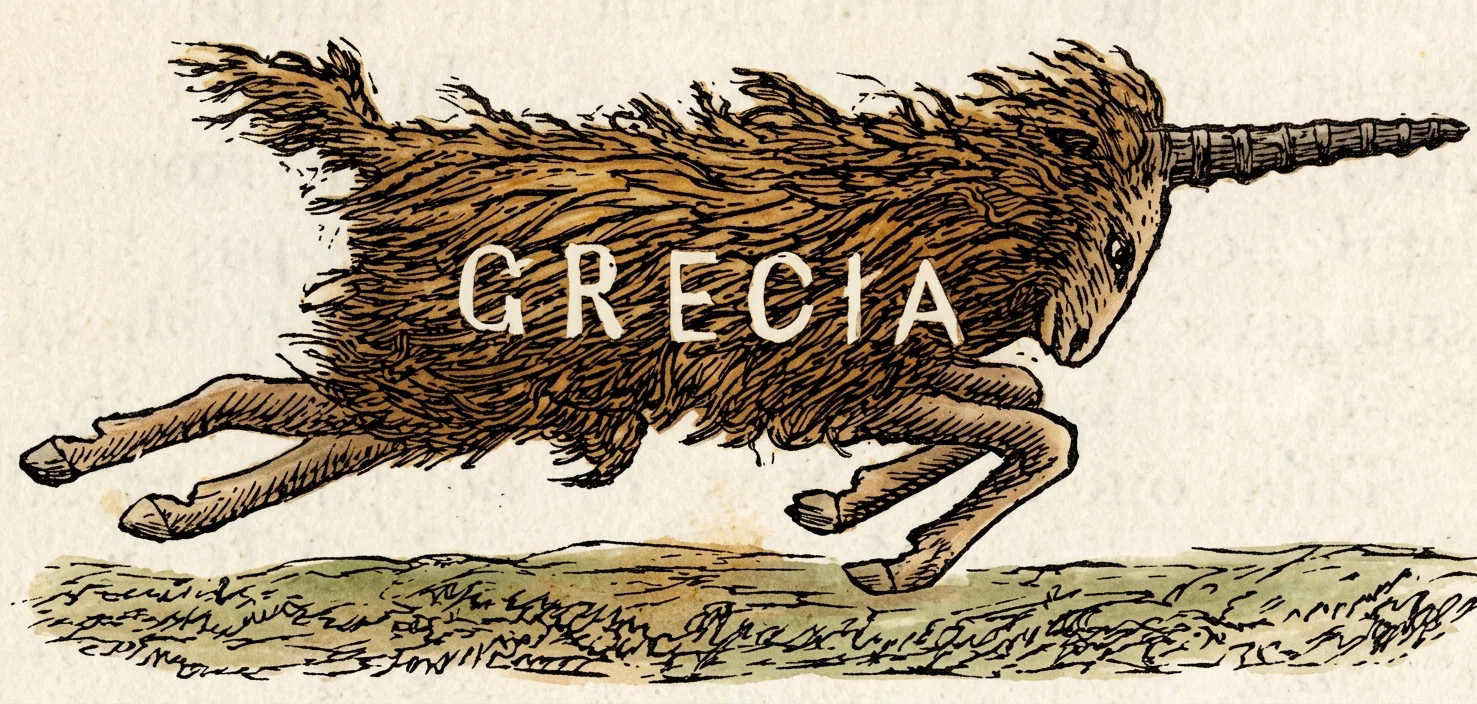
Scene second. A rough he goat with a notable horn between his eyes came from the west with such rapidity that he seemed not to touch the ground. And he dashed into the ram, overthrew him, broke his horns, and trampled him into the ground. The he goat waxed “very great.”
But while he was defiantly prancing about in the plenitude of his power, suddenly the great horn between his eyes was broken, and in its place as suddenly sprang forth four notable horns toward the four winds of heaven.
Scene third. Out of one of these four horns of the goat the prophet then saw a little horn protruding. And lo, it grew with marvelous rapidity. It took a turn toward the south, and toward the east, and toward the pleasant land. It sprang upward to the host of heaven, and, encircling some of the stars, brought them to the ground and stamped upon them. It even reared itself against the prince of the host, took away the daily, cast down the place of his sanctuary, gathered to itself an overwhelming host by reason of transgression, cast down the truth to the ground, and practiced and prospered. The little horn waxed “exceeding great.”
Scene fourth. Other objects now come into the field of vision. Heaven does not look with indifference upon all the transactions indicated by the symbols and their work thus far introduced, especially as it affects the people of God. Angels regard it, and consult about it. Two of them held converse respecting it, in the hearing of the prophet. How long, said one to the other, shall be the vision concerning the daily sacrifice, and the transgression of desolation, to give both the sanctuary and the host to be trodden under foot? Then turning to Daniel, as in addressing him he would address the people of God, who are more especially interested in the response, the angel made answer: “Unto two thousand and three hundred days; then shall the sanctuary be cleansed.”
This is the entire matter of the vision, and fills the chapter to the 15th verse. It was now necessary that it should be explained; and Daniel immediately heard

AN EXPLANATION COMMANDED.

“And it came to pass, when I, even I Daniel, had seen the vision, and sought for the meaning, then, behold, there stood before me as the appearance of a man. And I heard a man’s voice between the banks of Ulai, which called, and said, Gabriel, make this man to understand the vision. So he came near where I stood: and when he came, I was afraid, and fell upon my face; but he said unto me, Understand, O son of man: for at the time of the end shall be the vision. Now as he was speaking with me, I was in a deep sleep on my face toward the ground: but he touched me, and set me upright. And he said, Behold, I will make thee know what shall be in the last end of the indignation: for at the time appointed the end shall be.” Verses 15–19.
Gabriel, true to the commission here laid upon him, proceeded at once to enter upon his duty and to give the explanation he was enjoined to make.
SYMBOL OF THE RAM EXPLAINED.
“The ram which thou sawest having two horns are the kings of Media and Persia.” Verse 20.
This is plain language. It cannot be misunderstood. This being the first symbol, we know at what point the vision commences. It does not begin with the empire of Babylon, as do the visions of the second and seventh chapters, but the Babylonian empire being very near its close in the third year of Belshazzar, when this vision was given, the view commences with the incoming Medo-Persian empire. The two horns of the ram denote the union of these two powers, the Medes and the Persians, in one government.
The Medo-Persian supremacy commenced at the overthrow of Babylon by Cyrus, B. C. 538, and extended to the battle of Arbela, B. C. 331, two hundred and seven years. So long a time is covered by the first symbol. In the explanation of the next symbol we have the power that overthrew the Persian empire, and consequently succeeded to its place.
SYMBOL OF THE GOAT EXPLAINED.
“And the rough goat is the king of Grecia: and the great horn that is between his eyes is the first king. Now that being broken, whereas four stood up for it, four kingdoms shall stand up out of the nation, but not in his power.” Verses 21, 22.
This also is plain and unequivocal language. The power that was to succeed the Persian in the empire of the world, according to the prophecy, was the Grecian. It was fulfilled two hundred and thirty-one years after the vision was given, when, at the battle of Arbela, Oct. 1, B. C. 331, Alexander the Great utterly routed the forces of Darius Codomanus, and became absolute lord of the empire to the utmost extent ever possessed by any of the Persian kings.
The great horn between his eyes was the first king. This was Alexander the Great. That horn was broken. Eight years after the battle of Arbela, Alexander died in a drunken debauch at the age of 33, Nov. 12, B. C. 323.
In place of this first horn, four came up toward the four winds of heaven. These, the angel said, signified four kingdoms to arise out of the nation. After the death of Alexander, much confusion arose among his followers respecting the succession. It was finally agreed, after a seven days’ contest, that his natural brother, Philip Aridæus, should be declared king. By him and Alexander’s sons, Alexander Ægus and Hercules, the name and show of the Macedonian empire was for a time kept up. But these were all soon murdered; and the regal family being then extinct, the chief commanders of the army, who had gone into different parts of the empire as governors of the provinces, assumed the title of kings. They thereupon fell to leaguing and warring with each other to such a degree that within the short space of fifteen years from Alexander’s death, the number was reduced to just four, as the prophecy had declared. These kingdoms thus originated about 308 B. C. They were Macedonia, Thrace, Syria, and Egypt, ruled respectively by Cassander, Lysimachus, Seleucus, and Ptolemy. The kingdom of the goat dates from B. C. 331 to the time when a succeeding power appears upon the scene, B. C. 161, as we shall hereafter see. A period of 170 years is thus covered by this symbol.

THE SYMBOL OF THE LITTLE HORN EXPLAINED.

“And in the latter time of their kingdom, when the transgressors are come to the full, a king of fierce countenance, and understanding dark sentences, shall stand up. And his power shall be mighty, but not by his own power: and he shall destroy wonderfully, and shall prosper, and practise, and shall destroy the mighty and the holy people. And through his policy also he shall cause craft to prosper in his hand; and he shall magnify himself in his heart, and by peace shall destroy many: he shall also stand up against the Prince of princes; but he shall be broken without hand.” Verses 23–25.
This little horn is unquestionably a symbol of the power that succeeded Grecia in the dominion of the world. And this, according to the prophecies of Dan. 2 and 7, was Rome. Some special reasons must be given if we are to take the ground that this prophecy does not run parallel with the others, and from the time of its beginning bring to view the same universal kingdoms.
Such a view, however, is taken; but such good reasons for it are not produced. Romanists, to avoid the application of this part of the prophecy to the Roman power, pagan and papal, endeavor to shift the application from Rome to Antiochus Epiphanes. And this lead of the papists has been followed by the majority of those who oppose the Advent faith. In our next we shall show that this view cannot be correct, but that the reasons fixing this upon Rome, are more clear and numerous than those even which determine the application of the other symbols.
U. S.