The ROYAL LAW

5%

Pacific Press Publishing Company · Mountain View, California · Jul 11, 1906

FromSigns of the Times, Vol. 32, No. 27

Read the full edition

The ROYAL LAW

BY F. C. GILBERT.
(A Hebrew Christian.)

VII. THE LAW IN CHRIST; CHRIST IN THE LAW.

Sin not only brought misery into the world but it also enslaved the human race. Man was bound; he was brought into bondage, and needed emancipation. 2 Peter 2:19. He lost his home; he lost his life; he lost his mind. Sin changed man’s whole condition; he lost his normal state; he became natural; he became carnal. 1 Cor. 2:14; Rom. 7:14.

The New Man Christ Jesus.

Having gotten into this state, which was practically a species of insanity, before he could obey the will of God and meet the requirements of God, he must have a new mind. Of the carnal mind we read: “For to be carnally minded is death; but to be spiritually minded is life and peace. Because the carnal mind is enmity against God; for it is not subject to the law of God, neither indeed can be.” Rom. 8:6, 7. While the same God was Ruler, with the same law as it existed before the fall of man, there must be a different man with a different mind in order to please the same God. Hence we read: “And so it is written, The first man Adam was made a living soul; the last Adam was made a quickening spirit. Howbeit that was not first which is spiritual, but that which is natural; and afterward that which is spiritual. The first man is of the earth, earthy; the second Man is the Lord from heaven.” 1 Cor. 15:45–47. Jesus Christ, the Son of God, became the Son of Man, but He was the new man, the spiritual man, the new creation. So of Him we read: “And the angel answered and said unto her, The Holy Ghost shall come upon thee, and the power of the Highest shall overshadow thee; therefore also that holy thing which shall be born of thee shall be called the Son of God.” Luke 1:35.
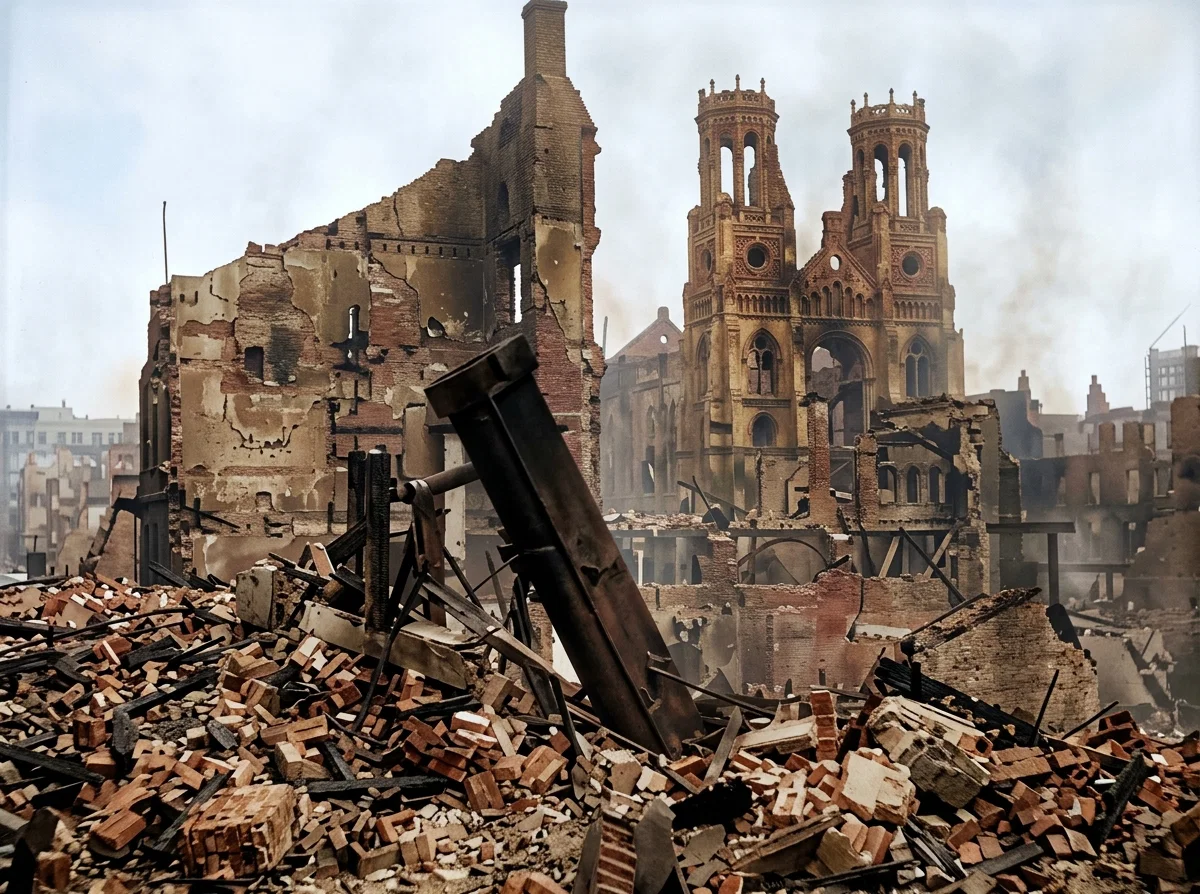
Temple El Emanuel, the great Jewish Synagogue, where Rabbi Voorsanger presided. In the ruins of this temple the Supreme Court held its first-sitting after the fire. A suggestion of the justice of the old God-given Hebrew laws.

The Will and Pleasure of God.

While the patriarchs, prophets, priests, and kings saw Him by faith all through the Old Testament, different persons at different times had been commanded of God to write concerning His personal appearing and His work. So in Ps. 40:6–8, we have the following utterance: “Sacrifice and offering Thou didst not desire; Mine ears hast Thou opened; burnt-offering and sin-offering hast Thou not required. Then said I, Lo, I come; in the volume of the book it is written of Me, I delight to do Thy will, O My God; yea, Thy law is within My heart.”
This the writer to the Hebrews plainly says refers to Christ. Heb. 10:5–7. Therefore His coming into the world was to do the will of God. We are told, however, that this will is the law of God. It is furthermore stated by the Saviour Himself, that His great mission in the world was to always do those things which pleased God. John 8:29. But the prophet Isaiah declared what it was that pleased God: “The Lord is well pleased for His righteousness’ sake; He will magnify the law, and make it honorable.” Chapter 42:21. Then the great reason why God sent Jesus into the world was that Jesus might perform God’s will. The reason the Saviour says He came into the world was to please God. But God tells us that His will is His law; and the Saviour declares that that which pleases God is obedience to His commandments. “If ye keep My commandments, ye shall abide in My love; even as I have kept My Father’s commandments, and abide in His love.” John 15:10. Therefore the pleasure of God and the will of God are one and the same thing; and both are declared to be the law of Jehovah.
The wise man tells us that out of the heart are the issues of life. Prov. 4:23. But in the heart of Christ was the law of God. Then the one vital issue of the life of Jesus our Lord was to reveal to men in living, daily acts what the law of God really is. The law of God was in the Lord Jesus Christ. He was the law lived out in the flesh.

God Revealing His Law.

This was the third exhibition of God’s law since Creation. First, God gave it to man orally in the Garden of Eden. Man lost the knowledge of the law and the law itself on account of sin. Again, God gave His law amid the thunders of Sinai, and handed it over to men on two tables of stone. Again man lost the knowledge of God’s law. The third time God gave His law to man. Neither orally as at Creation, nor in words as at Sinai, but in the living personality of His own dear Son. He, Jesus, was the living law. He was God’s law lived in human flesh. He was manifested to take away sin, which is “the transgression of the law.” 1 John 3:5, 4. What men could not understand by what they heard from father to son, what they could not understand from the lips of their teachers, they were to see lived out in the flesh of man, the Man Christ Jesus.
The law being spiritual, it was necessary for the man who should keep that law to be spiritual likewise; for only a spiritual being could obey a spiritual law. Consequently Jesus Christ was born of the Spirit. So that in order for any man to obey God and to keep His law, it was and is necessary that the individual shall be born again. John 3:1–7. He must have a new mind, he must have a new life, he must become a new creature. “Therefore if any man be in Christ, he is a new creature; old things are passed away; behold, all things are become new.” 2 Cor. 5:17.

Christ in the Law.

While it is true that the law was in Christ, it is equally true that Christ is in the law. This was the desire of God for man all through the ages, that Jesus Christ, the Son of God, the Saviour of men, should be seen in God’s law. Not that the law was merely so many words or precepts, but that they were truths which, in order to be obeyed and lived out, must furnish divine and regenerating power. It is a living law, potent with the very life of Deity. If rightly comprehended, by the new man with the new mind, every command would teach the soul the need of Christ to obey its injunction.

The Law a Mirror.

As was noticed in article five, the law of God is compared to a looking-glass. James 1:23. When the individual stands before the mirror and sees his defects, if there are spots of uncleanness, the glass tells him to obtain soap and water, remove those stains, and come back to see the condition of himself. In the first place the glass says unclean, unclean. After the water and the soap have been applied, the same mirror says the spot has been removed; you are clean. Even so it is with the law, with Jesus Christ. That law says we have sinned; we have come short of God’s glory; we are unclean. Rom. 3:9, 19, 23; Isa. 64:6. We feel our need of soap and water. Hence we read: “But who may abide the day of His coming? and who shall stand when He appeareth? for He is like a refiner’s fire, and like fullers’ soap.” Mal. 3:2. “Jesus answered and said unto her, If thou knewest the gift of God, and who it is that saith to thee, Give Me to drink; thou wouldest have asked of Him, and He would have given thee living water.” John 4:10. Then Jesus Christ is our soap and our water. We go to Him, and, bless God, He cleanses us from all our sins.
After we are all cleansed, we again return to God’s great mirror, and now that same law which condemned us before declares we are approved of God. “There is therefore no condemnation to them which are in Christ Jesus, who walk not after the flesh, but after the Spirit. For the law of the Spirit of life in Christ Jesus hath made me free from the law of sin and death. For what the law could not do, in that it was weak through the flesh, God sending His own Son in the likeness of sinful flesh, and for sin, condemned sin in the flesh; that the righteousness of the law might be fulfilled in us, who walk not after the flesh, but after the Spirit.” Rom. 8:1–4.
Not only was the law of God in the heart of Christ, but the life and character of Christ is in the law. The very traits of character that the Bible gives to Jesus the Son of God are the same as the attributes given to the law: