LETTERS TO A DAUGHTER

3%

Pacific Press Publishing Association · Mountain View, California · Jul 4, 1911

FromSigns of the Times, Vol. 38, No. 26.

Read the full edition

LETTERS TO A DAUGHTER

By a Mother
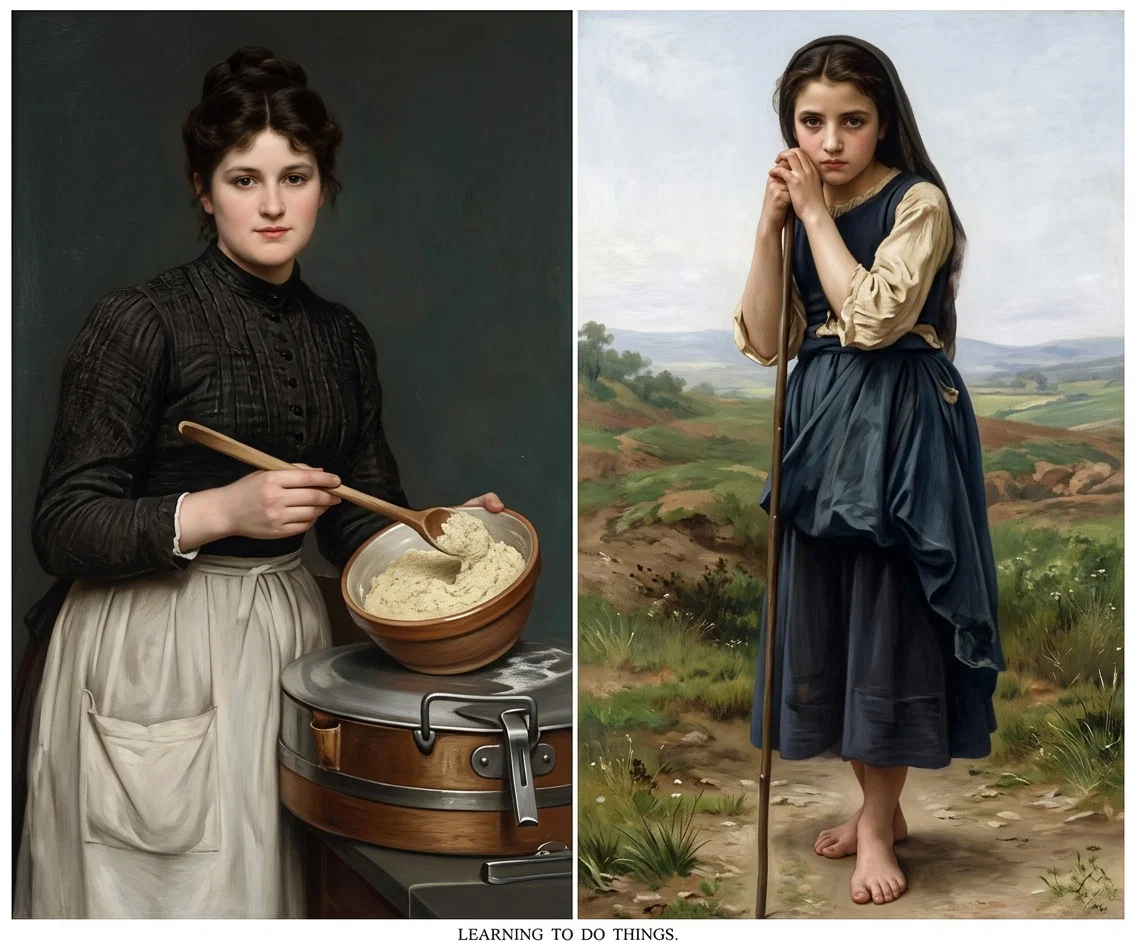
“Learning to Do Things”

MY DEAR DAUGHTER,—
Your letters are full of interest to us. We are more and more glad you are there. Do not be impatient to get at the work that seems to you to represent your purpose.
You know how I prize the spring-time of life, and I am as jealous of every passing day as you can possibly be. Yet I do not in the least regret these weeks and months you are spending in learning to do well this work, which is quite as necessary to the development of an all-round nurse as is the bathing of a sick person or the bandaging of a broken limb.
You say you are still engaged for the most part in washing pots and kettles. Do not despise this day of fundamentals, but strive each day to do your work better. Of course, darling, you will not spend your life at this; you may never do it again. But you will always have to do with this work in a way. You can never teach others to do with despatch and perfection that which you have not learned to do well with your own hands. Remember that life’s accomplishments, like character, blend to make a seamless robe. We can not strengthen a part without strengthening the whole. So while you are learning to wash a pot, leaving it, not once, but always, free from grease and soot, immaculate within and shining without, by the divine law of “the correlation and conservation of forces,” you are learning to assist, perhaps, to perform a delicate surgical operation.
In the Louvre at Paris is a painting by Murillo in which an old kitchen is represented. But doing the work therein are white-robed angels. One is putting the kettle on the fire, another is lifting a pail of water, another doing something else. All are busy, working with a will, refining the work in which they are engaged. “It is the angel aim and standard in an act that consecrates it.” There is no need of being great or doing great deeds in order to share the inspiration of God’s presence.
If we could but learn to measure by God’s standards, we should learn that real greatness lies in perfection in the least. So great is God’s estimate of character.
There is no such thing as chance. We each are in our allotted place, filling our own little niche. No one else can do our work. Would that every one of us could have the understanding of Stradivarius, whom George Eliot makes to say:
If my hand slacked I would rob God — since He is fullest good — He could not make Antonio Stradivarius’ violins Without Antonio.
Let this thought be your inspiration in all the work that is given you to do, day by day. Do each task the best it can be done. The reward is your own.
Already you are having the privilege of putting into practise some of the principles of scientific cooking. I am sure this will be a very enjoyable part of your training. You have the promise of being an accomplished cook before leaving this department. To be a practical as well as a scientific cook is no mean accomplishment. Indeed, such are hard to find. And your time will be well spent.
I see that your course of study and manual training takes you through a good course in domestic science. We have certainly chosen well in giving you the advantages of this school. That woman is fortunate who can turn her hand to all the arts that naturally grace the womanly woman.
I am glad to know you are making practical use of some of mother’s home training. I thought perhaps you could find time to make your own uniforms during your hours off duty. I am glad to know your effort has proved so satisfactory. I did not suppose you would dare undertake the making of the coat. You were wise to hire the assistance of an expert for a few hours. Her services were worth much more to you than the pleasure of having a well-fitting garment. It is worth twice the price you paid, to have had this little lesson in doing things right. I am glad you have the satisfaction of feeling the coat is more becoming than any you could get in the shops, and is better finished.
And so you have your fall hat already, and made it yourself! Are you not glad that I insisted upon your taking the course in millinery at the Y. W. C. A.? I am sorry you find it so hard to do up your white shirt-waists satisfactorily. I feel I did you an injustice in not insisting upon better instructions and more practise in the art, while you were at home. I have arranged for your sister two or three weeks with Madam Coin this coming vacation, learning how to wash, starch, and iron a shirt-waist in proper manner. You must struggle on and perfect a method of your own.
I was just looking over your letter. You must have saved at least forty dollars by the things you have been able to do for yourself. And it has been no hardship, I am sure, but rather a pleasure. Now you see you have that money for lectures, concerts, or anything else that will add to you pleasure and profit, while you are in the East. You will find many ways for it. Study to know that which will give you the best returns. This aptitude of yours for doing things will stand you in good stead at all times. In the homes of the well-to-do it will be appreciated. In the homes where much of your work will be, it will be most necessary to your success in giving comfort and relief.
Yes, dear, embrace every opportunity to learn any new accomplishment. First, it will add to the sum total of your worth. Second, you never know when or where you will need it.
The necessity of work — I should say the privilege of work — is man’s greatest blessing; and through it, whatever it is, be it honorable, we attain our highest culture.
My attention has just been called to a newspaper clipping under the heading of “Philosophy of Work,” in which are expressed the sentiments of men whose names are familiar to the world. I will send it to you:
“Nature is just toward men. It recompenses them for their suffering. It renders them laborious because to the greatest toil it attaches the greatest reward.” — Montesquieu.
“It is only by labor that thought can be made healthy, and only by thought that labor can be made happy, and the two can not be separated with impunity.
“If you want knowledge, you must toil for it; if food, you must toil for it. Toil is the law.
“It would be well if all of us were good handicraftsmen in some kind. Work first and then rest. You must do more than pray; you must work.” — Ruskin.
“Shun no work. Make yourself remarkable by some talent or other. Yet do not devote yourself to one branch exclusively. Strive to get clear notions about all.” — Seneca.
“Observe, without labor nothing prospers.” — Sophocles.
“Virtue’s guard is labor.” — Tasso.
“Labor rids us of three great evils, — irksomeness, vice, and poverty.” — Voltaire.
I would rather hear expressed in Voltaire’s language the positive side of this question. I think he would say, Labor gives us four great blessings, — happiness, usefulness, virtue, and prosperity.
Your loving — MOTHER.