Our London Letter

3%

Pacific Press Publishing Association · Mountain View, California · Dec 12, 1911

FromSigns of the Times, Vol. 38, No. 49.

Read the full edition

Our London Letter

By Our Own Correspondent
NOT since 1848 has Europe been in such a sea of troubles as she has been tossed upon during recent months. It seems quite in keeping with the times that China should be convulsed with two revolutions at once.
Here in England we do not know whether we are on the verge of another great paralysis of the national business such as we experienced last August, or whether we are to be spared this infliction. The question is now referred to the railway workers for their decision. In the summer disturbances, peace was patched up temporarily by the appointment of a government commission to go into the whole situation, so far as it affected the railway companies and their employees. It was understood that both sides would accept the report of the commission, whatever it was. That report has now been rendered, and some of the union leaders profess to find in it a satisfactory response to their demands, while others contend that it contains nothing of the sort. So the railway workers themselves are to settle the point by ballot, and if they refuse to accept the verdict of the commission, there will be another strike.
The Rt. Hon. H. H. Asquith
The bone of contention is the question whether the railway companies shall “recognize” the trade-union officials as the men’s representatives and enter into diplomatic relations with them. Hitherto all but one of the railway companies have positively refused such recognition to the union officials, insisting on dealing only with their employees in all matters of dispute. The government commission has reported in favor of recognition by the railway directors to a limited extent, but not so as to affect the maintenance of discipline or the efficient operating of the railroads. This concession does not satisfy the union officials, who demand full power of collective bargaining with the directors on behalf of the men they represent.
There are certain facts which tend to make the situation a little more difficult for the unions than it was in August. Since then they have attempted a railway strike in Ireland and been defeated. Further, all the great railways have made substantial increases in the pay of the lower grades of employees. It is believed, therefore, that prudence will counsel the unions not to agitate for another strike at the present time.
Meanwhile the strike fever is still rampant throughout the country. At the present time over 5,000 motor cab drivers are “out” in London, and every week we read of strikes in different parts. The mining industry is in a very unsettled condition, and it is generally expected that before long there will be a strike among the colliery workers throughout the United Kingdom. One result of these labor troubles is to send up prices considerably. Coal is very dear and not always to be had.
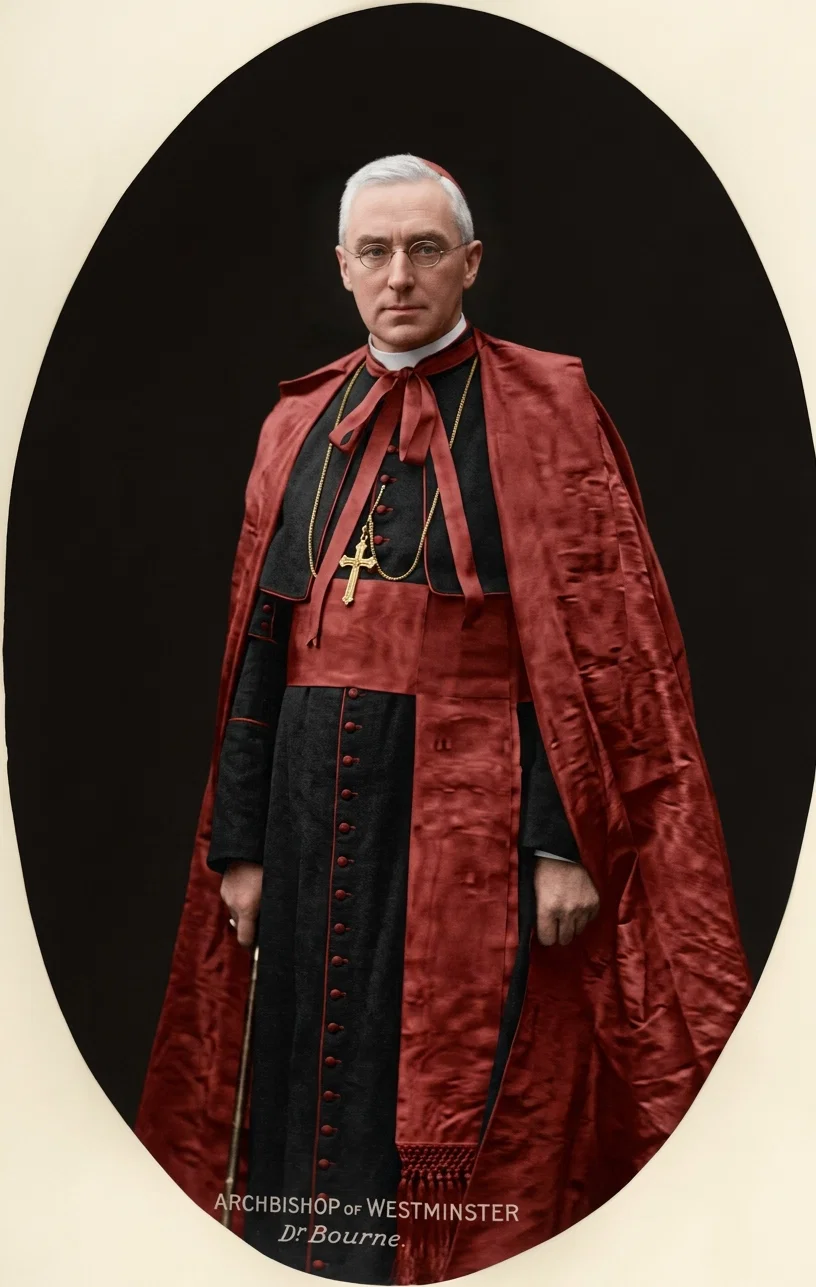
Doctor Bourne
Doctor Bourne

Lloyd-George’s Insurance Bill

Parliament is busily occupied with Mr. Lloyd-George’s insurance bill. If a happier and more prosperous state of affairs for the workers could be brought about by legislation, then the measures which Mr. Lloyd-George is introducing ought to accomplish great things. When the present bill comes into operation, every man who falls out of employment or becomes sick, will receive financial assistance; and if he should be smitten by tuberculosis, a part of the present scheme provides for sanitariums where his health can be built up, while his family at home are looked after. If children are born, the mother receives a subsidy. Participation in this scheme is to be compulsory for all who earn more than fifteen dollars a week, and the funds for operating it are to be provided by contributions from the individual, from his employer, and from the State.
When the insurance bill is enacted, the next great problem for this government is the preparation of a measure for giving home rule to Ireland. There is sure to be a keen struggle over the details; but the thorniest of the Irish problems, the land question, has already been got out of the way by the land acts which have made it easy for the small farmers to become owners of their farms. There is not likely to be any very violent resistance to the forthcoming home rule scheme, so far as the main question is concerned. The old charges of Romish intolerance have been brought forward, and some are predicting a reign of bigotry and persecution under the new order of things. But so far as the discussion has brought facts to light, up to the present time the Protestants have been found equally guilty in this respect. There is a growing conviction that home rule for Ireland will not prove an unmixed triumph for the priests. Mr. Sydney Brooks, a prominent advocate of home rule, writing in the “Fortnightly Review” for November, says:
There have been not a few signs of late that the emancipation of the Irish mind — the most needed of all revolutions — has already begun; and while there is much that can not be foretold as to the effects of home rule, this at least can be predicted with some confidence, — that the process of intellectual enfranchisement would be greatly quickened, that an anti-clerical party would quickly develop in an Irish parliament, and that home rule, so far from spelling “Rome rule,” would eventually spell “Rome ruin.”

Canada and Reciprocity

It was a great surprise to England that Canada so flatly rejected the proposition for reciprocity with the United States, altho some portions of our press expressed pleasure at the decision, and announced that Canada was “saved to the empire.” The general opinion has been that Canada was actuated partly by prejudice and had not altogether consulted her own interests. Some say that Canada is as yet young, and sensitive about her nationhood, and that she was unnecessarily alarmed at the talk about annexation.
D. Lloyd-George, M. P.

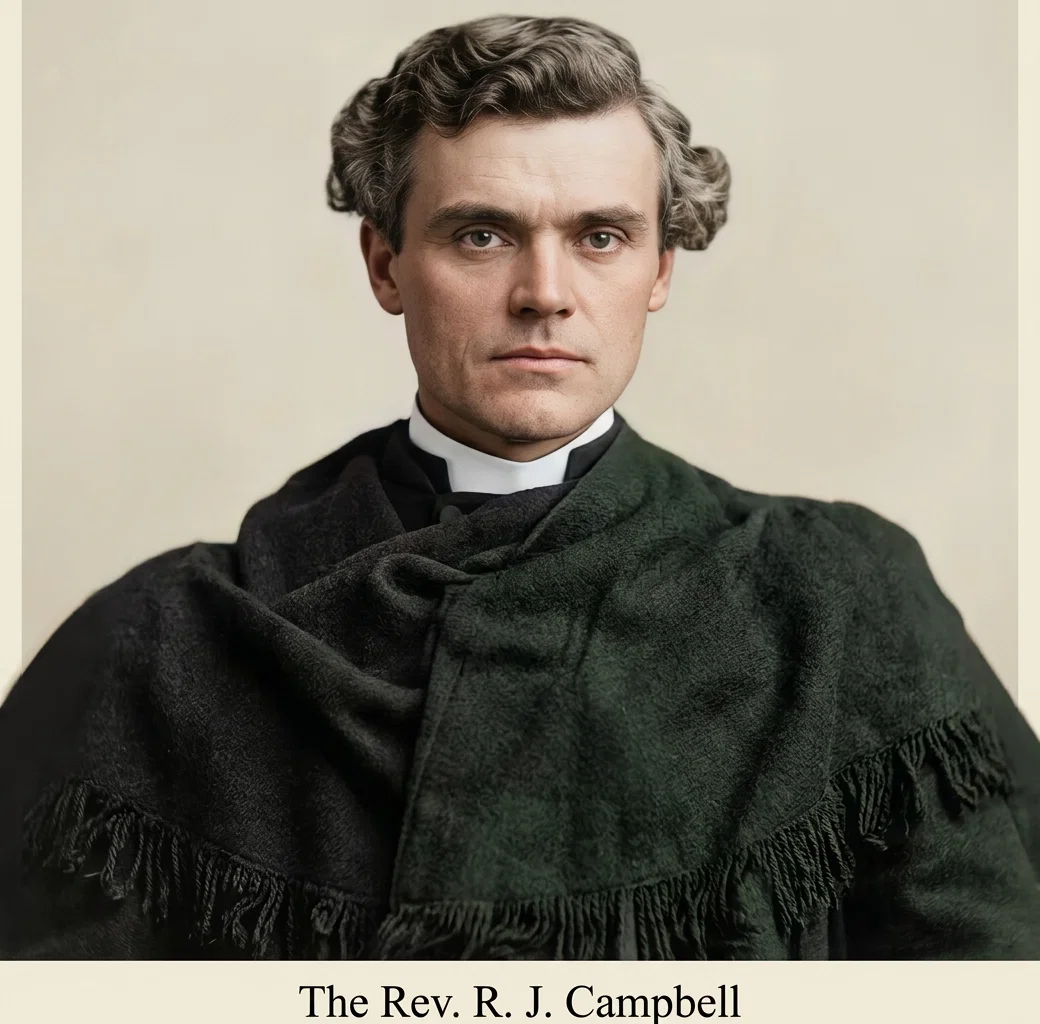
Campbell and the Congregational Union

In the religious world the most interesting event of the last few weeks was the reconciliation between the Rev. R. J. Campbell and the Congregational Union. Mr. Campbell was invited to a recent conference at Nottingham, and there took an opportunity of declaring his personal loyalty to Christ in these words:"Jesus of Nazareth in my experience is inseparable from the eternal Christ. I worship Him. I trust my soul to Him for time and eternity."
The declaration was received with applause; and Dr. Forsyth, who has been, among the Congregationalists, the principal champion of the orthodox theology and the most vigorous opponent of the new, announced that after the avowal made by Mr. Campbell, the conflict between them was at an end. As Mr. Campbell has taken every opportunity since to declare that there has been no change whatever in his views or teaching during the last five years — namely, that every human being is inseparable from the eternal Christ — it is evident that he thinks the reconciliation has been brought about by an advanced move on the part of the Congregational ministry, and not by any retreat on his part. The "new theology" is certainly making rapid and startling progress in many quarters. Whatever language its exponents may hold about Christ, it is not to His saving power, but to a program of social reform, that they look for the uplifting of mankind.

Papal Advancement

The Roman Catholic hierarchy is being reorganized in a way which indicates that, in their own opinion at least, the Church of Rome is making substantial progress here. The bishoprics of Liverpool and Birmingham are now raised to the rank of archbishoprics; while Archbishop Bourne of Westminster becomes a cardinal. Even the national church will not now be able to make such a display of ecclesiastical titles as will the "Italian mission," the term which some Anglican sections apply in scorn to the Romish church in this country.

No Peace Talk Now

The wars and rumors of wars which have resounded throughout Europe of late have entirely dispelled the talk of peace. It is long since public opinion was so pessimistic about the future. Even those who were protesting most vigorously against the insane expenditure on unnecessary armaments, now confess with a sigh that the force of circumstances is irresistible, that we must bear our heavy burden as best we can and look forward to a heavier rather than a lighter load in the near future. One of the shrewdest observers among English journalists, Dr. E. J. Dillon, sees in the keen contest between France and Germany for predominance in Morocco, and in the fact that Germany gets her compensation, not in a free hand to spoil some weaker State, but in the shape of a large slice out of one of the French colonies, an evidence that the world is now fully divided up among the great powers. Henceforth, if these are to expand, it must be at the expense of one another. Dr. Dillon writes thus in the "Contemporary Review":
The Rev. R. J. Campbell
Without being gifted with particularly keen insight, one can discern among the contingencies of the near future the outbreak of bitter contests among the great powers for a redistribution of colonies. In other words, war will be more than ever one of the recognized means of carrying on a struggle for life among the nations. Consequently the one prime necessity for all great powers at the present day, is to prepare for these trials of strength and arm. When formidable armies and navies are become prime necessities of national life, it is suicidal folly to be stingy.
This is the despairing conclusion to which European opinion is drifting. All faith in treaties is disappearing. Men have seen so many torn up lately, and have seen the solemn compacts of the Hague Conference so completely ignored, that they feel it would be folly to put any trust in international honor, and that they must depend upon their own swords for independent existence. Many believe that England and Germany, during the last few weeks, have been within a little of declaring war upon one another. One writer in the "Contemporary Review" says:
The facts are leaking out. In the month of September both sides were prepared to act. Horses were bought. English officers were recalled from leave. In Germany even the reservist got his equipment ready and noted his instructions, the instructions with which every reservist officer is supplied and which he must not divulge even to his wife. In England the secret was well kept; in Germany the rumors were sufficient to produce a panic on the Berlin bourse.
The fact that Mr. Winston Churchill has been transferred from the Home Office to the charge of the Admiralty at this juncture is giving rise to considerable speculation. He is known to favor economy, but it is not believed that he will venture to plead for any retrenchment at this time in naval expenditure.

Italy and Turkey

The course of Italy in her recent dealings with Turkey has been followed with a critical eye from the outset, and disclosures of her ferocious treatment of the Arabs have not lessened the volume or acerbity of the criticism. If the reports that have come to hand are authentic — and they seem to be sufficiently certified — Italy has not made a very promising beginning in her mission of replacing Ottoman misrule with a more civilized régime. There is danger that a "holy war" may be the outcome of the events now taking place in Tripoli. Another possible consequence may be the detachment of Italy from the Triple Alliance in which she is joined with Germany and Austria. There are not wanting, however, apologists for Italy's action in Tripoli, who think that she felt forced to make the move when she did for fear that the opportunity, not seized, would pass permanently out of her reach. The Paris correspondent of the "Times" wrote:
I gather that the chief reasons for Italy's sudden resort to the policy of war were based on the apprehension that the chance of establishing herself in Tripoli was slipping from her grasp. She knew that so long as the Morocco negotiations remained open, France would behave towards her in accordance both with the letter and with the spirit of the secret treaty signed by M. Delcasse in 1901. Once the Morocco question had been settled, it was thought that France, like the rest of the powers, would be sure to counsel delay. "And if we had delayed another ten years," observed one eminent Italian, "the French, by a process of natural expansion of their Tunisian frontier, might gradually have absorbed a great part of Tripoli."
So, judged by the standard in vogue among the great powers, Italy has done nothing out of the way in seizing Tripoli; and if she succeeds finally in her raid, there will be few to condemn the course she has taken.

Likened to 1848

Russia, with its assassinated premier, and Portugal, with its royalist uprising, have each had their difficulties; and Austria and France, like ourselves, have been afflicted with labor troubles of portentous magnitude. No wonder that the most sober sections of the public press have compared the times to the revolutionary epoch of 1848, and have over and over again given expression to the fear that the volcano on which Europe was precariously standing was about to break out in unprecedented eruption. W. T. BARTLETT.
The Rt. Hon. Winston Spencer Churchill
Among the interesting testimony that is produced before the Stanley Committee that is investigating the United States Steel Corporation, is the statement of a gentleman from Minnesota, who testified that in three months' time he and his brothers were stripped by that corporation of more than $6,000,000. Leonidas Merritt was one of the brothers thus defrauded; and he said: "It killed one of my brothers, it ruined other brothers, it left me wrecked in body, and for a time in mind, for I held myself alone to blame. I can not tell how it happened that I went to New York with all these millions and in a few weeks left with nothing." Mr. Merritt accused Mr. John D. Rockefeller of being responsible in the main for the loss of their money, and then when all was gone, the "Rev. Frank T. Gates, chief almoner of Mr. Rockefeller," told him to "walk the ties to Duluth," his place of abode. Not all that appears in the newspapers can be trusted as the veritable truth, but we may know for a surety of enough to establish the fact that this age has placed a lot of men in a position where they are able to use the grinding heel of greed in a most exasperatingly cruel fashion. There is no lack of the pious outward show; but the strength of the Nazarene that was manifested in real kindness and tenderness, and not in the make-believe sort, is most sadly lacking.