MEN are apt to think, when considering the subject of prophecy, that it is a sort of indefinite thing that deals in great generalities but can not be depended on for real detail of definite truth. But so surely as the God of all creation is the God of the Bible, just that surely should we look for absolute accuracy and definite and specific predictions when we enter the realm of prophecy.
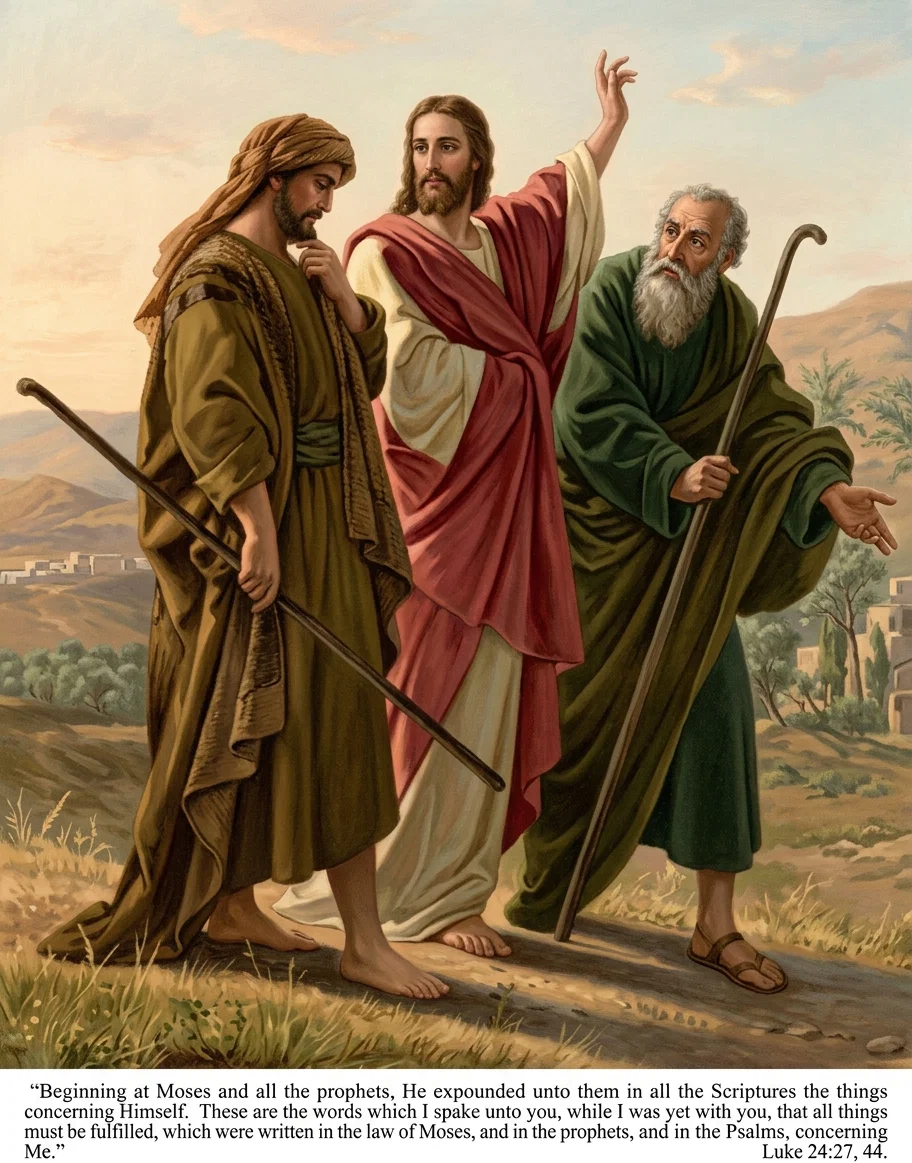
Beginning at Moses and all the prophets, He expounded unto them in all the Scriptures the things concerning Himself. These are the words which I spake unto you, while I was yet with you, that all things must be fulfilled, which were written in the law of Moses, and in the prophets, and in the Psalms, concerning Me. Luke 24:27, 44.
The infinite and all-powerful Jehovah who created every world that we see in the measureless expanse of space, is the one who lays claim to foretell the future. And He claims that He alone is able to do the wonderful deed of reading in advance the millenniums that are ahead, so that as prophecy is unrolling into history we may know that He understands what is to come just as well as He knows what has already passed by. Read one of the Lord's own declarations upon this point:
"Assemble yourselves and come; draw near together, ye that are escaped of the nations: they have no knowledge that set up the wood of their graven image, and pray unto a god that can not save. Tell ye, and bring them near; yea, let them take counsel together: who hath declared this from ancient time? who hath told it from that time? have not I the Lord? and there is no God else beside Me; a just God and a Saviour; there is none beside Me. Look unto Me, and be ye saved, all the ends of the earth: for I am God, and there is none else." Isa. 45:20-22.
God has declared things from ancient times, and there is none of the gods besides Him that can do this. Upon this one point of accurate foreknowledge He challenges all the gods of the whole heathen world. He says in another text:
"Produce your cause, saith the Lord; bring forth your strong reasons, saith the King of Jacob. Let them bring them forth, and show us what shall happen: let them show the former things, what they be, that we may consider them, and know the latter end of them; or declare us things for to come. Show the things that are to come hereafter, that we may know that ye are gods: yea, do good, or do evil, that we may be dismayed, and behold it together. Behold, ye are of nothing, and your work of naught: an abomination is he that chooseth you. I have raised up one from the north, and he shall come: from the rising of the sun shall he call upon My name; and he shall come upon princes as upon mortar, and as the potter treadeth clay. Who hath declared from the beginning, that we may know? and beforetime, that we may say, He is righteous? yea, there is none that showeth, yea, there is none that declareth, yea, there is none that heareth your words. The first shall say to Zion, Behold, behold them: and I will give to Jerusalem one that bringeth good tidings. For I behold, and there was no man; even among them, and there was no counselor, that, when I asked of them, could answer a word. Behold, they are all vanity; their works are nothing: their molten images are wind and confusion." Isa. 41:21-29.
This scripture is also vibrant with the challenge that Jehovah throws out to the whole heathen world. He asks them to bring forward a god that can show something that is to come, so that we may believe him to be a god of some consequence. But since he can not do that, it still remains that the mighty Creator is the only one who can read the future; and because of His infinite powers in every direction, and because of His infinite accuracies and His perfect righteousness, He calls upon us to worship Him as our Father and our God. But read one more of the several scriptures that speak in this same way of the foreknowledge of God:
"Remember this, and show yourselves men: bring it again to mind, O ye transgressors. Remember the former things of old: for I am God, and there is none else; I am God, and there is none like Me, declaring the end from the beginning, and from ancient times the things that are not yet done, saying, My counsel shall stand, and I will do all My pleasure: calling a ravenous bird from the east, the man that executeth My counsel from a far country: yea, I have spoken it, I will also bring it to pass; I have purposed it, I will also do it. Harken unto Me, ye stout-hearted, that are far from righteousness: I bring near My righteousness; it shall not be far off, and My salvation shall not tarry: and I will place salvation in Zion for Israel My glory." Isa. 46:8-13.
Here again the Lord affirms that He declares the end from the beginning; from the ancient times He tells the things that are not yet done. He emphasizes the fact that His counsel shall stand. The man from the far country is called upon to execute the counsels of Jehovah; and since He has spoken it, He will bring it to pass. The Lord makes it clear that He desires that we shall see in the prophecies of the Bible the evidence of His accurate foreknowledge. And as we see these things, we become not only intensely interested, but indescribably delighted in watching the curtain of prophecy unroll into history. We know what is before us in the world, because the prophecies declare it explicitly. We do not look into the future as a great chasm of darkness, but we stand in the focused rays of the search-light of prophecy, and know beyond a peradventure what the future of our world is to be.
The man whose life is spent among the accuracies of true and exact science, and especially the man who devotes himself to the important science of astronomy, ought to be able to see that the prophecy of the Bible is just as accurate in its unfolding as the planets and the stars and their constellations are accurate in all their movements. A New Testament writer speaks on this wise of the dependence we may put in prophecy:
"We have not followed cunningly devised fables, when we made known unto you the power and coming of our Lord Jesus Christ, but were eye-witnesses of His majesty. For He received from God the Father honor and glory, when there came such a voice to Him from the excellent glory, This is My beloved Son, in whom I am well pleased. And this voice which came from heaven we heard, when we were with Him in the holy mount. We have also a more sure word of prophecy; whereunto ye do well that ye take heed, as unto a light that shineth in a dark place, until the day dawn, and the day-star arise in your hearts: knowing this first, that no prophecy of the Scripture is of any private interpretation. For the prophecy came not in old time by the will of man: but holy men4of God spake as they were moved by the Holy Ghost.” 2 Peter 1:16-21.
Observe that the last part of the foregoing quotation says that the will of man was not exercised in giving the prophecies, but men of God were moved to speak. A man who is moved to speak something from God, speaks the words of God. This puts God Himself, and not the man, behind the prophecy. The dark places of this world, and the still darker place of the future that is before it, not to speak of its origin and past history, would be indeed hopelessly engulfed in gloom if it were not for the prophecies that tell us of what is on before. They light up this great sea of darkness for the one who believes and studies the predictions that God has given.
In the foregoing quotation, Peter refers to his experience in the mount of transfiguration. He tells of what he saw and heard on that occasion. And these things that were heard and seen are evidences that we are not following the cunningly devised fables of the heathen oracles when we make known the power and coming of the Lord Jesus Christ. But even these things that he saw and heard are not so sure as the word of prophecy. For, as expressed in the Revised Version, he says, “We have the word of prophecy made more sure.” At first it might seem inconceivable that Inspiration would declare that prophecy is sureer than what we actually see and hear. But when we consider that God Himself moved the prophets to speak the sublime predictions of the future, then we can see that the human element of imperfection is eliminated, and that God alone assumes the responsibility of the prophecy.
In view of what God’s Word says in regard to the dependability of its prophetic utterances, is not the wise thing for us all to study them closely and reverently?