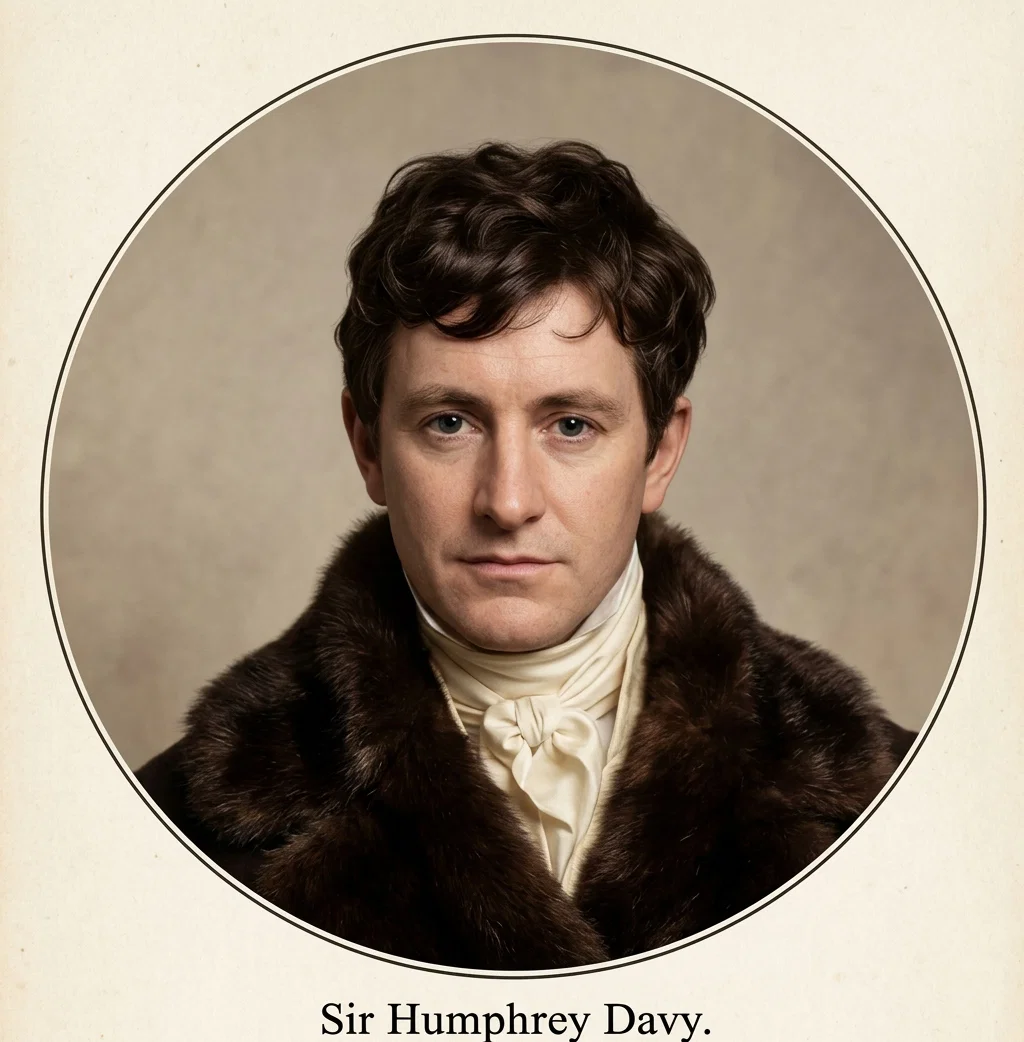
WHEN Sir Humphrey Davy was a boy about sixteen, a little girl came to him in great excitement.
"Humphrey, do tell me why these two pieces of cane make a tiny spark of light when I rub them together."
Humphrey was a studious boy, who spent hours in thinking out scientific problems. He patted the child's curly head, and said:—
"I do not know, dear. Let us see if they really do make a light, and then we will try to find out why."
Humphrey soon found that the little girl was right; the pieces of cane, if rubbed together quickly, did give a tiny light. Then he set to work to find out the reason; and after some time—thanks to the observing powers of his little friend, and his own kindness to her in not impatiently telling her not to "worry," as so many might have done—Humphrey Davy made the first of his interesting discoveries. Every reed, cane, and grass has an outer skin of flinty stuff which protects the inside from insects, and also helps the frail-looking leaves to stand upright.
Talking about children helping in discoveries reminds us of another pretty tale: In 1867 some children were playing near the Orange River, in Africa. They picked up a stone which they thought was only a very pretty pebble, far prettier than any they had found before. A neighbor, seeing this stone, offered to buy it for a mere trifle. He, in turn, sold it to some one else; and so the pebble changed hands, till at last it reached the governor of the colony, who paid $2,000 for it. This stone which the children had found was the first of the African diamonds.—Selected.