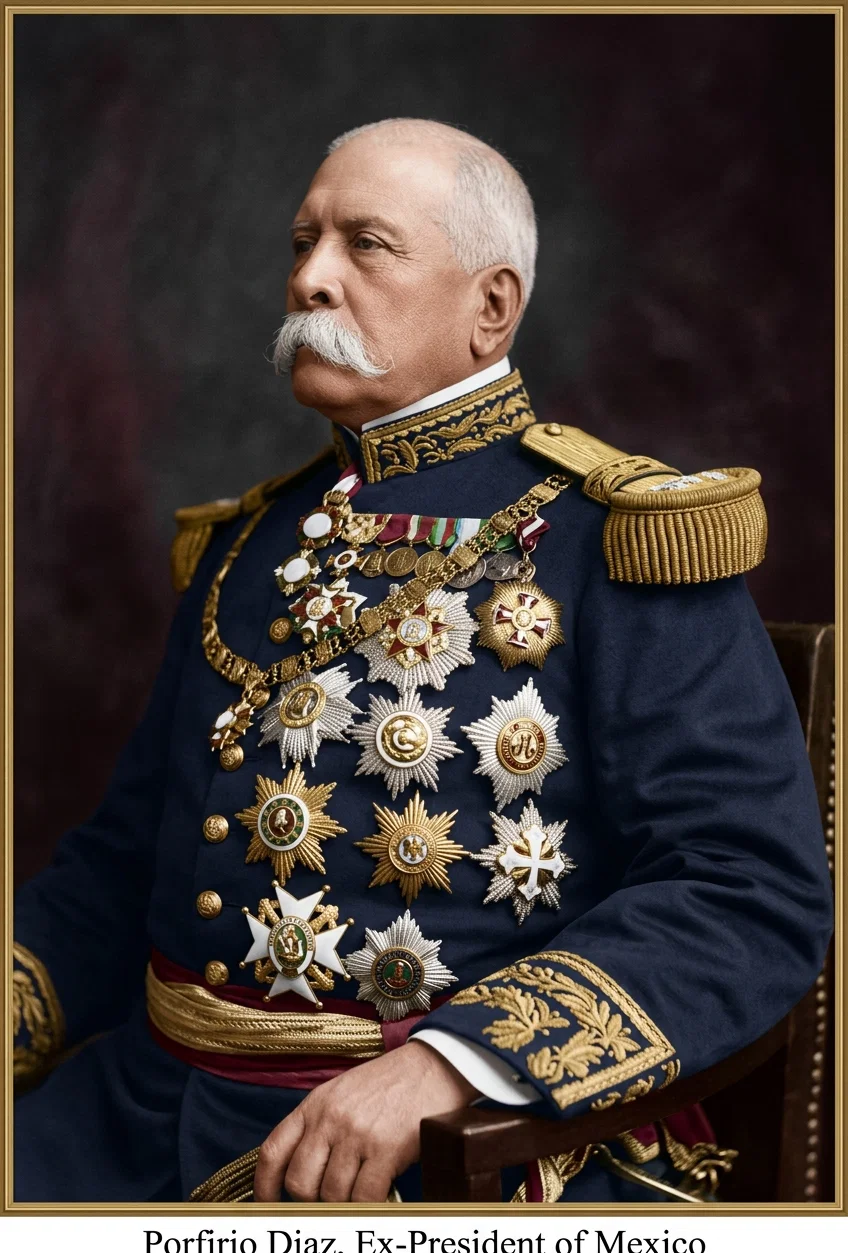
In scores of clubs, societies, churches, papers, and magazines, there has been recently considerable discussion concerning Diaz, ex-president of Mexico, and the future rôle of that government. Comparatively little of the discussion is based upon a personal knowledge of life as it is in Mexico.
It having been my good fortune to attend the Guadalajara high school for several months, and the national school of commerce in Mexico City for almost a year, and having lived for six months as one of the family in a Mexican home of the middle class, I am in a position to judge with some degree of accuracy as to Mexican character, what has been for years the sentiment of the educated class in regard to the Diaz régime, and what are some of the probable fruits of present conditions.
In forming our judgment of our own race, we call to mind the best. We should not judge Mexico by the peon who, after centuries of ignorance and oppression by both Church and State, manifests a deceitful character. Very many of the middle and higher classes are honest, brave, and true. They long, pray, and work for the betterment of their race. Almost to a man the Mexican is polite and excessively generous. Their patriotism is remarkable.
In regard to the Diaz régime, I quote from John Kenneth Turner, whose article in the February number of the "Pacific Monthly" is indisputable. He questions why the multimillionaire, Francisco I. Madero, a man deserving honor and respect, should suddenly turn outlaw, "taking a step that he knew would result in the confiscation of his property, estrangement from lifelong friends, persecution of the members of his family; and for himself, if he failed, banishment or imprisonment, perhaps execution!"
Porfirio Diaz, Ex-President of Mexico
As students of prophecy we may promptly answer, It is because God's will demands universal progress, advancement in education, and individual freedom. God will use the man best suited to fulfil His purpose. The third angel's message means the highest development of body, mind, and soul to the individual Mexican as well as to any one of our own favored land.
This individual development of the masses has been restrained. But God has decreed a "new order of things," that seems to rest largely in the hands of Madero. In more than one instance this man has manifested a character of nobility, honor, and self-sacrifice. One illustration of his honor is shown by his risking his own life to save that of Navarro, a captured general of the federal forces.
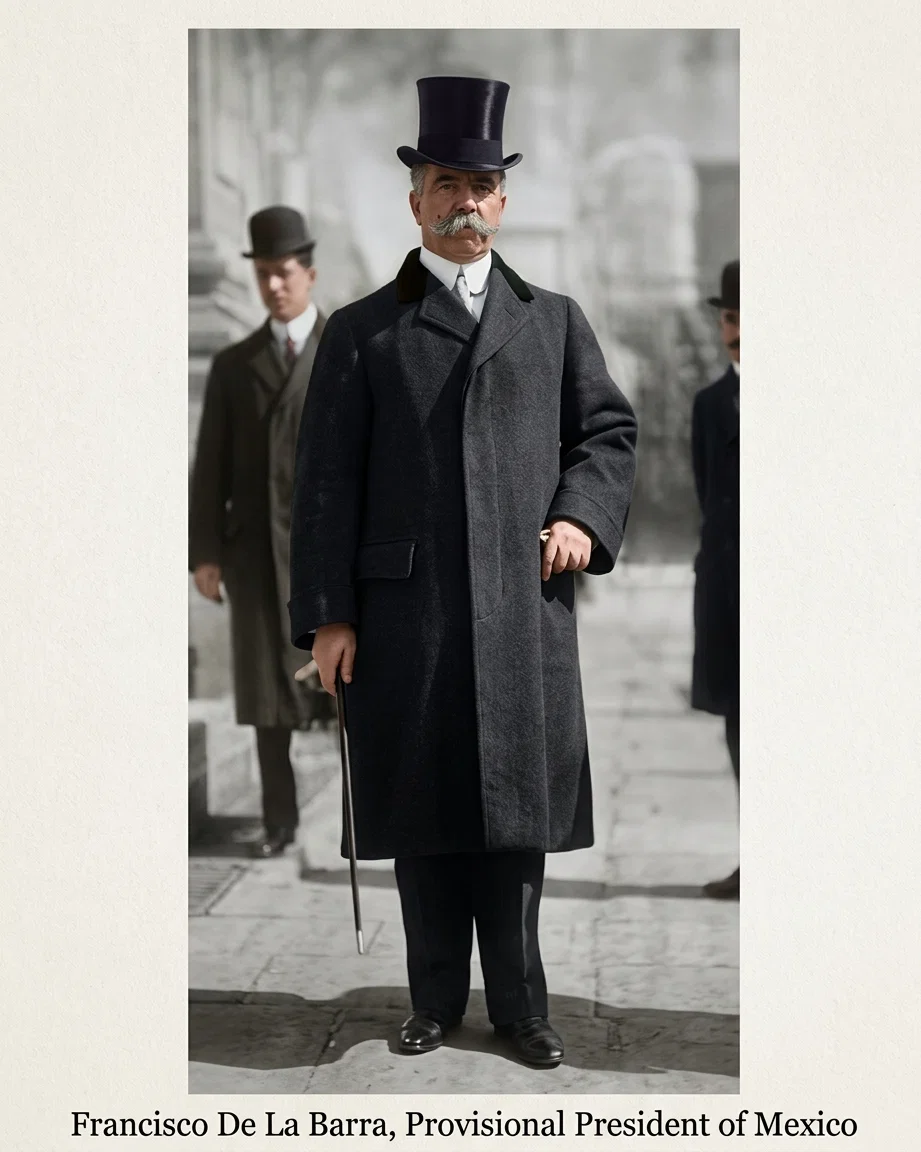
Francisco De La Barra, Provisional President of Mexico
The advancement of Mexico in evangelical, in educational, and especially in industrial lines during the rule of Diaz, is insignificant compared with the contemporary progress of other nations. And yet he is praised as the "maker of his country," as tho individually responsible for whatever benefits his countrymen now enjoy. America's greatest benefactor, Abraham Lincoln, said, "No man is necessary to the State," realizing that there is a superior Power directing in the affairs of men.
If we believe that, for ourselves, rulers obtain their just right to rule by the consent of the governed, should we deny our neighbors the same privilege? We ought rather to congratulate the Mexican republic in its daring struggle to throw off the shackles of graft and selfishness, and make itself wholly free.
Mr. Turner gives us a true glimpse of Mexican life as it was under Diaz:
1. "In Mexico there are chattel slaves, at least three quarters of a million of them — five per cent of the population."
2. "In Mexico there are at least five or six millions of peons — one third of the population. These peons are only slightly removed from chattel slavery. They are bound to their employers by debt, and under such terms that there is no hope of ever paying their debt. . . . The peons have absolutely no opportunities to learn to read or to advance in any way. . . . The system of peonage has expanded during the régime of Diaz, and the conditions of the peons have become very much worse."
3. "The extremes of wealth are far greater than they are in the United States. . . . The typical farm is the million acre farm; the farmer, the man who owns the slaves and the peons — the king of money kings."
4. "In Mexico City, the metropolis of the country, not more than one fifth of the houses within the city limits are regularly supplied with water with which to flush the sewers, while there are many densely populated blocks which have no public water whatever."
5. "According to the Mexican census of 1900, but sixteen per cent of the population were able to read and write."
6. "If justice is meted out in any case, it is justice that is given in charity — not justice that is guaranteed by the State."
7. "In Mexico free speech and free press are unknown. To breathe a word against the government spells ruin."
This view of Mexican life is given by Mr. Turner. I know that it has been the view of the educated class, for I have heard just such things discussed in Mexico by both teacher and pupil. I have seen the political rival of Diaz suppressed, and the unfavoring press quickly silenced.
I insert a few quotations as to the character of Diaz:
1. "The one remarkable thing that Porfirio Diaz has done has been to keep his grip on the reins of power for thirty-four years."
2. "He wanted to rule for life, and he moved along the line of least resistance."
3. "Why have Americans hailed Diaz as the greatest statesman of the age? . . . It is because he has made it pleasant for Americans who happen to be in a position to influence public opinion."11It is argued that the Mexican character is unsuited to the civil procedure of courts, incapable of successful popular sovereignty. Many fear that popular sovereignty will lead to Catholic domination, to less favorable conditions for the advancement of Christianity, etc.
Let me ask, How can Mexican character become suited to proper government except by the actual exercise of their powers in that function? History has proved over and over again that, whatever the condition of the people may be, popular sovereignty means a greater measure of liberty, advancement in social and educational lines, and happiness.
"But the Catholic domination!" cries one in horror. We must leave that with God. While the majority have no right in any country to enact religious laws, neither have the minority a right to hinder such enactments by force of arms. This latter condition prevailed under Diaz.
Nothing can hinder the rapid advancement of God's work in Mexico except selfishness. In the religious as well as in the political sphere, God's plans have often been retarded by the covetousness of His servants.
To me, the Mexican revolution means the clearing away of much rubbish that has impeded modern progress, the open door to a work no less than that already accomplished in the American republic. What shall we do to follow up God's leading? Shall we not in humble gratefulness to God deny our own pleasure, or profit, or personal interest, and throw ourselves into the furrow of Mexico's great need? Dear reader, the call comes to you and to me.