Conditions of Finance

8%

Pacific Press Publishing Association · Mountain View, California · Oct 24, 1911

FromSigns of the Times, Vol. 38, No. 42.

Read the full edition

Conditions of Finance

SEVENTY clerks and eighty-three officials are busily engaged, and will be for some weeks to come, in dissolving the Standard Oil Company into the thirty-four companies that it swallowed up in its monopoly organization. And the decision in this case is pointed to by the big money men of the nation as a warning. This decision has produced an uneasiness that may, in spite of the most careful efforts, result in a general business panic.
Every movement of Mr. J. P. Morgan is closely watched, and the reporters are seeking every opportunity to ply him with questions in regard to the immediate future in the financial world. In a recent visit to Washington, D. C., he is reported through the New York "World" to have said:
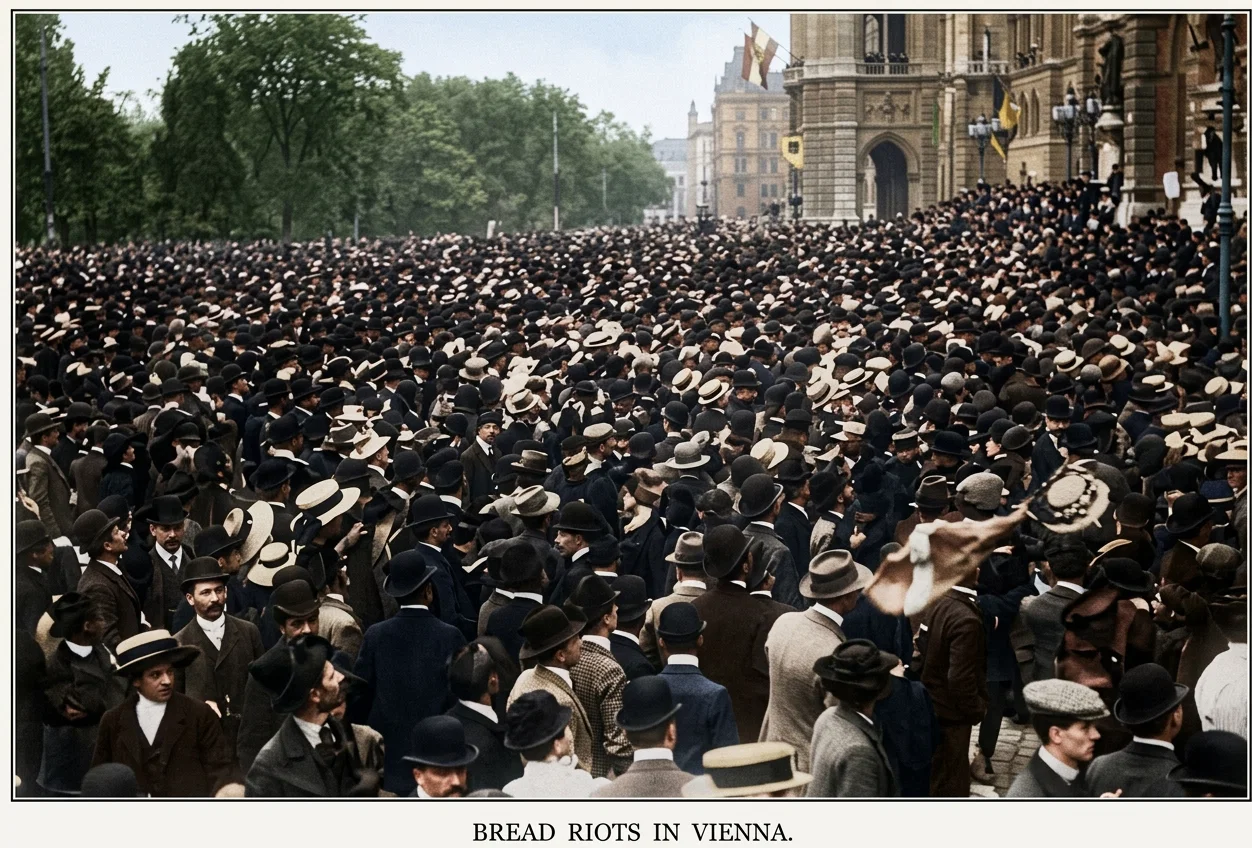
BREAD RIOTS IN VIENNA
The present attitude of the attorney-general toward the major business interests makes for uncertainty, and has made the country apprehensive. The apprehension is not confined to the officers and members of the great aggregations of capital, but to business men generally, whether their interests are with or against the big corporations or simply associated with them.
The foregoing quotation from Mr. Morgan really amounts to a statement that if the great corporations and monopolies are not let alone there will be a big financial panic. And in harmony with his statement are some of the utterances in one of "Holland's Letters" to the "Wall Street Journal." He says:
The abler business men are now convinced that we are entering upon a period of industrial and business depression, occasioned in great measure by the relation now maintained between the Government and what are called the big business interests of the United States. For if the determination of the President and of his attorney-general not merely to proceed against a large number of corporations (the attorney-general says at least a hundred) be maintained, but furthermore, if the Government maintains its present disposition absolutely to hold off, not deigning to give any counsel or in any way to enlighten the managers of these combinations so that they may know whether or not they are operating in conformity with the Sherman law, then it will be impossible to carry on great business in the United States until there has been ultimate determination of this entire matter. That, at least, is the unanimous opinion of the ablest and most reputable business men of this country.
After saying more of the same import, "Holland's Letter" states:
This is the condition which justifies our leading business men in predicting that if the situation be unchanged industrial depression is certain for the next two and possibly three years.
A sentence or two from a concluding paragraph of his "Letter" says:
Instead of mutual trust and coöperation, with intent to promote national prosperity, there has been developed distrust and even open war, or else an armed truce. This is all the more deplorable because the wealth of the country which is in corporate form is at least half the total wealth.
"At least half the total wealth" of the nation has been gathered into the corporations. This gives the corporations the position that enables them to produce a panic if they so desire, but they are not apt to have any such desire as that. On the other hand if conditions arise in the country that throw these big corporations in a position of uncertainty so that they are afraid to risk their capital in various enterprises, business becomes stagnated and a panic is the result whether the big combines want it that way or not. So no matter what may be the motive or the desire, the condition is there. The great aggregations of wealth are such in this country now that about a dozen men hold the balance of financial power, and it is necessary to keep that particular dozen men in a calm, even frame of mind in order to keep the country from being involved in a financial panic.
These great financial men are in a state of uneasiness right now. The foregoing authoritative quotations show it, and there are columns upon columns of additional quotations of the same character that might be given. The financial world is very unsteady, and we know not what a day may bring forth. The social world is very unsteady, particularly in the field of labor, and the outcome is looked forward to with anxiety. The war spirit is rampant, despite the heroic efforts that many good men and women are putting forth to secure a lasting peace. But there is not a single particle of it but what is on the prophetic program, and we may know definitely the meaning of it all if we will. T.