A Discounted Bible

3%

Pacific Press Publishing Association · Mountain View, California · Jul 25, 1911

FromSigns of the Times, Vol. 38, No. 29.

Read the full edition

A Discounted Bible

STRIKING and significant indeed is the tremendous fact that the great Protestant religious world of to-day has largely — yes, almost universally — departed from its old position of faith and trust in an inspired and authoritative Word of God.
Few indeed, comparatively speaking, are the preachers and teachers who now present to their auditors the unmodified statement of the apostle that "all Scripture is given by inspiration of God, and is profitable for doctrine, for reproof, for correction, for instruction in righteousness."
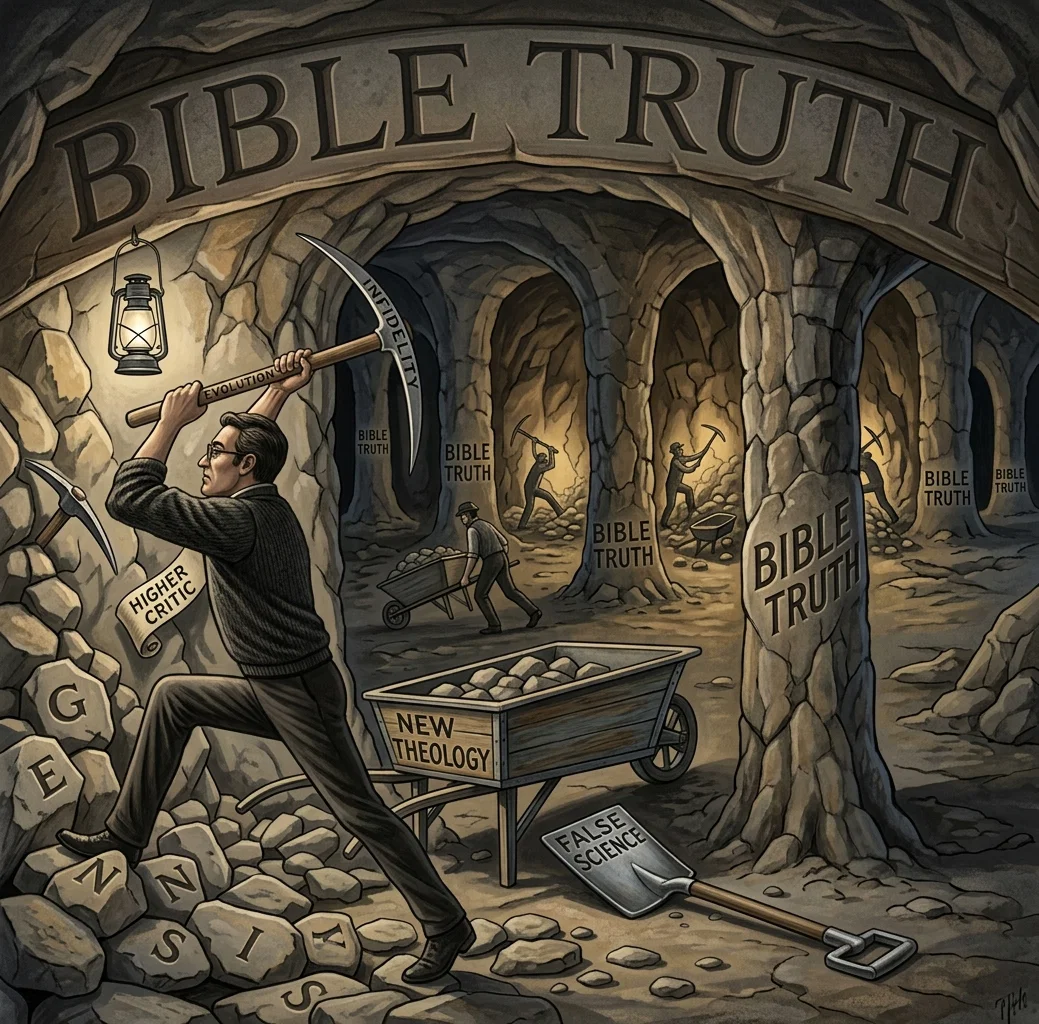
UNDERMINING THE FOUNDATIONS
It is but little more than a year now since Harold Bolce, in the "Cosmopolitan," brought the charge that in our great universities and colleges our leading educators in many instances were instilling into the minds of their pupils principles of infidelity that completely undermined their faith in all those truths which have proved the very safeguards of morals, the absolute foundations of righteousness and life. Of course, a multitude of apologists at once rushed into print to register their denials, and to make it appear that Mr. Bolce had entirely misjudged the situation. But the evidence given in many instances was unimpeachable, and only those who refused to see could for a single moment believe that the truth had not been told.
And who does not know that the younger men who to-day occupy the pulpits of our leading churches, have come from these very universities whose theological departments are honeycombed with this same infidelity of which Mr. Bolce wrote? And it requires but the slightest effort in the line of inquiry to ascertain that these YOUNGER ministers openly boast of their ability to prove that much of the Bible record is mere literary trash, antiquated and obsolete.

A Note of Warning

The terrible extent to which this infidelity has developed is not appreciated as it should be. Occasionally, however, somebody comes into actual touch with the facts as they are, and immediately sounds a note of warning. Here is one from a Baptist brother, found in "Word and Way," under date of December 29, 1910:
These words of Ruskin's [found in the preceding paragraph] can apply no more pertinently to any phase of modern indifference and criminal complacency in the face of neglected duty and vanishing opportunity than that which has characterized the attitude of our Baptist leaders, preachers, and churches, and which they still maintain toward the awful rising tide of looseness in practise and discipline and heresy in doctrine which now threatens with irresistible force and unimpeded momentum to sweep away the last landmark of Baptist belief and the last vestige of Baptist faith; to leave Baptists without any place of anchorage and without a reason for existence.
If in the last hundred years of Baptist educational zeal and activity, with the millions of consecrated Baptist money that has been put into our schools, colleges, and theological seminaries, we have been able to build nothing better than modern hotbeds of "higher criticism," skepticism, and infidelity that would put Huxley, Darwin, and even Voltaire and Tom Paine, to shame, and that turns out a brand of "theology" that . . . Bob Ingersoll could have swallowed down all at one dose without blinking, then it is high time for Baptist men and women and Baptist churches to stop giving their money and their influence to the support of such schools. . . . Our greatest danger from them lies in retaining them under the Baptist name, giving them Baptist support, sanction, and patronage, until they have saturated our pulpits, our denominational press, our publication societies, and especially our Sunday-school and young people's literature, with the rank poison of their unbelief and infidelity, their scorn and contempt of the Bible, their mocking evasion of the doctrine of the divinity and lordship of Jesus, and their utter repudiation of the personality and work of the Holy Spirit.

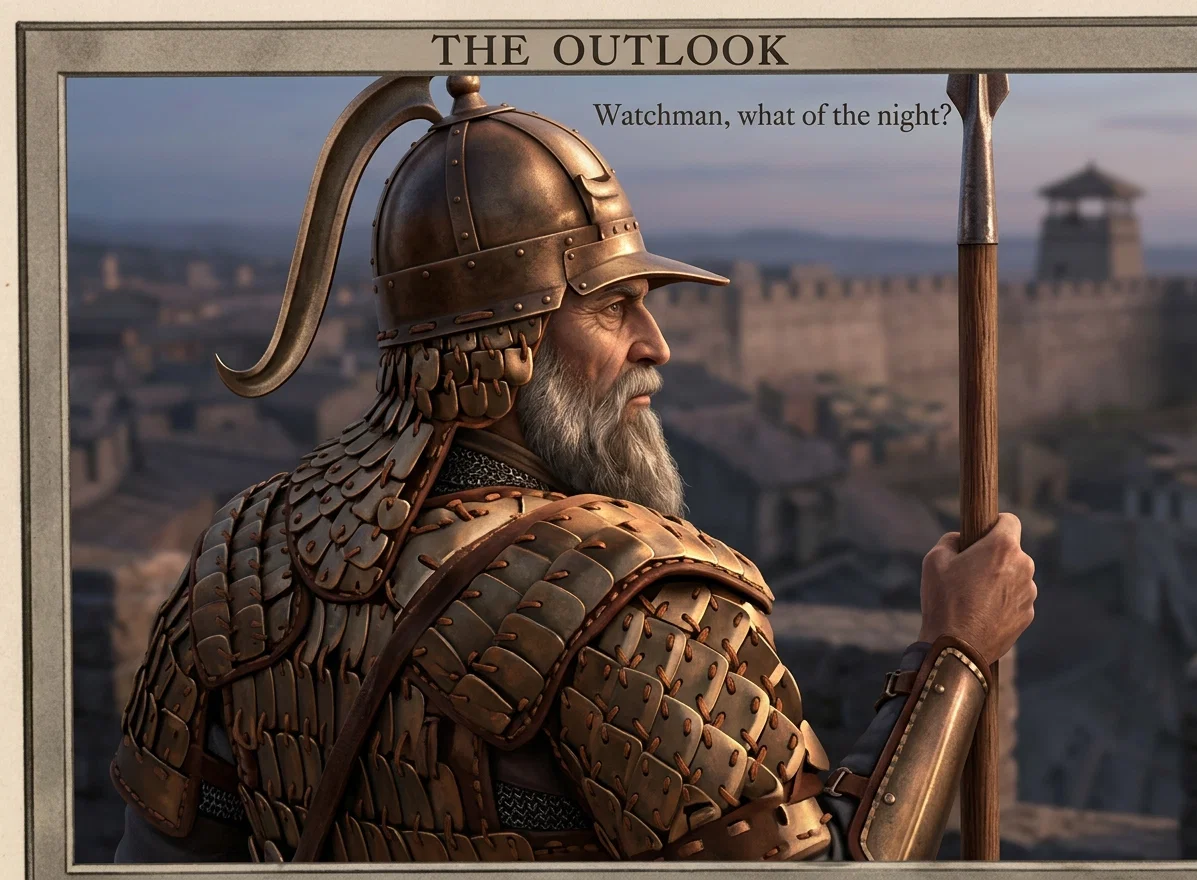
Battering at the Citadel of Faith

After the same order speaks the editor of the Baptist "Examiner" (New York):
Some of our pastors and teachers, not satisfied with abrogating, on their own motion, long established usage with respect to the ordinances of the Gospel, are now battering away, with the catapults of argument and ridicule, at the very citadel of our faith as Baptists, the New Testament, repudiating its authority, denying its inspiration, and claiming the right to depart from its teachings when these do not square with their own opinions.
There is unmistakable evidence of a trend toward a denial of the divinity of our Lord, toward the doctrine of universal salvation, a repudiation of the atonement of the cross, and a conception of the kingdom of God as a society, not of men and women redeemed by the blood of Christ, but of all respectable, well-behaved people, whether they believe on the Lord Jesus Christ or not.
Such ideas as these are proclaimed from our pulpits and professional chairs with constantly increasing boldness, and they are having their effect. Our own is not the only denomination infected by them. They are in the air, and are regarded by many as a necessary expression of the spirit of the age. [Bold-face mine.]
It is all too true that the Baptist denomination is not alone in this trend toward infidelity. While "MULTITUDES OF BAPTISTS are mourning to-day over the assaults of their leaders upon the integrity of the Bible," there are multitudes of other churches having the same experience.

The Leaven at Work

"Current Literature" (April, 1910) tells us that "whether for good or for ill, the modernist ferment is working in all the churches." It mentions in particular the Baptist, Congregational, and Methodist bodies as illustrations, and quotes from Dr. William Henry Burns, "for more than twenty-six years either a pastor or presiding elder of the Methodist Episcopal Church in Chicago." Speaking of church conditions generally, Dr. Burns says:
Dr. Crocker [to whose teaching he has just referred] is mistaken. What he calls damnable heresy does not walk. It rides in its ecclesiastical automobile, as did Ahab in his chariot; and when it overhauls some modern orthodox Elijah trudging along the dusty highway on foot, it imagines it can see the moss growing on his bare, bent, Biblical back, and if it does not run over to crush him, it cries out to him, in the spirit of a true "heresy" hunter, "Art thou he that troubleth Israel?"

The Decided Trend

Ah, there is no doubt as to the trend of the times. Higher criticism, the professed friend and defender of Christian truth, has proved itself Christianity's most subtle and able enemy. When men like Harnack and Boussetand many others of the same stamp, rise up and make open attacks upon the doctrines of the divinity and resurrection of Christ; when they explain away the miracles, and account for them upon purely scientific grounds; when New Testament teachings are so changed that even the most orthodox Jew no longer finds in the Christian faith anything objectionable, — then we may know that the limit has almost been reached.

From the View-Point of the Modern Jew

A prominent Jewish writer, after speaking of Harnack, says:
Already a large percentage of Christian pastors confess that they no longer believe in the divinity of Christ. Only official Christianity still carries the fetters of the dogmatic teachings of the church. Harnack's free and open position is all the more significant from the Christian point of view, because he has removed those very things in Christianity which were a stumbling-block to the Jew. And if this process of elimination continues consistently and logically, there will soon be nothing left in Christianity except what is distinctively Jewish.
One is OFTEN reminded nowadays by "higher critics" and their followers, of the foolishly wretched teachings of Origen, the semi-pagan, Platonic, philosophic "higher critic" of the fourth century. Of the Bible Origen said, "The Scripture interwove in the history some event that did not take place, sometimes what could not have happened; sometimes what could but did not." "Who is so foolish," he wrote, "as to suppose that God, after the manner of a husbandman, planted a paradise in Eden, . . . and placed in it a tree of life?" "Countless instances of a similar kind," he added, were to be found. "Nay, the Gospels themselves are filled with the same kind of narratives." I say we are often reminded of Origen's belittling of the Bible, by present-day teachers. For example, the noted Rev. R. J. Campbell, of London, England, recently gave his audience to understand that Christ's feeding of the multitude was not a literal event, but only symbolic. "The feeding of the multitude," he declared, "was not a feeding of the body, but a feeding of the soul with the bread of life."

The Whole Bible Attacked

Time was, and not many years agone, when but small portions of the Bible were made the objects of attack, and by comparatively few men. The book of Job was a mythological tale, Jonah's prophecy a fish-story. To-day, however, every book from Genesis to Revelation is under the fire, not of the few, but of the many. One is really out of style now who does not know how to insinuate some doubt regarding the reliability of the Word of God.
To close this article, let a few samples of present-day discounting of the Scriptures be offered in evidence. We "accept the Bible," says a recent writer, "as a medium of truth, but insist upon rejecting what is not reasonable in it. . . . We give it high and honored place as the record of religious thought and progress in the past, but not in any sense as an infallible guide in the present."
Prof. Gerald B. Smith, of the divinity department of Chicago University, declares that "in the investigation of the Old Testament religion it has been found that many of its elements were derived from Israel's contact with Babylon." "I am opposed," writes a German professor, "to having schoolboys and girls taught that the narrative about the world being made in seven days is true, or that there is any veracity in the statements that man was made of clay, that life was breathed into his nose, and that woman was made of a man's rib. I object to the tales about the ten patriarchs."
But God's Word still stands sure. To those who regard it only as "the word of men" (1 Thess. 2: 13), it can bring no blessing; but to those who receive it "as it is in truth, the Word of God," it will prove the power of God unto salvation. By the Spirit of our God it is still translated into human experience, and till time is no more it will continue to be man's anchor Rock, his everlasting good hope. C. L. TAYLOR.