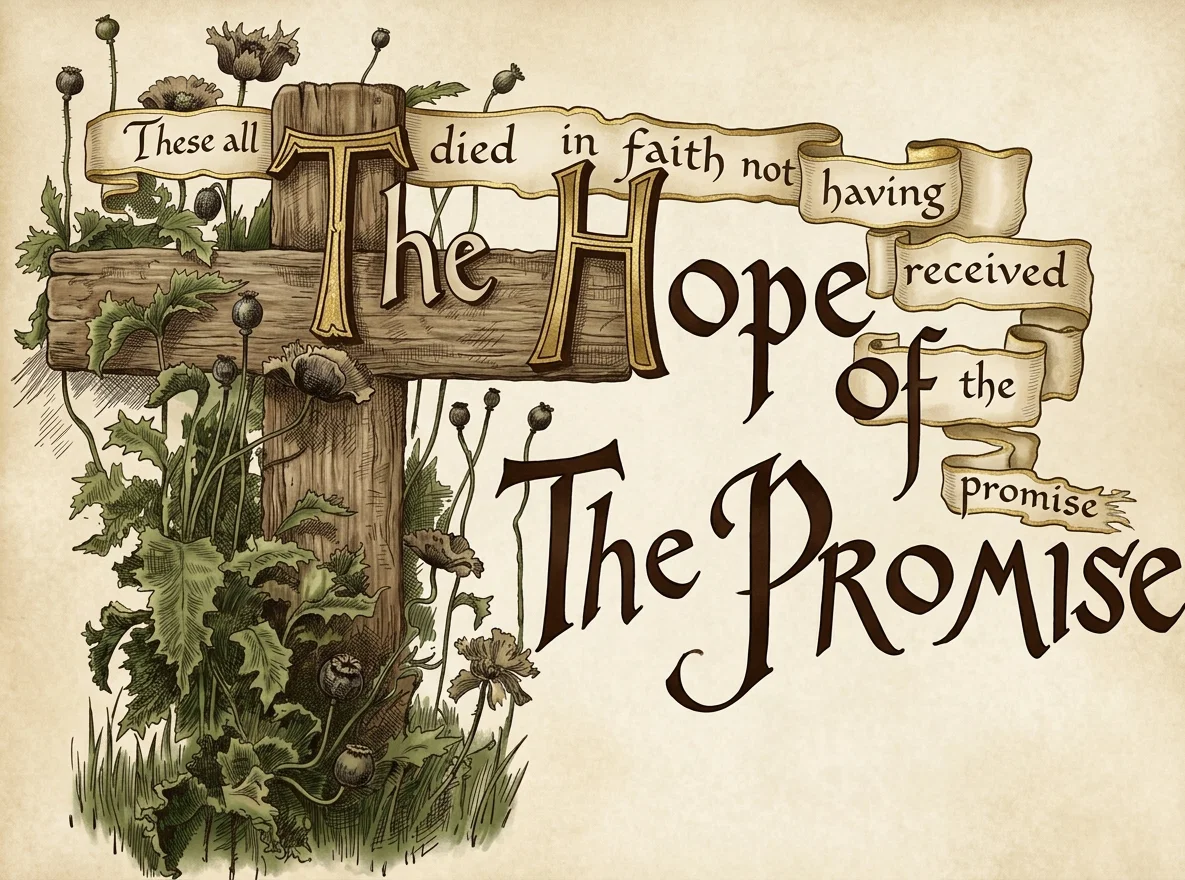
A PROMISED REDEEMER

17%

Pacific Press Publishing Company · OAKLAND, CALIFORNIA · May 13, 1897

FromSigns of the Times, Vol. 23, No. 19.

Read the full edition

A PROMISED REDEEMER.

THE prophecies relating to our Lord and Saviour Jesus Christ form a golden chain whose links extend from that first promise in Eden. "I will put enmity between thee and the woman, and between thy seed and her seed; it shall bruise thy head, and thou shalt bruise his heel" (Gen. 3:15), down to the latest prophecy of the Old Testament, "Behold, I will send my messenger, and he shall prepare the way before me; and the Lord, whom ye seek, shall suddenly come to his temple, even the messenger of the covenant, whom ye delight in" (Mal. 3:1). Through faith in the promises, our fathers the patriarchs, and indeed all Israel, looked forward to the coming Redeemer, the "Hope of Israel." It is said of those ancient worthies: "These all died in faith, not having received the promises, but having seen them afar off, and were persuaded of them, and embraced them, and confessed that they were strangers and pilgrims on the earth." Heb. 11:13.
It is most interesting for us who live in this Gospel day to look backward and trace the prophecies of the Old Testament down to their exact fulfilment, as recorded by the evangelists. God called Abraham, the "Father of the faithful," from that far-off region, Ur of the Chaldees; he was commanded to leave his country and his kindred and his father's house, and to go into an unknown land, with this promise: "I will make of thee a great nation; . . . and in thee shall all families of the earth be blessed." Gen. 12:2, 3. This promise was renewed successively to Isaac, to Jacob, and to David, the king of Judah, in whose royal line the Saviour was to come. Even his birthplace was pointed out, and this miraculous sign was given by God, through Isaiah the prophet: "Behold, a virgin shall conceive, and bear a son, and shall call his name Immanuel." Isa. 7:14.
Isaiah, who is often called the evangelical prophet, described so accurately the life of humiliation, the sufferings and death of our Lord, more than seven hundred years before the events took place, that their fulfilment alone proves beyond doubt the inspiration of the sacred Word, for they are fulfilled even to the minutest particular. Infidels may scoff and cavil at God's Word, but who can "declare us things for to come," "and show us what shall happen"? Yea, "show the things that are to come hereafter, that we may know that ye are gods." Isa. 41:22, 23. "Who hath declared this from ancient time? . . . have not I, the Lord? and there is no God else beside me." Isa. 45:21. "Declaring the end from the beginning, and from ancient times the things that are not yet done, saying, My counsel shall stand, and I will do all my pleasure." Isa. 46:10.
"Watchman, tell us of the night, What its signs of promise are. Traveler, o'er yon mountain's height, See that glory-beaming star!" AUGUSTA W. HEALD.