Affairs in Portugal

8%

Pacific Press Publishing Association · Mountain View, California · May 23, 1911

FromSigns of the Times, Vol. 28, No. 20.

Read the full edition

Affairs in Portugal

From Our Own Correspondent
Six months have passed since the Portuguese freed themselves from two heavy yokes, and they surely have demonstrated stability in governing themselves and cleaning up the rubbish of many years. One measure was taken in giving the workingman the right to strike. Then followed a lengthy series of strikes, gas makers, street-car and railway employees, shoemakers, and sewing girls, all desiring an increase of wages and less hours of work. They were very orderly; and with one exception in the city of Setubal, there was no great trouble, altho many companies are foreign. Owing to misunderstandings, two ministers spoke of retiring from office; but large delegations begged them to stay, and having the confidence of their colleagues and the people, they kept to their posts of duty.
Ever since the revolution the Jesuits, who fled or were banished, have kept up a continual propaganda in foreign papers against the republican government and people. Many false telegrams were published, with other calumnies. And it is not to be wondered at if the "Signs of the Times" has published some of the same. Altho the hatred against the priests seemed to be great, yet this was forgotten in the victory. Only two priests were shot, and these had guns in their hands. Lourenzo Mattos, the Jesuit editor of the journal "Portugal," escaped to Spain, and was not shot and dragged in the streets. The convents were attacked because they were centers from which the people were fired on. Arms and ammunition, besides a great amount of provisions, were found. So far as I can judge, the monks and nuns were very well treated, considering everything. Near where we lived, over nine hundred priests were imprisoned in a fort. I chanced to come into Lisbon on the same train with twenty-one priests who were conducted by a company of soldiers. These were met by cavalry in Lisbon and taken to the Ministry of Justice. The people made no special demonstrations.
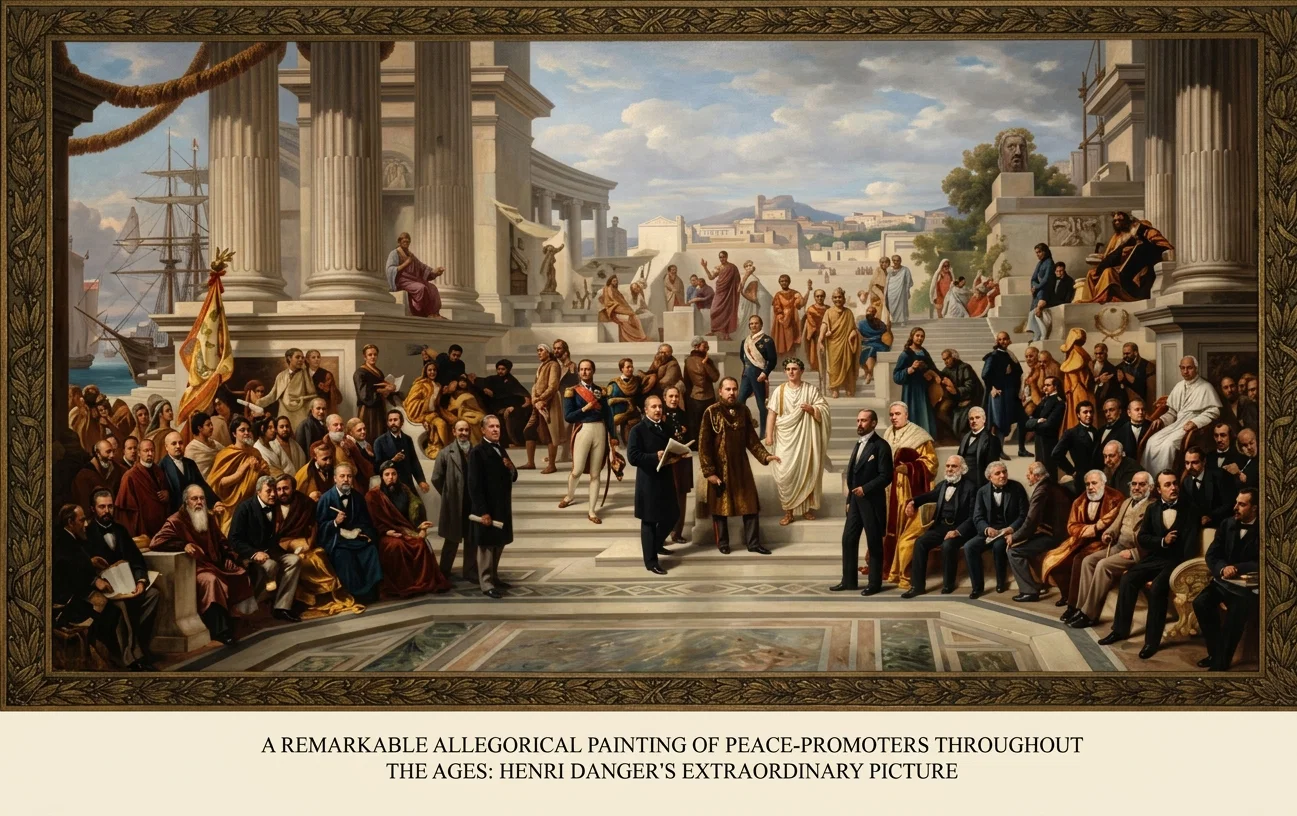
A REMARKABLE ALLEGORICAL PAINTING OF PEACE-PROMOTERS THROUGHOUT THE AGES: HENRI DANGER'S EXTRAORDINARY PICTURE
One early decree was to give freedom and protection to all in their religious worship. The Protestants sent in messages, as also did the Portuguese mission of Seventh-day Adventists. In the cities all Catholic processions in public are prohibited; while in villages where all are Catholics they are allowed. The law for the separation of Church and State has been delayed. One reason is that if decreed so soon many would have thought the law was anti-religious. Many priests have taken advantage of the delay, in arousing the people against the government. The bishops were the leaders. However, the government took energetic measures, deposing one bishop, and imprisoning priests.
In the month of January Bishop Hartzell, of the African Methodist Episcopal Church, with Mr. Robert Moreton, sub-director of the British and Foreign Bible Society in Portugal, as interpreter, had an interview with the Minister of Justice, Affonso Costa, and Minister of Colonies and Marine.
The organ of the Methodist Episcopal Church in Madeira, called "Voz da Madeira," in both English and Portuguese, published the same as written by the bishop and examined by the minister. With respect to the general plan of the government in religious matters the following was declared:

NO. 1

Religion in the public schools and work in private religious schools was also talked about. A spirit of justice to all is kept uppermost. We will give the words of the interview on this point.

NO. 2

Many Protestants here can not bear the thought of having religion taken out of the schools, and advise a change of the religion to be taught. Even the bishop seems to have ideas along this line; but Mr. Affonso Costa has a better understanding of the proper use of public funds and the separate places religion and State should occupy.