LETTERS

5%

Pacific Press Publishing Association · Mountain View, California · May 23, 1911

FromSigns of the Times, Vol. 28, No. 20.

Read the full edition

LETTERS

TO A DAUGHTER By a Mother

Choice of Life-Work—Importance of Habit—Promptness—Neatness—Order
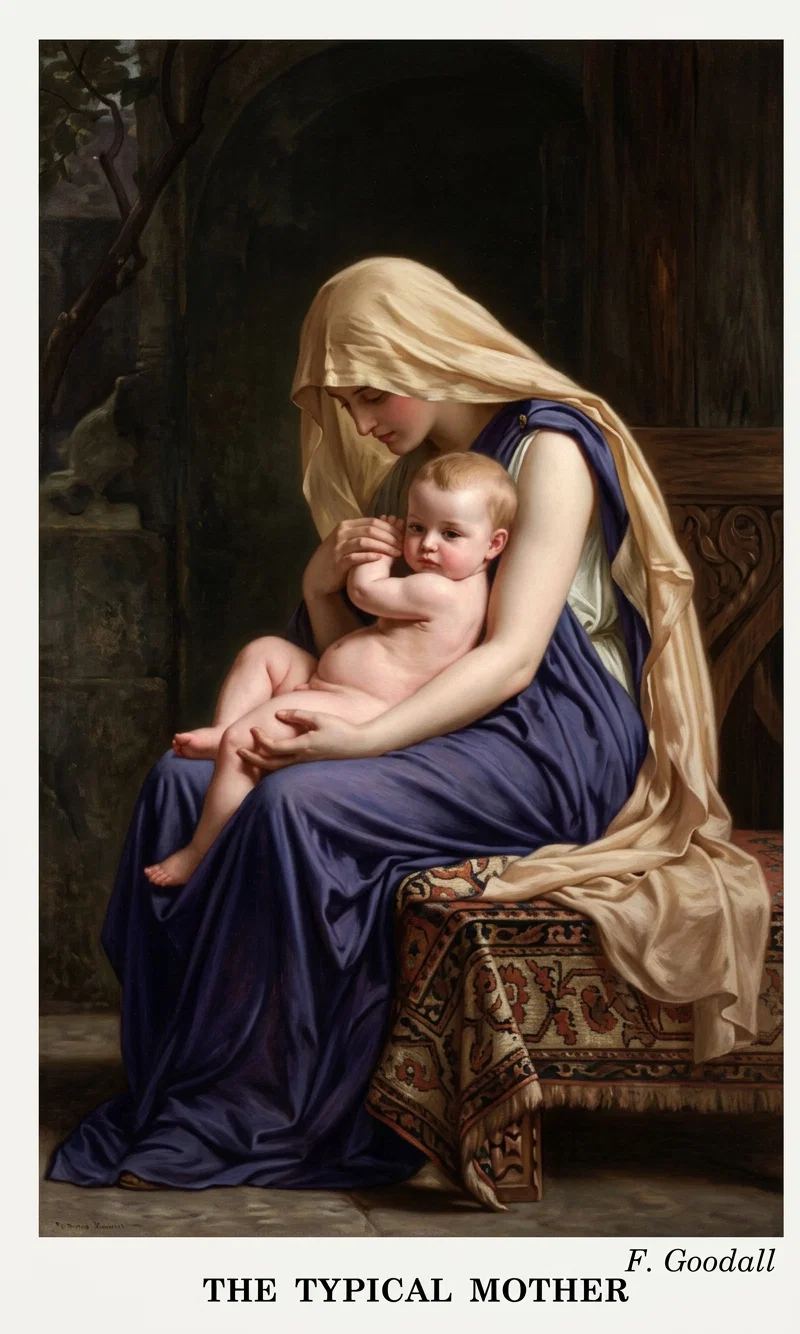
MY DEAR DAUGHTER: Since you have left us, my heart has been filled with thoughts of you. Not with anxious thoughts, my dear, for I know I can trust you to do your best. I feel that your heart and purpose are fixed. Still, at this budding time of youth, this period of greatest possibilities, this time in which the shade and coloring of your whole life will be cast, there is so much which will make for or against its brightest attainment, that I feel I must write you many things.
In the quiet hours of the night, when thoughts of you are sweeter than sleep to the weary body, when before the Father's throne I talk about your beautiful life as I see it perfected before me, these thoughts come tumbling over each other in such profusion, I feel I have a volume at my tongue's end to speak to you. I have no fear, my daughter, that you will think mother is sermonizing, and lightly lay aside my letter; for I remember with comfort that once when I wrote you in this strain you answered quickly, and told me how precious my words seemed to you, and expressed a wish that I would write you again concerning these things. You were a schoolgirl then.
It has been with holy gladness of heart that I have watched your developing womanhood, and your choice—your own free choice—of life-work. I am glad you have chosen to be a trained nurse, for in it, I believe, more easily than in any other, you can follow the footsteps of your Elder Brother, the Holy Comforter of Galilee.
Now, dear, you have gone to your training, and for a time at least (to mother it seems such a long time) you will be away from us, and I shall give you in instalments the thoughts of my heart to you-ward.
We have prayed and studied carefully to know the best school, that which would afford you the best experience in the care and treatment of the sick, and would fit you best to help lift the standard of nursing higher wherever the Master might direct you to work later on. You may have to stand alone as a light-bearer of the third angel's message; hence the necessity of your leaning hard, my dear one, very hard, on the arm that will never fail.
Dwell often upon the "vision" of a life filled with love and service; and strive daily, hourly, that you may not be disobedient to the "heavenly calling"—for such I think we may rightly name it; for have we not sought earnestly for guidance in making this your life-work?
Now will begin in earnest the work of crystallizing your ideals into character building as no experience it has been your privilege to have in the past has done. Right here I want to recall to your mind what I have often tried to impress, the great value of habit in perfecting those qualities that will make for success in the profession you have chosen. Some one has defined habit as "aptitude from frequent repetition," a force as strong for good as for evil, whose strength you can never appreciate until you undertake to break a bad habit once fully formed. Make habit, then, your all in strengthening those traits of character and those practises of life that will make you most able to serve and hence most successful in your profession.
Probably the first thing that will impress you as you enter upon your training will be the exactness with which every item of your daily task will be required. If I have been rightfully informed, your first months, several of them, will be put in at bed making, sweeping and dusting, washing dishes, pots, and kettles, cleaning of toilets, etc. I did not tell you of this—I did not need to. I am sure you will not be daunted by it, nor falter for one moment. You may wonder what all this has to do in training you for your life-work; but as you proceed you will see its bearing and be thankful for it. I deem this the most important part, one of the fundamentals of your training, not alone for your chosen profession, but as tributary to that other calling, the highest ever given to woman, that of home making. Remember this always: Your work, whatever it is, however small or menial, will be characteristic of all your work, however exalted. If you are prompt at your scrubbing of tiling, toilets, halls, etc., in the morning, you will also be prompt at the bedside of the suffering to whom you are called to minister. Let me urge you to strive to make every step of your work complete. Look out for the hidden corners. Let not one particle of dust be left there any more than you would wear a stocking with a hole in it ever so small, or hide away or cover up an unclean thought.
I want to emphasize this matter of promptness. It is nearly always a matter of habit when one is a little behind in meeting an appointment or in coming to the table. Begin right in this respect, and hold to it as for your life. By so doing you will in the end save much valuable time to yourself. What is more, you will avoid doing great injustice to many others, whom you will rob of much valuable time otherwise.
It goes without saying that your own person should be immaculate. Your hair must be neatly dressed before you leave your bedchamber, your gown and apron neat and clean. Before you retire at night see that you have the wherewith to do this. I have often thought what must be the disappointment of a young husband when his bride appears in the kitchen with disheveled hair and untidy dress. It is not to be wondered at that his ideals of home life crumble and his ambitions wane.
But after you have been prompt in your every duty and thoro in the discharge of every detail, one very important thing rests with you in order that this neatness may prevail. I have seen people who were prompt and neat in the extreme who nevertheless lived continually in the utmost confusion. It is said that any one can clean a house, but it takes a fine housekeeper to keep it clean. The secret of this can be told in the story of a little mother whom I once visited. She was a frail little woman, and she had four little ones all under eight years of age. She had no one to help her, yet her house was in perfect order. Of course the babies had their playthings in moderation, and when they were playing with them they were in the middle of the floor; but when they were not, as if by magic the floor was clear. I asked how she kept her house thus. "Simply by having a place for things and putting them in it. If I didn't, I would lose my mind," she said. This principle she instilled in her children in their babyhood. I stayed a week with my own two babes, and was simply amazed at the ease with which she entertained us, never hurried, never apparently weary. Those children have since grown to be veryaccomplished and useful young people. This is why I have so often urged you to keep your room, your wardrobe, and your bureau drawers in order. You ought to be able to find any article of your belongings in the dark.
I am glad, my dear, for just the experience you are having right now. Write me often. Your affectionate— Mother.
—**—