Among the Nations

3%

Pacific Press Publishing Association · Mountain View, California · Oct 10, 1911

FromSigns of the Times, Vol. 38, No. 40.

Read the full edition

Among the Nations

The Outlook

Great Britain
THE unrest of the last few months continues. While many of the local disturbances of a week or two ago are just now quiet, matters are not by any means settled. The commission appointed by the British government to inquire into the labor situation there is at work; but we are again told that if the decision does not meet the demands of the laborers, we may expect a renewal of the strike. It is everywhere admitted that there has been a decided advance in the cost of living, and this must indeed be felt by men who are receiving only from $3.75 to $6.00 a week. It seems, looking from the standpoint of the better paid American laborer, that it would be simply impossible to live — to support a family — on such wages. In fact, it is a common complaint among apprentice boys and girls in this country that it is quite impossible for them to live — to board, room, and clothe themselves — the first year or so of their apprenticeship, even tho their initial wages are $5.00 a week. What must it be for families when food prices are quite as high as they are in America?
The solidarity strike, to coin the term (for that is what Great Britain had to face), has been a new thing for the English people. It evidently, however, has come to stay. It is a tremendously potent weapon. It exceeds, in its power to impose hardship upon the public in general, anything which the trusts have yet devised. The great combinations of capital, and corporations which supply the world with food and clothing and control prices on all commodities by which men exist, draw their support from the whole mass of people which consume their products, and whenever they so desire, increase the price, even tho it saps the life of the community. The recent rise in the price of sugar in America is evidence of that. Seemingly without any reason whatever, the price has been advanced. It adds a few more millions to the already over-wealthy owners of the sugar trust, but it adds to the pinching poverty of the millions. A dog can live longer, however, if his tail is cut off inch by inch, beginning at the end, than when it is taken off at one blow directly behind the ears. The solidarity strike effects its purpose somewhat after the latter fashion. It means that when one organization of labor has grievances, all have grievances; and whenever there is a strike on the part of one organization based on a principle common to them all, that all shall join. Of course we can see what the effect would be by what the effect was in England. In a few days more it would have practically brought starvation to the whole island; and while there would not be so much danger in a country like America, still it would bring very great hardship indeed.
Trans-Atlantic Co. photo

Germany

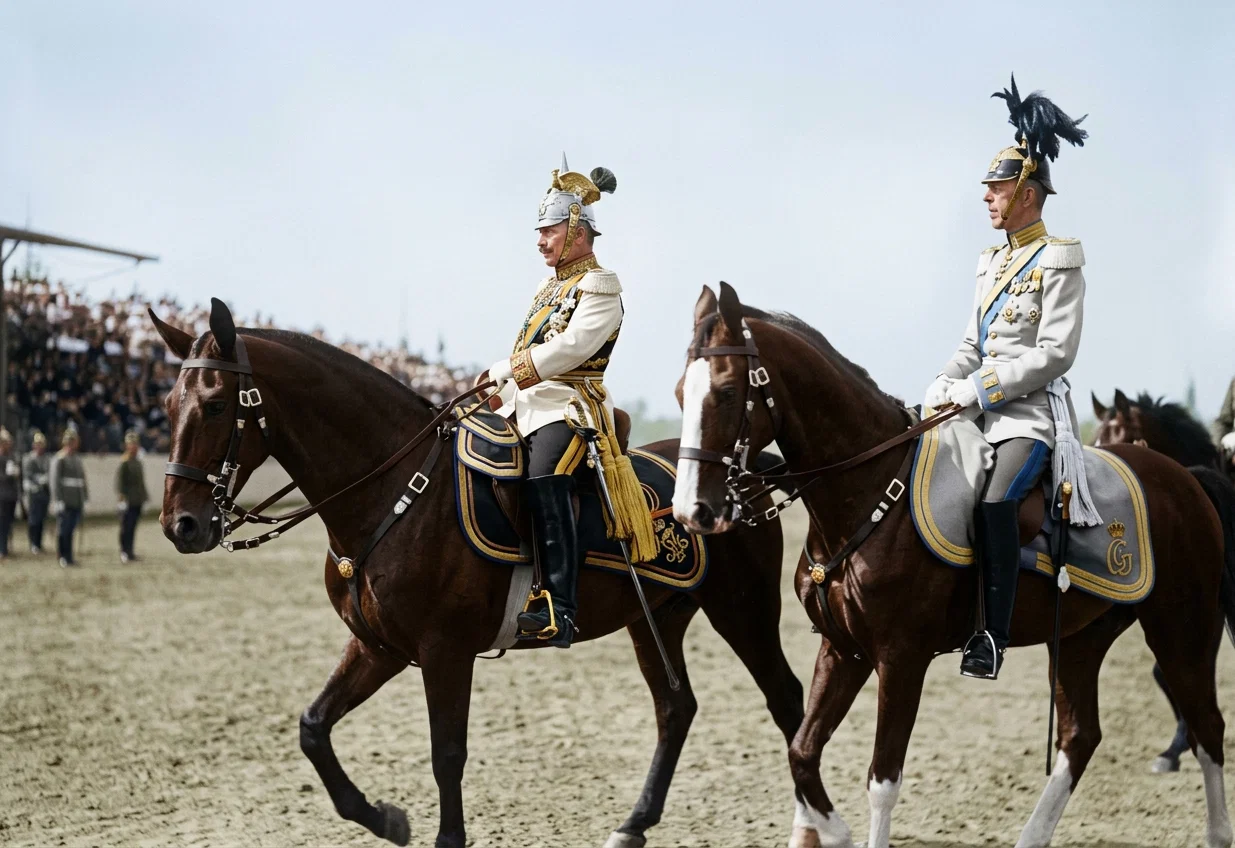
Germany stands in the same critical position as Great Britain. Such a strike as that would paralyze the empire. Germany could not turn her troops against the unions in case of disorder, because she fears that the troops themselves would refuse to take such action, as the socialistic principles which are espoused by so many German people have permeated the army, so that the army itself would refuse to turn its weapons against its own members.
Trans-Atlantic Co. photo
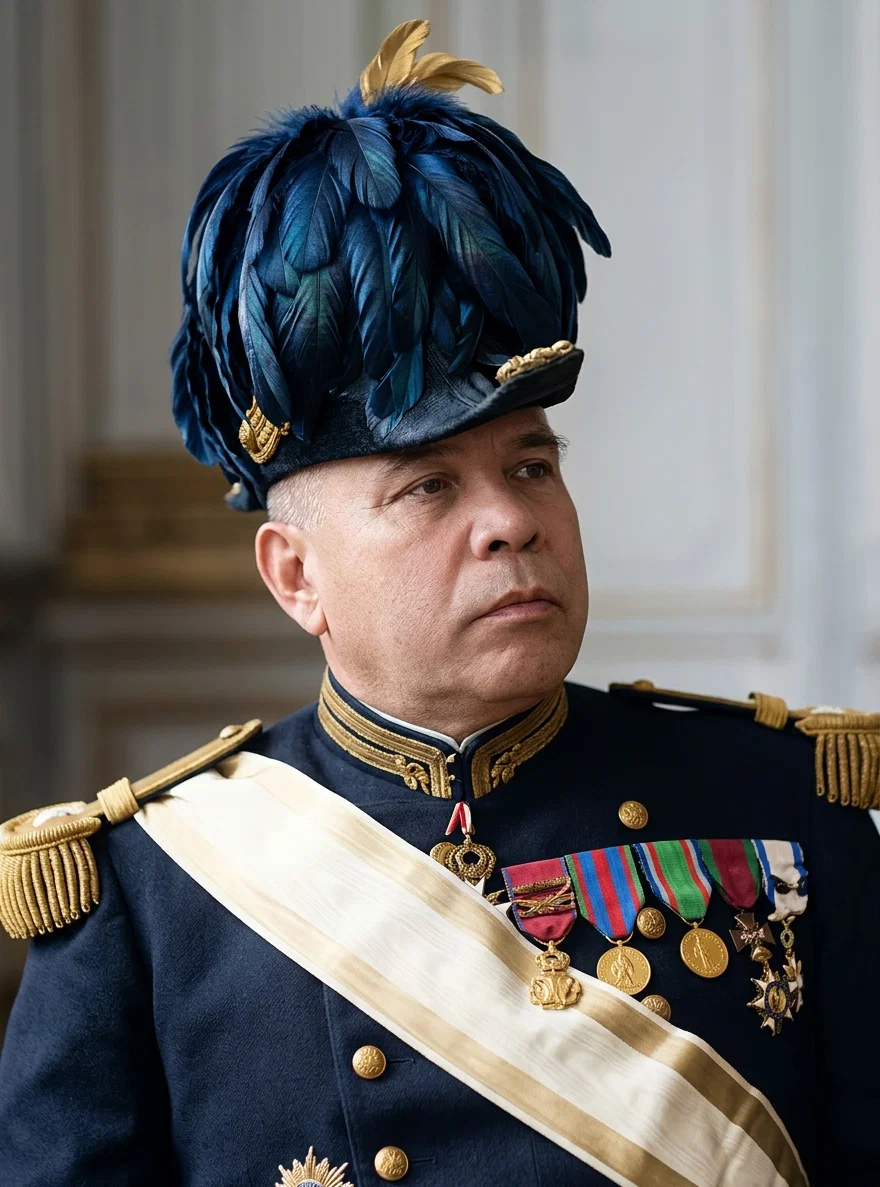
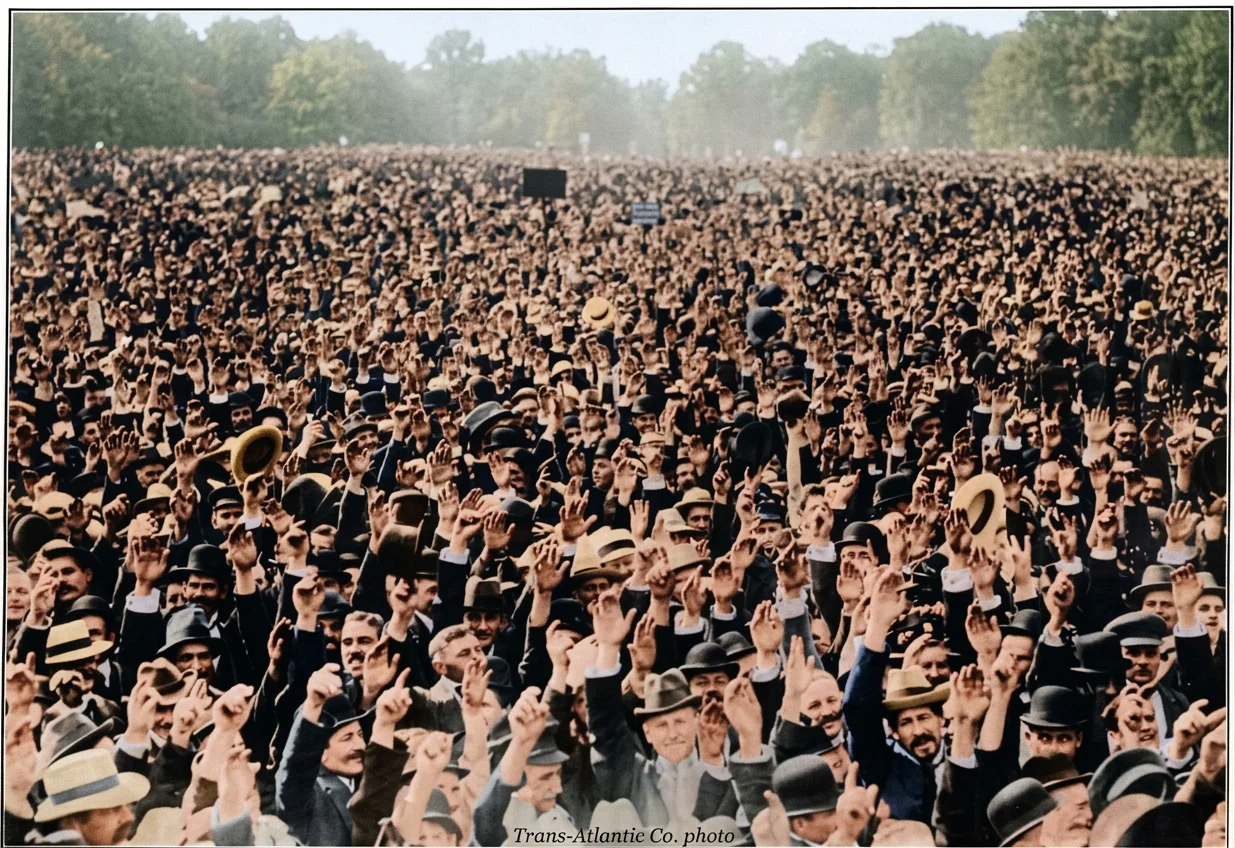
Then, too, war talk in Germany has not been assuring. Some of the Jingo papers of that empire are urging war with France or Great Britain. On the other hand, more cautious minds have felt that it would be fatal for Germany to go to war now, because she would not only have France, but England, to fight, and it has been a serious question whether she would have the support of her own people. Socialists to the number of a million gathered in Treptow Park, Berlin, to protest against Germany's going to war with France. They felt that there was no call for fighting their brothers in France over any questions that might arise regarding Morocco, or any other part of Africa. This doubtless had its effect upon some of the German demands of France. Another element which had its effect in staying Germany's hand is the demonstration which France made over her navy.
The third and perhaps still more potent influence, was the influence of capital. Many German bonds are held by French investors, and French investors were making calls upon Germany. England also holds German bonds, and calls were made from there. It is stated that Germany applied to the Rothschilds, but they said, "We can not accommodate you to loans unlesswe can get the endorsement of American financiers;" and American financiers, through Mr. Morgan, stated that he could not invest money in Germany unless Germany would accede to the terms of France, which seem to him reasonable. So the real peacemaker, after all, in the Franco-German trouble over Morocco, may be John Pierpont Morgan. This shows the power which capital has in the world at the present time. If it is profitable for capital that a war should occur, we may be quite confident that the influence would be as potent to bring about the war as the peace.
Another thing which has been stirring Germany is the treaty that is now pending between America and England. That treaty is not admired in Germany. Some declare it is a hollow make-believe, others that it is the forerunner of an alliance between English-speaking peoples which aims to control the world.

France

Just now it is not a republic of peace and quiet. There are not only the strikes which the railways and other corporations have had to deal with; but upon the heels of the strikes have come the bread riots in Northern France, which are spreading throughout the country. The French housewife is known as a model of economy and frugality. She makes her own purchases. She has, under normal conditions, been able to buy food products at about the same price year after year; but the sharp advance which has been made in recent months has had a serious effect upon those who were barely living within their means. And yet we are told that the bread riots which have taken place are more of a political character than an economic. They are led by the political agitators in Europe. They have not only stirred France, but they have spread over the Belgium border, and many towns and places are in turmoil over high prices there. Nothing is said on the part of these bread rioters about an advance in wages, but a cut in prices. It is the very opposite of the demand made by the labor-unions, and yet the effect is the same — to protect the family and reduce the cost of living. There is this, however, in the rise of wages,—that whenever higher wages are paid to those who produce the necessaries of life, there comes a corresponding increase in the prices of the commodities themselves, so that the consumer is not at all helped thereby. Consequently strife is not allayed permanently. Temporarily there is a cessation; but in a little while the laborer sees that he has not been benefited by his rise in wages, consequently he is ready to strike again. In the bread riots in France, troops have had to be called out in order to maintain the peace.

Austria-Hungary

The London "Times" tells us that there are railway and labor troubles in Austria-Hungary, demands for increased wages, and it is feared that a general strike may follow. An enormous increase in the cost of the necessities of life is recorded there as well as in other countries.

Spain

Spain is a seething political caldron. We noted last week that martial law had been declared, and that the constitutional guarantees
Trans-Atlantic Co. photo
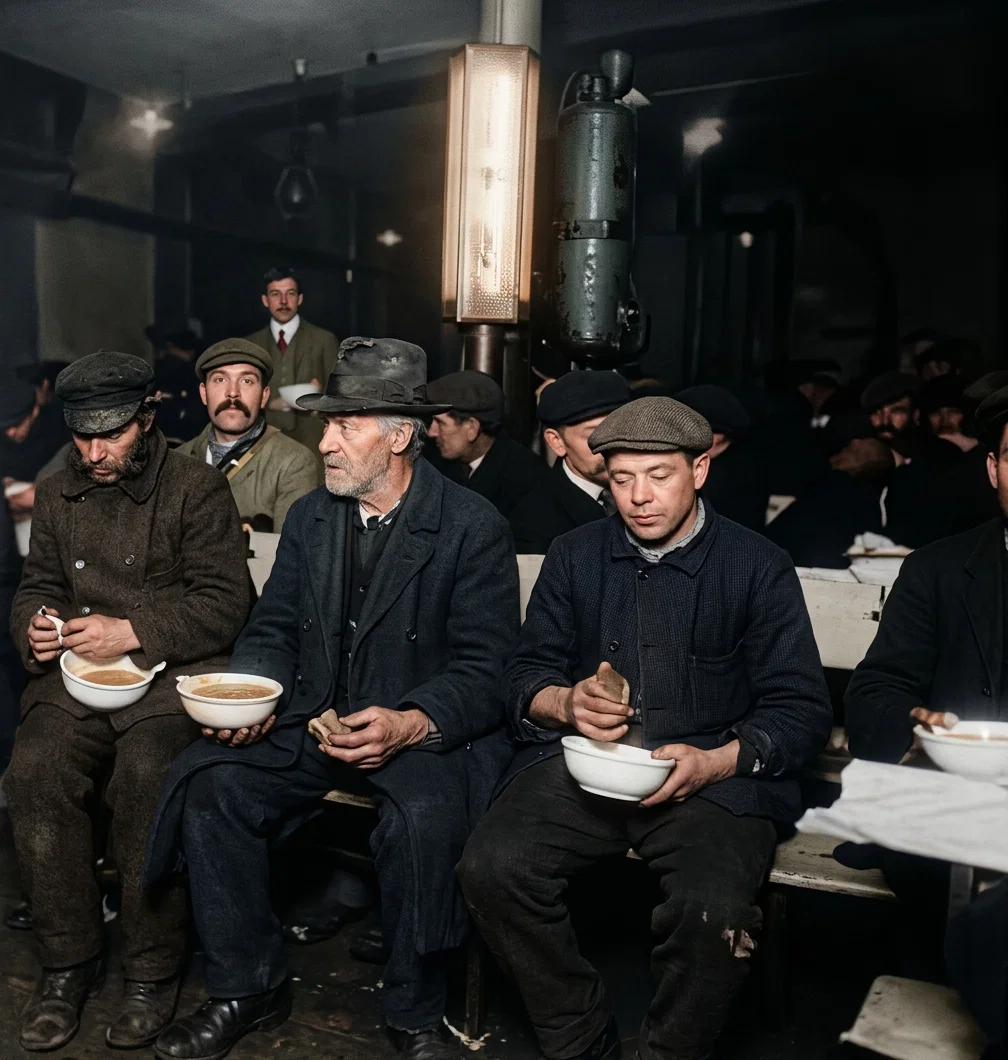
had been suspended. This has quieted the strike situation, and seemingly struck terror, for the time, to the revolutionists; and yet, many of the Spanish troops are in Africa, and some of the revolutionists are led by ex-army officers. It would not take very much to involve the whole country in civil war. On the part of the clericals, or the strong Roman Catholic element, there is most decided opposition and enmity to Premier Canalejas. All the reserve government troops are under arms. It is discovered, it is said, that the strike was not a mere economical or labor trouble, but was part of a revolutionary plot to overthrow the government, a part of which plot was to assassinate prominent men, General Weyler, former Spanish commander in Cuba, among them. Quite a number of these revolutionary leaders have been arrested.

Portugal

Just over across the line from Spain is the baby republic of Portugal, and Portugal is having her troubles. A constant revolution is pending, if we may believe the reports from there, altho the republic has passed through a successful election, and even Roman Catholic papers concede that the president is a good man, but they feel that his hands are somewhat bound by the laws. Yet the "Croix" (a strong Roman paper), of Paris, declares that "the republic is dead. It sinks beneath the weight of its blunders and the
violence of its crimes. If Portugal sinks with it, this will furnish a good lesson to the king who in future is to rule the country with honesty and intelligence. King Manuel has the complete sympathy of the Portuguese people, and his return is the subject of daily prayers on the part of a nation which is in agony under the yoke of a dozen unscrupulous adventurers. The national exchequer is drained dry." But it is a serious question whether the thinking people of Portugal wish Manuel restored or not. The republican government has ascertained that the total indebtedness of the royal family for which King Manuel is responsible, is over twenty million dollars. His restoration would certainly not help to solve Portugal's economic problems. Most of these debts consist of treasury advances to the royal family. If Portugal fails, it will evidently be through her financial difficulties left her as a heritage by the former monarchy. It is rather a strange coincidence that the present president, Manuel de Arriaga, is a descendant of the royal family of Orleans, from which years ago came the Spanish King Remiro II, and to which the dispossessed Queen Amelia belongs.
Russia's internal condition is exceedingly uncertain, and it looks like the reign of terror there.
We need not mention the troubles brewing between Italy and Turkey, and Turkey's general troubles with her neighbors on every side, which are endemic and chronic.

What It Means

And these are conditions in Europe to-day. As a London despatch under date of September 23 states: "To-day's news gathered from all parts of the Old World tells of socialistic uprisings, food riots, general strikes, wars or preparations for war, in every important country in Europe with the exception of Holland, Sweden, and Switzerland. A careful analysis of the situation in each of the countries which are now taking part in a general movementof unrest such as Europe has not before experienced in the present generation, reveals the fact that in every case Socialist agitation of a revolt against the fast increasing cost of living, is at the bottom of the disturbance." Workmen are beginning to realize that they are not getting their share of the wealth. The decline in value of government securities shows how seriously the financiers look upon the question. Conditions are decidedly critical through the whole of Europe.
In America things are not by any means assuring. The threatened labor troubles are by no means settled. The shopmen of the Harriman lines are demanding recognition, not of their several unions, but of a federation of their unions as a unit; an eight-hour day instead of a nine-hour, a flat wage-increase of seven cents an hour; equal representation on boards of directors of the company's hospitals; free keeping of patients in hospitals as long as patients demand it, sanctioned by their association; granting of conferences after thirty days' notice of desire to change contract is submitted; employees to be granted ninety days' leave of absence instead of being laid off; no physical examination or personal record; capability of an employee to be determined within thirty days, after which no man can be discharged on grounds of incompetency; grievances to be handled by shop employees' federation; seniority in service to govern promotion to foremanships; and several other matters besides.
Vice-President Julius Kruttschnitt declared that this would increase the pay-roll $7,500,000 a year, and would place the control of the railway system itself in the hands of its employees, and so prevent the railroad from carrying out its duty toward the public. The "Call," the Socialist paper of New York, declares that Mr. Kruttschnitt has pointed out the result: it would place them in absolute control, and "that is the very thing for which the men should fight; it is the thing toward which every battle of labor is inevitably tending, and until it is realized, there must be industrial warfare."
The thinking reader will see that the object of this is to effect the same solidarity among the working men as was manifested in England. What affects one union would affect all, and consequently every industry of America manned by union workmen would cease, and the millions that would suffer most would be those who are not personally interested in either the companies or the men. Some have therefore suggested that there should be certain courts which, after the employers and employees had had a reasonable time to settle their differences, should step in and settle for them, for the sake of the public whom they serve. Arbitration without authority is generally useless.
An editorial in the New York "Independent" of September 7 points out that labor arbitration has not been satisfactory. When crises have been reached, these arbitration decisions have failed. It declares: "Arbitration proves inexperience to be nondescript," and demands, "Let the presumption of liberty stand; let the parties agree in liberty if they can; when they can't, let the State step in, and without any beating about the bush tell them, not what they ought to do, but what they MUST and will be COMPELLED to do." But to do that the State must have authority; and would the people grant this authority?
Our sister republic on the south of us has had a change of administration. They have turned out the doughty old President Diaz, and are in the campaign of electing a new one; but thus far the campaign has been marked by bitterness and riots and mobs and loss of life. Friends of Mexico question whether, whoever she may elect, if he governs Mexico, however smooth may be his words, will not have to use about the same means that Diaz did.
Such, tamely expressed, are some of the conditions in the world at the present time. Today there is peace; to-morrow there could be so far as human indications go, revolution and uprising everywhere. Why there is not is indicated in the symbolic prophecy found in Rev. 7: 1-3. Notwithstanding conditions in this old world, God overrules, and He has commissioned mighty, strong angels to hold the winds of strife until His work is done. When that time comes He will let men have their own way.
How true are the words of our Lord which He used in pointing out the signs of the end! After mentioning those in the heavens, He declares, "upon the earth distress of nations, with perplexity" (see Luke 21: 25-27), and distress of nations with perplexity is upon us. After these developments, He declares they shall "see the Son of Man coming in a cloud
Trans-Atlantic Co. photo
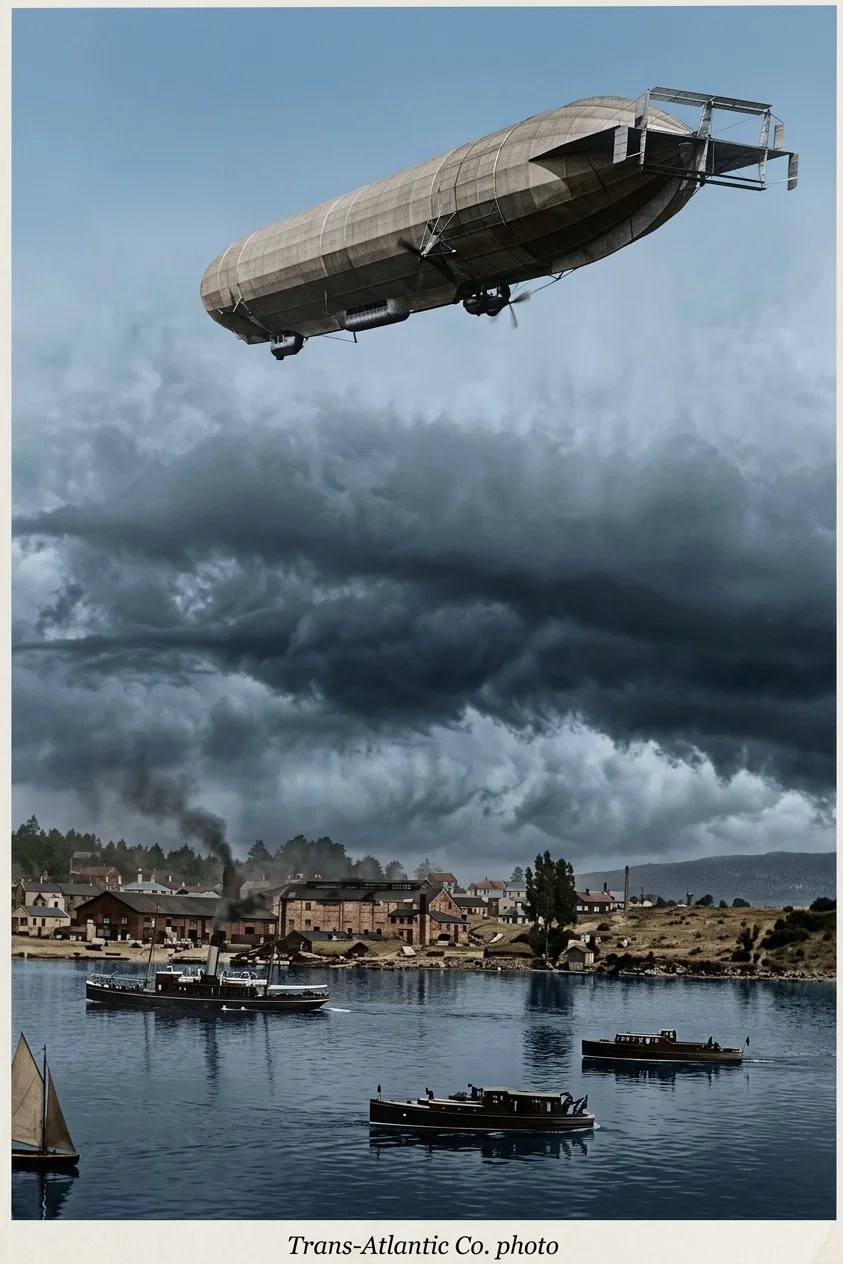
The Zeppelin air-ship Schwaben crossing Lake Constance, with Count Zeppelin at the helm. Now we are told that one is being built near San Francisco that will far surpass the Zeppelin air-ship, one which is able to rise from any place, remain stationary in the air, reverse and go backwards, and can sail against the wind under nearly all circumstances, combining the aeroplane with the dirigible. A large amount of buoyancy is furnished by gas chambers, but it is heavier than an air-ship, after all.
with power and great glory." All these things, reader, are indications of the end, indications of the coming of the Christ, indications of the cessation of the present earth-rule, which is proving so utterly unsatisfactory. Peoples and nations are having their way in the matter of experiment. Humanity will try every experiment, and God permits it; but all will prove unsatisfactory, and there never will be the reign of peace which men dream of, and which devout souls long for, until Christ shall come. Then the kingdoms of the earth will become as the chaff of the summer thrashing-floors, and the Lord Himself shall reign. — ★ ★ —