THE earliest missionaries to Japan in modern times are now gray-haired men and women, and but few of them remain. What have been the results of mission work in Japan thus far? The following figures give such answer as statistics can furnish: At the close of 1909 the total number of Christians reported to the government was 146,508, those churches having more than 10,000 communicants being as follows: Roman Catholics, 62,158; Greek Church, 15,098; Japan Church of Christ, 17,049; Congregationalists, 14,606; Episcopalians, 13,008; Methodists, 11,092.
These may seem like meager results when compared with some mission fields. But statistics alone can never tell the whole story. The Gospel seed sown in multitudes of hearts, and waiting to spring up and bear fruit; the silent but powerful influence of Christian teaching and ideals upon the life of the nation—bare statistics furnish no estimate of such results as these.
In the light of past experience, what may be hoped for and expected in mission work in Japan? As already intimated in a previous article, we need expect no indiscriminate rush into the Christian church on the part of the Japanese; for that time has passed. On the other hand, the period of anti-foreign feeling has also been safely passed, and the Japanese are now more open to conviction as to the real merits of the religion of Christ. These conditions give promise of steady, permanent growth in response to faithful, patient labor. But with the strong worldly spirit that has taken possession of the people in their quest for temporal advancement and a standing as a nation among the world's great powers, there is great need of a baptism of pentecostal power, that the attention of the people may be attracted to spiritual things.
It is worthy of note that thus far the principal successes of Christianity in Japan have been won in the larger cities and towns. The reasons for this are quite apparent. These centers of population were first opened to foreign influence, and hence have been the principal field of missionary effort. Further, in the cities are found those who have broken away from home ties and influences, for the sake of entering upon a business career, or of gaining an education in the higher schools. And it is found that these classes are most readily influenced to break away from the religion and customs of their fathers.
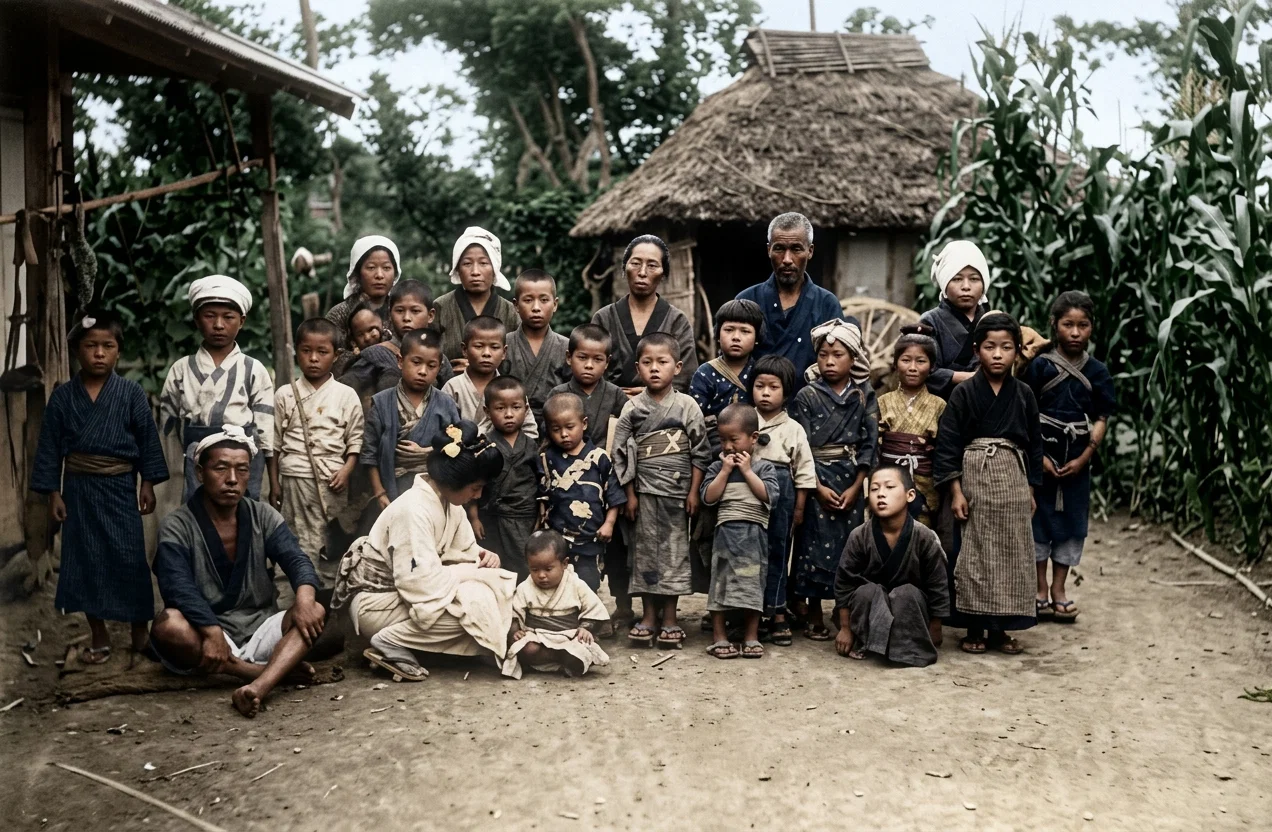
A group of country people in Japan
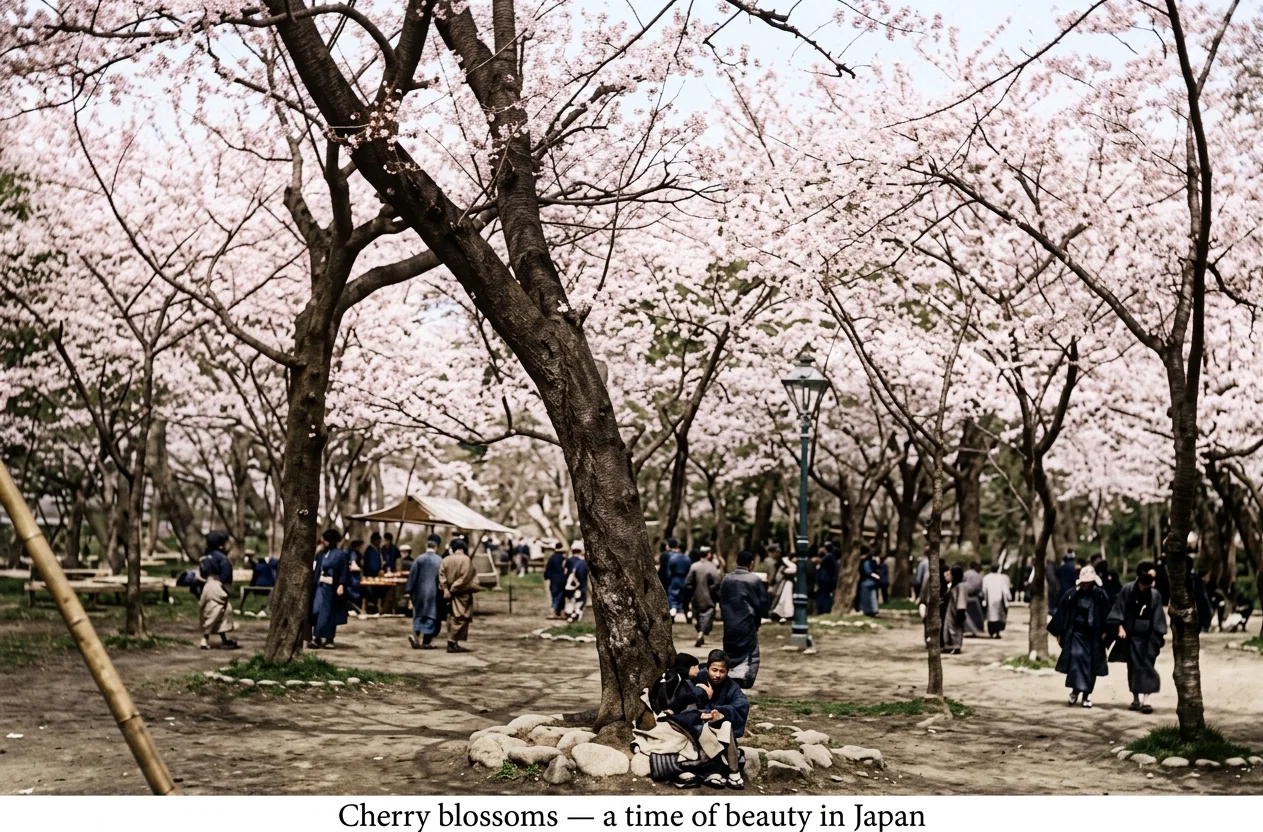
Cherry blossoms — a time of beauty in Japan
A Great Difficulty
But the Gospel message must go to the whole nation; and that means that the rural districts must be entered by the Christian evangelist. And this campaign has already been entered upon. The special difficulty to be met is due to the peculiar character of the social system in Japan. This is the product of Japanese feudalism, which flourished until a generation ago. The dominant idea in this system is that the individual is to be submerged in the family, and the family in the community. Thus individual responsibility is reduced to a minimum. The Christian idea of responsibility to God as the first and highest obligation of the human soul, has no place in this social scheme. The individual must consult his parents or elder brother before making any important move. With the family, the trite question, "What will the neighbors say?" exerts a deterrent power beyond the comprehension of the Occidental mind.
But the fight is on; and as the ranks of the enemy are broken here and there, it is easy to see how this very difficulty is often turned to advantage. An elder brother who accepts Christianity may exert a strong influence to win the other members of the family for Christ. And the family being once united in the faith, they are naturally zealous to win their relatives. Thus may this very difficulty become one of the "all things" that work together for good in the advancement of the cause of Christ.
A few incidents from real life may serve to illustrate the statements made above. A Japanese barber in the city of Hiroshima determined to become a Christian; so he closed his shop on the Sabbath, and posted a notice in the window that no work would be done on that day. At once his neighbors and friends called on him, and expostulated with him for his change of religion. They made no objection to the new religion because of its character or teachings, but urged
that there was not another Christian in that neighborhood, and that for one man to adopt a strange religion was contrary to all custom and precedent.
A Japanese lady was greatly displeased because her daughter had become a Christian; but through the tact of the evangelist, her prejudice was finally removed, and she made request that the truths of the Gospel be presented at her own house. The appointment was made; and when the hour arrived, she had gathered in a goodly company of her near relatives, and the faithful evangelist rejoiced in the privilege of speaking the word of life to this widened circle.
And what shall the harvest be? That will depend not alone upon the faithfulness of those now pressing forward in the work, but also upon the liberality of those who make it possible to do the work with promptness and vigor. The need is great, but all can help, for there is need also of the earnest prayers of God's people.