145,000 March in Monster Parade—The Deeper Significance of This Mighty Movement
THE most absorbing topic of this time is preparedness for war. Dr. Jordan, in a recent article in the Sunset Magazine, speaks of it as "the impulse of the wave of preparedness set in motion by the fear of the greed of the men about New York."
Without question, the demonstrations in New York City on May 13 were a mighty expression of the strong, impulsive "wave" that has begun to spread over this nation in favor of preparing for war.
The New York World speaks of that great demonstration as "a spontaneous exhibition of true Americanism in the first city of the United States."
Mayor Mitchell spoke of the parade as "enough to wake up the dead."
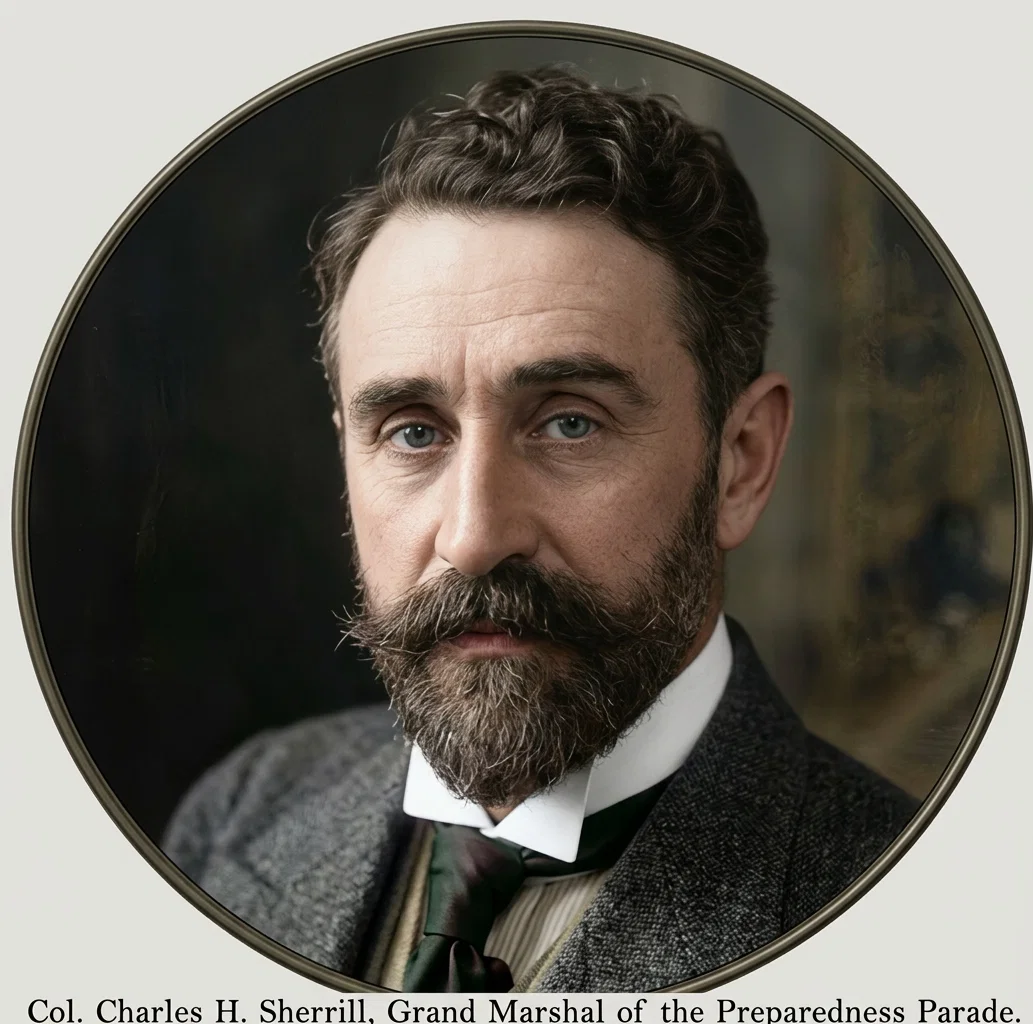
Col. Charles H. Sherrill was the grand marshal of that preparedness parade. He gave six weeks, with "hundreds of men" acting as his assistants, "to produce this great demonstration."
"Mr. Sherrill said that an army officer whose specialty is counting marching troops," gave the "total number of marchers at 145,000." The New York Times made a careful count of the paraders, and gives the number as 125,683. These Times figures are the lowest of any, but certainly are quite sufficient to be very impressive.
The Independent says, "It was probably the greatest procession of civilians that the world has ever seen."
60,000 Applications Rejected
WHILE preparations for the parade were under way, many applications were received from different parts of the country for the privilege of taking part in the demonstration by joining the marching columns. But all these out-of-town applications had to be rejected, for the reason that the applicants from New York City alone were so numerous they could not all be received to take a part in the parade. The Wall Street Journal said that half as many were rejected as had a place in the procession.
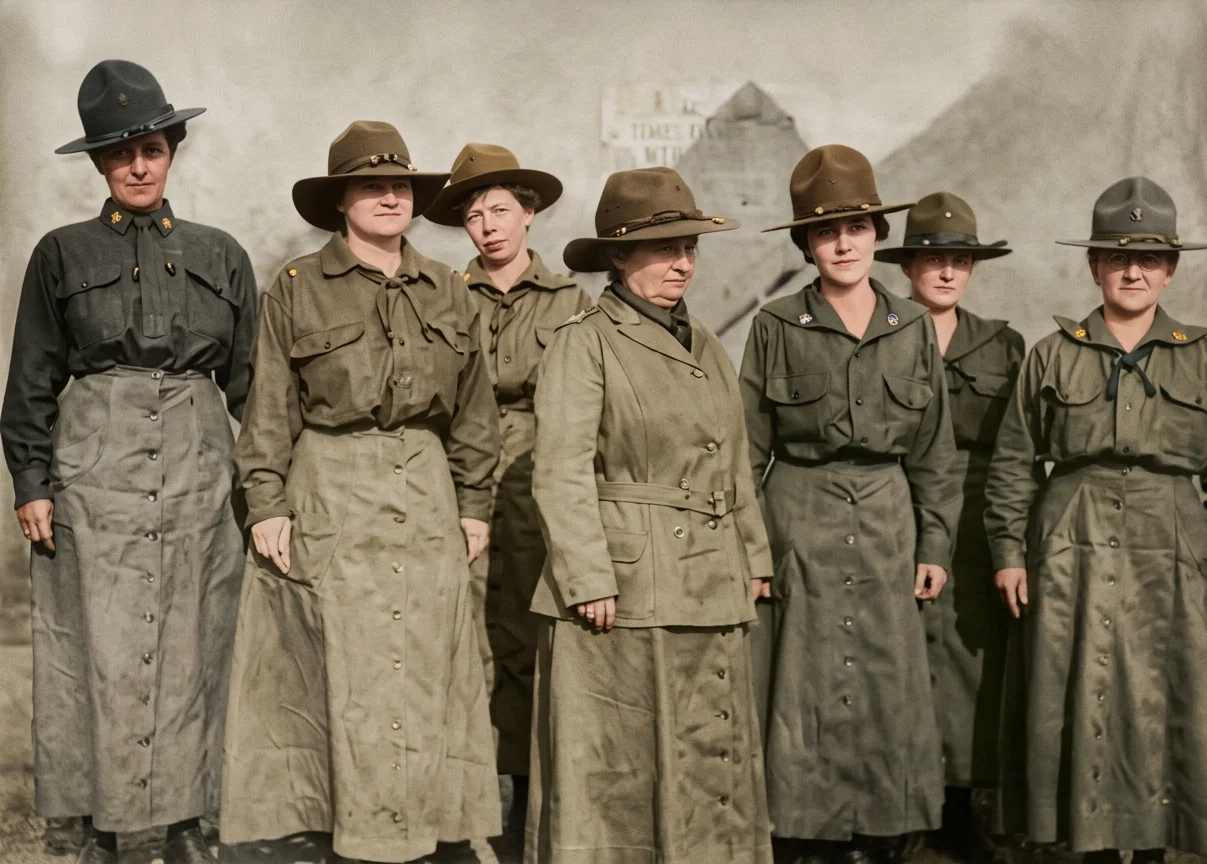
All the various trades of the laboring people were strongly represented, and conspicuous in the marching columns were platoons of women who favored preparedness. It took more than twelve hours for the parade to pass the reviewing stand. The procession started before ten in the morning, and not until 9:40 in the evening did the last of the marching host pass the reviewing stand.
It is believed that fully a million men and women from various positions along the sidewalk, and from windows and other points of vantage, viewed the procession. Even the quarters of some of the peace organizations were usurped by the great crowd, so that it might view the spectacle.
The crowd upon the streets was so great that it did not entirely dissolve until the next morning. After the parade was over, the street cars and other means of transportation were "a perfect jam," as all through the rest of the night they sought to carry the masses of people to their homes.
The parade was designed to give an expression of the country on the subject of preparing for war. It was evidently designed also to impress the pacifists with the thought that their efforts are both futile and absurd. Catching the contagion started in New York, many other leading cities have had such demonstrations, or are planning to have them in the very near future. Baltimore, Boston, Buffalo, and Rochester are in the list, while Milwaukee and St. Louis are discussing a plan to join Chicago in a great preparedness demonstration. If this Chicago affair is successful, it will probably equal if not outdo the demonstration in New York. Even Porto Rico has asked for a "preparedness" army camp, and "a colonel has been sent there to attend to it."
The "Advisory Committee of Railway Executives," which has been in existence for about a year, and is composed of some of the greatest leaders in the transportation world, affirms, "The keystone of the arch must be transportation preparedness." These men recommend "that a billion dollars a year for the next five years should be expected in railway improvements," in order that the transportation facilities may be brought up to that state of preparedness that would be equal to the mighty strain if the nation were suddenly plunged into war.
"Holland's Letter," in a recent Wall Street Journal, says, "The agitations in favor of preparedness are now nation wide, and the overwhelming public interest in this subject is regarded as having been well demonstrated by the unparalleled parade in New York City on Saturday of last week." In the same letter, Holland also says, "The relation of the railway systems of the United States to preparedness, in the opinion of men competent to pass an opinion, is the most important factor in that work."
Is the Peace Movement a Failure?
IT is now quite generally conceded that military preparedness will be the overtowering issue in the presidential campaign this summer and fall. The men who have been making strong statements, through the press and on the platform, against military preparedness and in favor of disarmament, are now asked to take a back seat, while those who are in favor of military training of the most strenuous type are absorbing the attention of the nation.
In a demonstration in Detroit, Michigan, a few days since, in favor of military preparedness, while Mr. Roosevelt was speaking, a woman who had become wrought up by the occasion cried out, "I have two sons whom I offer." To the offer of this sacrifice to the war gods, Mr. Roosevelt replied, "If every mother would make the same offer, there would be no need for any mother to send her sons to the front."
One of the leading theories of the times is suggested in this379statement of Mr. Roosevelt's. It is affirmed that in a nation where every man is drilled to fight, there is the best insurance against war. The theory is a very taking one. It seems quite plausible on the face of it; and the great masses agree to it, as is shown by the demonstrations that are now so strongly in progress.
A few years ago, everybody was telling us that we never could have another war, that peace was assured forever to this world. Then why these explosive feelings in favor of war, in this country that is isolated from every other part of the world? What has brought about this great change? A recent editorial in the New York World speaks of the peace movement as "a monumental failure." This editorial says:
"Nowhere in the world has the theory that a just and lasting peace might be secured by moral suasion been more generally accepted than in this city and country. There has been a rude awakening; and Saturday's procession, moving from morning until night, expressed the conviction that this hope must be abandoned.
The Shipwreck of Pacifism
"If pacifism as at present formulated had not fallen short in all respects, Europe would not now be reeking with blood. Those who trusted most to pacifism have most to regret. It is not the Peace Palace at the Hague, but its valiant army, that safeguards Holland. Treaties, laws, and promises which pacifists regard as ample security, went down like stubble in the path of the invaders of Belgium and Serbia.
"Religion was as helpless to prevent this war as it is to end it. International socialism, long boastful of brotherhood, fell into hostile ranks almost without a protest. Nonresistants, peace-at-any-price men, emotionalists, and sentimentalists could not stay the sword for an hour, when the day long fixed by the war lords for its use finally appeared.
"In all history, there has been no such utter shipwreck of a worthy cause as that which has overwhelmed pacifism. It has been generously supported, but only hypocritically accepted. Good men have been lulled by it into deadly delusions. Bad men have taken advantage of it to destroy their neighbors. It is the colossal failure of the age, and yet its dupes in this country do not hesitate to malign those who have had enough of the pretense and would put their house in order.
"What the pacifist cannot see is that a nation armed for defense is a better peacemaker than a nation whose life and property are exposed to the raid of nations armed for offense. With the world full of desperado war makers, the country that depends for security upon correct principles only is as much of a strife breeder as a sheep in a cage of wildcats.
"A Rude Awakening"
"WHEN New York marched for preparedness, it marched also for peace. When New York pronounced pacifism a failure, it condemned not the purpose but the method. When New York demanded weapons, and men trained in the use of them, it did not commit itself to militarism. It indicated its refusal to rely henceforth upon a pacifism known to be worthless. In this we believe that the metropolis spoke also for the United States.
"Until a change comes over the earth of which there are no signs at present, every true aspiration of pacifism, like every right cherished by freemen, can have no adequate defense that does not rest upon force."
These editorial statements from the New York Daily World are significant, and worthy of more than passing consideration. The editor says "there has been a rude awakening" from "the theory that a just and lasting peace might be secured by moral suasion." Peace palaces, treaties, laws, and promises, according to the World, are not the safeguards of a nation, but its army and its navy. The peace cause, declares that journal, has suffered utter shipwreck, and "is the colossal failure of the age." The editor even thinks that "with the world full of desperado war makers," the "correct principles" set forth by the peace societies, if wholly depended upon, would be about "as much of a strife breeder as a sheep in a cage of wildcats." And furthermore, "until a change comes over the earth of which there are no signs at present," force is the only thing to be depended upon in seeking for peace.
The Wall Street Journal recognizes two great successes shown by the present war. One of them was the highly trained army of Germany, and the other was the efficient navy of England. The Journal thinks that both of these organizations should be developed in this nation, in order that we may be, made so strong that no power on earth would attempt to invade us.
In the Delirium of War Fever
THE men of this world will range themselves on many different sides of these various questions. They will discuss them very heatedly. They will have their theories, and each one will be sure that his theory is the correct one. The peace society men are sure that if they could have their way, they would end all war. The military men think that if they could have their way, they would make war so terrible that no man would dare fight.
But setting all of these theories to one side, we desire to emphasize the great fact that the world is in the delirium of a war fever. A war plague has burst upon it. Two thirds of the civilized nations of the earth are engaged in a death struggle; and those who are not actually engaged in the conflict, are strenuously exerting themselves to prepare for that which they fear is coming.
When Rome held all the world in her grip of peace, she banished John to the isle of Patmos. While he was on that isle, he had a view of these very times in which we are living, and he described the nations in these days as being "angry," and said that "the spirits of demons" would be provoking them to war.
And the Master, who inspired John, Himself said, when He was here in person: "There shall be signs in sun and moon and stars; and upon the earth distress of nations, in perplexity for the roaring of the sea and the billows; men fainting for fear, and for expectation of the things which are coming on the world: for the powers of the heavens shall be shaken. And then shall they see the Son of man coming in a cloud with power and great glory." Luke 21: 25-27, A. R. V.
Thus does the Master affirm that the days just preceding His coming will be days that will cause men to faint for fear while they are looking at what is coming upon the world.
Predicted 2,700 Years Ago
MOST minutely and graphically does the prophet Joel describe these signs. He says:
"Proclaim ye this among the nations; prepare war; stir up the mighty men; let all the men of war draw near, let them come up. Beat your plowshares into swords, and your pruning hooks into spears: let the weak say, I am strong. Haste ye, and come, all ye nations round about, and gather yourselves together: thither cause Thy mighty ones to come down, O Jehovah. Let the nations bestir themselves, and come up to the Valley of Jehoshaphat; for there will I sit to judge all the nations round about. Put ye in the sickle; for the harvest is ripe: come, tread ye; for the wine press is full, the vats overflow; for their wickedness is great. Multitudes, multitudes in the valley of decision! for the day of Jehovah is near in the valley of decision." Joel 3: 9-14, A. R. V.
How intensely does this prophecy tell that when "the day of Jehovah is near in the valley of decision," the nations will be called upon to "bestir themselves" as they beat their plowshares into swords and their pruning hooks into spears, in their terrible preparations for the war of the great day! Even the "weak" among them are to say they are "strong," and they are to hasten their great preparations.
The great mass of humanity will not regard these prophecies seriously. But like the generations of the past, they will nevertheless go forward in fulfilling them.
Wise men and women will think seriously of these conditions in the world to-day, and will view them in the light of the clear shining of the predictions of God's word. The war craze that is gripping the world in this our time, is the prelude and the preparation for the great Armageddon of the Apocalypse.