The Way to Christ

8%

Pacific Press Publishing Association · Mountain View, California · Jul 22, 1913

FromSigns of the Times, Vol. 40, No. 28.

Read the full edition

The Way to Christ

By Mrs. E. G. White

THE commandments of God are comprehensive and far-reaching; in a few words they unfold the whole duty of man. "Thou shalt love the Lord thy God with all thy heart, and with all thy soul, and with all thy mind, and with all thy strength. . . . Thou shalt love thy neighbor as thyself." In these words the length and breadth, the depth and height, of the law of God is comprehended; for Paul declares, "Love is the fulfilling of the law."
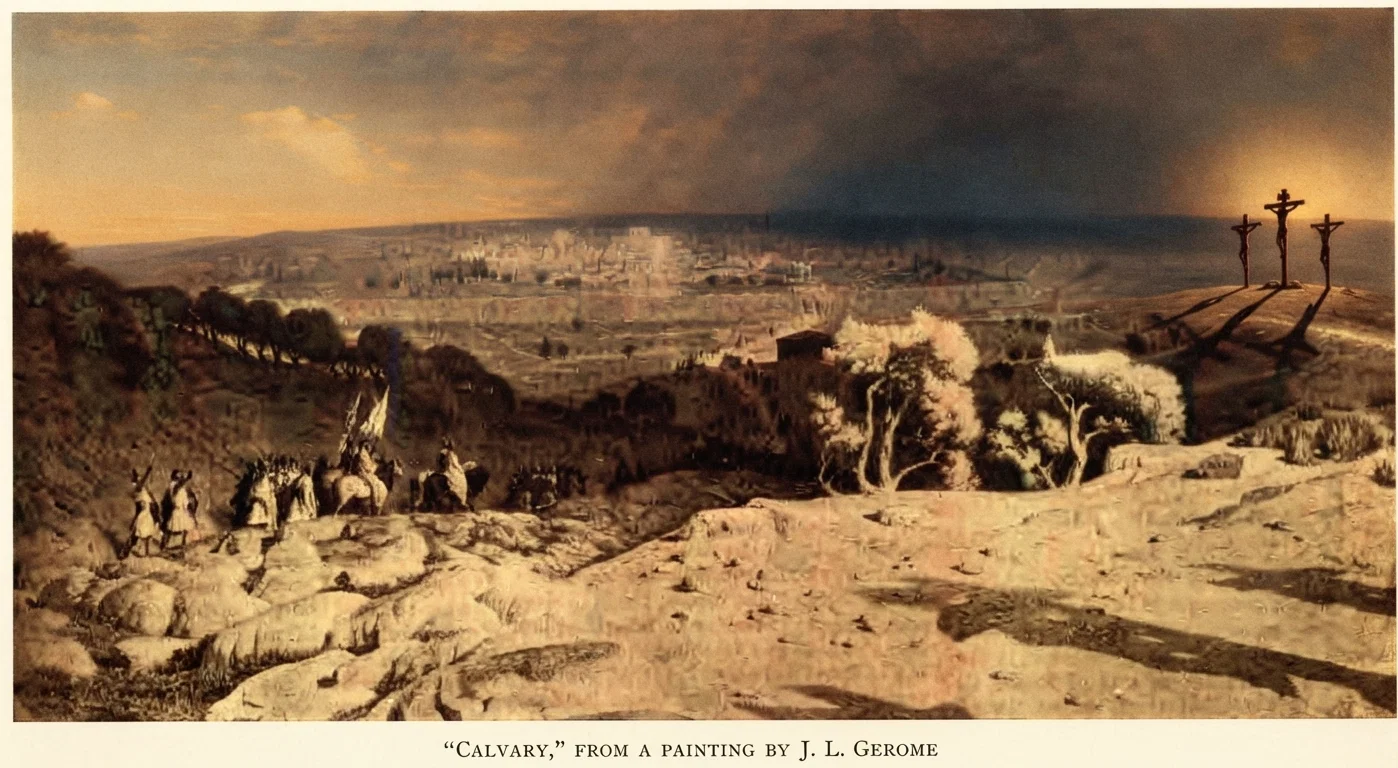
“CALVARY,” FROM A PAINTING BY J. L. GEROME
The only definition we find in the Bible for sin is that "sin is the transgression of the law." The word of God declares, "All have sinned, and come short of the glory of God." "There is none that doeth good, no, not one." Many are deceived concerning the condition of their hearts. They do not realize that the natural heart is deceitful above all things, and desperately wicked. They wrap themselves about with their own righteousness, and are satisfied in reaching their own human standard of character; but how fatally they fail when they do not reach the divine standard, and of themselves they can not meet the requirements of God.
We may measure ourselves by ourselves, we may compare ourselves among ourselves, we may say we do as well as this one or that one, but the question to which the judgment will call for an answer is, Do we meet the claims of high Heaven? Do we reach the divine standard? Are our hearts in harmony with the God of heaven?
The human family have all transgressed the law of God, and as a transgressor of the law, man is hopelessly ruined; for he is the enemy of God, without strength to do any good thing. "The carnal mind is enmity against God: for it is not subject to the law of God, neither indeed can be." Looking into the moral mirror,—God's holy law,—man sees himself a sinner, and is convicted of his state of evil, his hopeless doom under the just penalty of the law. But he has not been left in a state of hopeless distress in which sin has plunged him, for it was to save the transgressor from ruin that He who was equal with God offered up His life on Calvary. "God so loved the world, that He gave His only-begotten Son, that whosoever believeth in Him should not perish, but have everlasting life."
Jesus was the majesty of heaven, the beloved commander of the angels, who delighted to do His pleasure. He was one with God, "in the bosom of the Father," yet He thought it not a thing to be desired to be equal with God while man was lost in sin and misery. He stepped down from His throne, He left His crown and royal scepter, and clothed His divinity with humanity. He humbled Himself even to the death of the cross, that man might be exalted to a seat with Him upon His throne. In Him we have a complete offering, an infinite sacrifice, a mighty Saviour, who is able to save unto the uttermost all that come unto God by Him. In love He comes to reveal the Father, to reconcile man to God, to make him a new creature renewed after the image of Him who created him.
Jesus is our atoning sacrifice. We can make no atonement for ourselves; but by faith we can accept the atonement that has been made. "For Christ also hath once suffered for sins, the just for the unjust, that He might bring us to God." "Ye were not redeemed with corruptible things, . . . but with the precious blood of Christ, as of a lamb without blemish and without spot." It was through infinite sacrifice and inexpressible suffering that our Redeemer placed redemption within our reach. He was inthis world unhonored and unknown, that, through His wonderful condescension and humiliation, He might exalt man to receive eternal honors and immortal joys in the heavenly courts. During His thirty years of life on earth His heart was wrung with inconceivable anguish. The path from the manger to Calvary was shadowed by grief and sorrow. He was a man of sorrows, and acquainted with grief, enduring such heartache as no human language can portray. He could have said in truth, "Behold, and see if there be any sorrow like unto My sorrow."
Hating sin with a perfect hatred, He yet gathered to His soul the sins of the whole world. Guiltless, He bore the punishment of the guilty. Innocent, yet offering Himself as a substitute for the transgressor. The guilt of every sin pressed its weight upon the divine soul of the world's Redeemer. The evil thoughts, the evil words, the evil deeds of every son and daughter of Adam, called for retribution upon Himself; for He had become man's substitute. Tho the guilt of sin was not His, His spirit was torn and bruised by the transgressions of men, and He who knew no sin became sin for us, that we might be made the righteousness of God in Him.
Voluntarily our divine substitute bared His soul to the sword of justice, that we might not perish but have everlasting life. Said Christ: "I lay down My life, that I might take it again. No man taketh it from Me, but I lay it down of Myself. I have power to lay it down, and I have power to take it again." No man of earth or angel of heaven could have paid the penalty for sin. Jesus was the only one who could save rebellious man. In Him divinity and humanity were combined, and this was what gave efficiency to the offering on Calvary's cross. At the cross mercy and truth met together, righteousness and peace kissed each other.
— ★ ★ —