Our India Letter

4%

Pacific Press Publishing Association · Mountain View, California · Oct 22, 1912

FromSigns of the Times, Vol. 39, No. 41.

Read the full edition

Our India Letter

By Our Own Correspondent

A Promising Year

FOR India the year nineteen hundred twelve has been a very prosperous one. Altho Gujarat and Kathiawar in the Bombay Presidency, and some other portions of the empire in a lesser degree, have faced famine conditions for the first six months of the year, yet with the coming of the monsoon season hopes revived, and now, near the end of the rains, all India is rejoicing in the prospect of a normal crop and sufficient to keep starvation from every door. In India the poor expect nothing more than to continue their existence; and it is wonderful, the amount of contentment and happiness this lowly people find in the meager fare and most inhospitable surroundings in which they are compelled to live.
But when the rains fail! Ah, the heart-rending sadness of it all, as man and beast, under a cloudless, burning sky, and on a parched and burned earth, wearily drag out day after day with no hope of anything better till the next monsoon, looking constantly for the worst, and patiently waiting for the end! Is it any wonder that the survivors welcome the first signs of the coming monsoon when the yearly season for it arrives? The papers herald the first downpours in Ceylon and the Bay of Bengal, and with anxious eye and bated breath the multitudes watch its progress up the coast, and wonder if by any evil mischance they will be missed this year. Then comes the rain. And with thankfulness the Hindu repairs to his temple to worship his god, and the Mussulman to the mosque in praise of Allah, the all-powerful, for his mercy in sending the refreshing rain so necessary to life. And this year there is rain, and in the future there is food; hence there is hope on the plains of India.
One reason for suffering among man and beast in Gujarat, this year of shortage and famine, was that there was a lack of cars for the transportation of forage for the cattle. Thousands died before they could be supplied from the districts of plenty.
In spite of the fact that famine visits portions of India nearly every year, the suffering is relieved in these days by the excellent system of government aid that is at once instituted. The moment it is found that there will be no rain in certain districts, the government arranges for famine relief, and in due course it comes into operation. Of course, in very severe years, even this fails of the needed efficacy.
Then, too, the irrigation schemes of the government in the dry belts are taking away the dangers incident to rainless years. With the extension of these schemes, whole sections have been relieved of all fear of famine in future years, as in the northern part of the United Provinces and the Punjab because of the Jamna and Ganges canals, parts of the northwest, and the country around the city of Puna. In each of these sections, large dams have been built, holding back the waters of the rivers for just such times of shortage. Further schemes are either just about completed, as the immense dam and irrigation project between Igatpuri and Nasik on the west coast, or are in the preliminary stages, as the new irrigation scheme for the Southwest Deccan, which when finished will water the entire territory south of Puna to the city Sholapur. It is the government's intention to make the Deccan free from famine possibility in coming years.

Frontier Disturbances

Last year the China-Tibet border of India was disturbed for a time by the murder of government agents by one of the border tribes, and an expedition was sent against them; but this year, so far as India is concerned, has been a quiet one. However, on the other side of the line in Afghanistan, a small rebellion broke out among the Khost Valley people against the ameer. To some extent this affected the quiet of the border tribes in India for a little time; but the Khost people having come to a settlement with the ameer, this has died down.
Tibet has kept itself before the public eye on account of its close proximity to India, and the relations that have existed in past years between it and that government. The dalai-lama, who when the Chinese troops entered Lhasa two years ago, fled with his court to this country, has resided near Calcutta up to the revolt of the Tibetans from Chinese authority at the time China was too effectually involved in her internal troubles to attend to her subject territories. At the time of the Lhasa outbreak he went to Darjiling, and at the opportune moment proceeded to Lhasa by way of Kalimpong to take the leadership of his people in the final battles with the Chinese and the subsequent negotiations. He is said to have imbibed many modern ideas while in India, and it is fondly hoped that he will open up his country to the world should he return to power. Tibet is rich in mineral wealth, and it might, with enlightened rulers, take a higher place in the world's affairs.
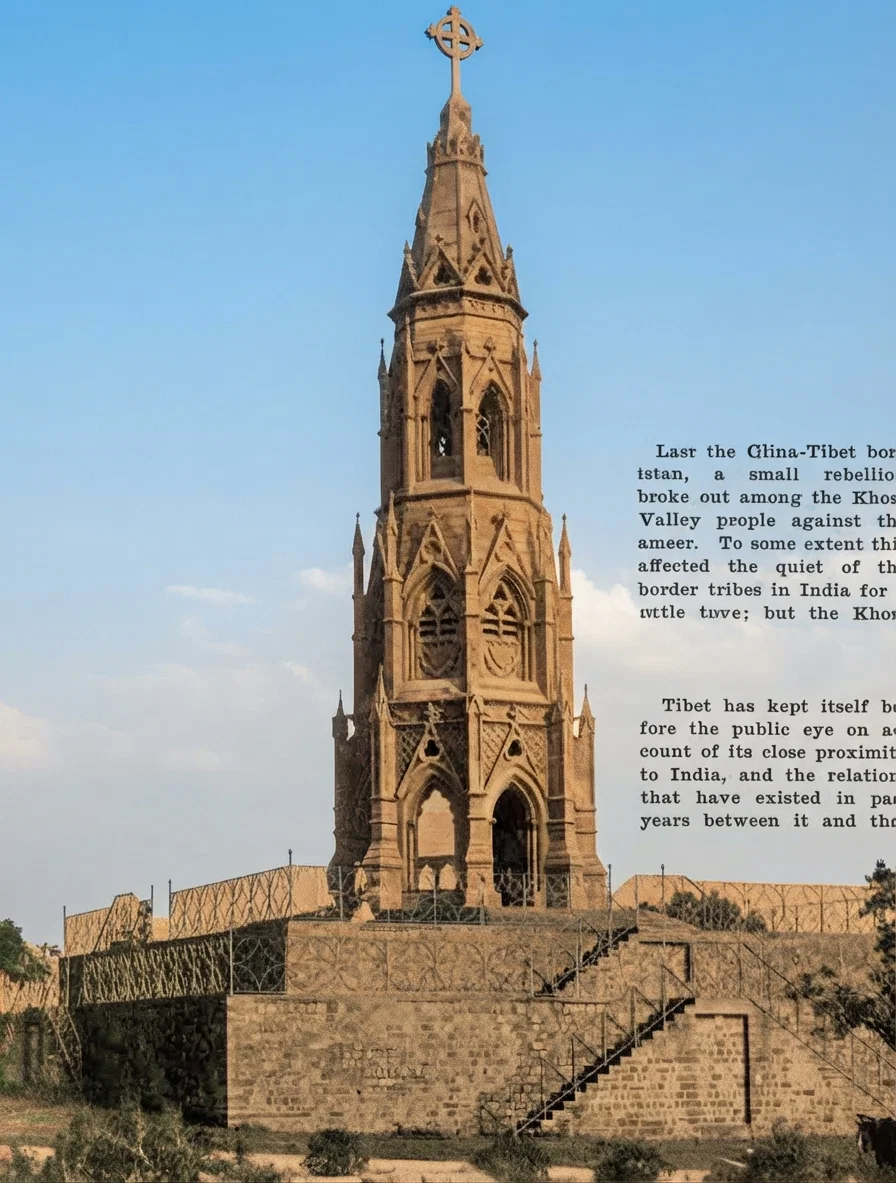
MUTINY TOWER AT DELHI, INDIA
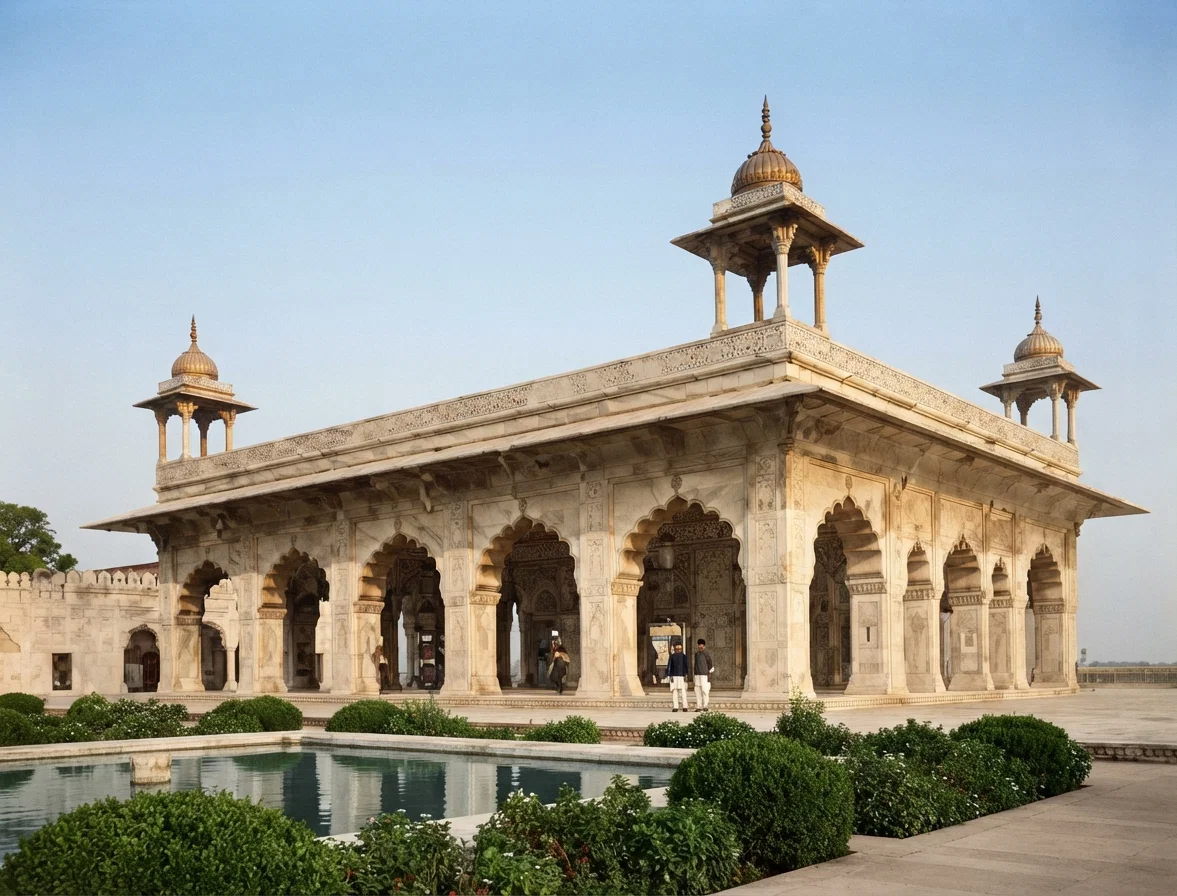
Hall of Private Audiences, Delhi, India

The New Capital

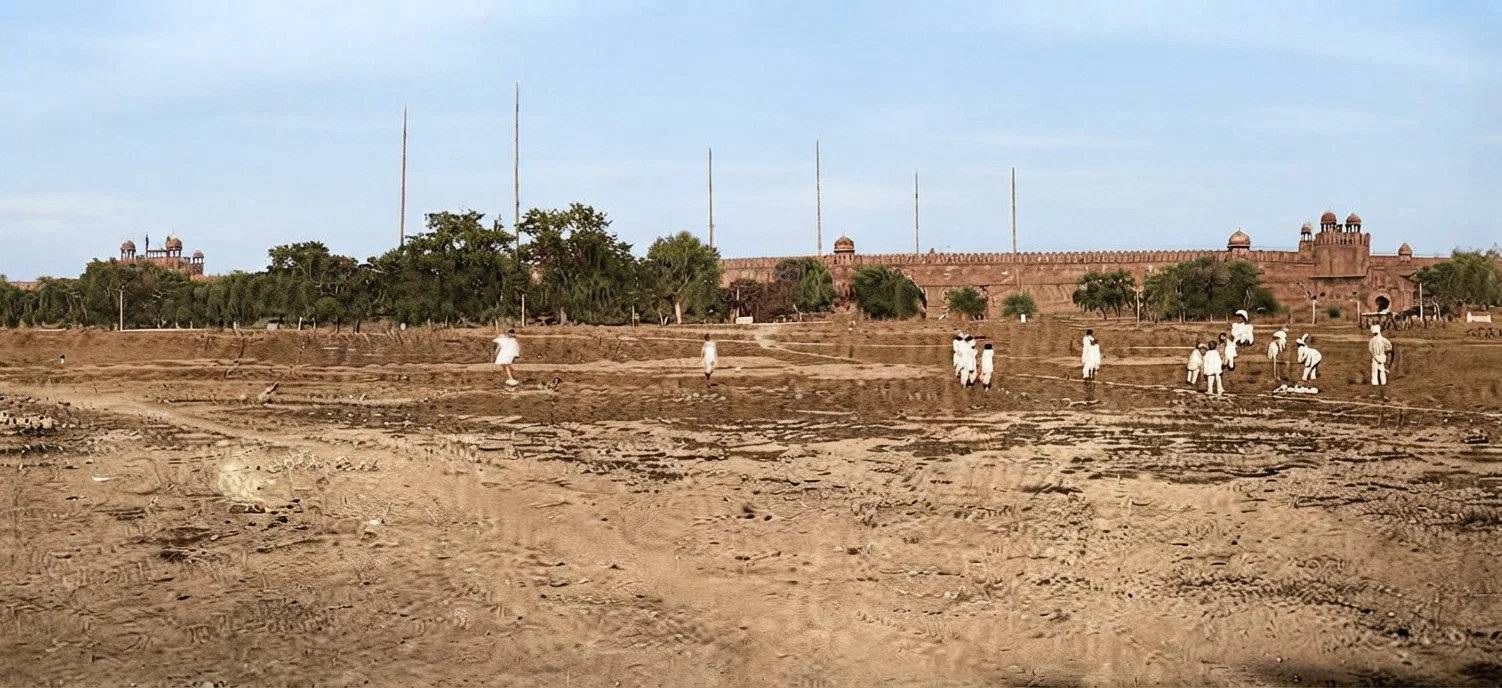
Work on the building of the new capital of the empire at Delhi has long been under way. The temporary quarters are nearing completion; and this fall, when the court comes down from Simla, Delhi will become in reality the capital of India. Experts from England have been over the ground, and the site for the new city is to be laid well outside the old city wall, to the southwest, and a ceremonial station near the Lothian bridge will be the starting-point of a broad avenue through the city by way of the Jamna Masjid and the Delhi gate of the old city walls to the new city.
The way in which the change of capital is coming to be viewed by many prominent thinkers is voiced by one authority, Mr. Harold Cox, in the Edinburgh "Review," as follows: "The day of the provincial government has now come." He says that the effect of the change will be decentralization of government, affecting now the imperial government itself, and later the provincial governments as well. More freedom of action to local governments, such as the presidencies of Bombay, Madras, and Bengal, and the provincial councils, as Bihar, and the United Provinces, and the Punjab, will result. A call is persistently made for a royal viceroy; and with the change in the methods of government expected from the new order of things, this is thought to be within the realm of possibility. One thing seems certain, and that is that as the result of the change of capital, India will see material changes in methods of administration.

Bengal and Bihar

Meanwhile the new provinces created at the durbar are getting harnessed into the traces and prepared for their responsibilities. Up to the time of the readjustment of the frontiers,Bengal had been under a lieutenant-governor; it now becomes a presidency with a governor in council. The capital of the presidency, Calcutta, has become reconciled to the loss of the imperial prerogative, and throughout the province the new order of things seems to be opening up smoothly and with little opposition. The train of the governor, Lord Carmichael, narrowly escaped wrecking on its way from Darjiling to Calcutta, soon after his taking office; but this was thought to be the work of some one with a personal grievance, rather than a political attempt. Bihar starts life with a new capital at Patna, and work on the new quarters is pushed as rapidly as possible.

The Persian Railways

The commercial community of India have been very much pleased with the promise of a new railway from the Russian line ending in Caucasia and connecting with the Indian line at Quetta. This would make possible an all rail route from Europe to India, and shorten the journey as well as the mail time. But there are opponents of the scheme in the person of some military officers, who feel that it will be a strategic blunder, and will open the way for the southward advance of the Russian. Already Russia has completed railways to the northern borders of Afghanistan, a short distance from the frontiers of India, but separated by mountains which form a difficult barrier; and the opening of a rail route across the plains of Persia opens an easier and safer route.
The fact of the disturbed conditions in Persia, with the not very remote probability that Russia and England will have to take over the administration of the country, emphasizes the fear that is felt by many Englishmen, that the touching of the frontiers may be the opening wedge for further aggressions when a likely opportunity presents itself. Since the return of the dalai-lama to Tibet, there have been persistent rumors that the Russian agent, who was mainly responsible for the difficulties that led to the British expedition under Colonel Younghusband, is again in Tibet, influencing the political situation. This is but a sample of what is taking place all along the border-lands; and in all the recent diplomatic relations between the two countries, the paw of the Russian bear, tho covering its claws, is seen reaching out after every tempting morsel available. To open the way to India, therefore, seems but to tempt to further aggression our great Russian neighbor.

The Fight Against Disease

Against ignorance, fanaticism, and filth, the government is seeking to educate the masses of India along sanitary lines, so as to be able to cope with the awful scourges, such as cholera, plague, smallpox, and leprosy, which yearly carry off millions of India's people. Malaria and consumption are also receiving their share of attention from the government. It is reported that more people in some provinces die of malarial poisoning than of all other diseases combined. Free quinin is now dispensed from nearly all government offices throughout India.
Plague, that terrible scourge which wrought havoc in Northern China a year or more ago, is ever with us; yet some express the hope that an immune population will eventually come out of the present troubles, as it has been found that rats which pass through one epidemic are far less susceptible to a second. It is hoped that human beings are similarly affected, and that an immune population will in time develop. Yet at this writing, the slack time of the year for the ravages of the disease, the death-rate therefrom weekly is over five hundred, while in the winter season it reaches as high as eight or ten thousand. Cholera is equally fatal during the summer months.
NEW CAPITAL GROUNDS JUST OUTSIDE THE OLD CITY WALLS AT DELHI, INDIA
In a number of sections, hospitals for the treatment of tuberculosis are established, and an effort has also been begun to reach the confined inmates of the purdahed homes by means of female nurses. It has been found that the secluded inmates of the homes of India, especially among the poor, who rarely see anything but the bare walls of a small room, or perhaps at most an enclosed well-like compound, are among the heaviest contributors to this fell disease. It fact, when any of the great scourges visit India, it is the women, secluded and unable to fly from the terror, who fall easiest victims.