Among the Indian Women

6%

Pacific Press Publishing Association · Mountain View, California · Mar 26, 1912

FromSigns of the Times, Vol. 39, No. 13.

Read the full edition

Among the Indian Women

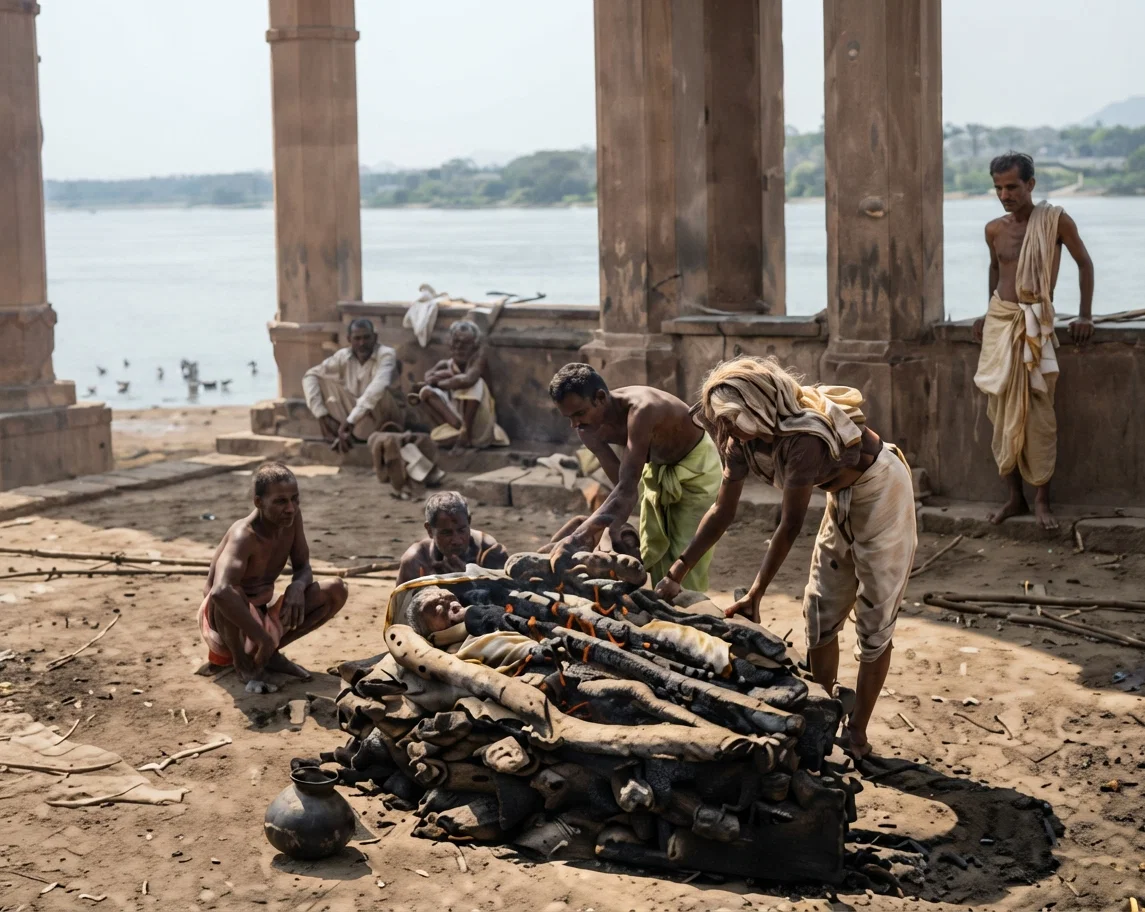
A S we are writing to-day, all life seems awake to activity. At our next neighbor's house musical instruments are beating, and the sound is resounding over all the near-by hills. People of all rank, style, and description are assembling. The great event of the day is the wedding of an Indian king of a district near by, to a queen, the daughter of a rajah of a near district. The bride is a little child, scarcely out of the nursery, a dear little girl of twelve. She is leaving her father's home, possibly never to return, and her husband is what might be termed an old man. There has been revelry for days, but to-day is the great day of all. Indian gentlemen of position and rank have come to the wedding, bringing scores of people, to show thus their prominence. Poor people by the hundreds have come to enjoy the food furnished in abundance. Three have died from the revelry, and have been carried to the burning ghats a short distance down the hillside.
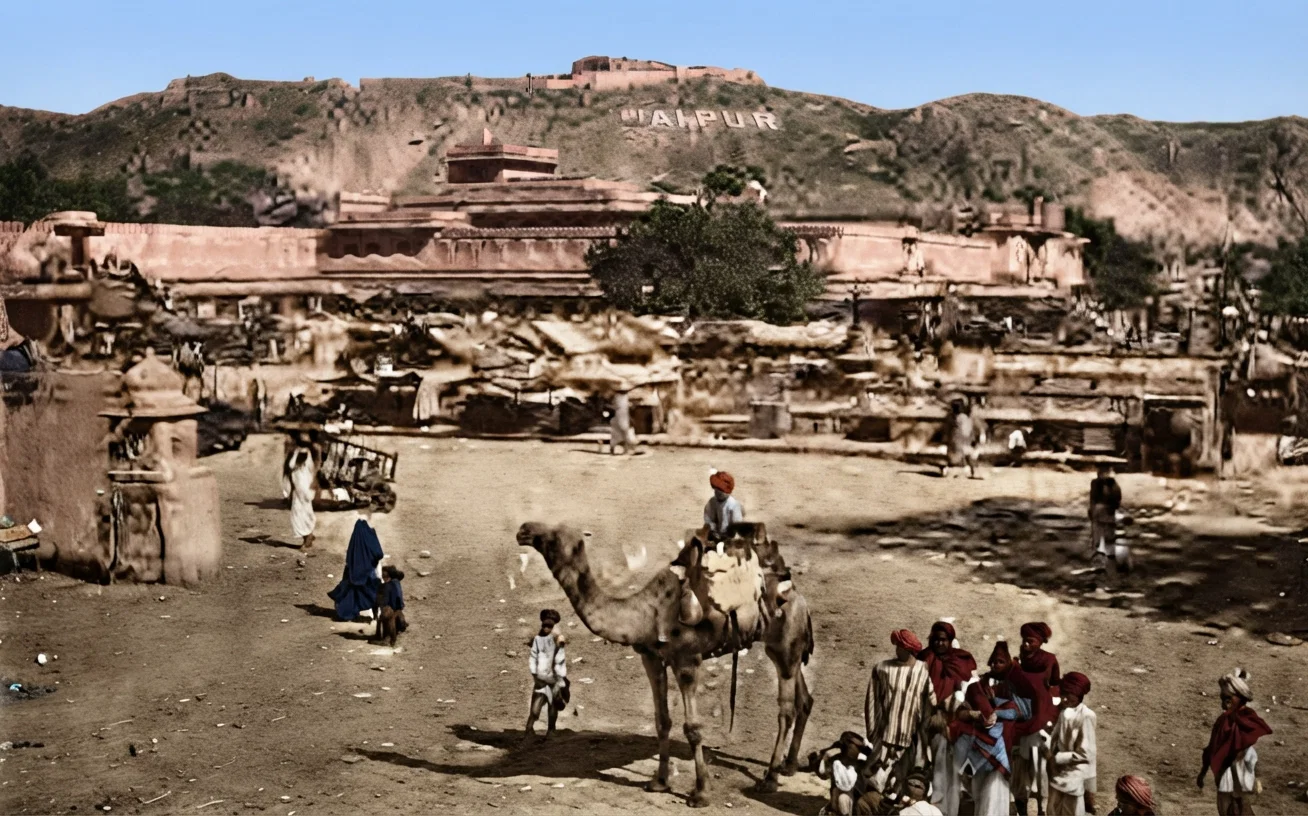
Scene in Jaipur, capital of the province of Jaipur, India
While all is gay, a sad picture is seen of the daughter parting with her parents. The scene is a pathetic one. Their baby girl leaves their protection and care as the parents turn their faces homeward. But last of all there is a parting gift from the father to his daughter,—six little girls of her own age, from his country, he presents as a last tribute of his love to his little daughter, to be her companions, and we may well say playmates, as she goes to her new home.
Our hearts go out in pity for this little child, and we wish that we might bring her to our school, and let her enjoy freedom with the other children rather than be placed behind purdahs and always kept carefully screened from the eyes of the outside world. But this little child is only one of thousands, and it is to be hoped her lot will be better than that of a widow. She will probably have many comforts that the poor can not enjoy; and yet there is nothing that can take the place, in her heart, of the love and companionship of her parents.
Recently I visited the home of a child bride thirteen years old. Her father has one of the finest palaces in these parts of India, and in many ways has adopted Western ideas. In the education of his children, he has been very liberal, and this little princess can talk English very fluently. She seemed to enjoy our visits, and we had some good talks together, and she begged that I come often and see her. In one of her talks, she was inclined to open her heart and tell me how unhappy she was. Her mother-in-law is an uneducated Indian woman, and afraid to have her son's wife under English environments, and in many ways makes the life of the young princess very unhappy. One day while I was visiting her, she referred to the difference in the home life of the Indian people and that of those in other lands. She said, "When you come, there is sunshine for a few minutes; and when you are gone, the shadows gather."
We were sitting in an enclosed veranda, just outside the drawing-room. The windows were open which led into the adjoining room; and we afterward heard that the husband was lying in that room, seeking to catch some word with which to condemn his wife. After I had gone, he and the mother-in-law flew at her and gave her a beating, and then wrote to the father, asking him that his daughter be prohibited from receiving calls from the outside world. But he replied that he was very pleased to have his daughter mingle with English ladies.
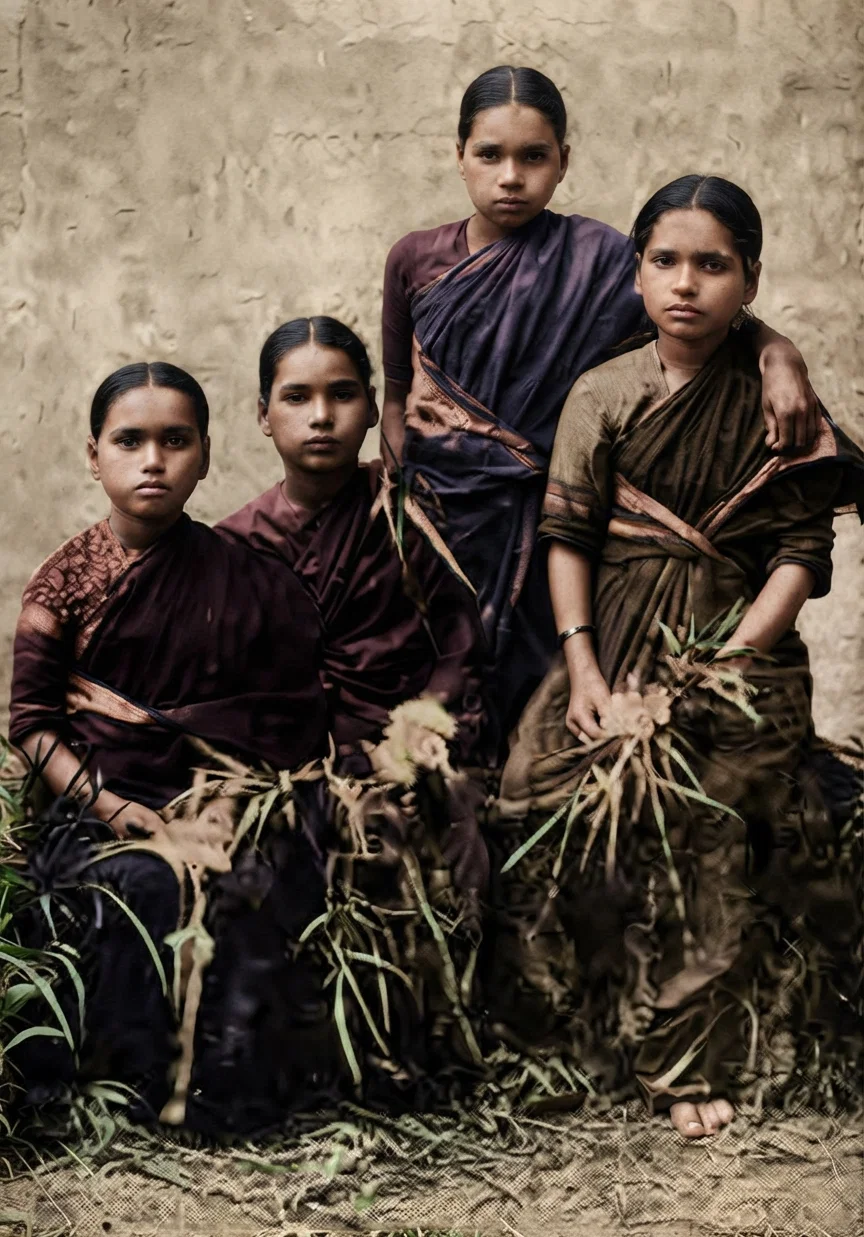
Group of child widows of India
The little princess has now gone down to her home on the plains, and we wonder what the future has in store for her. Fortunately her husband is young, and she is not so liable to be left a widow as the little queen in the home above us, whose husband is along in years. When he dies, she — poor little thing! — will be said to be the cause of his death, and will have the sad future that awaits the majority of Indian wives.
Occasionally we find a woman who has come in touch with Western ideas through the influence of the missionary of the Gospel, and resolves at all costs to make something of her life. We were very pleased the other day to receive a visit from a woman of the "Arya Samaj." Tho young, and left a widow, she resolved to get an education to fit her for a teacher. This she has done. It is really refreshing to meet such an Indian woman, and she a widow, eager to give her heart and time to help her companions in their life. But she is only one of a few, among the thousands who simply sink into oblivion.
A missionary who spends her entire time among these women, gives us a little glimpse into the narrow life of the poor child widows of India as she sees it:
One of the saddest pieces of work is to visit one of these newly made widows. After one outbreak of plague, I heard of three of our old Kanarese scholars whose husbands had died of plague. I went to the house of one. The mother-in-law came to the door. I asked to see Subbamanne. She said, "You can not see her; she is too full of trouble to see any one." I said, "But Subbamanne has been so friendly, I am sure she would like to see me." Again she said, "It is impossible." I said, "I have come to see Subbamanne, and I will wait here until I see her." Then she asked me to go into the house, and opening a cupboard in the wall, without any light or ventilation, showed me Subbamanne. What a change! The bright, strong girl had become in a few days stricken and old. She was being kept shut up until the day when her relatives would be invited to see her degraded, her head shaved, her jewels taken off, her pretty clothing exchanged for widow's red cloth.
Some time since, I was in Samane and saw a young widow, apparently not more than sixteen years of age, sitting at the door with a tiny bit of humanity in her arms. The child looked so ill that I felt that I must stop and inquire about it. I was invited into the house, and found no fewer than seven widows. The others were all much older. I was told that the young widow's husband had died six months before her child was born. One meal a day and fasting for twenty-four hours each month, no water being allowed however ill she might be, had resulted in an emaciated, diseased child. I had with me our school nurse, who had been trained in a Zenna hospital. I asked her if she had seen such a case before. She replied that they were innumerable in the hospital where she lived.
It is only by getting in close touch with these people, that one knows the inner life of these "shut in" women. In many cases very little is known of them; but to the missionary who spends her life in visiting these secluded women, is the inner life revealed. What is needed to-day to help Indian women is scores, yea, hundreds, of well-trained, consecrated, warm-hearted women who will be contented and glad to give their lives in an unselfish struggle for these souls. Workers should adapt themselves to the customs and ways of a land like this, so as to be able to give the Gospel message in such a manner that these secluded sisters shall not become discontented with their lot or get out of touch with their people, butrather show them the Gospel that brings peace and contentment into the life.
A burning ghat, India
There are down-trodden women in India, And many child widows as well. They know not the voice of the Master, O, hasten the story to tell — The story that Jesus Christ loves them — This blessed news often repeat. In His infinite, tender compassion, He says to us, "Give them to eat." They are heart-sick and weary, dear sisters; Do not say we can do nothing more. Let us take what we have to the Master; He will make it a full, ample store. We may have but a few loaves and fishes — His touch makes the smallest things great. The heathen are dying of hunger; Let us hasten before 'tis too late.
Mrs. J. L. SHAW. Mussoorie, India.