EDITORIAL

7%

Pacific Press Publishing Association · Mountain View, California · Sep 3, 1912

FromSigns of the Times, Vol. 39, No. 34.

Read the full edition

EDITORIAL

"The Forerunner of Christ"

THE following is part of a story of a great reformer: "And in those days cometh John the Baptist, preaching in the wilderness of Judea, saying, Repent ye; for the kingdom of heaven is at hand. For this is he who was spoken of through Isaiah the prophet, saying, The voice of one crying in the wilderness, Make ye ready the way of the Lord, make His paths straight."
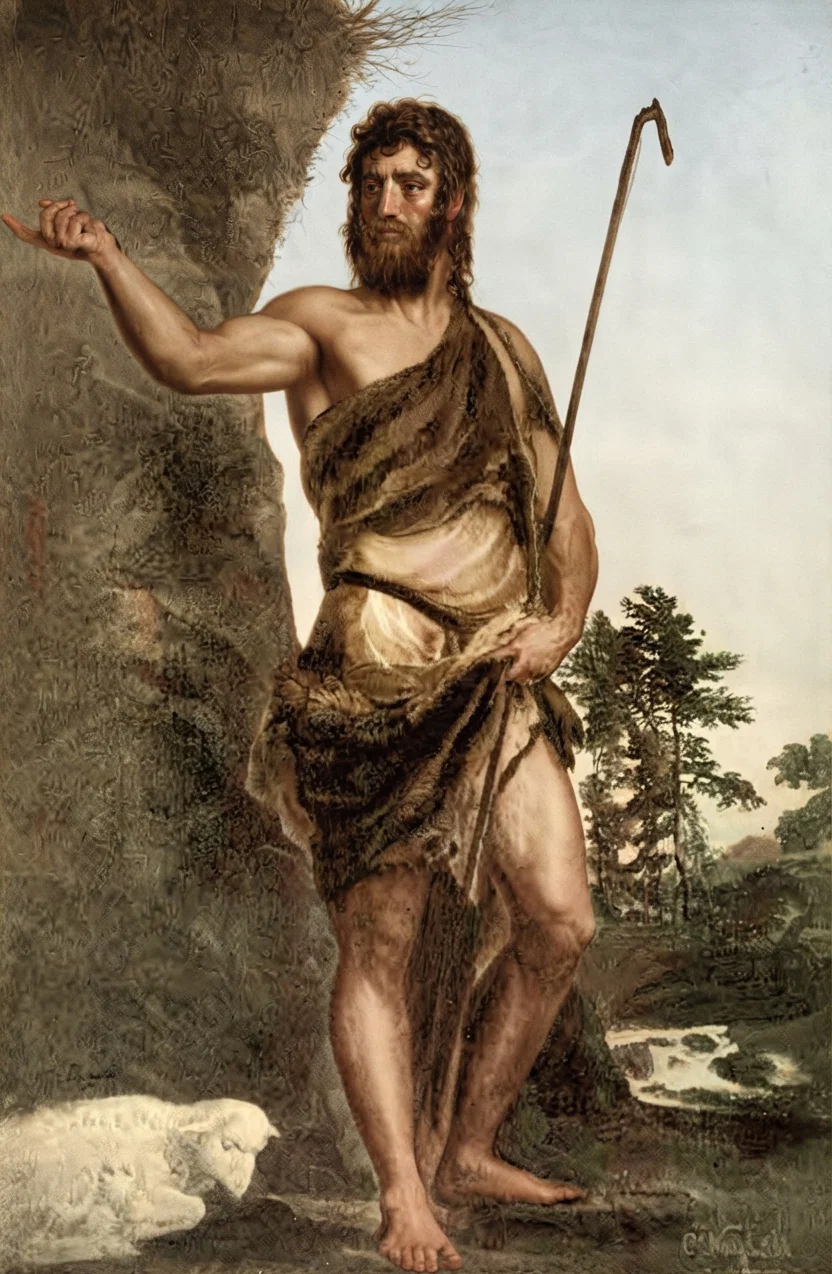
Titian "The voice of one crying in the wilderness, Make ye ready the way of the Lord, make His paths straight"
ONE of the most remarkable characters of the Scriptures is John the Baptist. He was not a great father, like Abraham; he was not a leader, a lawgiver and organizer, a learned author, like Moses; he was not a miracle worker, like Elijah or Elisha; he was neither warrior, nor poet, nor literary, like Joshua, or Isaiah, or David, or Ezekiel; he was not a maker of proverbs, like Solomon. He wrote no book, wrought no miracle; yet it is said of him by the Lord Jesus Christ, "Among them that are born of women there hath not arisen a greater than John the Baptist." In what did his greatness consist?
His greatness was not in his birth or education, humanly speaking. His father, Zacharias, of the course of Abijah, was a humble priest, with a humble wife, Elisabeth. Both were faithful, righteous, devoted, doing their simple duty, and becoming aged in the service of God. John was a child of their old age, foretold by God's angel, and a subject of prophecy at his birth. He was doubtless carefully reared, and taught by his parents in his early childhood, but in the later days of his youth his time was spent apart from man, in the solitudes. This one sentence tells the whole story of his early life: "And the child grew, and waxed strong in spirit, and was in the deserts till the day of his showing unto Israel."
Surely, according to modern ideas, an inadequate education for his work, whatever it might be.
BUT, first, like Elijah of old, he was trained of God. His early training, largely by his mother, like that of Jesus, was from the Scriptures, until he was saturated with their story and spirit. In the deserts of Judea, in mountain and plain, by river and sea, in storm and tempest, in sunshine and calm, under the open starry heavens, he had learned to know God, had communed with Him, had come to appreciate His unsearchable greatness and power.
HERE, too, he learned his mission. Mightier, man never knew. He was to be the herald, precursor, immediate messenger, of the Son of God to this world. "A prophet?" said Jesus. "Yea, I say unto you, and much more than a prophet. This is he, of whom it is written, Behold, I send My messenger before Thy face, who shall prepare Thy way before Thee." Some great men have small missions, and grow little; some little men have great missions, and grow great. John the Baptist had greater mission than prophet had ever before known.
MIGHTIER mission than to be the immediate messenger of the Son of God, mortal never had; but the man was worthy. He had the marvelous power to sink himself out of sight, and rejoice in the success of One whose glory utterly eclipsed his own. Power greater there could not be. It is the acme of Christian experience. The prophecy which went before called him Elijah. Jesus declared him to be Elijah; but when the committee from the Sanhedrin went out to interview him by the Jordan, and demanded who he was, "he confessed, and denied not; and he confessed, I am not the Christ. And they asked him, What then? Art thou Elijah? And he saith, I am not. Art thou the prophet? And he answered, No. They said therefore unto him, Who art thou? that we may give an answer to them that sent us. What sayest thou of thyself? He said, I am the voice of one crying in the wilderness, Make straight the way of the Lord, as said Isaiah the prophet."
JOHN did not do as did one priest of his day—the historian Josephus—give a long list of honorable ancestors. He might have done this, but he eliminates all reference to himself, all that would in the world's eyes bring distinction, or elevate him. "I am the voice of one crying in the wilderness,"—only a voice. More than six centuries had passed since Isaiah had uttered the prophecy. During all that time, it had been silent, unfulfilled. But when God's time came, the message found the man. The message was great; it was of God, eternal in its import, omnipotent in its effective operation. And the man, giving himself undividedly to the service of God, was made great in the mightiness of the message. So it ever is. All the power, all the authority, all the infallibility of the servant, lies in the message of God that he bears. All the power to forgive, or absolve, or curse, or cleanse, lies in the Word, not in the workman, only as the workman is the voice of the Word.
THIS means self-surrender; and John met this — met it so thoroly that he could rejoice in the sense of his own diminishment, because it redounded to the glory of the Master. His disciples were jealous for him; they wished to arouse his jealousy. They said, 'Rabbi, He that was with thee beyond the Jordan, to whom thou hast borne witness, behold, the same baptizeth, and all men come to Him.' What was the reply? 'John answered and said, A man can receive nothing, except it have been given him from heaven. Ye yourselves bear me witness, that I said, I am not the Christ, but, that I am sent before Him. He that hath the bride is the bridegroom: but the friend of the bridegroom, that standeth and heareth him, rejoiceth greatly because of the bridegroom's voice: this my joy therefore is made full. He must increase, but I must decrease.' Only those baptized of the Spirit of God could give true utterance to such sentiment. Knowing that he must decrease, knowing that all the power and influence that he had in Judea should fade out before the influence of Christ, even as the stars fade before the sun, yet in that very loss his joy was made full, made full because it exalted the Master whom he came to serve.
JESUS declared that 'if ye will receive it, this is Elijah, which was for to come.' The angel who foretold John's birth declared that he should have the spirit and power of Elijah. He fulfilled in part that prophecy found in the last verses of the Old Testament: 'Behold, I will send you Elijah the prophet before the coming of the great and dreadful day of the Lord.' Elijah was a type of the herald of the first advent, John the Baptist; he was also a type of those who should give God's last message to the world. How the characters of Elijah and John, and the messages which they bore, harmonize in spirit with the prophecies which the Lord has spoken concerning the days in which we live! Take, for instance, the great, positive part of the threefold message of Rev. 14: 6-14: 'And I saw another angel flying in mid-heaven, having eternal good tidings to proclaim unto them that dwell on the earth, and unto every nation and tribe and tongue and people; and he saith with a great voice, Fear God, and give Him glory; for the hour of His judgment is come: and worship Him that made the heaven and the earth and sea and fountains of waters.' And other prophecies which speak of that message, and the context of that which we have quoted, show that God's last great message is to close with all earthly glory in the dust, and the Lord alone exalted in that day. And therefore those who give that message to the world, heralding the second advent of our Lord, must, as did John the Baptist, so fully yield
themselves to Christ that His glory shall be first in everything, that they will rejoice in whatever may come to them, only so that His own cause may be advanced. The messenger is not greater than his message, in God's plan. God's message now is pregnant with all the mightiness and power and meaning of all past messages. He who will let it possess his soul, recognizing, appreciating his own utter insignificance and God's greatness, may not be counted great in the sight of man, but he will be great in the sight of God, and his reward may be safely left to the wisdom and love of his Master. W.