The Importance of the Home

3%

Pacific Press Publishing Association · Mountain View, California · Nov 5, 1912

FromSigns of the Times, Vol. 39, No. 43.

Read the full edition

The Importance of the Home

A Molder of Character
By Mrs. L. D. Avery-Stuttle
HOME! How the very word sets the heart-strings aquiver! What myriad memories cluster around it—what sweet, old-fashioned pictures! Interview any man or woman above forty years of age on the subject of his early home life, and almost without exception you will have a very fair index of his or her character. Of course there are exceptions, but hardly more than enough to prove the rule.
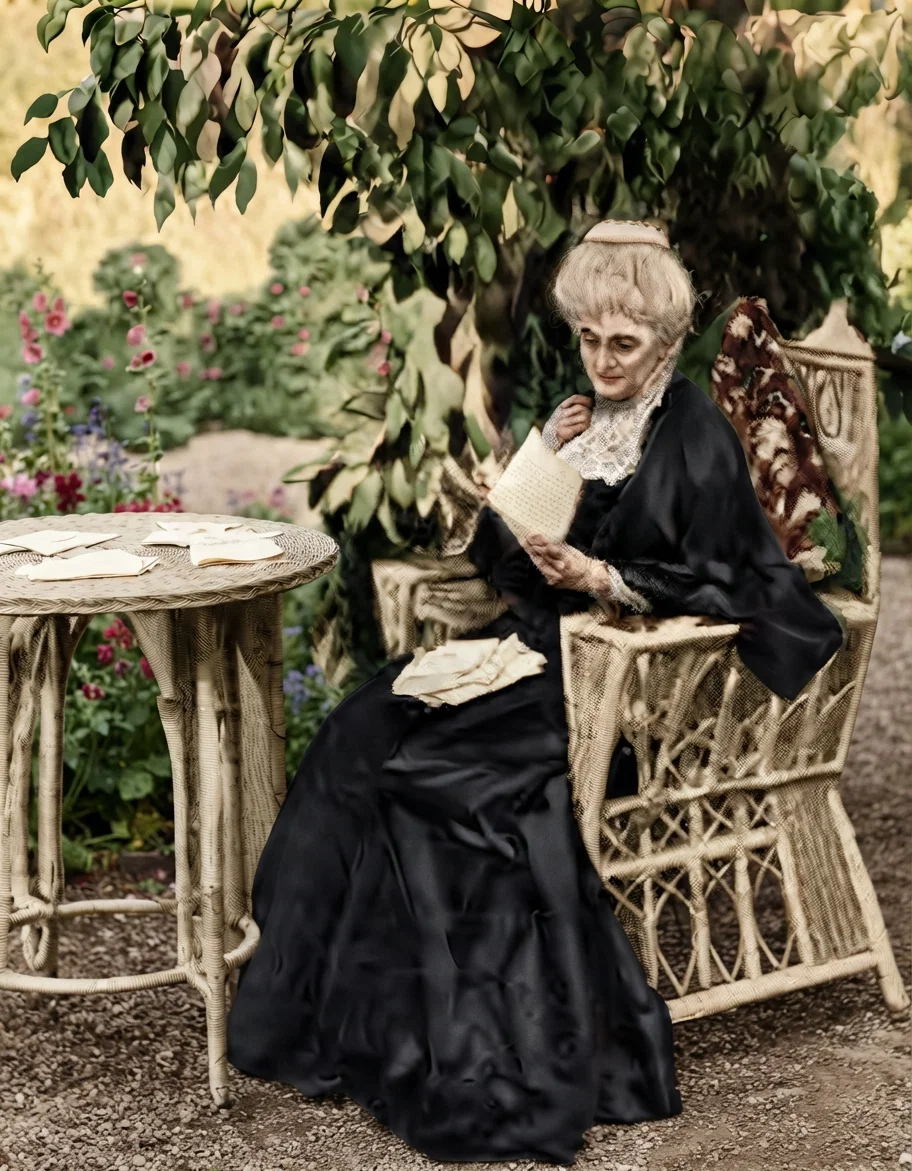
Call to mind almost any of our acquaintances. There is Auntie Willis. Her hair is white, but her cheek is pink and fresh, and her eyes are as blue as the skies in June.
She is halting at the gate.
"Come in, auntie. I wish you would tell us a little about your old home—when you were a child, I mean."
"When I was a child!" echoes the old lady dreamily, while her expressive eyes light up with a radiance that is good to see.
"If I could only see the old home again, just once! There never was another quite such a home, I think. And then, my mother—what a blessed mother she was! Her beautiful life and character have been my ideal from earliest childhood. I'm only sorry that I represent her so poorly.
"Tell you about my early home life? Well, there's not much to tell, except that ours was a happy home, a beautiful home, a Christian home. It was not stately or grand or luxurious. O, no; it was not the least bit like the modern homes of to-day,—just a quaint, old-fashioned farmhouse.
"But I can never forget the morning glories that climbed up at the windows, and the tall, stiff hollyhocks and the sweet-williams and marigolds in the front yard. Those flowers had a peculiar effect upon me as a child," continued Auntie Willis, "and I believe the effect has somehow lingered ever since. They were always associated with my mother, in my mind; they appealed to my love of beauty and purity, and had the effect of increasing my childish determination to emulate the good and the pure."
"But can you tell me, auntie, what particular influence—whether at home or elsewhere—had the greatest effect upon your early life in the molding of your character?"
Auntie Willis thought a moment, and replied slowly:
"I am sure that it was the godly example of my Christian parents, first and greatest; and after that, I think I would name the flowers, the music, and the books which I enjoyed in my childhood's home. The flowers I have already mentioned. We used to sing a great deal at home—my brother and I; and those old songs seem almost a part of myself, to this day.
"Then, the books! There was not a very great variety, I can assure you. But the good old Book was first of all."
“I wish you would tell us a little about your old home”
Well, the experience of Auntie Willis is not at all exceptional. Show me a home of peace and quietness and prayer—a home where love rules every member, and where discord and angry words are altogether unknown—and I will show you boys and girls who are not quarrelsome, who are gentle and thoughtful of the feelings of others, and who are loved and sought after by teachers and playmates alike. I will show you young men and young women who can be depended upon, whose word and whose promise are never held at a discount. And as they grow older, these young shoulders are those upon whom a willing public is very apt to place burdens.
Given an ideal home, and it matters not so much what the after-influences may be. I tell you, the old home life and the old home influences can not be shaken off.
"What!" exclaims some doubter. "Do you mean to say that children always turn out well, whose home influences have been good? Why, I've known ever so many sons of ministers to go wrong, and daughters, too, for that matter."
Well, that is quite possible. But it may be that even the homes of some ministers of the gospel are not always ideal. They should be, yes; but all of us make mistakes. Do not misunderstand me. An ideal home is not necessarily one where mistakes are never made. But when the mistakes are made, they are corrected as soon as they are seen—and even father and mother are not ashamed to acknowledge a fault.
I will tell you five little words which are wonderfully necessary for each member of the family to repeat upon certain occasions, if a happy home would be maintained. They are very simple words, and it would seem that they would be quite easy to speak; but they are the hardest words in the English language—or any other—for the most of us to repeat.
We can say almost anything else. We back around them, and jump over them, and dodge them. A child will sometimes prefer to take a whipping rather than to speak them. The older brothers and sisters will spend sleepless nights trying to coax an awakened conscience to let them off a little easier, or in trying to invent some other words which will do just as well. While father or mother—O, dear! they are so fearful that the expression of these simple words will detract from their dignity, and that discipline could never again be maintained, that they also are too apt to excuse themselves, and the magic words are rarely heard.
Here they are:
"I did wrong; forgive me."
Well, how often do you hear them? Are they as familiar to your ears as cross words or boastful words or hasty words? Does this beautiful sentence pass your lips as often, in presence of the family, as do foolish words or idle gossip?
If they were oftener used, the divorce courts would be robbed of a large percentage of their disgusting business, and even the criminal courts would be affected.
But all these things have their influence. O, believe me, there is nothing which is so felt in the after-life of the boys and the girls, as home influence, be it good or bad.
Good schools and good teachers are important, but good homes and good mothers are more so.
An excellent education is a splendid thing, but an excellent home and efficient home training are better. I tell you, the homes of the nation need to be jealously guarded; then the country will take care of itself.
Are battle-ships and standing armies necessary for the safety of the country? Good homes and good fathers and loving mothers are a hundredfold more so!
The teaching which a child receives at school, be it either good or bad, wise or otherwise, can be, and often is, almost or quite undone by the parents at home.
Ah, the home ought to be an Eden in miniature! Talk about Christianizing a nation! Let us be more sensible, and Christianize the home.
Good homes mean good citizens. Good citizens mean a prosperous community. And prosperous and healthy communities mean prosperous schools and industries, healthy and growing churches, and well-attended Sabbath-schools.