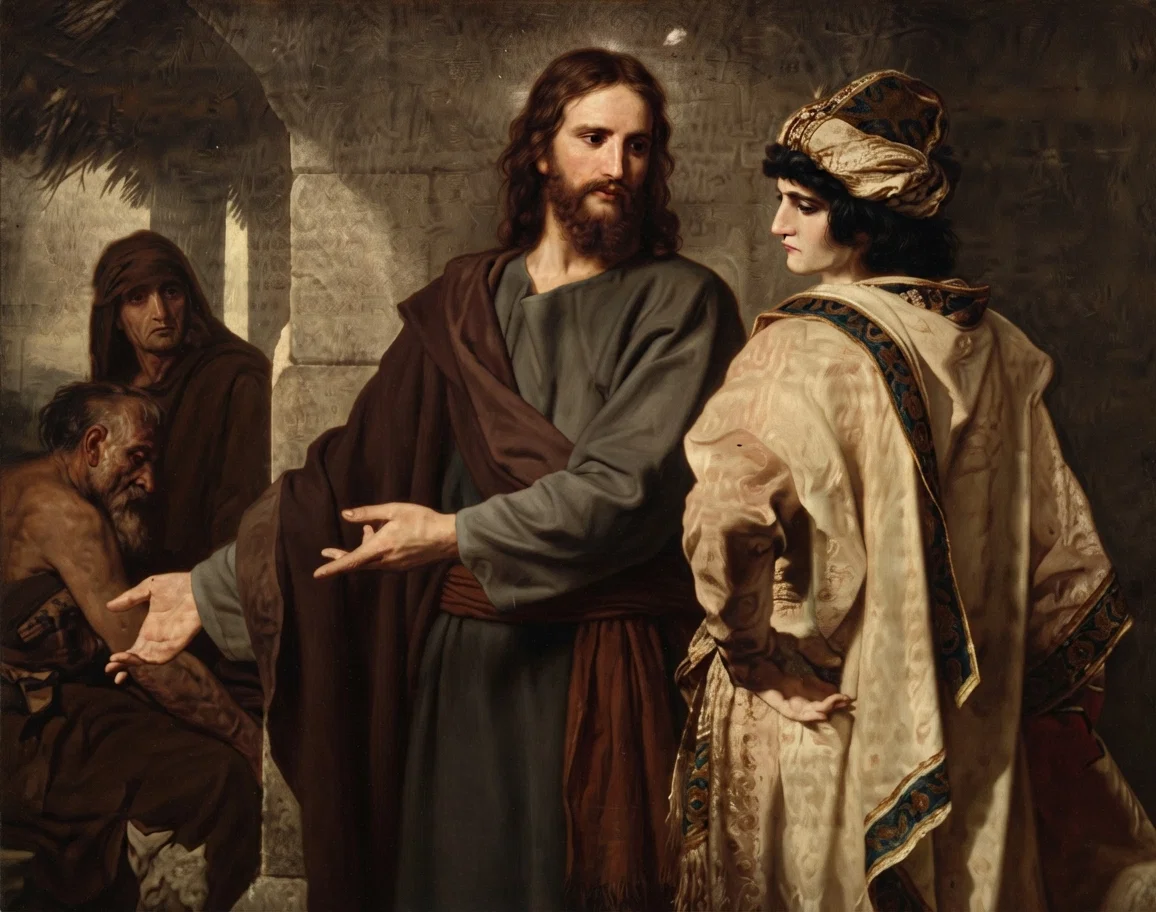
"Who loved me, and gave Himself for me." Gal. 2: 20.
IN these few words, Inspiration has announced the mighty truth that men are loved individually and saved individually.
God loved the world, and gave His Son to die for the world; but in its last and true analysis, the love of God is directed to individual men.
Viewed from whatever angle, the blessed plan of salvation shows that it was devised and must be executed with reference to men as units.
Calvary speaks only to "whosoever," and "whosoever" is always the individual.
"Whosoever" may believe, "whosoever" may choose, "whosoever" may be saved.
It must be true, therefore, that God's great gifts of life and righteousness are sacred to "whosoever" alone. "Whosoever" has right to all that God proffers him. He has right—an inherent and unalienable right—to believe, to choose, to accept. John 3:16 shows that the great life contract can know but two parties,—an individual God and an individual man.
It were well also to notice that in carrying out the life contract, there are no go-betweens provided for. Nothing is done by proxy. On the part of God there is no delegated authority, on the part of man no transferring of right. God Himself comes down to man, and man himself is drawn up to God.
From Hofmann's great painting, "Christ and the Young Man." Even so the Personal Christ appeals to each Individual soul. To Him alone our allegiance is due. He only is our Saviour. To Him alone must we give account. There can of right be no law, no dogma, nothing human, which interferes between the Saviour of men and the Individual man.
Individual Righteousness
Some one has truly said that religion is man's individual relationship of faith and obedience toward God.
Dear reader, if you will give the matter careful thought, you will readily see that there can be no such thing as national, State, or municipal righteousness, for the simple reason there is no such thing as national, State, or municipal conscience. Conscience is the "inner man" of the individual, that wonderful something upon which the Holy Spirit works to convict man of his personal wrongs. The Holy Spirit, as a part of the Calvary plan, works only in the heart of the "whosoever."4
Never in the history of man has there been such a thing as the salvation of a nation, or even of a church, considered as a whole.
People have not been saved in masses, because they have not believed in masses. It has seldom been true that even a majority of any one nation has believed; and even had this been true, the salvation of the majority could not have brought salvation to the minority. As faith is individual, God-given, and non-transferable, so salvation, which comes by faith, is individual, God-given, and non-transferable. "Tho these three men, Noah, Daniel, and Job, were in it, they should deliver but their own souls by their righteousness, saith the Lord God." Eze. 14:14.
Power to Accept or Reject
The great law of individuality which operates in the matter of man's acceptance of life, operates also in his rejection of life. The right to accept implies his right to reject. As no one may rightly interfere to hinder the acceptance of God's gifts, so no one may rightly interfere to hinder the rejection of those same gifts. In each case man deals alone with Him who offers salvation. God reserves to Himself, to His own court of judgment, the decision of all questions concerning man's direct relationship to the divine government. He has not asked nor will He accept the services of any nation, any church, or any society, which would attempt to dictate to His earthly subjects the course they shall take in accepting or rejecting any of His divine propositions.
For some reason, however, men have been wont to forget that God alone can deal with the great question of salvation; and all through the ages there have been repeated efforts to coerce in matters of religious belief and religious practise. But without a single exception, the God of heaven has upheld those who have stood for the principle of individual right, and in His dealing with men and nations He has marked out in most wonderful way the course He would have us take to-day.
Biblical Examples in Point
In the struggle of the three Hebrew children against the decree of Nebuchadnezzar, the right of individual faith and choice was the main point at issue. Daniel 3. They maintained their right to worship according to the persuasion of their own hearts, even tho in so doing they made themselves liable to the supreme law of the land. The king's decree commanded them to worship contrary to their accepted and established belief. And God miraculously upheld them in what appeared as open disobedience.
With Daniel, at a later date, the circumstances were somewhat different, tho the principle was much the same. Daniel stood for individual right in following the truth. Unlike Nebuchadnezzar's decree, which commanded the worship of a false god, the law of Darius forbade the worship of the true God. See Daniel 6. At least, Daniel was forbidden to offer prayer to the true God for a specified period of time. However, the prophet rejected the law, and followed his daily practise irrespective of the intolerant law which brought him to the lions' den. But God stood by His servant, and individuality triumphed over the then greatest monarchy of earth.
God's Recognition of Individuality
And why should it not? Are not God's commands addressed to the individual? Do they not call for individual obedience? Neither Daniel nor any other child of God could plead as an excuse for disobedience toward God the fact that some earthly precept or some earthly ruler had interposed to hinder. God is supreme, His laws ever have first place, and His direct connection with each soul enables that one by grace to meet every requirement.
This manifest truth of individual relationship to God in matter of faith and moral obedience, for which Daniel and his fellows so earnestly contended, and in which God made them victorious, was made a living issue in the days of the apostles. Daniel and his three brethren opposed government interference, whereas the apostles opposed church interference. But whether from church or government, the interference was justly resented and the believer divinely upheld.
A New Testament Example
Peter and John had been sent forth to preach the blessed Gospel of forgiveness of sin and healing of disease. Their work was the fulfilling of their Lord's direct command. The commission to evangelize the world belonged to them individually and came to them directly. To them the work of Christ was a personal responsibility, a moral obligation, an unalienable right. Their answer, therefore, to the church authorities who sought to restrain them was: "Whether it be right in the sight of God to harken unto you more than unto God, judge ye. For we can not but speak the things which we have seen and heard." Acts 4:19, 20.
Did God sustain them in their decision against the organized church of their day? — He surely did. To Him by prayer they carried their case. "And when they had prayed, the place was shaken where they were assembled together; and they were all filled with the Holy Ghost, and they spake the word of God with boldness." Acts 4:31. The Holy Spirit strengthened them to do directly contrary to the decree of the church. And when arrested again, they boldly said, "We ought to obey God rather than men." Acts 5:29.
Why has not the church always remembered this? Why did not religious leaders, and especially the professed followers of Christ, understand that man is to answer to God alone for his faith or lack of faith? Did not the great apostle disclaim dominion over his brethren's faith? 2 Cor. 1:24. Did he not teach the wrong of judging and condemning another because that other did not meet one's standard? And in splendid recognition of individuality, did he not say, "To his own master he standeth or falleth"? Rom. 14:4.
Yes, the apostle taught man's direct relationship. He made it very plain, when he added, "Let every man be fully persuaded in his own mind." Rom. 14:5. All the great questions pertaining to the relationship of man to God's great spiritual and invisible kingdom, are such that poor finite men, however organized, can not successfully, because not rightfully, interfere. Only God sees the heart, understands the motives, and does the inner work of grace. He alone is responsible for results, and to Him alone men shall give account. Rom. 14:10, 12.
The Individual Pre-eminent
The voices of martyred millions are still declaring that faith is the gift of God to the individual heart, and that the preservation of a faithful, individual relationship is more sacred than life itself.
It can not be too fully nor too strongly emphasized that every feature of the great relationship between God and man is sacredly individual. The call of the Gospel is to the individual. Rev. 3:20. The choosing is individual. Rev. 22:17. The gift of faith is to the individual. Rom. 12:3. The work assigned is individual. Mark 13:34. The salvation is individual. John 3:16. And if loss comes to any, it too is individual. Jer. 31:29, 30.
Such is the teaching of God's blessed Book. From Genesis to Revelation it makes known the inherent right of individuality. And well were it, to-day, when so many and so mighty movements are inaugurated, Christian workers would always remember the individual,—remember his rights before God, and in all that is done seek so to embellish and emphasize those rights, that God shall not be hindered in His work of calling individual hearts to an individual faith and a blessed and everlasting individual salvation. C. L. TAYLOR.