Studies in Daniel

2%

Pacific Press Publishing Association · Mountain View, California · Feb 20, 1912

FromSigns of the Times, Vol. 39, No. 8.

Read the full edition

Studies in Daniel

A Vision of Empires; Three Historic Powers

DANIEL'S vision of chapter 7 was given in the first year of Belshazzar, B.C. 540. Babylon was still a great empire. Two years later another vision is given the prophet, recorded in the 8th chapter of his prophecy. That vision has a twofold aspect,—that which pertains to the kingdoms themselves as kingdoms, and the spiritual aspect, which affects the people of God. The first of these we consider in this study. Let us learn —

The Answer of the Text

1. What came to Daniel in the last year of Babylon?
In the third year of the reign of King Belshazzar a vision appeared unto me, even unto me, Daniel, after that which appeared unto me at the first. And I saw in the vision; now it was so, that when I saw, I was in Shushan the palace, which is in the province of Elam; and I saw in the vision, and I was by the river Ulai. Verses 1, 2.
2. What did he see?
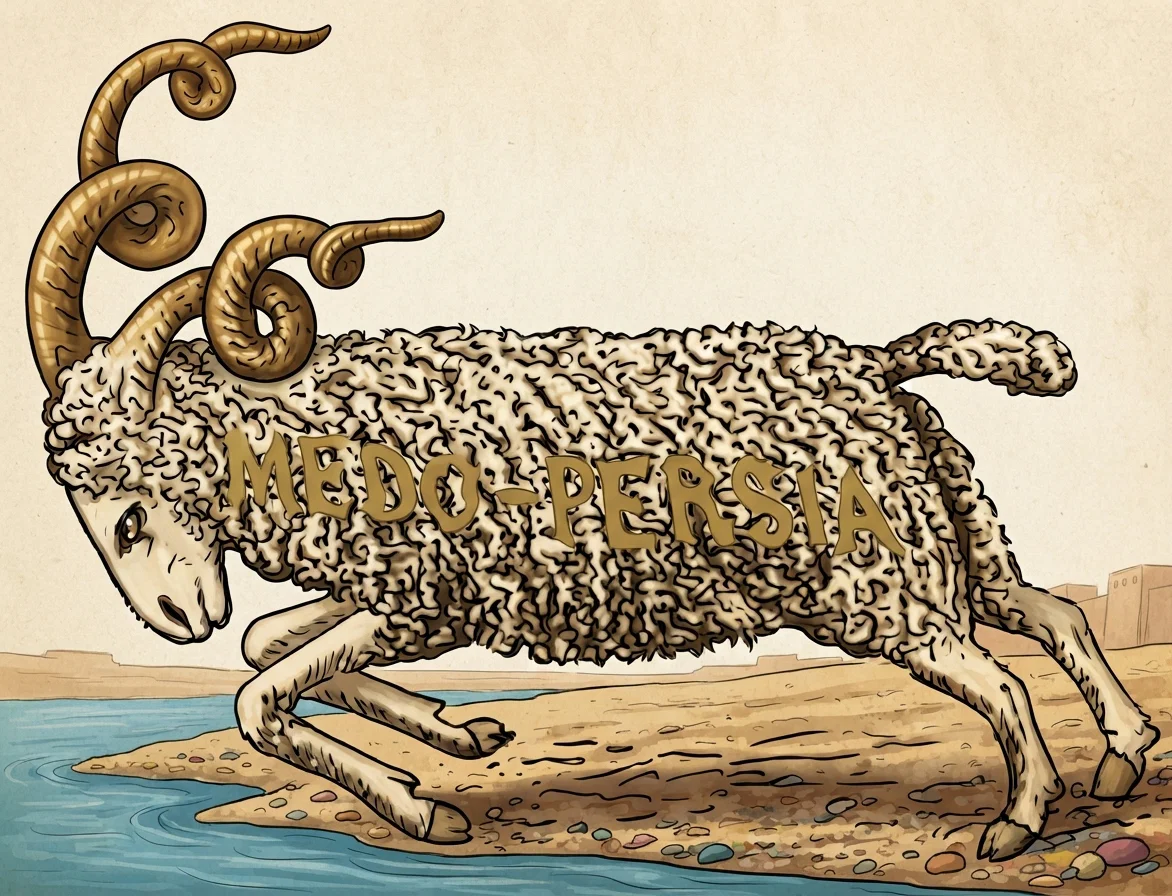
Then I lifted up mine eyes, and saw, and, behold, there stood before the river a ram which had two horns: and the two horns were high; but one was higher than the other, and the higher came up last. Verse 3.
3. What is said of the power of the ram?
I saw the ram pushing westward, and northward, and southward; and no beasts could stand before him, neither was there any that could deliver out of his hand; but he did according to his will, and magnified himself. Verse 4.
4. What is the next scene described?
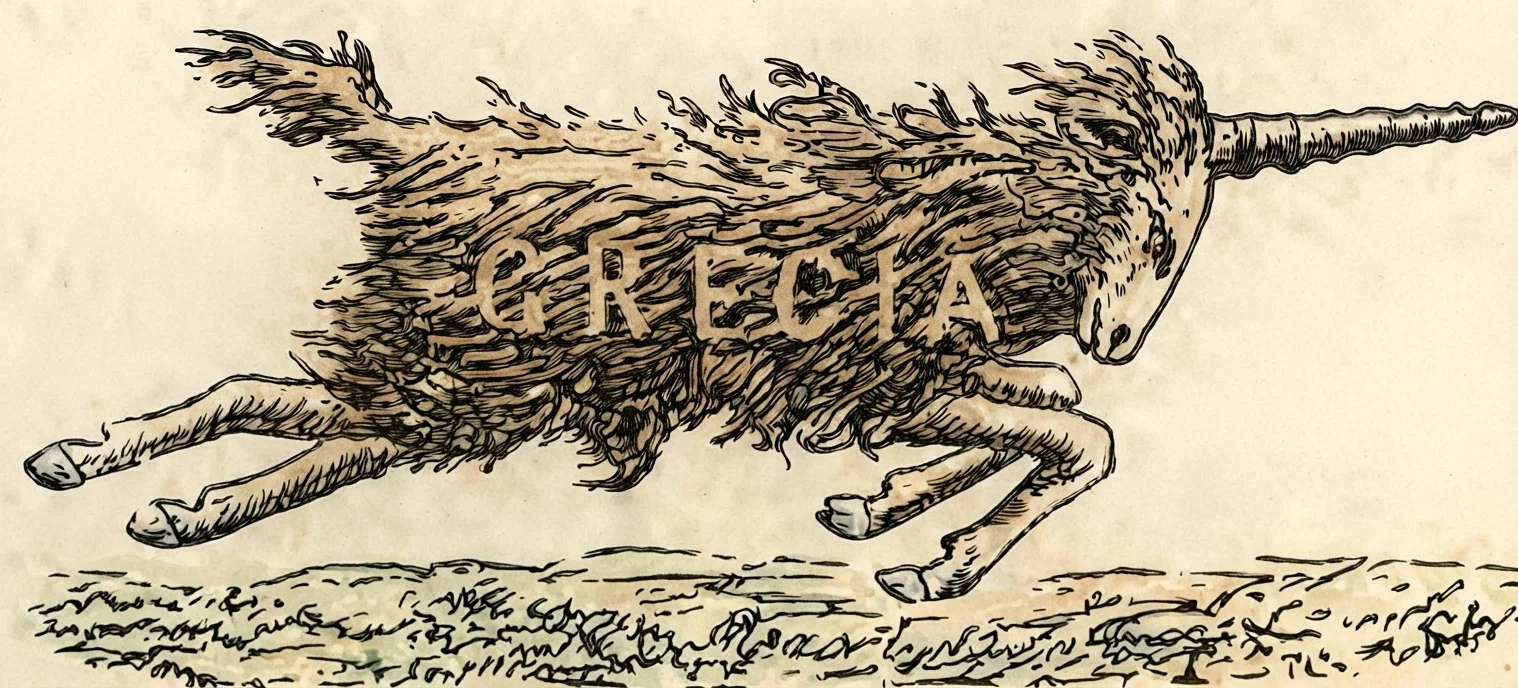
And as I was considering, behold, a he goat came from the west over the face of the whole earth, and touched not the ground: and the goat had a notable horn between his eyes. And he came to the ram that had the two horns, which I saw standing before the river, and ran upon him in the fury of his power. Verses 5, 6.
5. What is said of the comparative power of the goat?
And I saw him come close unto the ram, and he was moved with anger against him, and smote the ram, and brake his two horns; and there was no power in the ram to stand before him; but he cast him down to the ground, and trampled upon him; and there was none that could deliver the ram out of his hand. Verse 7.
6. What is the sequel of this symbol?
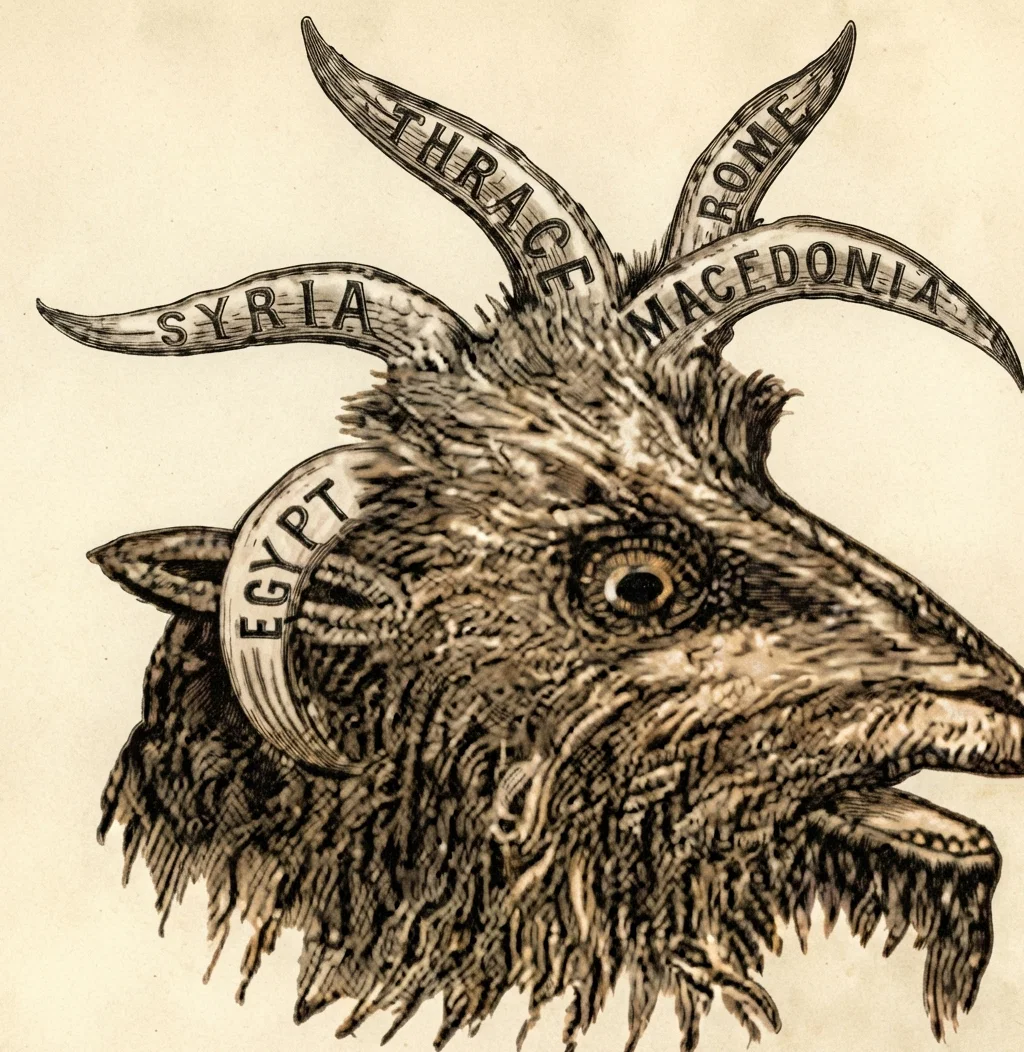
And the he goat magnified himself exceedingly: and when he was strong, the great horn was broken; and instead of it there came up four notable horns toward the four winds of heaven. Verse 8.
7. What divine command was given the angel Gabriel?
And I heard a man's voice between the banks of the Ulai, which called, and said, Gabriel, make this man to understand the vision. Verse 16.
8. What did the angel tell Daniel?
And he said, Behold, I will make thee know what shall be in the latter time of the indignation; for it belongeth to the appointed time of the end. Verse 19.
9. What did the angel declare was symbolized by the ram?
The ram which thou sawest, that had the two horns, they are the kings of Media and Persia. Verse 20.
10. What was the explanation of the rough he goat?
And the rough he goat is the king of Greece: and the great horn that is between his eyes is the first king. Verse 21.
11. What was symbolized by the four horns?
And as for that which was broken, in the place whereof four stood up, four kingdoms shall stand up out of the nation, but not with his power. Verse 22.

Note and Comment

The explanation of this part of the prophecy is neither difficult to make, nor hard to understand. The great outlines are given in the prophecy itself, and the Bible student needs only to add a few facts of history, and the meaning is clear. It is well to note that no symbol of Babylon appears in this vision, tho the throne of Babylon was still standing, and the wonderful city was still untouched by the hand of the spoiler; yet the great fact remained that the “glory of kingdoms” was near the close of her career. Only a few more months, at most, and the Chaldean monarchy would be ended, “the beauty of the Chaldees' excellency” overthrown.
Babylon has run a pitiful career since Nebuchadnezzar, her great king, laid down the scepter. Her present king, Nabonidus, is building heathen temples, and worshiping at heathen shrines; the affairs of the empire are in the hands of his son, the pleasure-loving, lust-loving, inexperienced Belshazzar. The outposts in the greater part of Chaldea were already in the hands of the conqueror, Cyrus, and the city of Babylon was practically the only thing that remained. Her citizens laughed at the foe from within her impregnable walls, forgetting that God had spoken of her destruction and successor.
In his vision Daniel was carried to Shushan (Susa), then of little account, destined afterward to become the capital of the empire of Persia. The province of Elam was south of Media, east of Chaldea, and northwest of Persia proper. The river Ulai is now called Karasu, or Kerah. It was called by the Greeks, Choaspes, and by Pliny, Euloeus. The angel Gabriel, the one through whom God gives revelations, explains the two-horned ram to the prophet. “The ram which thou sawest, that had the two horns, they are the kings of Media and Persia.” Verse 20. The lower horn represented Media. After Babylon was conquered, Darius the Mede (Cyaxares II) took the united kingdom of Medo-Persia, and reigned two years.
When Darius the Mede died, Cyrus the Great came to the throne. He it was that elevated the empire to its commanding position. The use of the ram is most appropriate. It is said that the king of Persia wore a jeweled ram's horn of gold instead of a diadem. The Hebrew for “ram” springs from the same root as “Elam,” or Persia. “Pushing westward” refers to Persia's conquering career toward the west, including the conquered kingdoms of Babylonia, Mesopotamia, Syria, and Asia Minor. “Northward” over Coictus, Armenia, Iberia, and to the Caspian Sea, Persia pushed her conquests. “Southward,” Judea, Egypt, Ethiopia, and India submitted to Persian arms. The ram wrought his will and magnified himself, or became GREAT. After Cyrus, ruled Cambyses his son (B.C. 529 to 521). Smerdis the impostor followed, reigning less than a year, and therefore not noted in the chronological lists. Then came Darius Hystaspes (521 to 485), Xerxes (485 to 465), Artaxerxes Longimanus (465 to 425). This last king is followed by Xerxes II, who after a few months is assassinated by his half-brother, Sogdianus, a usurper. He is deposed by Darius II, or Darius Nothus, who reigns 424 to 405. Artaxerxes II, or Mnemon, reigns to 359, succeeded by Artaxerxes III, who kills all his relatives and rules to 338. Arses, the son of Artaxerxes III, is placed upon the throne by Bagoas, the king's murderer, and he occupies it until 336. Then Bagoas slays him, and makes Darius III (Codomanus) king, the last of the Medo-Persian monarchs, who slays Bagoas. And yet the Persian monarchy reached its highest elevation under Darius Hystaspes. Xerxes, the wealthiest of all, was a weak monarch, and from his day the empire began to decline.

The Grecian Empire

The symbol of the fierce he goat is also explained by the angel: “And the rough he goat is the king of Greece: and the great horn that is between his eyes is the first king. And as for that which was broken, in the place whereof four stood up, four kingdoms shall stand up out of the nation, but not with his power.” Verses 21, 22. These are the words of inspiration more than 200 years before Grecia came to world empire. The first ruler of that empire was the renowned son of Philip of Macedon, Alexander the Great, who first met the forces of Darius at the river Granicus in B.C. 334, and there threw against the Persian forces the Greek phalanxes, led by his own unbounded ambition and indomitable energy. With 30,000 infantry and 5,000 horse, Alexander attacks the Persian host of 600,000 foot and 20,000 horse, and utterly defeats them. In November of the following year Darius, with an army of 400,000 foot and 100,000 horse, is again defeated at Issos in Cilicia, and 40,000 are made prisoners. The final battle is fought October 31, 331, at Arbela. Here Darius has 1,000,000 men on foot and 40,000 cavalry. Againsthim is Alexander, with 40,000 footmen and 7,000 cavalry; but Persia is utterly routed, and the remainder of the empire soon yields to the victorious Macedonian. Darius demonstrated the truthfulness of Ps. 33: 16: “There is no king saved by the multitude of a host.” God's time had come for a change in world empire. “The Most High ruleth in the kingdom of men, and giveth it to whomsoever He will.” Just as long as He could use Persia, He did; but when the time came that Persia could no longer be used of God for the furtherance of His Gospel in the earth, the Lord sets Persia aside, and brings Macedonia, or Greece, to world dominion. Alexander died of fever, after a prolonged debauch, at Babylon, in B.C. 323, at the age of thirty-two. He had accomplished more than many great men had wrought in a lifetime. The great and notable horn was broken in its strength.
The heirs of the throne were Alexander's half-brother, Philip Arrhideus, and his posthumous son by Roxane. The regency in behalf of these was given to Perdiccas, one of Alexander's generals. Antipater of Craterus received the regency of the west, or Macedon; Ptolemy that of the south, or Egypt; Antigonus that of Pamphylia, Phrygia, and Lycia; Eumenes, Alexander's secretary, that of Paphlagonia and Cappadocia, yet unsubdued; Cassander that of Caria in Asia Minor; and Leonatus part of Syria. These satrapies were presumably held for Alexander's legitimate successor, his son by Roxane, as soon as that son was old enough; but many ambitions and little loyalty lurked behind these positions. The next year Perdiccas, having married an ambitious sister of Alexander, planned to make himself king, whereupon the other generals formed a league against him, and he was slain, and Antipater was made regent. A new division of the provinces ensued, and Babylon was given to Seleucus in B.C. 317. Lysimachus, another general, became master of Thrace, and the next year Eumenes was put to death by Antigonus. Five years later Cassander marries a half-sister of the dead emperor, and builds the city of Thessalonica, named after his wife. He is made regent of Macedonia until Alexander IV (called also Alexander Aegus) is of age; but the same year he murdered both Roxane and her son, and became master of Greece; and three years later (B.C. 308) Cleopatra, the sister of Alexander and the last of the royal house, was assassinated by Cassander's order. Various battles and changes followed.
The year 306 marks a change in the affairs of the empire. Antigonus and his son Demetrius assume the title of king. Seleucus, Cassander, Ptolemy, and Lysimachus follow the example. There are at this date five great rulers,—Antigonus, Seleucus, Cassander, Lysimachus, and Ptolemy. War follows, Ptolemy, with allies, is defeated by Demetrius in a great naval battle at Salamis the same year. In the next three years Demetrius has conquered Rhodes, and driven Cassander out of Greece. In B.C. 301 Lysimachus and Seleucus, at the battle of Ipsus, completely overthrow Antigonus and his son, Antigonus being slain, and divide his dominions between them. This leaves what is contemplated in the prophecy, four great kings in Alexander's empire—Ptolemy in Egypt; Cassander in Macedon and Greece, with also the provinces of Cilicia in Asia Minor; Lysimachus a part of Thrace and the greater part of Asia Minor, including Lydia, Mysia, Caria, Lycia, Phrygia, Lycaonia, and a part of Cappadocia. His capital at first was at Lysimachia, west of Byzantium in Thrace. Later it was at Ephesus, but it never was at Byzantium, where now stands Constantinople.
Seleucus, whose kingdom extended to India on the east and the Caspian Sea on the north, including Bithynia, Paphlagonia, part of Phrygia, a part of Cappadocia, Asia Minor, and Syria on the west, with his capital at Antiochea on the Orontes in Syria (see Mahaffy, “Alexander's Successors,” Larned's History of Ready Reference, maps, etc.). In this year are developed the four heads of the leopard, therefore the four horns of the goat. Previous to 306 these were only satraps, or division leaders, of Alexander's empire, holding their positions for the coming king; but in 301 they were each of them independent kings, having separate territory. Thus, precisely, was the prophecy of God's Word fulfilled.
But another power is predicted, another symbol is yet to be considered. Unlike the former, it is not named by the angel, but descriptive details of its work are made much fuller, and we believe that the logical explanation is equally clear. This is reserved for future studies.