IMMEDIATELY after the capture of Nanking by the rebels, and the retaking of Hanyang by the imperials, an armistice of three days was declared, as the leaders on both sides appeared to be anxious to stop bloodshed and make overtures of peace. At the expiration of this period, all parties being willing, the armistice was extended for fifteen days, namely from December 9 to December 24, on the following conditions:
Shensi, Shansi, and Szechuen, being cut off from telegraphic communication, must therefore be left to their own devices, except that both sides agree not to send re-enforcements to their respective parties.
In all other quarters military operations are suspended.
Tang Shao-yi will meet General Li, the generalissimo, or his delegate, to discuss the situation.
General Li appointed Dr. Wu Ting Fang, of Shanghai, as his delegate to talk peace, and the revolution government refused to allow him to proceed to Hankow, claiming that Shanghai was a much more suitable place for the conference, and that it was the place of the imperials to send their delegate to the republican center, not for the rebels to send delegates to the imperials. On receiving this word, Tang Shao-yi, the official delegate of the government, was ordered to proceed at once to Shanghai, and he is expected here tomorrow, at which time the conference will immediately open. The municipal council of the British concession have offered the use of the town hall for holding the meetings, this being on neutral territory, but no definite arrangements will be made until Tang Shao-yi arrives. This conference between the plenipotentiaries of the Peking government and the revolutionary groups is of tremendous importance to China. Indeed, it is not too much to say that the fate of the empire may turn on the issue. The whole world will observe the proceedings and criticize the outcome with intense interest. Their excellencies Tang Shao-yi and Wu Ting Fang will either earn the applause of civilization or be condemned for having failed to rise to an opportunity for setting China firmly in the path of progress which is presented by this extraordinary collocation of circumstances. It is a great responsibility.
Alternatives of the outcome of these conferences primarily are peace or war, and the propositions involved invite examination. First may be considered what the situation probably will be if hostilities are resumed. At present the Yang-tse River approximates a dividing line between territories controlled by the government and revolutionaries. Some localities north of the river have been in revolt, but a number of these have returned to imperial allegiance, being apparently satisfied with the concessions granted, and others show disposition to do the same. It seems reasonable to assume that if the war is continued the country will divide North against the South with the Yang-tse River as the general line of demarcation.
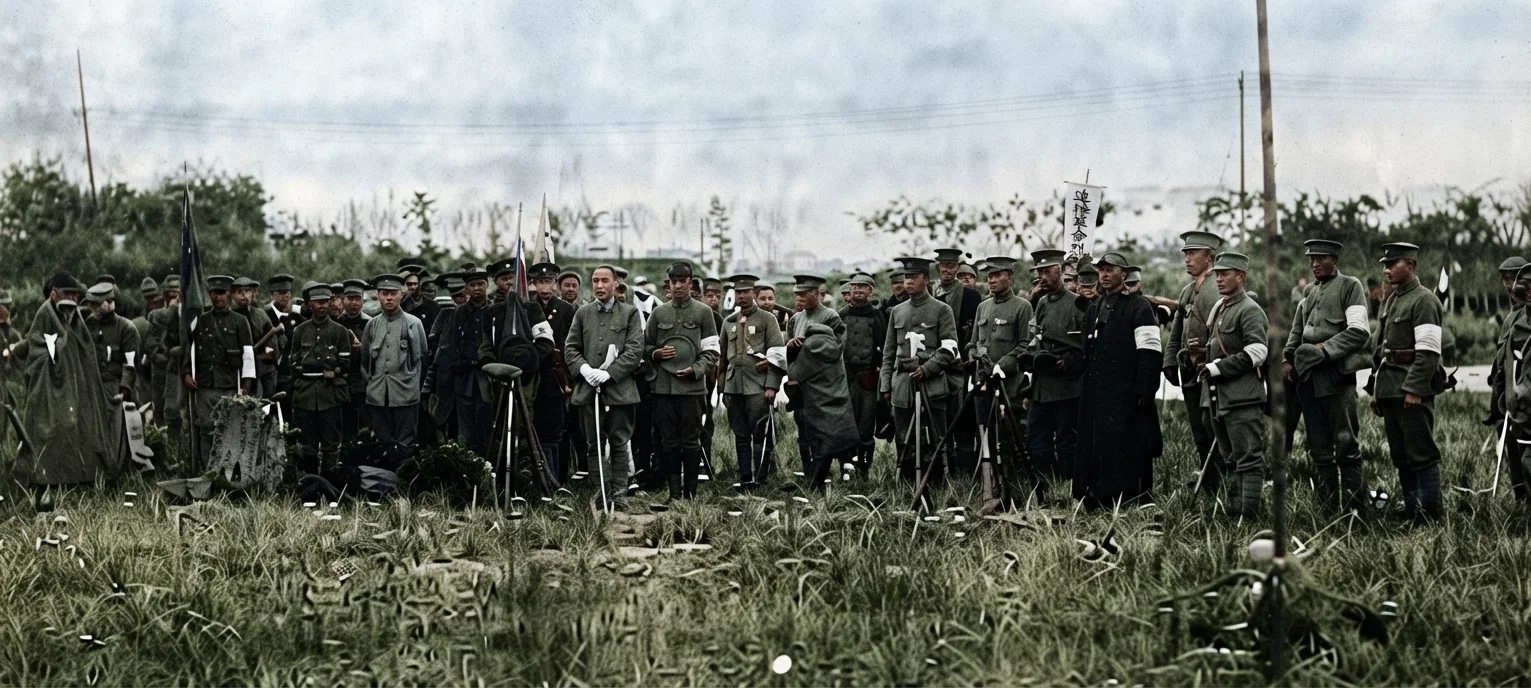
Memorial service for the dead rebel soldiers at Nanking. General Ling Zan Sen, in command of the rebel forces, is shown under the X, with his cap off. It is too bad that such fine looking men have to think themselves under the necessity of the horrors of war.
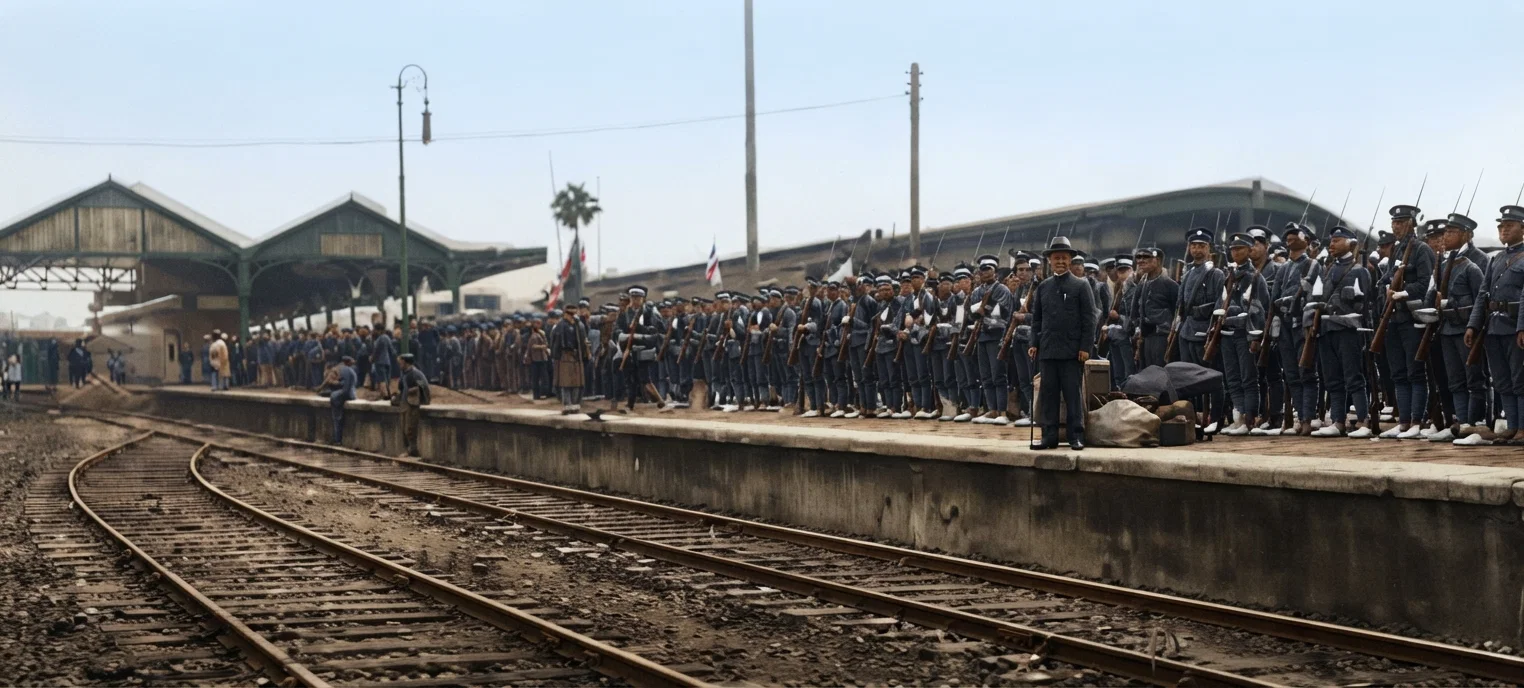
Shanghai troops waiting at the station, en route to Nanking. The Commercial Press Volunteers are among them, the manager walking in front, marked by X. It is with this Press and these men that our correspondent used to be connected.
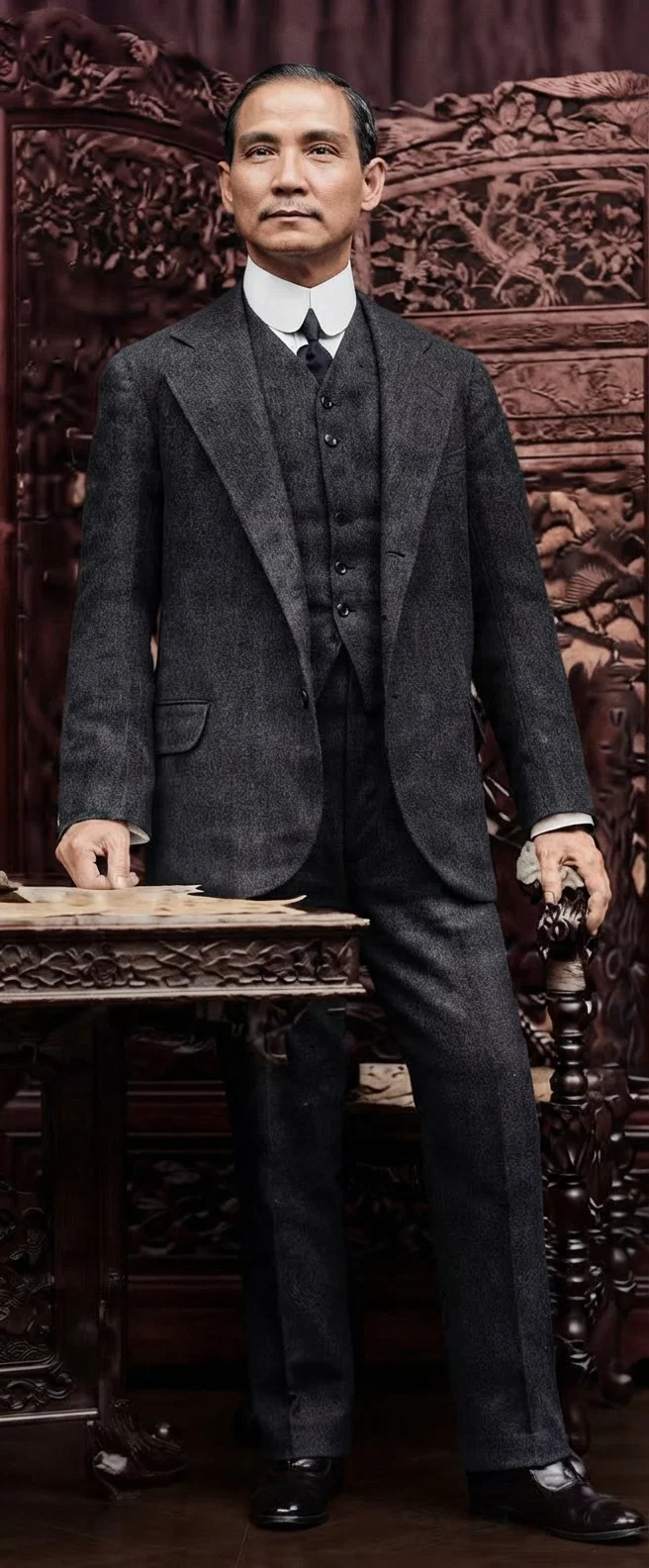
Sun Yat Sen, originator and leading promoter of the Chinese revolution. One of the leading Chinese merchants of the Pacific Coast says he is just the same as George Washington.
As thus divided, the sections would have nearly equal resources when all the conditions which apply are considered. The Peking government has the advantage of being recognized by foreign nations, a condition which will continue while it remains in possession of the capital and any considerable region surrounding it. It has almost all of the modern drilled army, and a great majority of the trained officers. It has better military equipment. Yuan Shi Kai should now have mobilized in the northern provinces over 50,000 regular troops. The government still controls the imperial railways of North China, the Peking-Hankow railway, and the Tien-Tsin-Pukou railway over the greater part. Thus it is able to concentrate troops at any given point along or north of the Yang-tse. Moreover, the imperial troops are accustomed to and equipped to endure a cold climate, and winter now has the northern part of the country in its grip.
On the other hand the new republican government has been firmly established south of the Yang-tse River, and apparently has the situation well in hand. The organizing of the various provinces is now practically completed, and there is no sign of weakness or division among them yet. Just how many trained troops they can control it is hard to say; but at least 10,000 are on their way north from Canton now, with the avowed intention of going to Peking. At Nanking the lowest estimate given is 30,000 troops, with likely another 30,000 between there and Wuching and at the latter place. Many of these are new recruits, however; and while they do not lack bravery, yet their short period of training, and the absence of good, strong officers and leaders, have caused their defeat many times during the struggles around Hankow.
These disadvantages are somewhat offset by the fact that the rebels control all the warships at present on the scene, numbering about a dozen; and most important of all, they have the sympathy and loyal support of a large majority of the populace, not only in China but all over the world. This has been manifested by the large contributions which they are daily receiving from wealthy Chinese in different parts of the world. And this question of financial support will have a weighty influence in deciding who will be the victors.
That both sides are hard pushed for funds is not denied, and the revolutionists are receiving large gifts all the time, while the government, deprived of all the ordinary customs receipts and taxes, and under tremendous expense, is just about to collapse. The empress dowager has opened her private purse, as has also Prince Ching; but after this is gone they do not know where they will turn. When Yuan Shi Kai undertook the guiding of the ship of State through these perilous waters, it was with the understanding that he would be provided11with plenty of funds to finance it. To this end the government has been negotiating with several of the foreign powers to secure a large loan. Negotiations were proceeding satisfactorily, and the money was in sight, when Dr. Wu Ting Fang took such active steps that he succeeded in stopping these loans. He said:
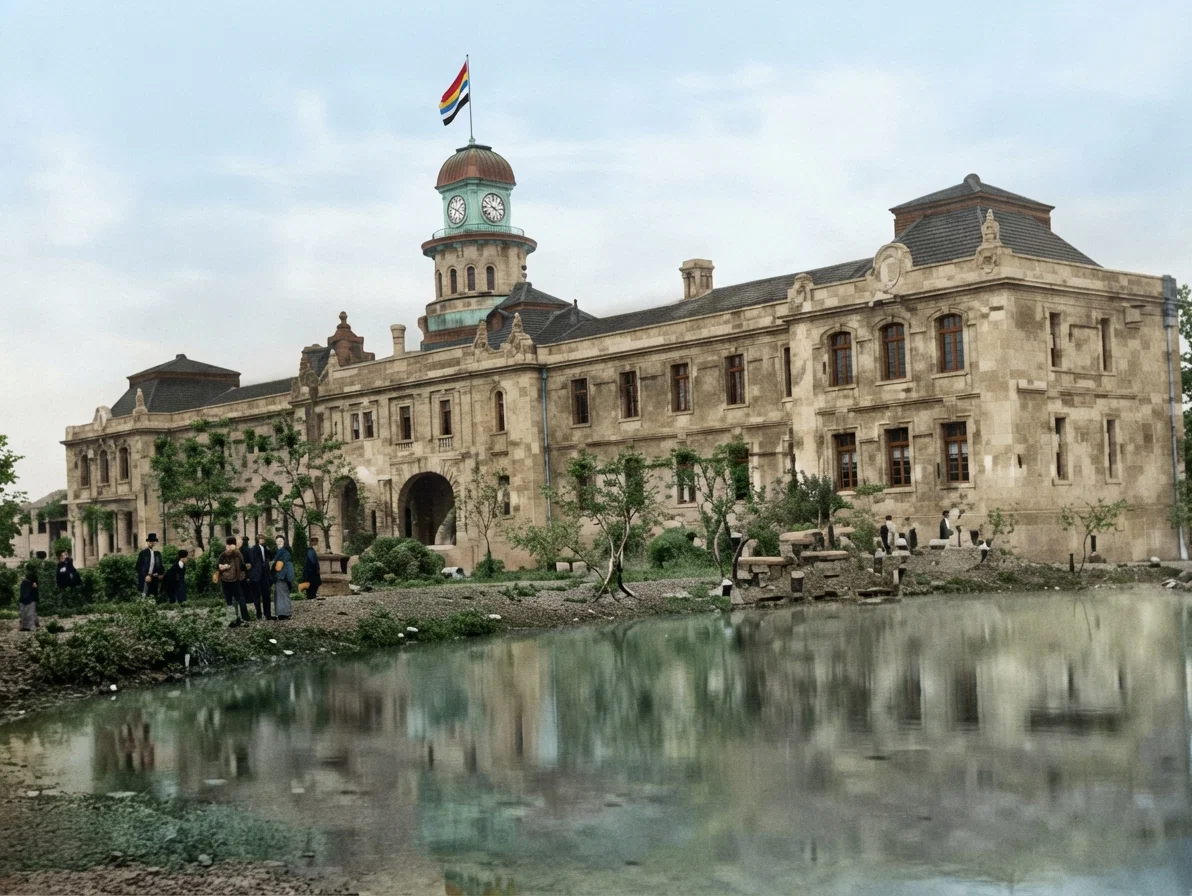
One of the exhibition buildings at Nanking, now used as the rebel headquarters
The foreign banks would be very foolish to make a loan at this time. The country is engaged in civil war, a large part of it is in the possession of the revolutionists, and the imperial government has no more right to mortgage it than I would have to place a mortgage on property belonging to some one else.
Besides that, the rich people proposing to make the loan should realize that it would not be worth what they will get out of it. The Chinese have no animosities against other nations now, but if the loan is made it is sure to lead to bad feeling, probably antiforeign feeling, and in the long run the countries loaning the money will lose much more than they would gain through the small interest on the loan.
I don't believe the foreign governments realize the situation, or they would prevent such a loan. I have communicated with the consuls, and hope the ministers at Peking will send my protest to their Foreign Offices. The foreign governments have not yet recognized the republican government of China; but if it is necessary, I will send a communication direct to the State Department at Washington in regard to this loan.
In addition to writing to the foreign consuls in Shanghai, giving them notice that if the loan is made, the republicans will assume no obligations to repay it, Dr. Wu Ting Fang communicated with officials of the banks said to be planning the loan and warned them that such a loan would be very hazardous.
So it seems that the promulgation of hostilities will perhaps result in a temporary and possibly a permanent division of the empire into two parts, and subject the country and people to the horrors and disasters which inevitably attend such internecine struggles. The calamities which would befall under these circumstances are obvious. These are some considerations which will weigh upon the plenipotentiaries when they meet for discussion this week. It appears that the one point of serious divergence is whether the new government will follow the monarchial or the republican form. If the former is elected, an effort will be made to have the present dynasty retained, altho it may reign under a different name.
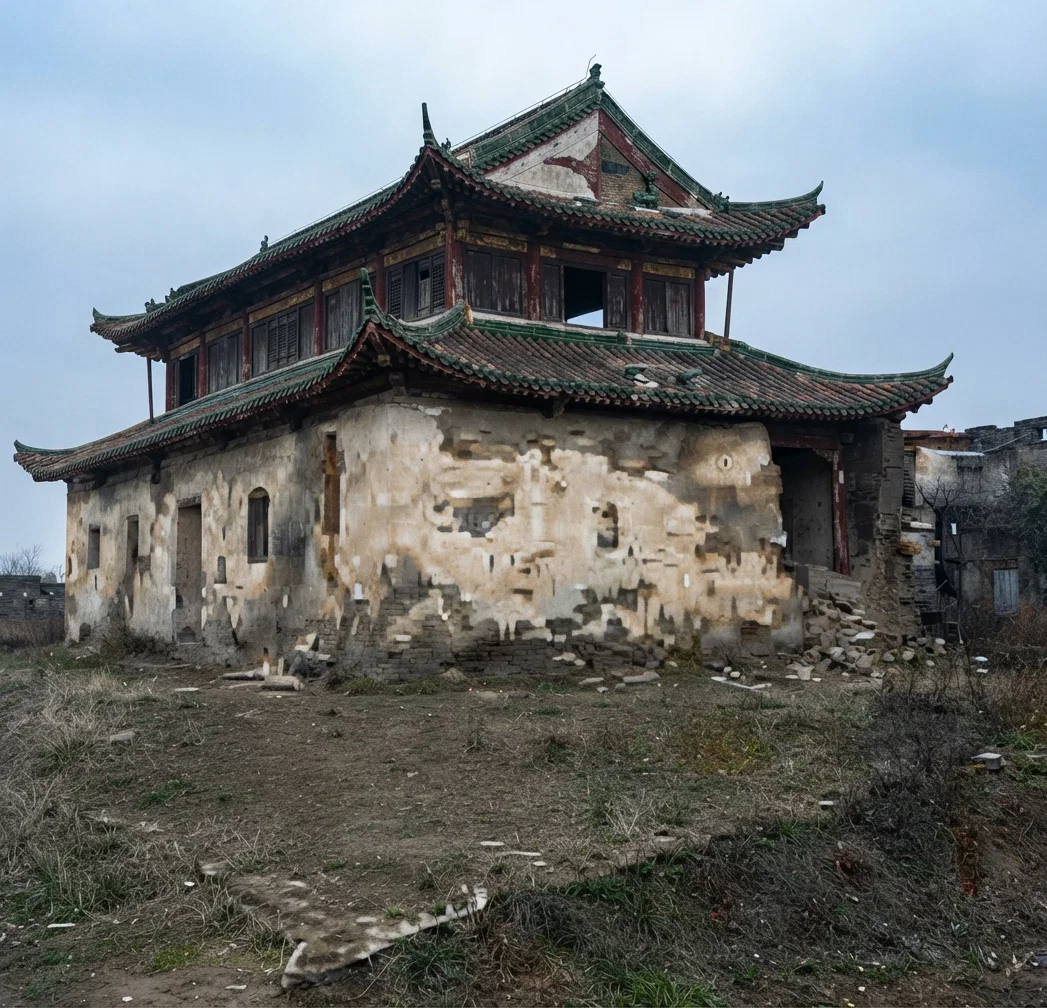
Tower on the top of Tai Ping gate, partially destroyed by rebel shells
General Li himself favors a republic, but deprecates further bloodshed and suffering, and the dangers of promulgation of civil strife, and is willing to forego his personal desires to prevent any possible disruption of the common great country.
Therefore, he will concede to the wishes of a majority of Chinese if a limited constitutional monarchy should be preferred.
It can not be said, however, that the rebel leaders would stand by a decision of this kind. The fighting blood is up, and the cry heard on every side is, "On to Peking!" "Down with the Manchus!" The country is now under military rule; and no matter what the peace conference may decide, it is doubtful if the soldiers would lay down their arms as long as there is a Manchu in power in the capital. In fact they want to move the capital. Wu-chang has been proposed, and also Nanking.
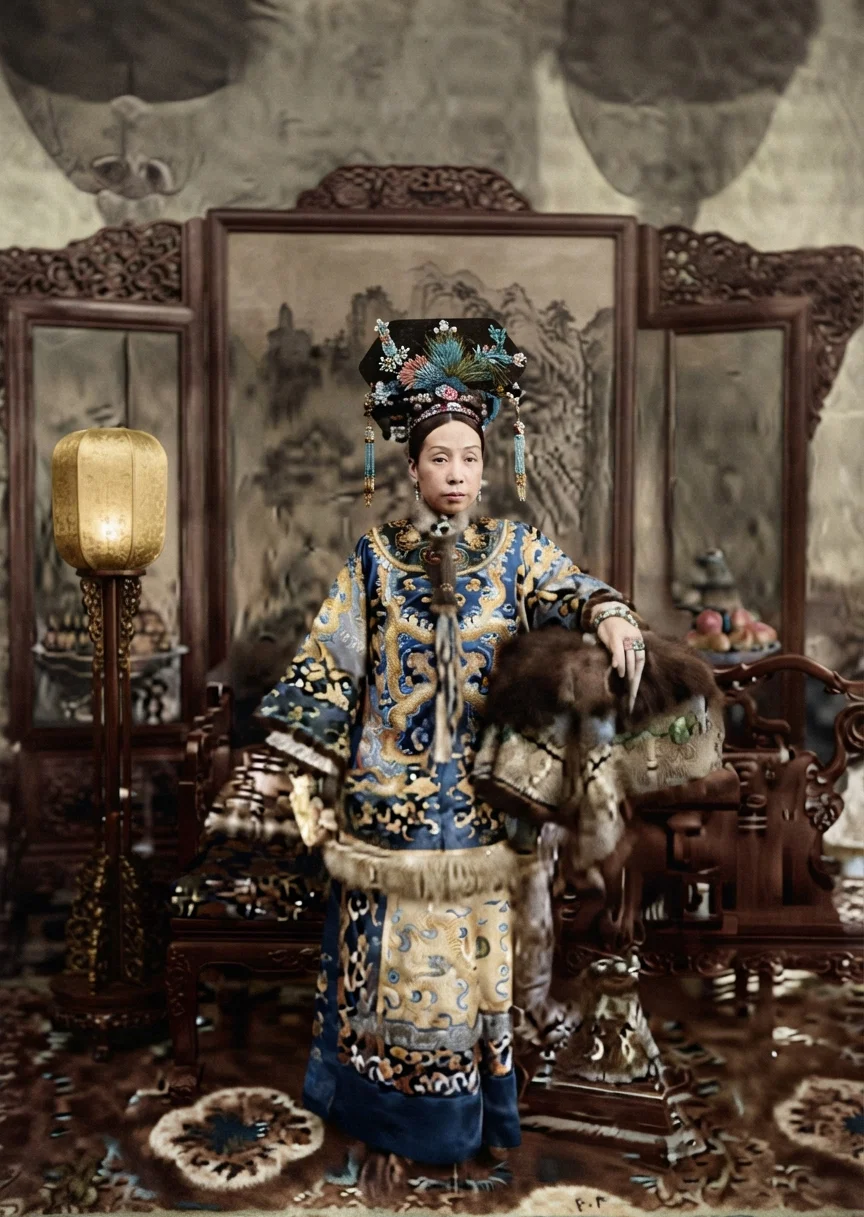
The empress dowager. She is a full-blooded Manchurian. Observe how different her features from the regular Chinese.
Revolutionist conventions have been held in both of these cities. In the former, the various delegates drew up articles of federation of the —
United States of China
These closely resemble the plan of the United States of America, but the power of the president is subject to limitations. These articles must be superseded, within six months, by a constitution.
At Nanking delegates from fourteen provinces met and elected Sun Yat Sen as president of the new republic. He has not arrived yet, but is expected in less than two weeks. It is announced that the object of the revolutionists in electing Dr. Sun at this time is to place the party in a position to ask recognition and stand before the world as a government. In this case, should the present peace negotiations fail, they assert that they will be in a position to ask recognition as belligerents, claiming that they have been recognized by the Peking government as such, have held negotiations, and that, the negotiations having failed, they are again going to war.
The most sensational occurrence since the granting of the constitution was on December 6, when the empress dowager issued an edict giving the prince regent permission to resign his office.
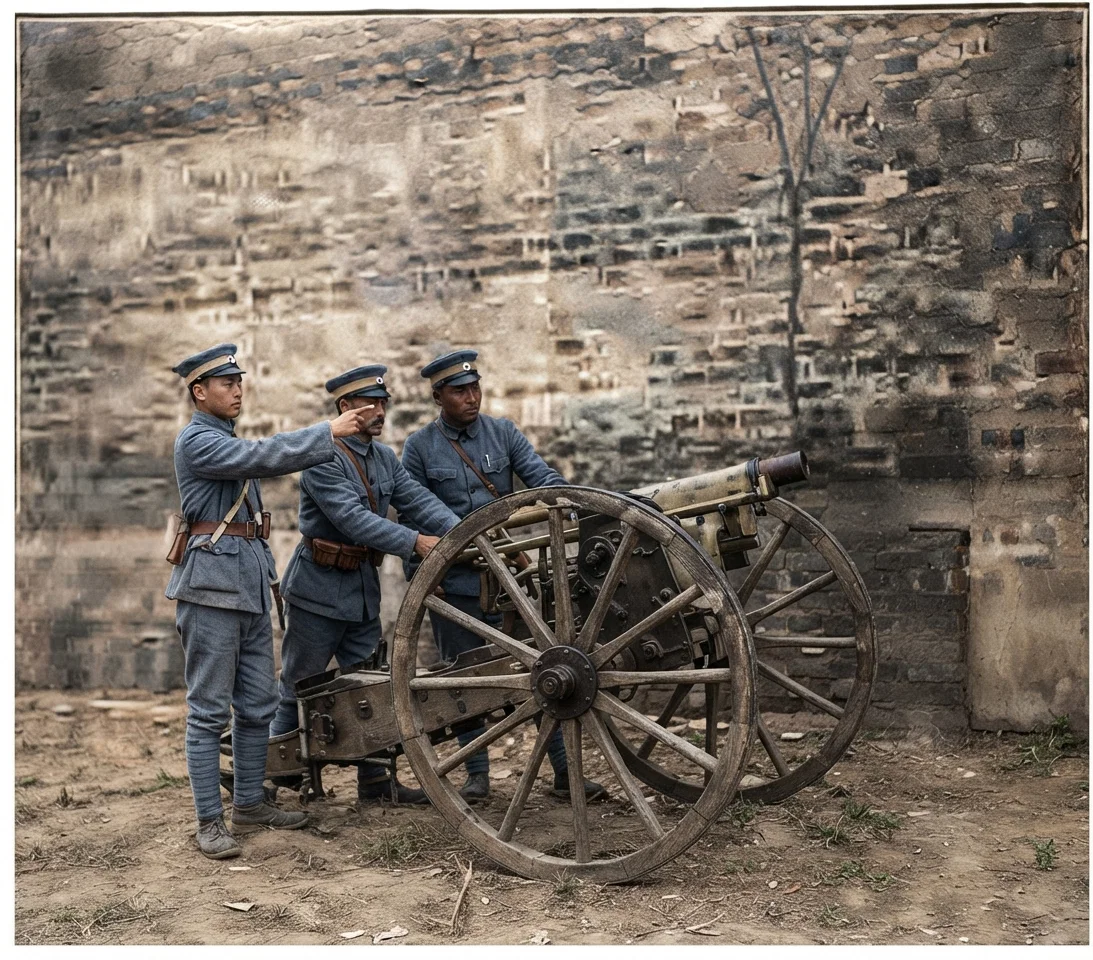
Rapid fire gun operated by the rebels at Nanking
Hsu Shi Chang and Shi Hsu, a Chinese and a Manchu, were appointed guardians to the emperor during his minority. The edict provided that the premier and the cabinet would take up the matter of a substitute regency later. This is taken to mean that the question probably will be left to the parliament to decide.
While the edict takes the form of granting permission to resign, in response to a memorial requesting that he be permitted to do so, there is no doubt that the prince regent was forced out. It is learned that Yuan Shi Kai, supported by Prince Ching, has been endeavoring for many days to bring this about, by telling both the empress dowager and the regent that such action was absolutely necessary.
The government hoped that this practical abdication would cause a better feeling among the people, and increase the probability of a settlement, as it means that Yuan Shi Kai's plan to raise the baby emperor practically as a Chinese can be carried out.
The action did not, however, produce the desired effect. The populace rather view it as an indication of weakness, and instead of being satisfied, they are loudly clamoring for more abdications of the same class, and say the empress dowager must go, and all the Manchus, before they will be satisfied.
Thus at the opening of the peace conference the indications do not lean very strongly toward peace. And in the meantime, notwithstanding the truce, both sides are rushing troops to Hankow as fast as possible, and preparations are going on for another big battle if the conference is not successful. Yuan Shi Kai has even been accused of desiring the truce for this cause, so he could get more troops on to the scene of action. The new premier finds himself now literally between two fires. The Chinese dislike him, because12they believe he is trying to bolster up the Manchu throne. That, in fact, is all they hold against him, and otherwise they like him. On the other hand, the Manchu are distrustful of him because of his efforts to take some of their power away from them.
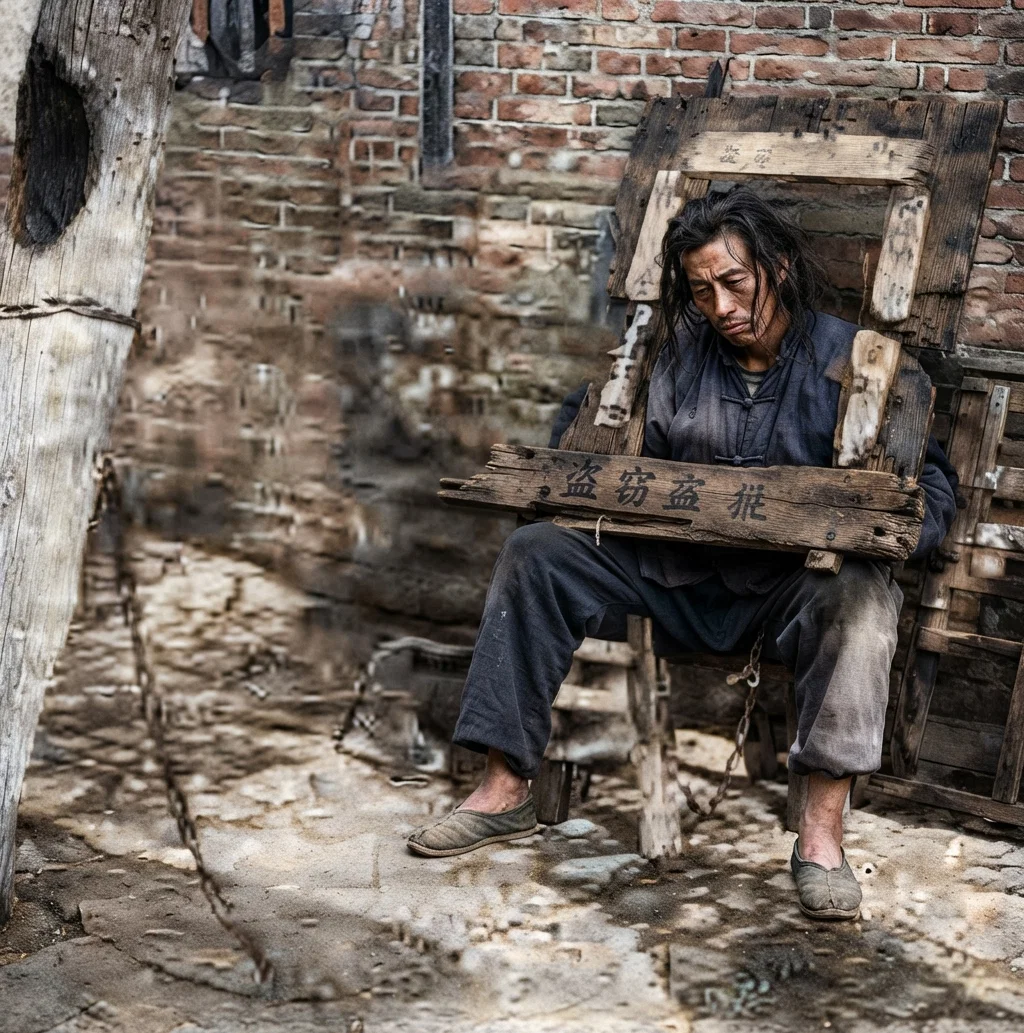
The ordinary Chinese method of punishing the lighter crimes. The "cangue" is worn for days or months, the criminal having to be fed, for he can not reach his head. His crime is described on the board through which his head projects.
To-day is December 18, and there remain yet six days of the truce. What these days will bring forth, no one can prophesy; but we are all hoping and praying that the unexpected may happen — that peace may be declared, and a government quickly established according to the best interest of the people, that the way may be speedily opened for the free course of the Gospel of the kingdom, that the last warning message may be quickly given, and many souls from the land of Sinim be prepared to meet the soon coming Saviour in the clouds of heaven.
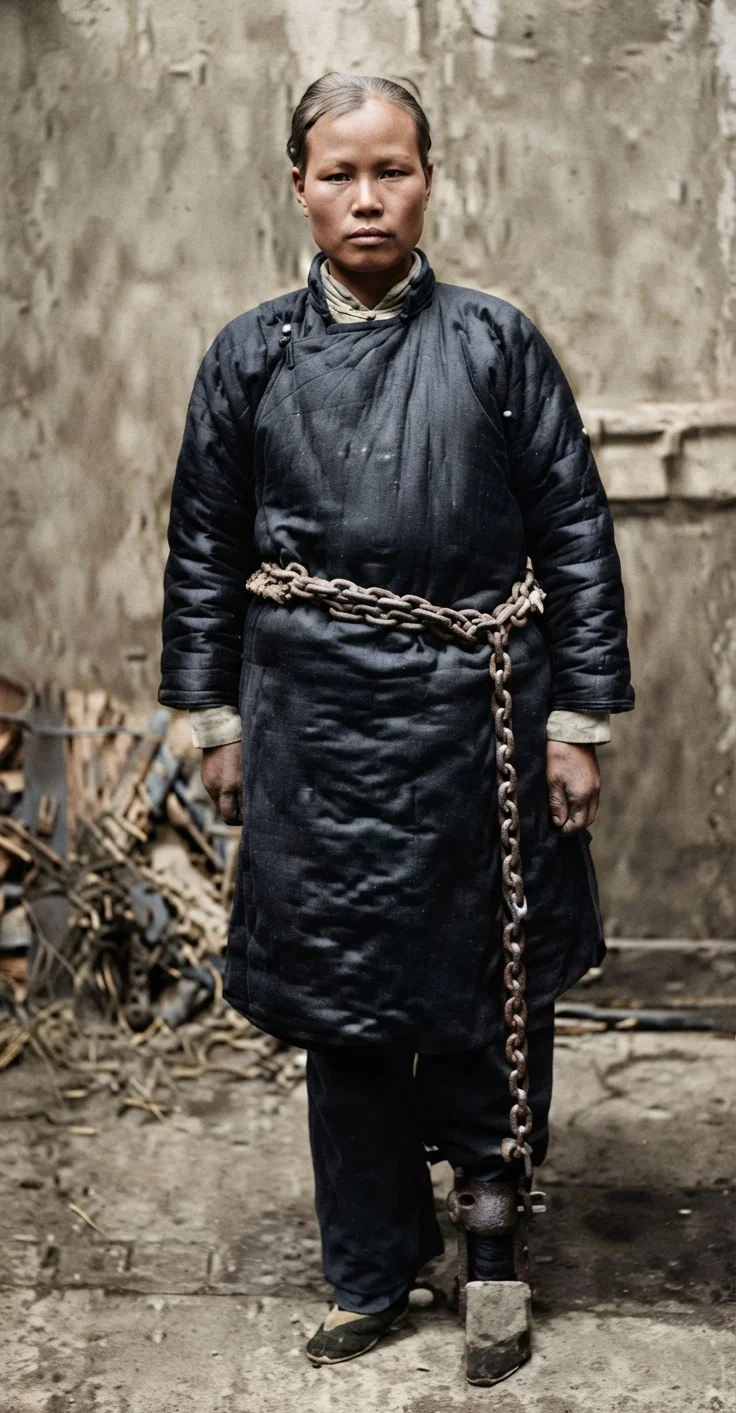
A Chinese woman chained for committing some offense