THE NEW AND LIVING WAY

8%

Pacific Press Publishing Company · OAKLAND, CALIFORNIA · Nov 8, 1899

FromSigns of the Times, Vol. 25, No. 45.

Read the full edition

THE NEW AND LIVING WAY.

What Is "the Holiest"?—What Is "the New and Living Way"?—What Is "the Vail"?—Type and Antitype.
IN Heb. 10:19-22, Paul sets before his brethren this hope-inspiring announcement: "Having therefore, brethren, boldness to enter into the holiest by the blood of Jesus, by a new and living way, which He hath consecrated for us, through the vail, that is to say, His flesh; and having an high priest over the house of God; let us draw near with a true heart in full assurance of faith."
A number of terms in this passage arrest attention, and tacitly invite explanation. What is the "holiest," into which we are to have boldness to enter? What is the "new and living way," consecrated for us? What is the "vail"? And what relation has His "flesh" to these objects? Is it the vail, or is it the way? and to whichever term it applies, how does it come to perform that office? A way has been opened before us, the apostle declares, which is a new and living way. Then he introduces the vail, and, referring to one or the other of these, he says, "that is to say, His flesh." Every one, of course, must be anxious to know what this new and living way is, and how we may secure a passport to walk therein. The "way" is evidently our Lord Jesus Christ; for by no other passage except "the way" can we enter into the holiest; and we enter therein, the apostle had just said, "by the blood of Jesus."
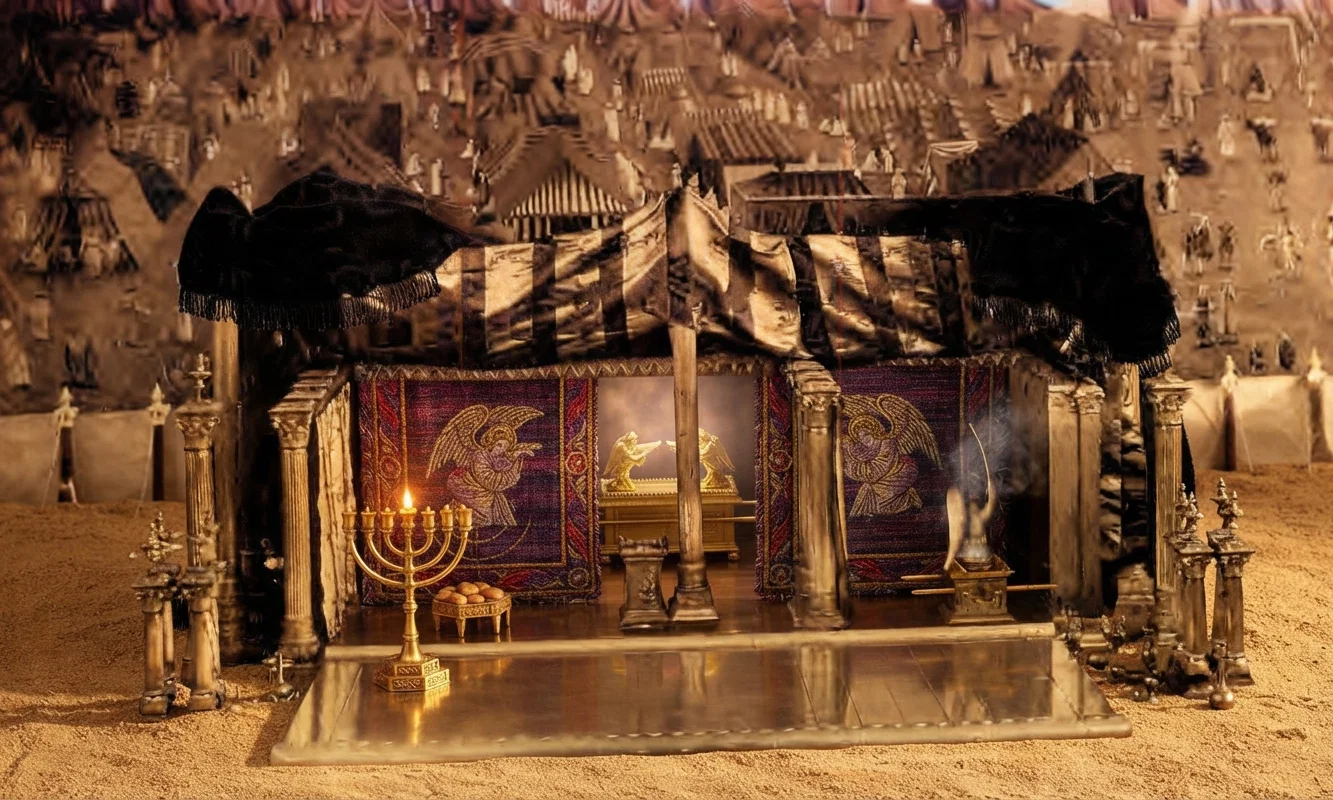
But what is the "holiest"? and by what necessity, and in what manner, do we enter therein? The Greek word which the apostle here uses, and which the translators have seen fit to render "the holiest," is in the plural number, and means, not a single place alone, but must take in as many as two, at least, and should be rendered "the holies," or "holy places." This is not the first mention of these places in the book of Hebrews. Beginning with the eighth chapter, where Paul introduces the subject of the sanctuary and the new covenant, he declares that Christ is the minister of the "sanctuary and of the true tabernacle which the Lord pitched and not man." In chapter 9 he refers to a type of this heavenly building which once existed here on this earth, and that was the tabernacle erected by Moses in the wilderness, from a pattern which the Lord showed him. That typical building, a shadow of the heavenly, had two apartments: the first, or holy place, and a second apartment, or most holy place, separated from the first by a door or vail. In both of these apartments the priests here on earth ministered, serving, says Paul, "unto the example and shadow of heavenly things." Therefore the heavenly sanctuary has two apartments, a holy and a most holy place, like the earthly; and in both these Christ, as our great antitypical high priest, performs his antitypical ministry. Those, therefore, who come to Christ, who address the throne of grace, reach Him by faith in one or the other of those two holy places in the true tabernacle where He ministers, whether they have a theoretical understanding of His locality or not. And the word "holiest," as we have seen, being in the plural, and meaning "holy places," these must be the places referred to by Paul in the passage before us. But the translators, not having an understanding of the subject of the sanctuary, could conceive of nothing in heaven but the holiest of all, and so took the liberty to translate a plural noun by the singular number, and call it "the holiest." Into these holy places we enter "by the blood of Jesus," as we come unto Him by faith. Not, of course, into both at one and the same time, but into each, respectively, in which the service is going forward.
And this will call for an explanation of another feature of the sanctuary work. In the type the ministration of the priests was confined to the first apartment, or holy place, till the day of atonement,—the tenth day of the seventh month. On this one day in the year the high priest went into the most holy place and made the atonement; and the yearly round of service was then complete, to begin again at once in the holy place. Heb. 9:7; 10:3. And each of these yearly rounds of service in the type represented the one great round of service performed by our Lord in the sanctuary above, as Mediator for the world. In accordance with the type, Christ first ministers for a long period
in the holy place; and when the time comes for the making of the atonement, or the cleansing of the sanctuary, He transfers the ministration into the most holy place, and ministers there a sufficient length of time to complete the atonement; and then the work of intercession for the world is finished.
Abundant evidence can be presented that we have already entered upon the time when this final work is being done; for the sanctuary was to be cleansed at the end of two thousand and three hundred days (Dan. 8:14); and those days ended in 1844. So, while Christ was in the holy place, Christians found Him there; when He is in the most holy, as He is now, Christians find Him there. "Having therefore, brethren, boldness to enter into the holies by the blood of Jesus." This covers the whole Gospel dispensation; but we have now reached the time when we might adopt King James' translation, and say, "Having therefore, brethren, boldness to enter into the holiest by the blood of Jesus." The "way" to Jesus now leads us there.
But, on the strength of this text, especially what is said about the vail, which, it is claimed, is His flesh, we are met with the objection that the whole view of the subject of the sanctuary, as here presented, that is, a literal sanctuary in heaven, with two apartments, in the first of which Christ first ministers, and then closes His work, finally, in the second, is entirely fallacious; because, say they, Paul declares that Christ's flesh is the vail, which, according to your position, would be nonsense. If Paul did say so, that, of course, would settle the question, and call for a readjustment of the whole argument; but he does not say so. The sanctuary had two vails—one at the entrance, which constituted the door, and a second which divided between the holy and the most holy place. The apostle recognizes this fact in describing the tabernacle of Moses, which was built from the pattern of the heavenly, which God showed him. He says in Heb. 9:3, after speaking of the first apartment, "And after the second vail, the tabernacle which is called the holiest of all." Now if in the antitype Christ's flesh constitutes either of these vails, which one would it be? and then what would the other vail represent? It would have to be, of course, something analogous; but nothing can be imagined to answer that purpose. A little transposition in this text, both natural and legitimate, will remove all confusion, and make the meaning clear. Thus: "Having therefore, brethren, boldness to enter, through the vail, into the holy places, by the blood of Jesus, a new and living way which He hath consecrated for us; that is to say, His flesh." As Christ ascended bodily to heaven, and is a literal priest there for us, He must have a real place in which to minister; and that is the temple in heaven; and that, according to the figure of it given us here on earth, must have a vail, or its equivalent, dividing between its first and second apartments. The flesh of Christ is not this vail. There is no possible sense in which it could be imagined to be such. But by His flesh, or by His sacrifice, the blood is furnished by which we enter into these holy places. Very strikingly and beautifully, therefore, His flesh may be called the "way." And it was a "new" way, because before men had only the blood of animals with which to approach God. And it is a "living" way, because Christ, having once died our sacrifice, now ever liveth to make intercession for us (Heb. 7:25),—to invite us to God through Him, directing us in the path of salvation, and assuring us of acceptance; for has He not declared that He will in nowise cast out any one who comes to Him? He says of Himself, "I am the Way, the Truth, and the Life;" and He affirms that no man cometh to the Father but by Him.
The force of Heb. 10:20 lies not in defining what the vail is, but in showing what the way is; and that way is the sacrifice of Christ, represented by the words "His flesh." The wonderful thing connected with Christ and His work is the inherent life pertaining to Him and it. We have previously spoken of Christ as the living Sacrifice; here He is presented as the living Way to God. And he who enters this way is himself made alive to God. The resurrection of Christ is the key to the glory of the Christian system. How it transfigures with light and beauty the whole warp and woof of the divine scheme of redemption! Under the old dispensation, a sacrifice once offered was forever dead; here the sacrifice continues to live, because it was a Being who, having tasted death for every man, has been brought out from His expiratory tomb. There the priests had not died, and so could not sympathize with those for whom they ministered; here the One who died has been raised from the dead, and become the high priest, to plead His own blood for those for whom He has passed through every phase of temptation, disappointment, suffering, and death. He can therefore be a merciful high priest, touched with every feeling of our infirmities.
"With joy we meditate the grace Of our High Priest above; His heart is made of tenderness, His bosom glows with love." URIAN SMITH.