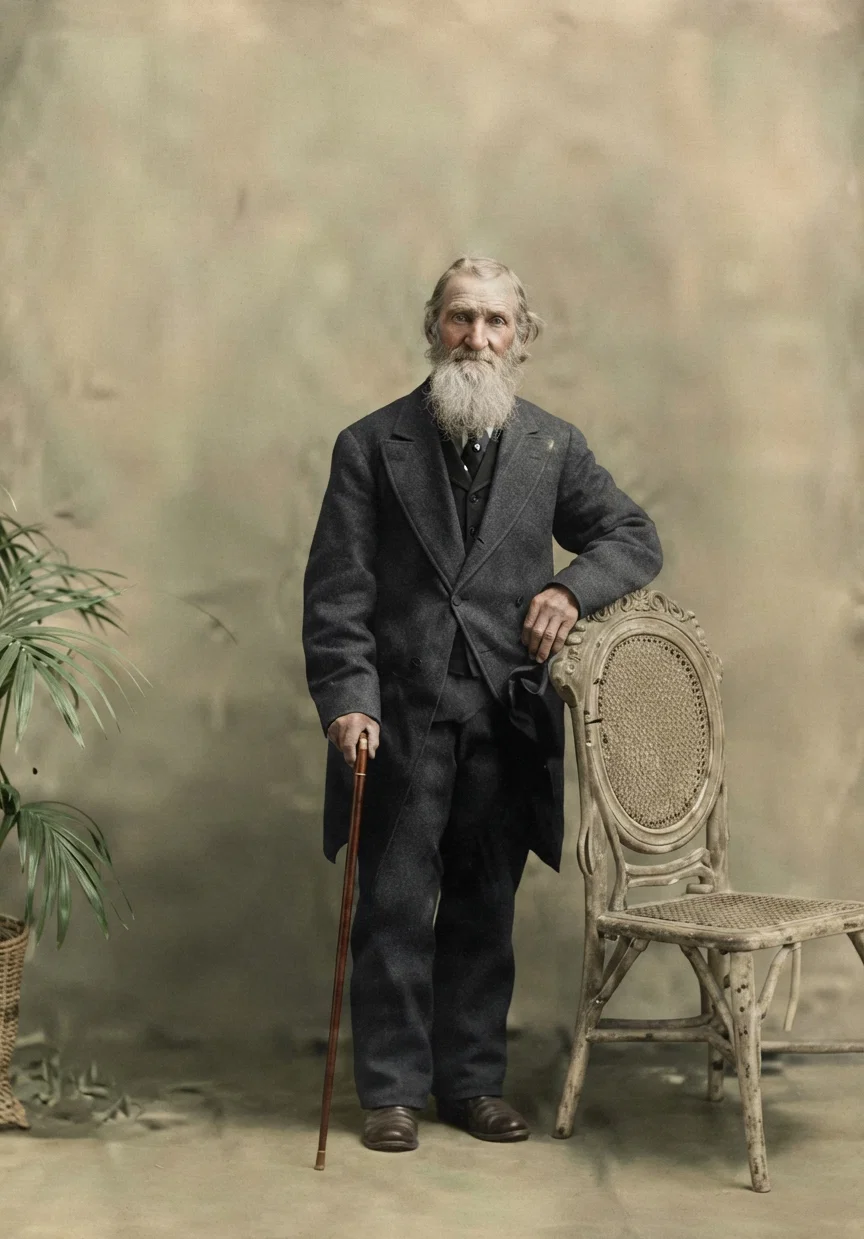
[Note.—For years the editor has been in correspondence with the aged brother, the sketch of whose life is given below. We believe this brief account of actual experience will be of value to others. Some never get old in heart; they are ever ready for advanced steps in the way of true reform.—THE EDITOR.]
THE subject of this sketch, James Lunney, is the descendant of Luigi Lunney, one of the kings of Connaught, Ireland. He now claims membership in a higher Royal Family, the child of the King of kings.
He was born in County Monaghan, Ireland, July 21, 1811; converted in his nineteenth year; became a total abstainer by signing the total abstinence pledge in 1837; emigrated to Ontario, Canada, 1870; embraced the Sabbath and advent truth in 1878, abandoning the use of swine's flesh as food at the same time.
In 1893 he became well-nigh helpless, confined most of the time to his bed, unable to get in or out of a carriage. His heart was so affected that life was despaired of, and he gave himself up to die, asking the Lord that his life might be spared if he could be of use in His service. God wonderfully raised him up, and used him in the conversion of others.
Up to 1894 he used beef once a day, when he read in the SIGNS OF THE TIMES of a family which had eaten no flesh for fifty years, yet having the best of health. Mr. Lunney, having serious stomach and intestinal trouble, believed the article contained a message for him. Tho having good beef for dinner, he did not taste it, but adopted henceforth a vegetarian diet at the age of eighty-three. In his own words: 'In a short time I began to improve; my bowels did not trouble me, nor my stomach either. The doctor's medicines lay untouched, and I got able to do some work for the Great Physician, not only the Healer of the body, but of the disease of sin.' And his advice to all is in favor of a vegetarian diet and foods prepared from grains and nuts.
This information we obtained last year while this aged brother was in an old people's home in Battle Creek, Mich.
During the later years of his life he has done much missionary correspondence, house to house visiting, and street preaching. And this year of grace, 1899, in his eighty-ninth year, improved in health on a truly reformed diet, he goes out again to labor for souls for whom Christ died. He writes a plain, readily readable hand, which shows very little of the tremors of age.
Such are the blessings of a temperate, Christian life, good health, a clear mind, and a happy, cheerful heart, burdened only for others' good.