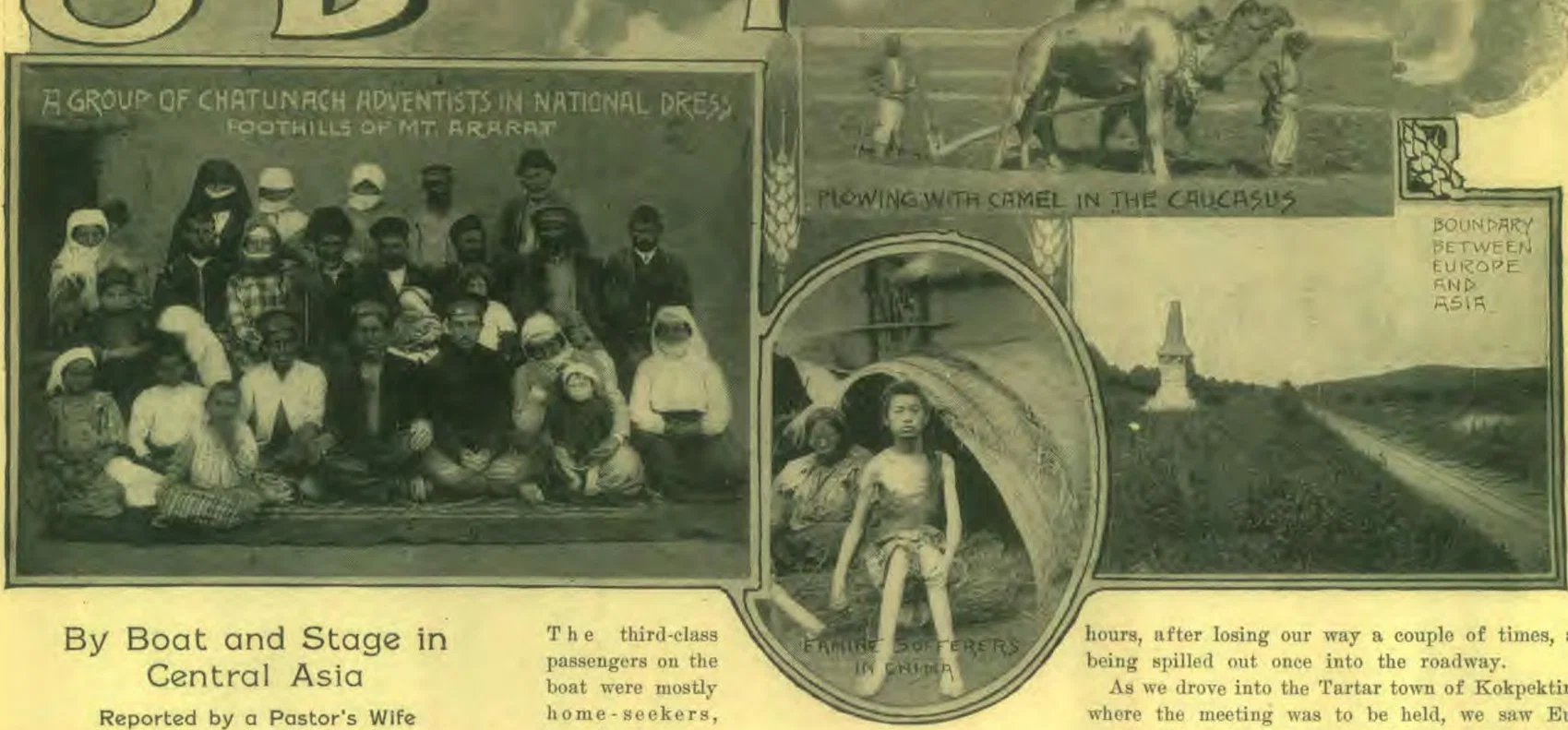
A GROUP OF CHATUNACH ADVENTISTS IN NATIONAL DRESS FOOTHILLS OF MT. ARARAT
By Boat and Stage in Central Asia
Reported by a Pastor's Wife
ONE of our general Siberian meetings was held near the Tartar town of Kokpektinsk, not far from the Chinese border. The nearest point by rail was the city of Omsk, a thousand miles short of our destination. The route lay up the river Irtish by boat, the river steamers being built after the American style, with electric lights and every modern convenience. There was a strange contrast between the boat and its surroundings as we sailed up the river. On the right were the Cossack lands, with their primitive towns and villages; and on the left we passed the Kirghizen and Tartar dwellings, generally consisting of dilapidated mud huts. But Russian-German emigrants are pushing into this far-off country and establishing homesteads.
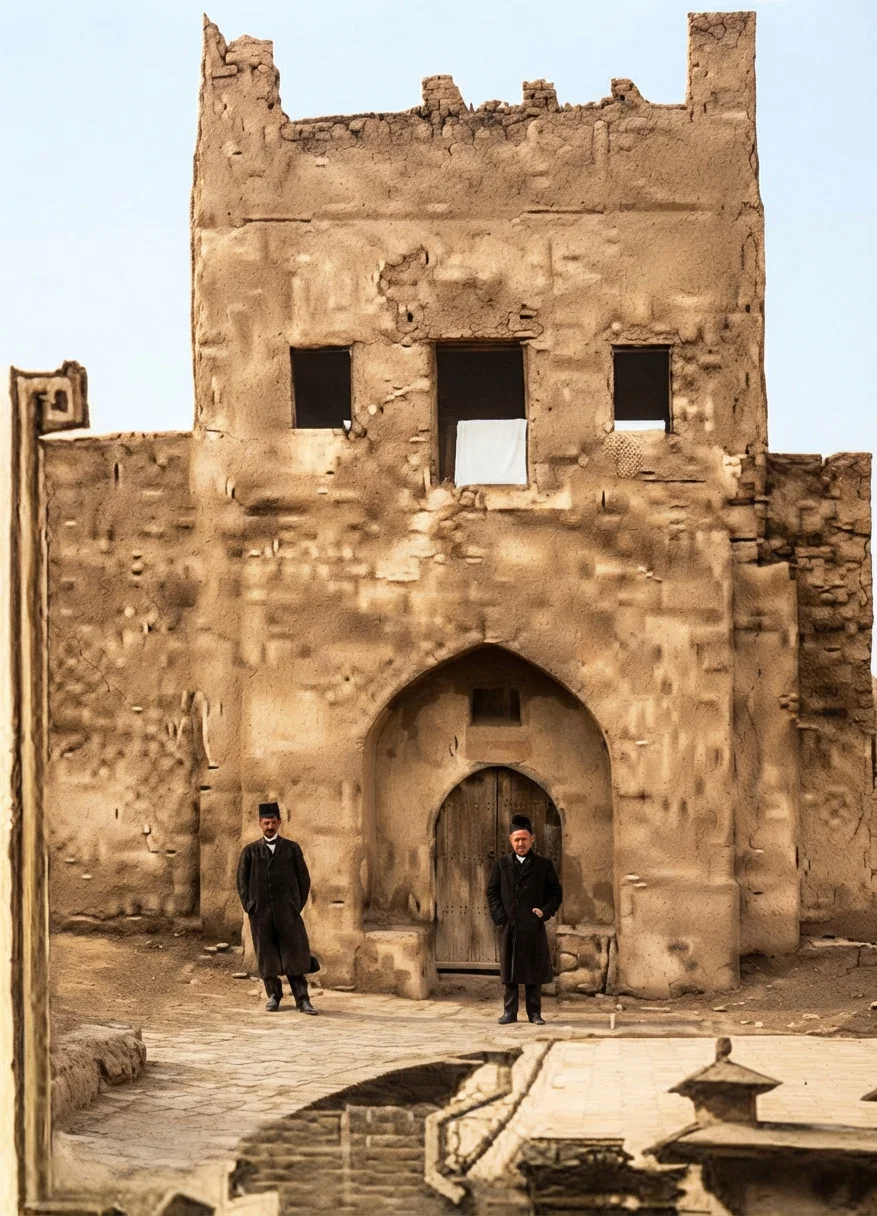
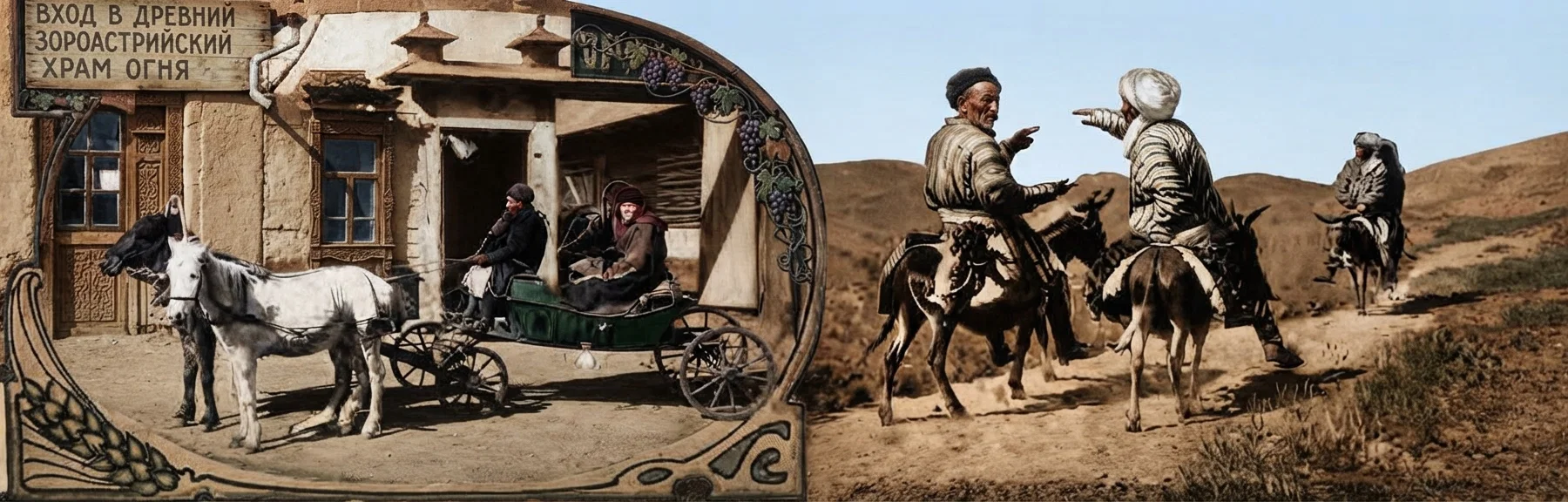
ENTRANCE TO ANCIENT ZOROASTRIAN FIRE TEMPLE
The third-class passengers on the boat were mostly home-seekers, bravely bringing European civilization into the heart of Asia. At almost every port our ship unloaded American foreign machinery,—hay-rakes, self-binders, mowers, etc. As the boat called at ports, we distributed Russian papers; and often, as we left, we could see the people gathering in groups, while one read aloud as others listened.
After five days we reached Semipalatinsk, and transferred to a smaller river boat. The heat was intense, the thermometer in our cabin often registering as high as 106 degrees F. Here we met brethren who had come fifty miles to meet us, knowing that our boat would stay some time in the harbor.
We had expected one of the brethren to go on with us to the general meeting; but he reported times so hard on account of the drought that he felt he could not go. However, as meetings were held, and the blessing of the Lord came in, this brother, with tears, said, "Forgive me; I will go with you to this meeting." He did go, and was ordained as a local elder, and is joining in carrying forward the work in this part of Asia, the Lord blessing him in his service. He speaks both German and Russian well.
Two days further by boat, and then we took the Kirghizen stage for one hundred fifty miles through the Altai Mountains to the place of general meeting.
These stages are curious affairs. Each one carries two passengers. They have four wheels, with poles stretched across the axles, between these poles a big willow basket being fixed. There are no springs nor seats. It was an exciting ride, as these Kirghizen horses go swiftly up-hill or down-hill, stopping not for ditches, stones, or small rivers. About every twenty-five miles we changed horses, wagons, and drivers. There was no slackening of speed when night came on. The one hundred fifty miles was made in twenty-four hours, after losing our way a couple of times, and being spilled out once into the roadway.
TRAVELING BY STAGE SIBERIA
As we drove into the Tartar town of Kokpektinsk, where the meeting was to be held, we saw Europeans with modern wagons and horses camped upon the steppe. My husband called out, "That must be the brethren come to get us." He was right; and all rejoiced at meeting with those of like precious faith.
Our way now lay across the steppes, with no villages nor settlements, but only now and then a Kirghizen tent, with herds of cattle. The mountains rose bare and high on every side; everything was still.
But thirty miles from the Tartar town we came to a Russian-German colony, where our meeting was held. More than half the settlement are Seventh-day Adventists. With tears of joy, they told us that they had sometimes feared they never would be visited by our ministers. They were hungry for the preaching of the Word, and wanted meetings day and night.
The meetings were held in a tent. The Spirit of God was present, souls were converted, and all were revived and refreshed. They were instructed and organized, and plan to carry forward aggressive work throughout the settlement, and out among their Mohammedan neighbors.
Thirteen of the brethren, with their horses and wagons, accompanied us when the time to return came, showing a shorter way through the mountains, and bringing us in their comfortable wagons. Most of the time we were riding through valleys, the great summer pasturing ground of the Tartars and Kirghizen. Immense herds of cattle and camels were grazing, with the shepherds' tents scattered all about the valleys. Both people and cattle were astonished as our sudden appearance disturbed the unbroken silence of their homes. But the inmates of the tents were always friendly and hospitable.
I saw few beds in Siberia, and none in any of the inns at which we stopped in Central Asia. These inns are kept by Russians, and as a rule are surprisingly clean and comfortable. They were often carpeted, and contained a table, chairs, and some13kind of couch. Often plants were blooming in the windows, and always the icons—holy pictures—were on the walls, as well as portraits of the czar and czarina.
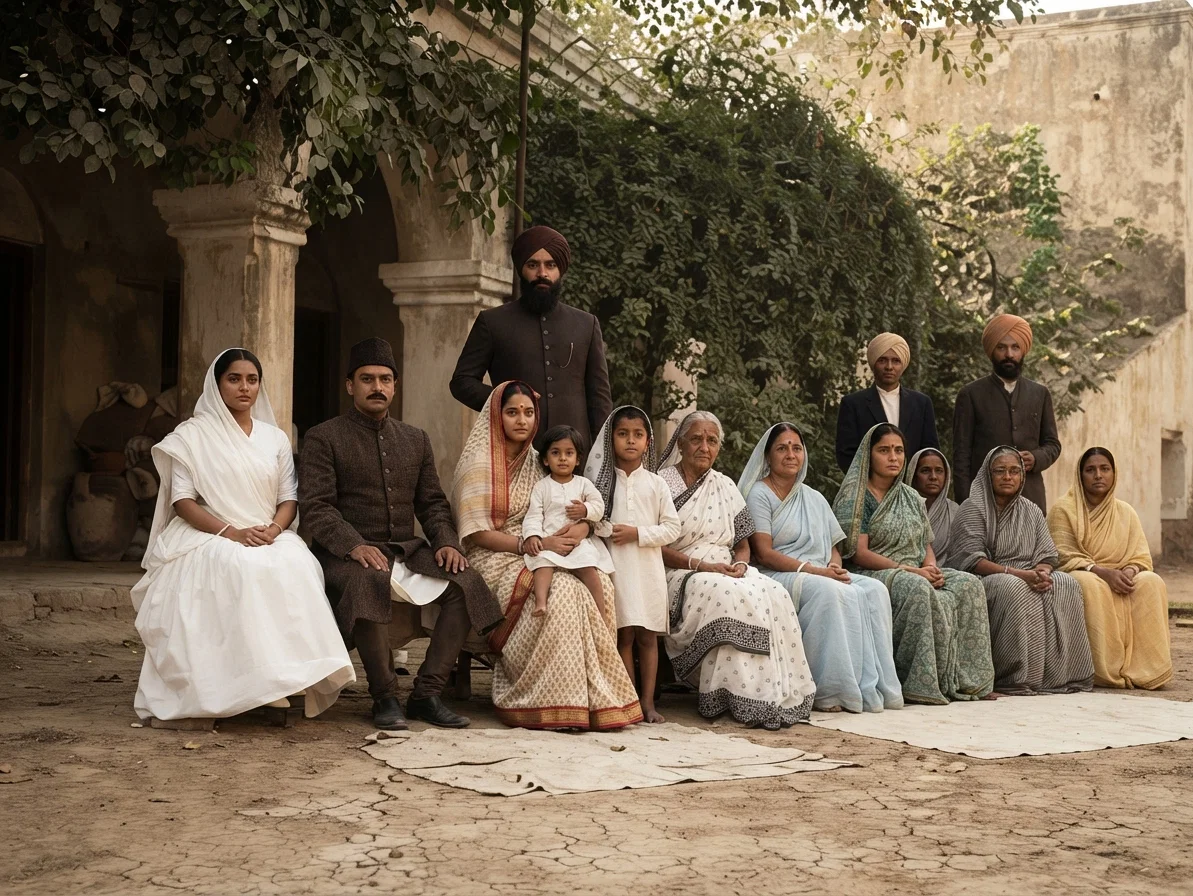
A Group of Hindustani Believers in North India
The rooms in these inns, or stage-coach stations, were free and open to us, as are the waiting-rooms in a railway station. Even tho we arrived in the middle of the night, waking the household, we were always patiently served. The men of our party lay upon the floor to sleep, while I took possession of the couch.
Our workers experience great blessings as they go among the people over these Siberian roads and rivers; and more than once the people of an inn have been so anxious to hear the Gospel message that they have refused to bring out the horses until they had had another meeting. Our workers and members are scattered from Russian Asia away across to Manchuria, by the Pacific.