TURKEY was formerly in possession of Tunis. Her padishah is still formally suzerain over Egypt. The influence of Turkey went in former times as far as Algeria and Morocco. In Europe her border lines came near to the walls of Vienna. But matters are quite changed now. Since one century ago many of her Christian subjects have become independent and formed native principalities and kingdoms. The Servians began in 1817, and were followed by the Greeks, Bulgarians, Montenegrins, and Rumanians. Turkey became more and more feeble, and the poor state of her inner affairs gave rise to the expression "the sick man." Also the great powers used the opportunity, and began to seize portions of the man, cutting off his arms and legs. Tunis and Egypt went; Cyprus, Bosnia, the Herzegovina, and Crete followed. Enormous territories were lost in the Caucasus. The state of "happy Arabia," of Syria and Palestine, is not yet finally settled. But the last real loss is the vilayet of Tripoli and Benghazi, the sandy plateaus between Egypt and Tunis, the very last remainder of real Turkish rule in Northern Africa, the last reserve of the califate over the millions of Moslems on the dark continent.
Motives for the War
How it came? Yes, it is true that the hand of the Lord is ruling over the nations of the earth; He is placing the borders and ordering governments. But as far as man is allowed to have an influence on the shaping of countries, his motives are in general money, and his rage for power.
European and American capitalists need fields where they can invest money and expect big returns. The vast plains of Turkey, her mountainous districts, are such a field; and there is a race among the nations, to get the best places for mining and railway purposes and to exercise political influence. Those concessions, given by the Sublime Porte to foreign companies, give always reason to the representatives of their respective governments to interfere in the one or the other way, often supported by threatening with the superiority of rude power.
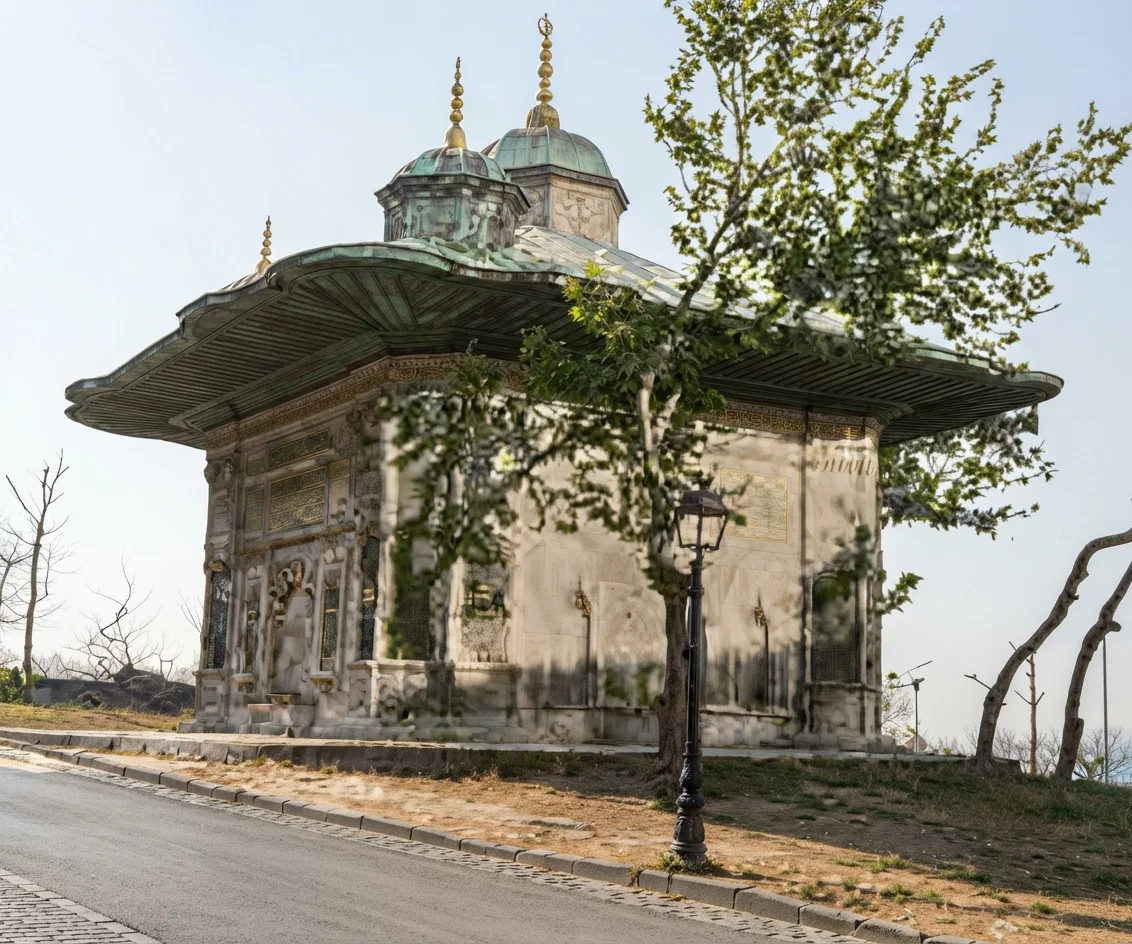
Fountain of Sultan Ahmed, typical of all the "Tsheshmes"
Indeed, Turkish officials see how the future of their country will end. They try often enough to hinder the work of the "foreigner," and often enough without any reasonable backing. Surely it is in many cases difficult to ascertain by what motives the foreign resident is guided.
Italy's complaint was that her peaceful enterprises in Tripoli did not find the support of the Turkish officials, that her representatives were fed with promises again and again. Also the unsettled case of an Italian girl in Adana was mentioned, who, it is said, had accepted Islam by force. There were also some other quarrels in the Red Sea. There happened some things in the capital, too, which lessened the respect for the Italian ambassador.
All of the above may be true, but there is another reason for the present war, and it is understood at once when we look to the map. Italy has only one African colony, Eritrea. There it had bad experiences. The Italians are quite sorry that Tunis is occupied by France, tho it is directly opposite Italian ground. Italy has lost a chance there. Her interest has centered therefore for some years on the neighboring part of Turkey, on Tripoli. Italy may think that her many emigrants will find there a suitable place to settle. It may be true that the ground contains riches which need only to be unearthed. The country was rich in the time of the Cæsars.
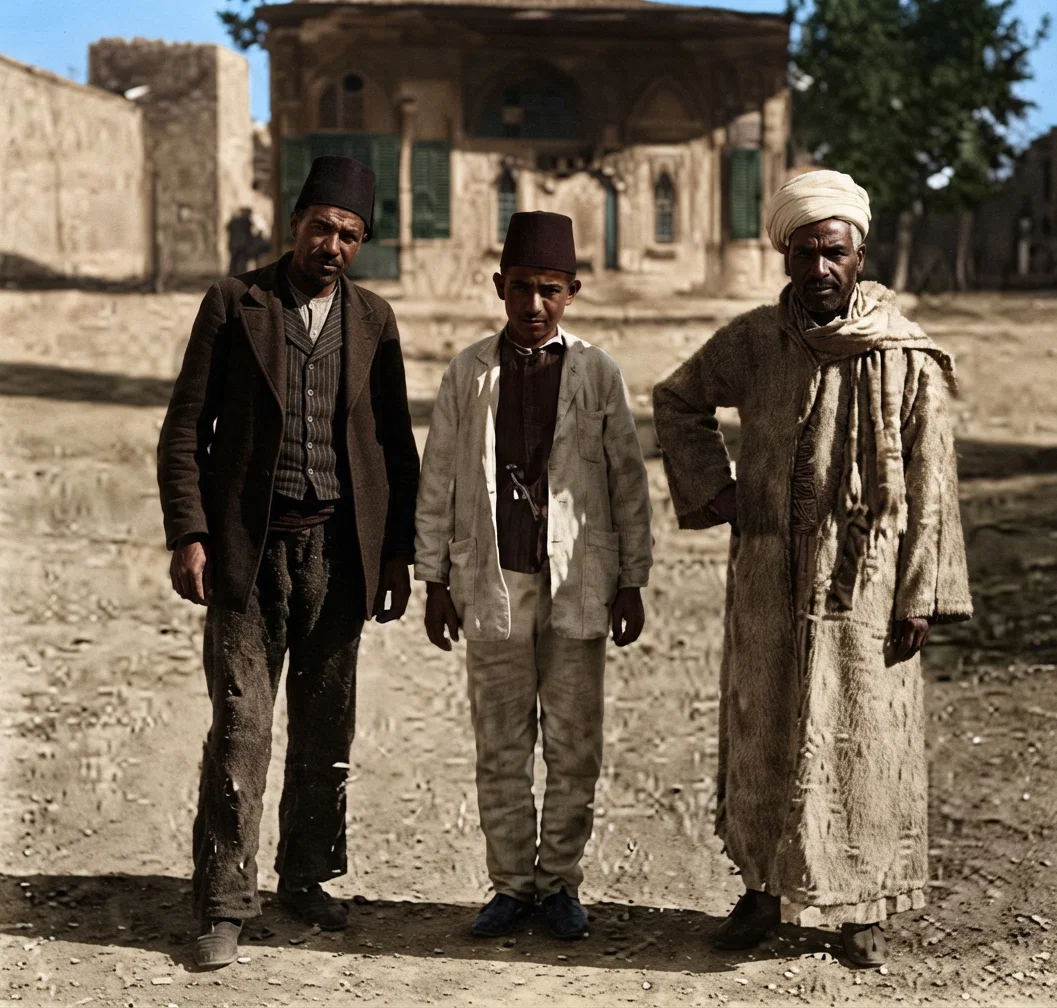
Group of natives in Constantinople
Italy has also to quiet the voice of her people, who want to have their part under the sun. She had to do it at the expense of Turkey, which is strong if she could use her army, but is feeble, extremely feeble, with regard to her fleet. Add to this the fact also that England does not allow communications over Egypt, and France is doing the same with reference to Tunis. Nevertheless many Turkish officers find their way to the battle-field around the cities at the coast of the Mediterranean.
The Moslem View of the Case
How matters will develop, none can say today. But it is taken as sure that Tripoli will finally remain in the hands of the Italians. Strong efforts are made everywhere to strengthen the Turkish navy. How Moslems think about the whole case, we learn from an appeal in behalf of the Turkish navy fund:
Those of you that are living under non-Moslem governments possess a certain amount of prestige amongst your rulers, not because you are Moslems, but because your coreligionists still count amongst the rulers of the world. Let these Moslem countries go, and your lot will be that of the once great but now most unfortunate of peoples—the Jews. It is universally recognized in Europe that the only reason of the inability of Turkey to check the aggression of Italy to-day is her want of an efficient navy. . . . Let not this impotence last any longer. To-day it is Italy; to-morrow it might be another of the European powers, to whom, in the words of the Tanin [the leading Turkish daily], "treaties are merely instruments of deception which may be destroyed when any advantage is to be gained thereby."
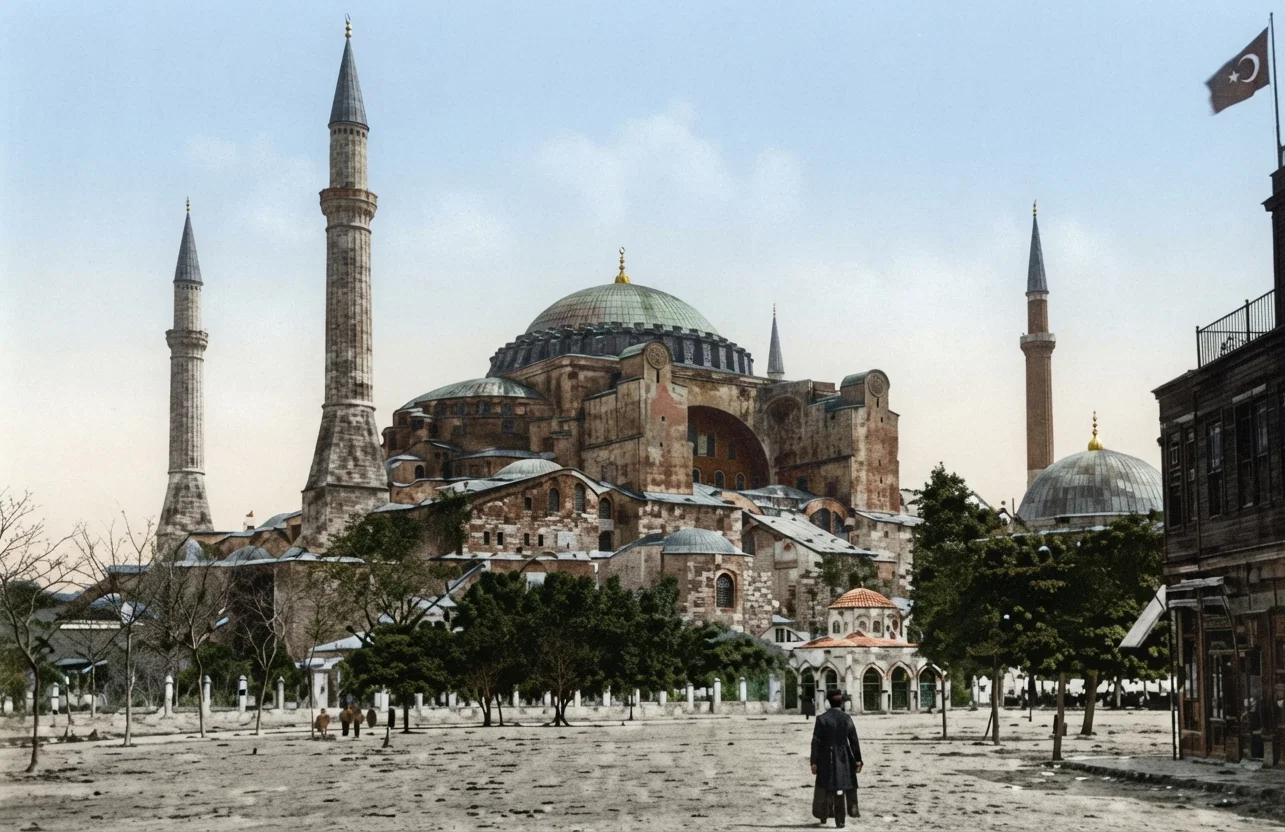
The celebrated cathedral of St. Sophia in Constantinople
This is the fate of Turkey. Mohammedanism had once its mission in the history of this world. But its time has gone, its influence dries up, just as is said in Rev. 16: 12.
The Quirinal and the Vatican
Let us mention one point more. The struggle between Quirinal and Vatican in Italy is well known. Clericalism seemed to lose ground. But it has regained its former position for a good part by its friendly attitude to the Italian march to Tripoli. The priests blessed the young soldiers going into a fight with an arch-enemy, against whom already their ancestors had fought in the time of the Crusades. On the other hand, Italy protects the money which is invested in numerous undertakings on African ground by the Banco di Roma, an institution with clerical money, and the position of which had become dangerous for the too large extension of the enterprises.
France and Germany are charging each other with the cause for Turkey's present difficulties, as the final settlement of the Morocco problem and the Tripoli affair came into being at the same time. Until now Italy has not gained much honor from her efforts. They have to thank the Turks that the latter did not repay the Italian cruelties by doing harm to the 50,000 Italian subjects who live by the grace of their Turkish hosts.
Constantinople is quiet. The same is reported from the provinces. Certainly there have been some doubtful hours, when none could say how matters would turn. But there are signs that the present state will remain until the Turko-Italian war ends. May it be soon!