By Lucas A. Reed, M.S., Editor of the “Signs of the Times Magazine”
It was the power of the State that, uniting with the church of the time, put Christ to death. His uncompromising adherence to right, notwithstanding the sentence of death placed upon Him by the church and the State of His time, justified the apostles in obeying God rather than men. Acts 5: 29.
It was the interference of the State in matters of conscience that brought about the martyrdoms of the early Christian church. In following conscientiously the precept and example of Christ, they refused to obey Rome in matters of conscience.
So in the Dark Ages, the martyrs were those who dared to deny the authority of the rulers in matters of faith and religion. While accepting the State’s rule in civil matters, they denied it any right to invade the conscience.
The Reformers logically must take the same position that Christ and the apostles had taken.
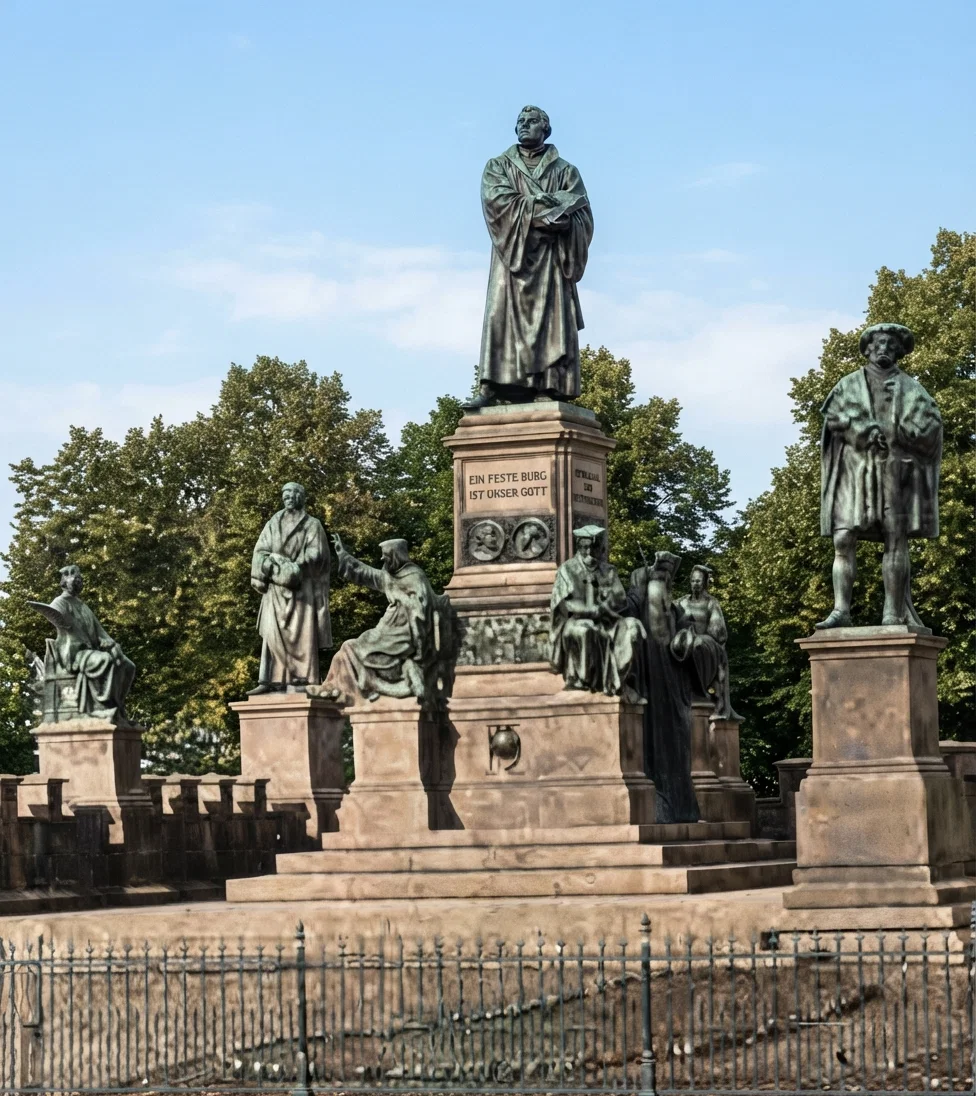
Statue of Martin Luther, the great German Reformer, who repudiated the interference of the State in religious matters. The basis of Christianity was the Word of God.
A Principle and a Watchword
For example, the work of Luther was well prophesied and exemplified when he, to do penance, sought to climb Pilate’s staircase, and heard the words of Holy Writ penetrating into the innermost sanctuaries of his conscience, showing to him that peace of soul and satisfaction for sin are not to be gained by the futile labors of man, but “the just shall live by his faith.” That one principle, “The just shall live by his faith,” became the great guide to Luther. It became the great battle-cry of the German Reformation. At once the soul’s way to God was opened up plain and clear to the very throne of God, not by the way of priestly confessor or penitential afflictions of the flesh, but through faith in Jesus alone. Not by the authority of men in power, not by the consent or the dissent of princes, was the soul to serve its Maker; but life, holy life, Christian life, was to be brought to earth through the faith of the individual alone.
It was therefore perfectly natural for Luther to attack the sale of indulgences peddled by Tetzel through Germany. He knew at once that no man, and no group of men, whether a church or a State, or both, could give man power to commit sin, or absolve him from the consequences; and so he boldly attacked that whole system of raising money for the church. He wrote out his ninety-five propositions against the doctrine of indulgence, nailed them to the church door at Wittenberg, and declared himself ready to defend them against all comers.
In Luther’s mind, worldly authority for religion went tumbling from the throne. The soul rests its faith in the Bible alone. This was the emancipation proclamation which he uttered to the world in his time.
It was therefore also just as logical, when Luther was called before the great diet at Augsburg, that he should not lean upon man, or take the teachings of men as his guide. His guidance was in the Word of God, his trust in his Maker alone; and when forced to give his answer as to whether he would retract, he could say clearly:
“Since your most serene majesty and the princes require a simple, clear, and direct answer, I will give one, and it is this: I can not submit my faith either to the pope or to the councils, because it is as clear as noonday that they have fallen into error, and even into glaring inconsistency with themselves. If, then, I am not convinced by proof from Holy Scripture, or by cogent reasons; if I am not satisfied by the very texts that I have cited, and if my judgment is not in this way brought into subjection to God’s Word,— I can nor will retract anything; for it can not be right for a Christian to speak against his conscience. Here I take my stand; I can not do otherwise. God be my help! Amen.”
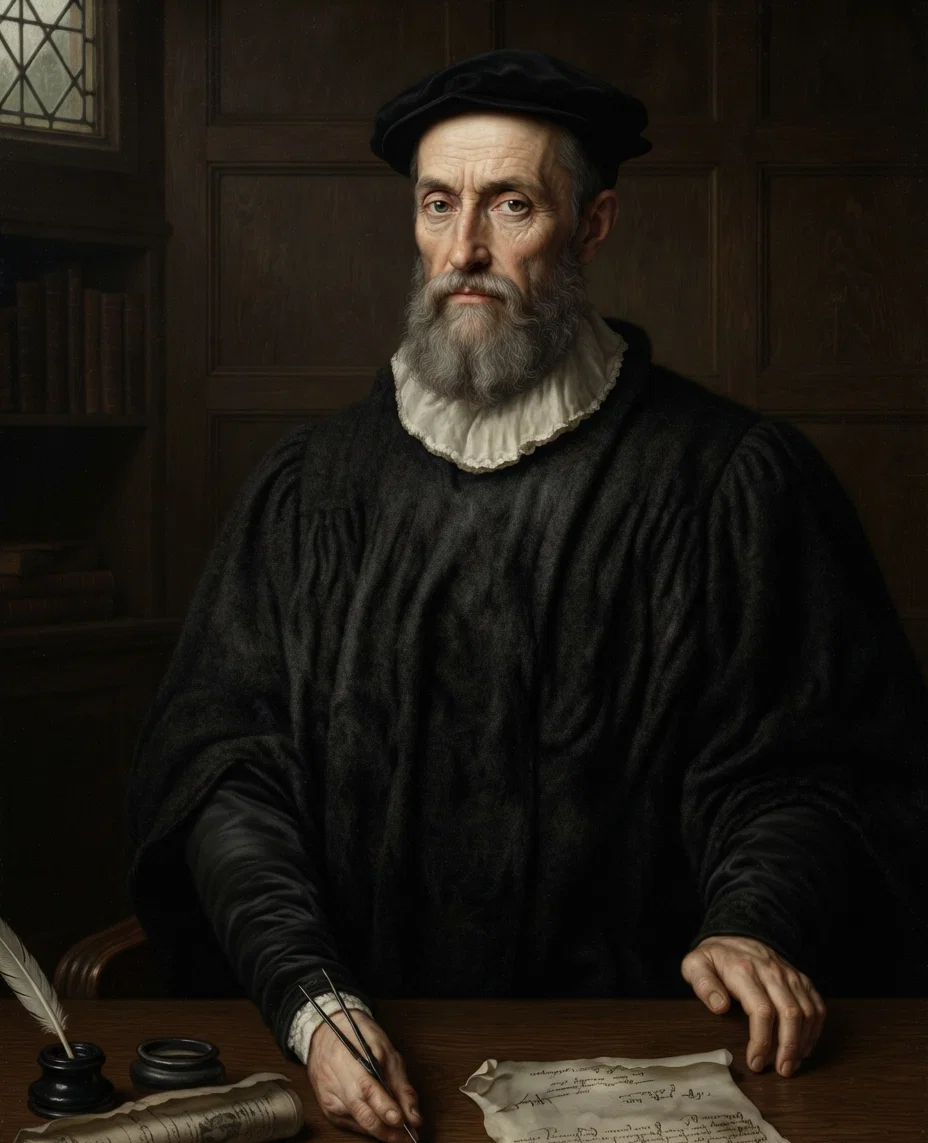
John Knox, the Scotch Reformer, of whom it is said that he “never feared the face of man”
Here the principle is laid down as clearly as it seems possible for human words to phrase it. No man is authority in matters of conscience, whether he be prince or prelate, legislator or church counselor, emperor or pope.
And when the spokesman of the diet told Luther, “If you do not retract, the emperor and the States of the empire will proceed to consider how to deal with an obstinate heretic,” and the listeners trembled at the threatening words, Luther himself could be calm, and say, “May God be my helper! for I can retract nothing.” And when, after consideration, they gave him still an opportunity, he remained firm, and said, “I have no other answer to give than I have already given.” The power that had forced princes and emperors to bow before it, broke harmlessly upon the faith of the simple, humble monk.
It was nothing strange that all the power of a church religion should be concentrated in its mighty wrath upon him; but in the providence of God he was kept safe, to continue the great work for the emancipation of human souls.
The Great Protest
Following out the great principles that gave birth to the Reformation, the protest of the princes marked a fresh impetus toward men’s adherence to faith only in the Word of God. The emperor had called a diet to convene at Spires in 1529, for the purpose of crushing heresy. The princes, if possible, by peaceful means, were to be induced to side against the Reformation. If they refused, Charles was prepared to resort to the power of the sword. It was a dark day for the Reformation, but the Reformers were not without hope. Melanchthon voiced their faith, “We are the execration and the sweepings of the earth; but Christ will look down on His poor people, and will preserve them.” The priests demanded that the States which had accepted the Reformation submit implicitly to Romish jurisdiction. This made the issue directly a matter of6
Questioner.—“Did civil government always exist in the world?”
Answer.—No; civil government is a temporary but necessary arrangement or expedient under sin.
Questioner.—“When do you understand civil government originated and became necessary?”
Answer.—When sin entered the world; in other words, when man became selfish. This fact is recognized by Mr. Andrew W. Young in his work on civil government. Explaining the necessity for civil government, he says:
"All men in society have the same rights. Therefore we can not rightfully supply our wants or gratify our own desires any further than is consistent with the rights of others. But man is by nature selfish, and many would infringe the rights of others, for their own selfish ends, unless restrained. Hence we see the necessity of some fixed rules, that each one may know what he may do, and what he must not do."—"Government Class Book," page 12.
But man was not created “selfish.” Hence civil government was not an original ordinance or arrangement of God. It became a necessity when man fell—when he sinned—when he became selfish. Then the “fixed rules” defining the metes and bounds of men’s actions, that each might “know” what he could and what he could not do, had to be promulgated. Then men, in defense of their rights, had to pool their rights and power, and vest power and authority in men as guardians of those rights. This, in whatever form it might assume, meant civil government.
The same is true also regarding moral law. This, in its negative, prohibitive, written form, became a necessity because of the entrance of sin. It was spoken “because of transgressions.” Gal. 3: 19. It was made “for the lawless and disobedient, for the ungodly and for sinners, for unholy and profane, for murderers of fathers and murderers of mothers, for manslayers, for whore-mongers, for them that defile themselves