EDITORIAL

8%

Pacific Press Publishing Association · Mountain View, California · Jul 23, 1912

FromSigns of the Times, Vol. 39, No. 28.

Read the full edition

EDITORIAL

The Good Tidings

“Glory to God in the Highest”
It is not to the learned or wise or mighty of earth that God reveals His marvelous mysteries. He is not unwilling to reveal them. He longs to do it; and He "is no respecter of persons." He was as willing to reveal to Cain as to Abel, to Hammurabi as to Abraham, to Pharaoh as to Moses, to King Saul as to David the shepherd boy, to King Ahab as to the rough prophet of the mountains Elijah, to the high priests Annas and Caiaphas as to the two fishermen Peter and John, to Pope Leo X as to the humble monk at Erfurt.
Why then does He so often pass by the learned and humanly great?—One reason is that they would take the glory of the revelation to themselves, be lifted up by their own importance, and feel that God was dependent upon them in the revelation of His truth to the world. Another reason is that if they were not themselves lifted up by a sense of their own importance, they would be exalted by a superficially thinking people. Still another reason may be that the learned in human wisdom are inclined to sit in judgment upon the God-given message, and modify, retrench, expand, interpret, till it loses its force, while the unlearned and humble will take God at His word.
For the wisdom of God has been counted foolishness by the world, and consequently in its own wisdom the world has not found God. And therefore "not many wise after the flesh, not many mighty, not many noble, are called: but God chose the foolish things of the world, that He might put to shame them that are wise; and God chose the weak things of the world, that He might put to shame the things that are strong; and the base things of the world, and the things that are despised, did God choose, yea and the things that are not, that He might bring to naught the things that are;" and then the reason is given,—"that no flesh should glory before God," and that "he that glorieth, let him glory in the Lord." See 1 Cor. 1: 18-31. And hence the ages have been a demonstration that "the foolishness of God is wiser than men; and the weakness of God is stronger than men."
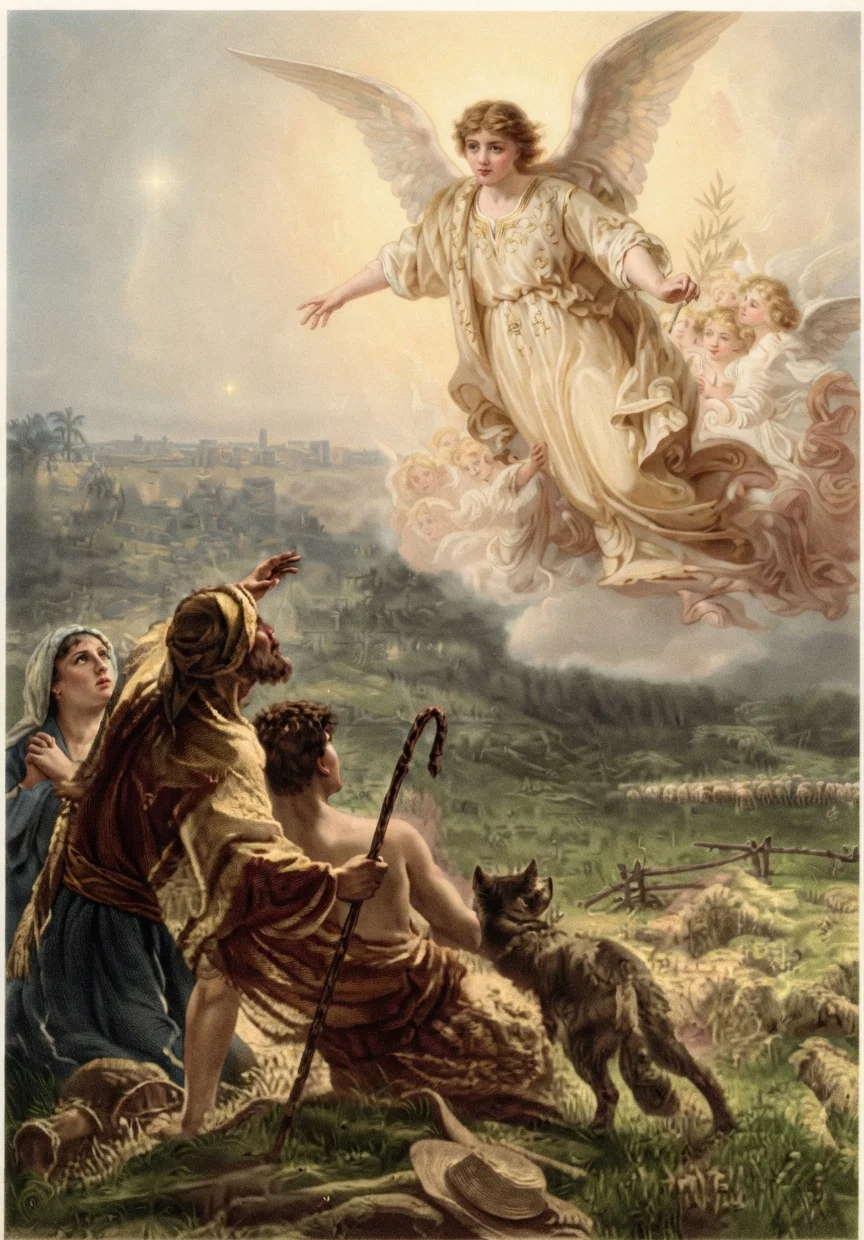
These thoughts may help us to see why, when the announcement to the world was to be made that the eternal Logos was become flesh, that news was not sent to high priest, or noted scribe, or learned rabbi, but to the shepherds watching their flocks on the hills of Bethlehem, who, in touch with God through nature, had learned man's littleness under the sublimely majestic march of the stars of God; who had learned man's foolishness in a thousand and one of the intricate problems of life and existence, unsolved by them as by the greatest scholars and philosophers; who had learned from the history of their own people of God's care and providences; who were developing, in the care of the weak, the aged, the young of their flocks, the tender sympathy manifest in infinite measure by the great Shepherd of the sheep.
As they suffered under the Roman yoke, the promises and prophecies of God's Word of the hope of Israel had become more and more precious, and His faithfulness in fulfilment was not alone marked in the history of the chosen people, but by the revolutions of the orbs above. Their humble, longing lives, their open hearts, fitted them to receive the message and messengers of God, and to them were they sent.
Beautiful in its simplicity is the story. While they were watching their flock, "an angel of the Lord stood by them, and the glory of the Lord shone round about them."
The divine glory terrified them, but the angel said: "Be not afraid; for behold, I bring you good tidings of great joy which shall be to all the people: for there is born to you this day in the city of David a Saviour, who is Christ the Lord." And immediately there appeared a great throng of "the heavenly host," singing in holy rapture, "Glory to God in the highest, And on earth peace among men in whom He is well pleased."
And then, without doubting, the shepherds proceed to Bethlehem, not to see if it is so, but to see "this thing that is come to pass." They find Him whom they sought, not in a palace or under a royal pavilion, but in a stable, in a manger. And joy fills their souls, and finds relief in praise to God, and in the telling of the story.
It is the "good tidings" still. It comes to every soul of earth; it comes, sinner, to you. Unto you is born this day a Saviour, who is Christ the Lord. Into your life would He be born anew. He would rest in the manger of your heart. He would transform it into the palace of the King, glorious with His own heavenly beauty. He would cleanse it from all filthiness, selfishness, self-serving, dissatisfaction, grumbling, criticism, and beautify your character, fill your soul with joy, and place upon tongue and lips songs of praise and the glad message of good tidings. Let Him do it to-day. Why wait? Why postpone the reception of a single blessing from God?