SILENT INFLUENCES

9%

Pacific Press Publishing Company · Oakland, Cal. · May 31, 1899

FromSigns of the Times, Vol. 25, No. 22.

Read the full edition

SILENT INFLUENCES.

IT has been said that— "There are sermons in stones, Books in running brooks, And food in every thing." Of the truth of this I wish to bear testimony, in the relation of an experience, an experience which no time can ever efface from my memory.
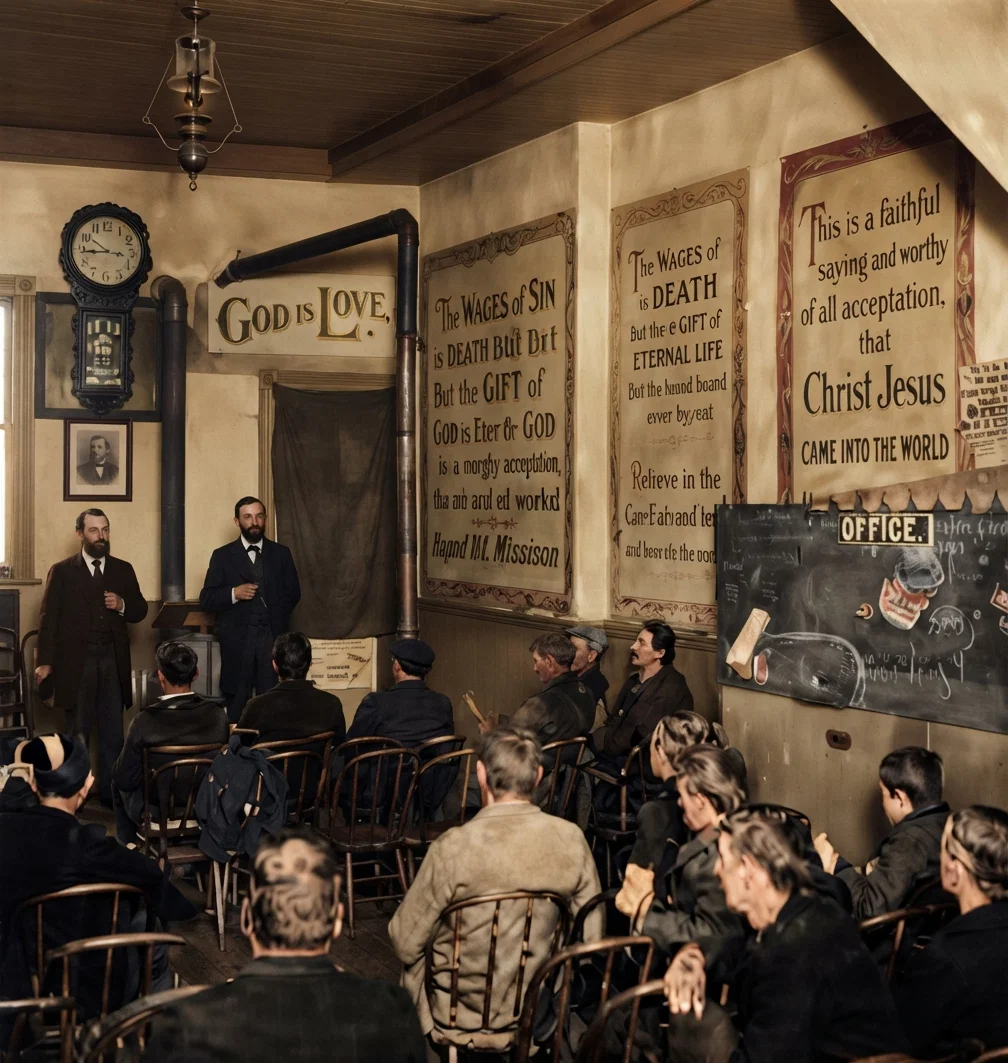
For a period of some four months I have been a constant attendant upon the daily and nightly Gospel meetings held in the chapel of the Helping Hand and Medical Mission of San Francisco. At all times, except those allotted to service and sleep, this little chapel is a quiet retreat, where the thoughtful may sit and meditate and read the Bible or other literature that has a tendency to cause him to seek that higher life, which brings a man in closer relation to his Maker. As an assistant to these thoughts, an air of spirituality is given by the innumerable texts and Scriptural quotations which adorn the wall, inscribed in illuminated letters in every available space.
As often as I came from the beautiful little chapel, where so much was being daily done to direct the mind to those all-important themes, just as often I remained untouched: "Still with that settled, ceaseless gloom The fabled Hebrew wanderer bore, That would not look beyond the tomb, And can not hope for rest before."
The time came when I was to leave the mission, the place where I had spent so many pleasant hours—hours that were soon to be recalled with most wonderful vividness and regret—regret that I had not profited more from the earnest efforts of the sincere, faithful, Christian workers who conduct the mission. Before the time when I commenced to attend these meetings, my nights and days had been largely passed in wine-rooms, and in the companionship of such characters as usually frequent those places.
This appetite and desire for drink seemed to leave me, and I prided myself that I had put the tempter aside forever.
Scarcely had I gotten away from the influences which surrounded and unconsciously assisted me in the keeping of my good resolutions, when I again became a victim to that chief missionary of hell on earth, the wine cup. That afternoon I lay in the dull stupor of the inebriate. How long I had lain amid my degrading surroundings I can not say, but when I was aroused it was night; inky darkness filled the space around; no sound was heard, when suddenly the stillness was broken by the tolling of a bell in some near-by steeple. With the fumes of alcohol beclouding my brain I was scarcely able to count the strokes, one—two—three—four—five—six—seven. O, it was just seven o'clock! in half an hour more services would commence at the mission. This thought found its way slowly through my darkened brain. For about thirty minutes, with eyes still closed, I saw, or seemed to see, the chapel of the mission as plainly as I ever saw it in my life; the door of the chaplain's office opened, and the workers, to whom I had so often listened with more pleasure than I had before known, filed out. I heard the hymn given out, I saw the organist take his seat and commence the prelude to one of my favorites, "Anywhere with Jesus will be home sweet home!" How I longed to join in that sweet song, but I was dumb.
Mr. Richards talked that night, as I have never heard words fall from mortal lips. Never will I forget them as I seemed to hear them that night. As he looked at me with tears in his eyes, his voice trembled as he said, "O blessed God, do not let this young man go into eternity lost!" Vainly I tried to say, "Amen," but, like the murderer Macbeth, "amen" stuck in my throat. I tried to pray, I could not. I could think of only one thing to say, and that was a prayer I heard Mr. Dolson say he had used on a desperate occasion in early life, "O Lord, have mercy on me a sinner!"
The meeting was over; I turned my eyes to those sermons on the walls; I had never tried to learn them when at the mission, but to my surprise I could repeat them word for word. From the very first verse I seemed to get consolation, "If we confess our sins, He is faithful and just to forgive us our sins, and to cleanse us from all unrighteousness." One after another I ran them through during those long hours of that sleepless night, and then I thought silence had a tongue.
Let me add that it was not long after this experience I had in the jail behind the iron bars, I found myself on bended knees in the mission. Verily the works of God are inscrutable. B. F. DEBOW.