THE SPANISH FIELD

10%

Pacific Press Publishing Company · Oakland, California · May 17, 1899

FromSigns of the Times, Vol. 25, No. 20.

Read the full edition

THE SPANISH FIELD.

At the beginning of the sixteenth century Spain ranked among the first of European nations. Her king, Charles I., was also king of the Netherlands and emperor of Germany (Charles V. of Germany). She sent forth her armies to conquer in the Old World, and to explore and take possession in the New. In America more than one-third of the present territory of the United States, and everything from the Rio Grande to Cape Horn, except Brazil, and including nearly all of the West India Islands, fell into her hands. The treasures of the Montezumas of Mexico and of the Incas of Peru, with the vast commerce of her other possessions, filled her coffers to overflowing. She was intoxicated with the pride of wealth and power.
Just when Spain was making her greatest conquests in America, the influence and power of the Reformation began to be felt in all the nations of Europe. Spain had already established the Inquisition, and its machinery was put to work so effectually that it promptly crushed out everything that the Roman Catholic hierarchy denounced as heresy. All investigation and freedom of speech were prohibited. The Bible was taken from the laity, and was practically discarded by the clergy. The people became the servants of the priests. The Inquisition was also established in Mexico and other Spanish possessions in America, and the same baneful results followed.
From the time the Inquisition was established dates the decadence of Spain. But her possessions were so large and her wealth and power so great that it was many years before the paralyzing and deadly effects of the course she had adopted were discernible; and it has taken four hundred years for her to gather the last fruits from the seed she had sown.
As the tree began to die, the branches began to drop off. Early in the nineteenth century the Louisiana territory was ceded to France; Florida was purchased by the United States in 1815. Mexico gained her independence in 1820, and all the countries of Central and South America quickly followed her example. The last of her foreign possessions have just been stripped from her, and her humility, weakness, and poverty are now as conspicuous as were once her arrogance, her power, and her wealth.
After civil liberty came it was years before the nations that had thrown off the yoke of Spain could break the ecclesiastical bands which three hundred years of papal rule, supported by the civil power, had placed upon them. Mexico is a fair type of Spanish-American countries. She has led in every move for civil and religious liberty, as also in the material prosperity which has so remarkably characterized her during the last quarter of a century.
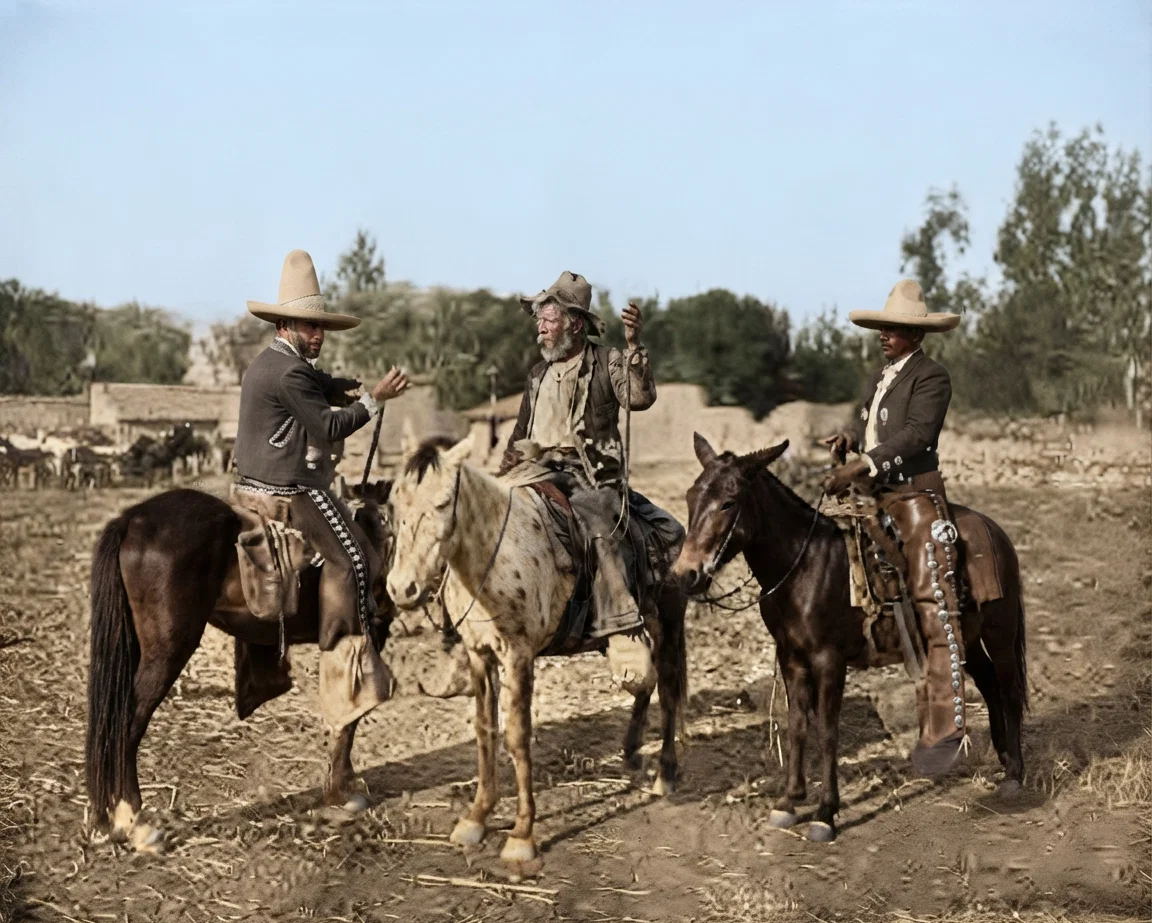
A Typical Mexican Scene.
The first constitution adopted by Mexico is known in history as the constitution of the three guarantees. One of these guaranteed that Roman Catholicism should be the only religion tolerated by the government. It was not until 1867 that the laws of reform, which had been enacted by Congress ten years before, went into effect. The laws of reform abolished all monastic orders, confiscated all property held by the church except that actually used for public worship, made marriage a civil contract, placed the cemeteries under municipal control, forbade religious processions and other public demonstrations, and conferred upon every citizen and stranger freedom and protection in his religious faith and practise. The noble and patriotic men who have given civil and religious liberty to their country have also opened up before it an era of prosperity such as has not been known before in its history. A splendid system of public schools has been established, and all the useful arts and sciences are fostered. They encourage all benevolent and philanthropic enterprises that are calculated to benefit society, and welcome foreigners who bring with them the enterprise and advanced experience of other countries to assist them in developing their own.
But Roman Catholicism is endeavoring to maintain, through clerical influence, what it has lost at the hands of the civil power. Every effort is being made to keep the people wholly under the influence of the Church of Rome. Protestantism is misrepresented and scandalized. But God has prepared the way for His truth to go to all these millions of Spanish-speaking people. They are still in almost total darkness in reference to the love of God and of the saving power of faith through the Gospel. The Bible has been, and still is, almost unknown among the masses. But the way is open for the Bible to be placed in the hands of the people, and for the Gospel to be preached to them. God has done wonders in opening up the way. It now remains for His people, whom He has commissioned to preach the Gospel of the kingdom to all nations, to step into the opening and do the work the Lord has enjoined upon them to do.
Spanish is more extensively spoken than any other modern language except the English. At a moderate estimate seventy-five millions of people speak Spanish, and very few of all these speak any other language. More people speak Spanish to-day than spoke English at the beginning of the century. Spanish-speaking nations encircle the globe. They may be summed up as follows: Spain, 17,000,000; Mexico, 13,000,000; Central America, 3,000,000; South America, 30,000,000; West Indies, 3,000,000; the Philippine and other Pacific islands, 8,000,000; North Africa, 1,000,000. DAN. T. JONES.