KENNETH'S DEBT

4%

Pacific Press Publishing Company · Oakland, California · May 17, 1899

FromSigns of the Times, Vol. 25, No. 20.

Read the full edition

KENNETH'S DEBT.

"MOTHER, I want it just dreadfully; and it don't cost but a quarter."
But Kenneth's mother only replied patiently, as she had done several times before, "I am sorry, dear, but I can't give you even a quarter."
"All the same, I'm going to have that rooster," Kenneth proclaimed to the younger children, who gathered around him. "I never can have anything. Mother could give me that quarter just as well as not." In his heart he knew that this charge was not true, but he thought it made him feel better to say so.
When the children came trooping in to supper that night, Ray ran to her mother, her blue eyes shining with excitement.
"Mother, mother," she cried, "Kenneth got the banty rooster, and the coop is all made for it; and bimeby he's going to have a hen and lots of little chickens and sell the eggs and buy a farm and we're all going to live there."
Kenneth looked somewhat defiant as he took his seat; but when his mother said gravely, "Where did you get the rooster, Kenneth?" the answer was prompt and frank: "Don't you worry about that, mother. That's all right, honest it is!"
Mrs. Miller was in the habit of trusting her children, so the subject was dropped. The rooster flourished in his new home, and all the children fed him, hung over his coop, and counted the number of times he crowed. Matters went on smoothly for a while until one day at luncheon Ethel announced, with her most elder-sisterly air:—
"Kenneth Miller is going to be arrested, and I saw the policeman that's going to do it. That lady told me so, you know the one you borrowed the quarter from."
Mother drew the frightened boy into her room and closed the door. Then Kenneth confessed.
"I borrowed it, mother. The lady that lives across the street from the other lady that was going to sell me the rooster; she knew I didn't have any money, so she said she would lend it to me. I mean to pay her. I do, honest."
"What are you going to pay her with?" mother asked. "You haven't any money, and mother told you she could not spare any."
"I thought maybe you could spare it by and by, or maybe Eddie or Nan would give it to me, or maybe I might find it on the walk, like Jimmy Lawrence did."
They talked it over a little more, and together they decided that Kenneth must make his own plans to pay his debt.
He wore a very puzzled face for several days, and once, coming to his mother, he breathed a wo-begone sigh:—
"Mother, isn't it just dreadful to owe things and have bills?"
One night Eddie came in hurriedly, and called upstairs, "If any one of you children will take this package to town, I'll give you five cents."
Kenneth's face lighted up, and he sprang forward eagerly. "I will, Eddie," he cried, and was out of the gate like a flash.
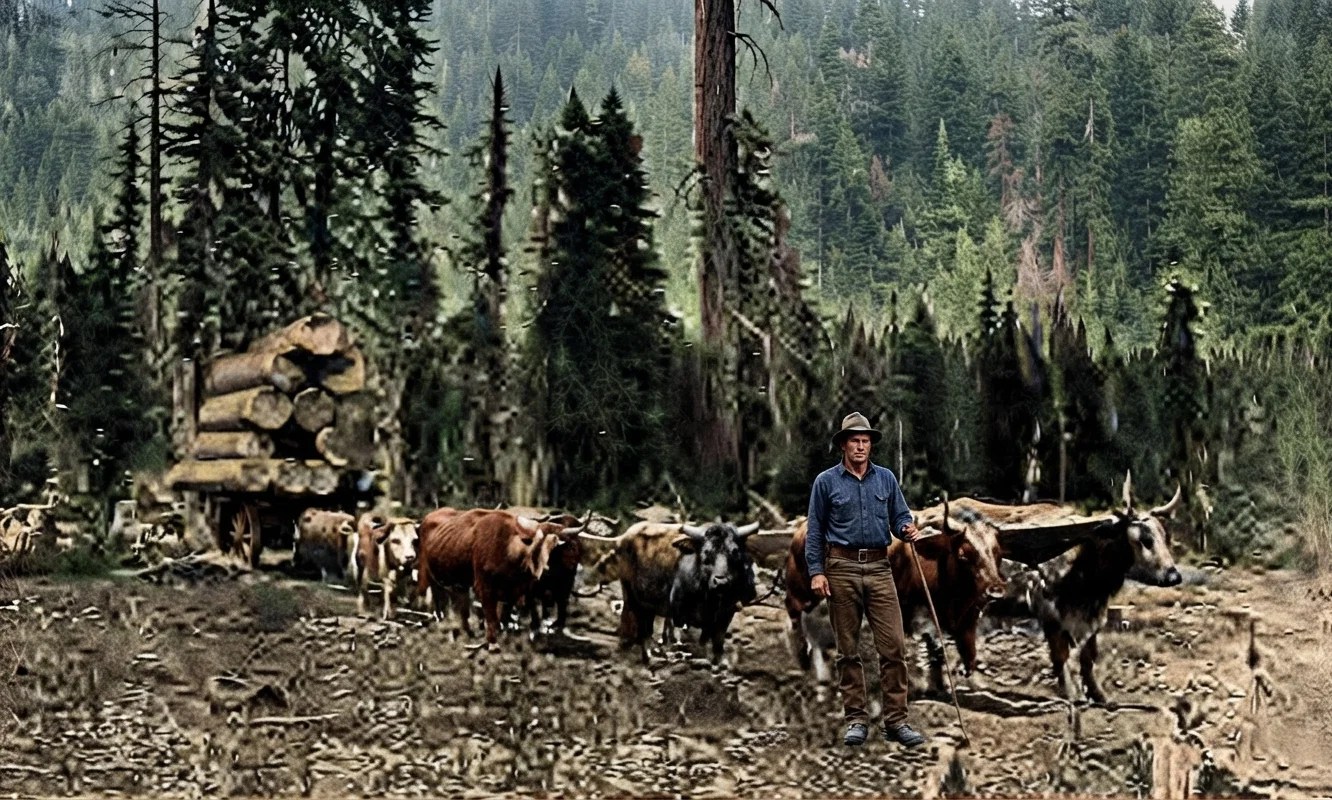
Logging in the California Redwood Forests.
That nickel was the beginning. The next morning the boy shouldered a small spade which belonged to father, and without a word to any one, started down the street. Going bravely to door after door, he asked: "Do you want your flower beds spaded up? I'll do it for ten cents."
Two people said yes; and so in the hot sun, hour after hour, sometimes struggling to keep back the tears, the boy dug away, and by the middle of the afternoon he had twenty cents. On the way home he stopped again at Mrs. Demorest's and gave her the money.
"That boy has got good stuff in him; he'll make a fine man some day," she remarked to her husband as the gate closed behind the tired little laborer.
His head ached; he was tired; he was hungry; but he had never been so happy in his life as when he climbed to his old seat on his mother's lap, and whispered in her ear:—
"I am not ever going to have any bills again, mother dear; I'm going to pay cash."—Morning Star.