Peace Assured—New Republican Government Organized—Dr. Sun Yat Sen the First President
JANUARY 1, 1912, was in truth a NEW YEAR'S day for China. It marked the beginning of a new era, the institution of a new republic, and the adoption of the Gregorian calendar.
How appropriate that China, the great question-mark of the Orient, having endured the bitter agony of plague, famine, and flood, and for two months felt the convulsive clutches of war and strife wasting her life-blood, should choose this day—the day when it is the universal custom to make new resolves for the future and "turn over a new leaf"—in which to proclaim her independence, to announce her freedom from Manchu rule, and to declare her intention of instituting a new order of things, a government of the people, by the people, and for the people, which will open the way to establish new methods of education, new systems of currency, to erect new standards of commerce and business, and to encourage friendly foreign relations. From this date, then, the world powers will reckon with a new force on the map of the earth, a new country.
The United States of China
From the three weeks previous, which is the date when the armistice was first declared, practically all the fighting ceased, and all interest was transferred from the seat of war to the peace conference which convened in Shanghai on December 18.
His excellency Tang Shao Yi, duly commissioned delegate from the Manchu throne, armed with full authority from Yuan Shi Kai, the premier, arrived on the afternoon of the 17th, and arrangements were immediately made for the opening of negotiations on the following day.
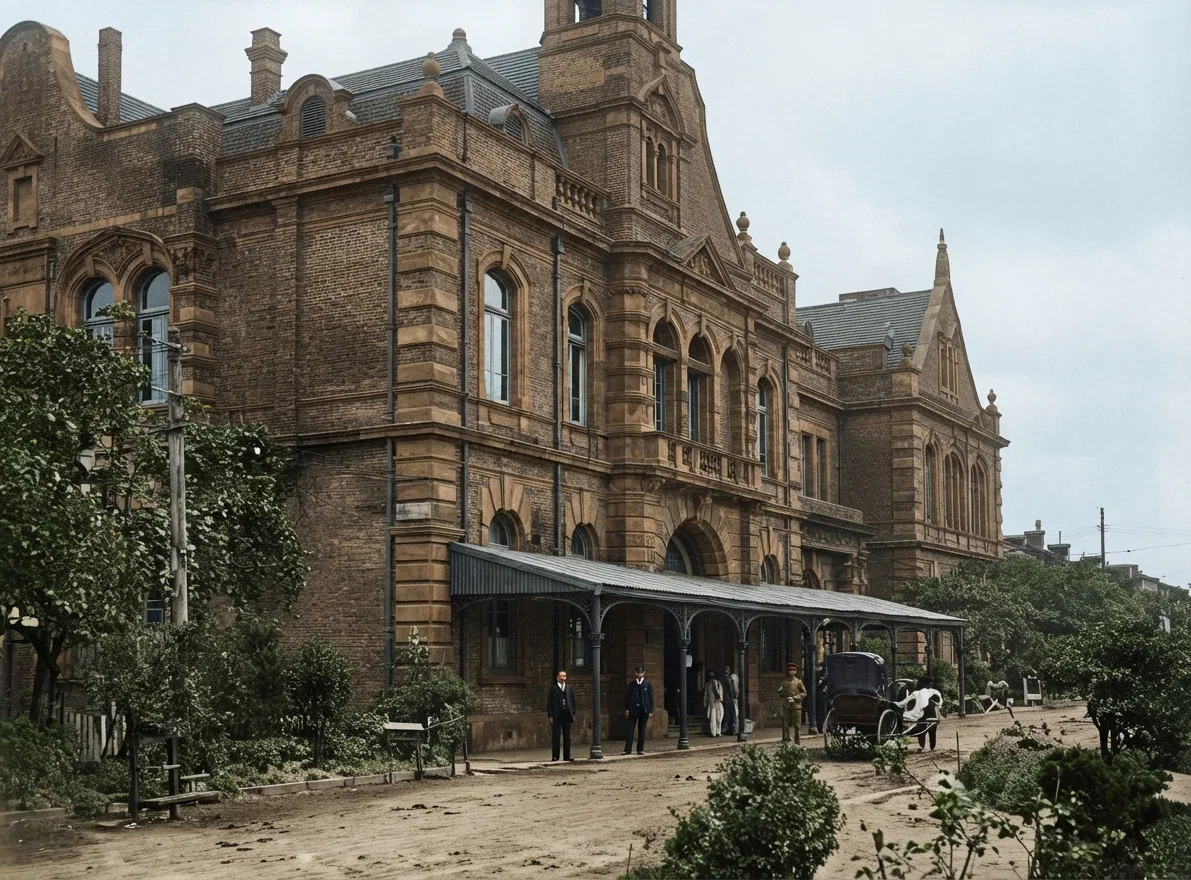
The meeting was called at the town hall in the British concession, this building being offered them by the municipal council of Shanghai.
The first question discussed was in regard to the armistice, as reliable reports were at hand showing that skirmishing and movements of troops were going on in direct violation of agreements. It was decided that a complete armistice must be called at once and all fighting stopped. Tang Shao Yi agreed to telegraph to Yuan Shi Kai to that effect, and Wu Ting Fang to telegraph to Li Yuan Hung.
The discussion of the solution of the present problems of the government was then taken up in earnest, and continued for four hours, but no results of this meeting were given out.
The next day, the conference convened again, and at its close the following statement was given to the press:
1. It was agreed that the armistice should be extended for a period of seven days; that is, from December 24, 8 A.M., to December 31, 8 A.M.
2. Dr. Wu Ting Fang advocated the establishment of a republican form of government for China. He believed that China is fully prepared to welcome the new republic. He said in substance:
"The people of China will accept no other form of government than a republic founded upon the will of the people. Since we can appoint delegates to represent us, both in the various provincial assemblies and in the national assembly at Peking, why are we not qualified to elect a president as the chief executive of the nation?"
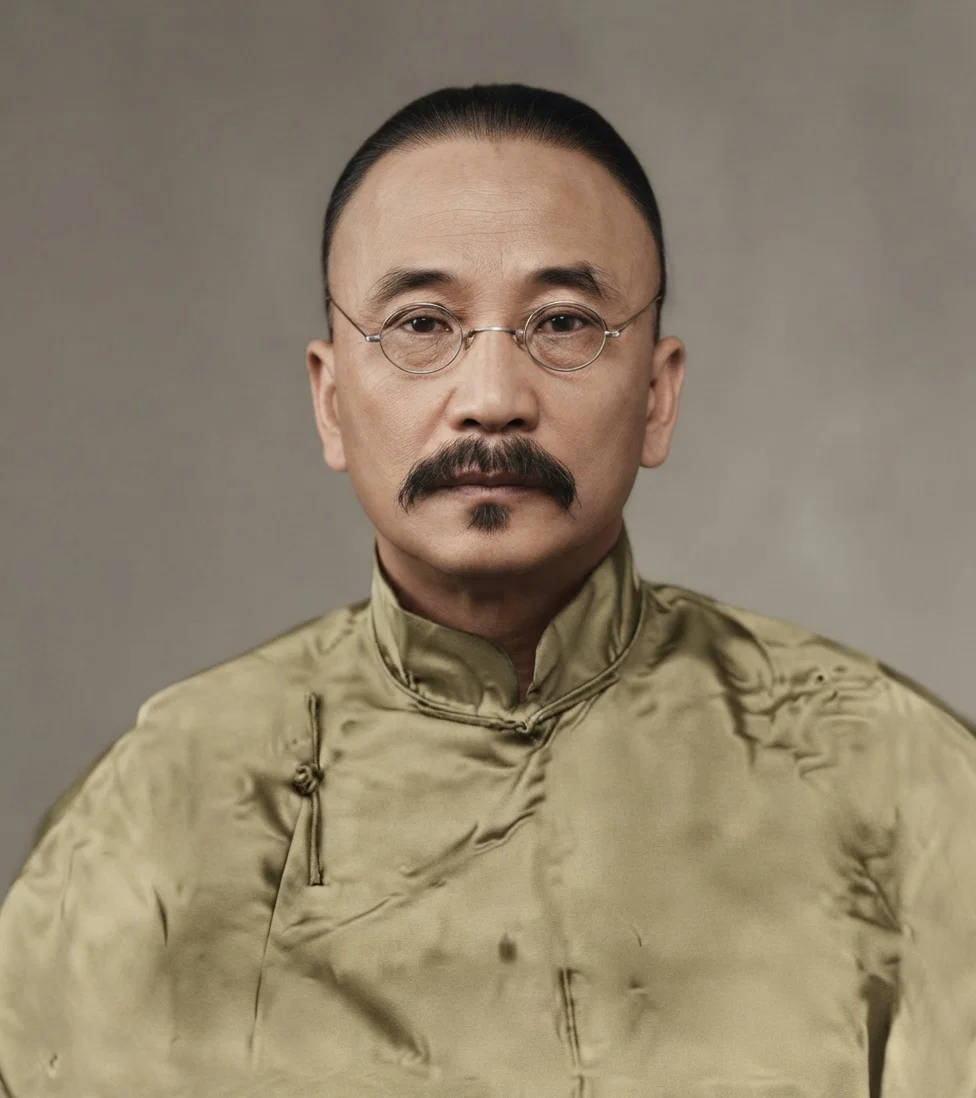
Tang Shao Yi, who headed the peace delegation from Peking
"The Manchus Must Go"
"The Manchus have for 267 years shown the utter impossibility of their governing the people. They must go out. A government may be well likened to a trading company. If the manager, through incapacity or dishonesty, causes the failure of the concern, he has no business to continue in office; a new manager must be elected by the shareholders. The Republican Party does not intend to drive the Manchus out, nor to ill-treat them. On the contrary, they want to place them on a perfect equality with the Chinese, enjoying together the blessings of liberty, equality, and fraternity."
H. E. Tang expressed his readiness to accept Dr. Wu's views, but desired to communicate with Peking.
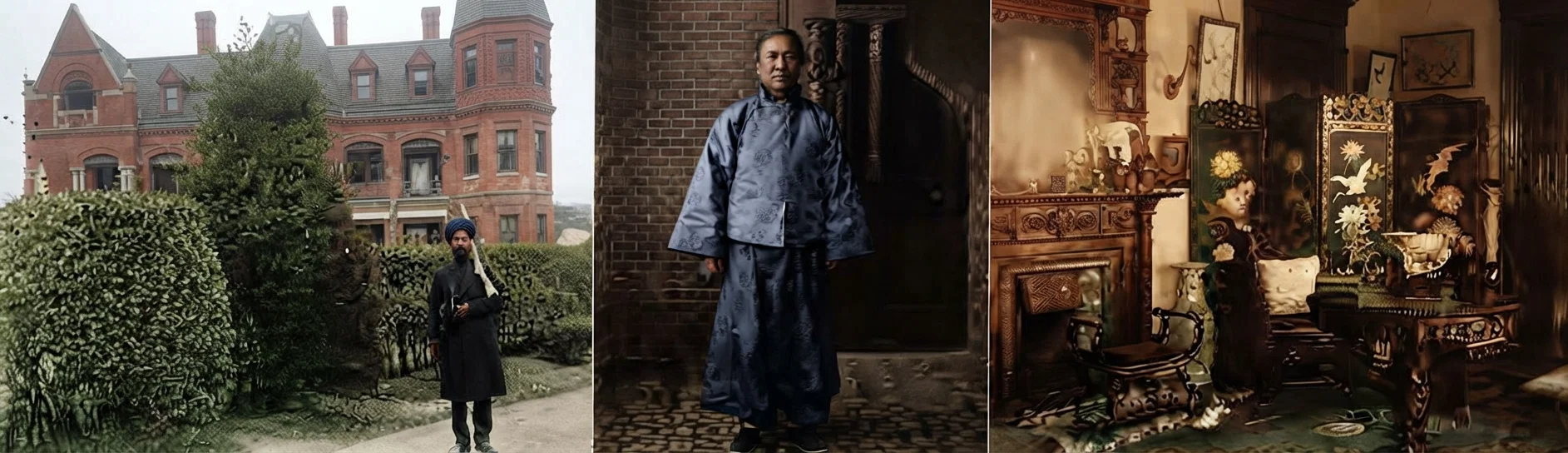
Left — Private residence of Dr. Wu Ting Fang, where he received the foreign consuls. Middle — Dr. Wu Ting Fang, taken on the porch of his residence a few minutes after the visit of the foreign consuls. Right — Room in Dr. Wu Ting Fang's house where he met the foreign consuls. The furniture is said to be elegant beyond description.
An Additional Statement
The official statement of the day's proceedings as handed out to the Chinese newspapers was practically the same as that given to the foreign papers, except that it contained the following additional statement as being made by H. E. Tang Shao Yi:
"Personally I am in favor of a republic, which is the only solution of the present crisis; but we must not in the conference overlook the integrity of Manchuria, Mongolia, Tibet, and other dependencies."
To which Dr. Wu replied, "The republic does not denote the integrity and union of the eighteen provinces only."
Tang Shao Yi replied to this, "I will have to telegraph to Yuan Shi Kai as regards the republican question."
It was a matter of surprise and great astonishment to every one to hear that Tang Shao Yi, the throne's delegate, had declared himself in favor of a republic and entered no objections to the program laid down by Dr. Wu. It is taken, however, as a good omen, because Yuan Shi Kai could hardly go back on the decision of his delegate without "losing his face," as the Chinese expression puts it, which literally means being publicly dishonored.
In this short period of history-making events, one of the most important, in an international sense, took place on Wednesday forenoon, the 20th of December, when the six great powers, America, Great Britain, Germany, France, Japan, and Russia, expressed their friendly solicitude as to the outcome of the pending peace negotiations to the chief delegates of the imperial government and the Republican Party in identical notes presented by their respective consuls-general.
They presented an imposing procession driving through the streets in a line of open carriages. They traveled at a rapid pace out Avenue Road, and went to Mr. E. S. Little's home first, where Tang Shao Yi received them.
After an interchange of pleasantries, the consuls-general and the imperial peace envoy retired to the reception-room, where the proceedings were gone through with in a formal way. This took only a few minutes, and they then drove over to the home of Dr. Wu Ting Fang, where the same thing occurred.
Upon the arrival of the six foreign representatives at the headquarters of each peace commissioner, the party were ushered into the reception-room, where they were greeted by the chief delegate. The German consul-general, P. von Buri, said, "We have been instructed by our respective governments to hand you this note."
At this the other five handed their messages in, and the German consul read his, which was as follows:
The legation of Germany at Peking has been instructed by its government to make the following unofficial representation to the commissioners whose task it is to negotiate the conditions for restoring peace in China.10
The government of Germany considers that the continuation of the present struggle in China exposes not only the country itself, but also material interests and the security of foreigners to grave dangers.
Maintaining the attitude of absolute neutrality, which it has hitherto adopted, the government of Germany deems it its duty unofficially to call the attention of the two delegates to the need of arriving, as soon as possible, at an understanding calculated to put an end to the present conflict, being persuaded that this view is in accordance with the wishes of the two parties concerned.
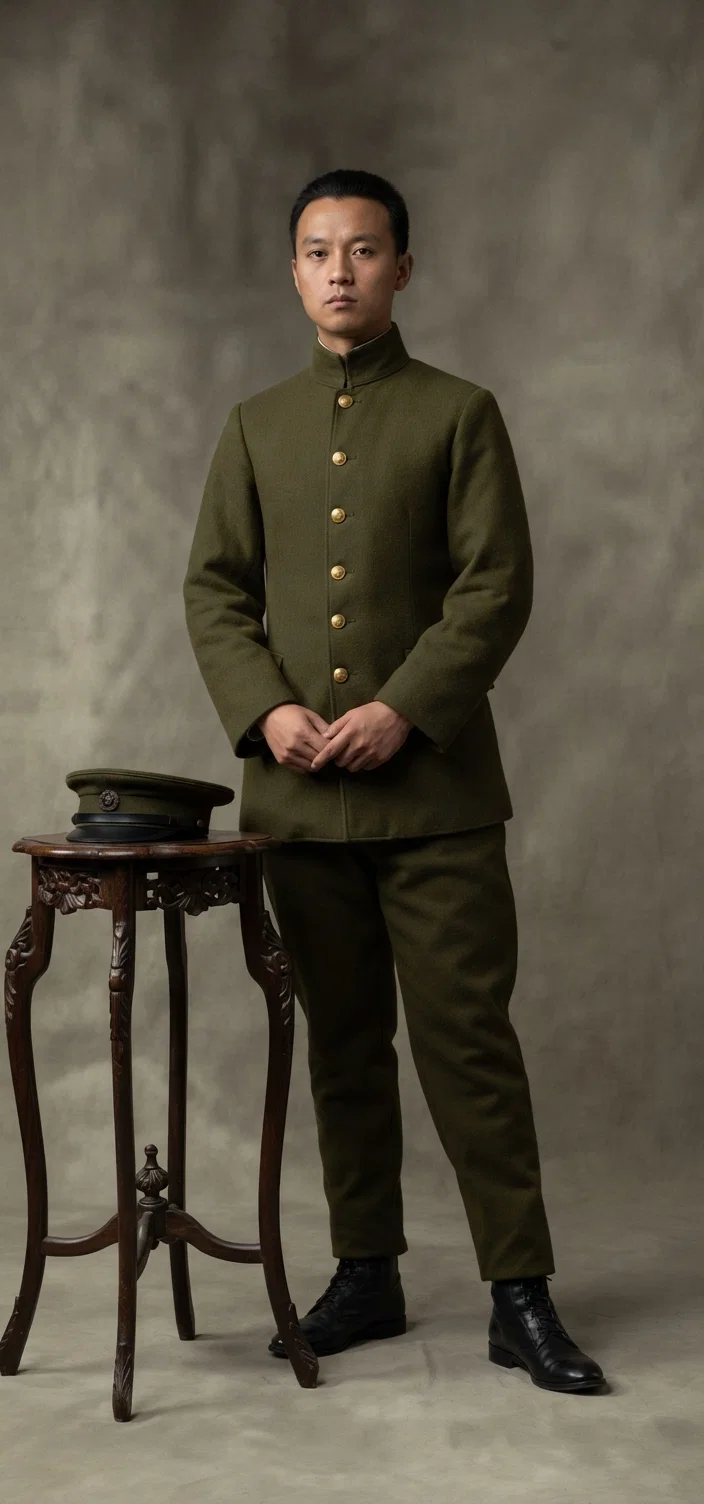
An officer of the revolutionary army
In reply Tang Shao Yi said, "I feel very grateful for the friendly interest shown by the foreign powers."
Dr. Wu's response was in substance:
The representations of your respective governments will have weight in our deliberations, and will be given due consideration. I am a man of peace; as you all know, I am a member of several peace societies. But we are fighting for liberty, freedom, and better government. We must not forget that if the present difficulties are patched up, another revolution may have to be gone through with. We must therefore arrive at a satisfactory settlement before permanent peace can be assured. If peace is secured on that basis it will not only benefit the Chinese people, but other countries as well.
As this was the first recognition, by any of the foreign powers, of the republican government, it marked a historical event.
With the hopes of being able to get a glimpse of the consular party, I started out that morning with my camera, and succeeded in reaching the home of Wu Ting Fang just after the carriages had entered the yard.
The house is a large, palatial brick structure, with a spacious yard; and at the gate were two tall Sikh policemen with loaded rifles, on guard.
They challenged me; and as I had no wish to make a closer acquaintance with them, I set down my camera at the gateway, and took a picture of the house. A Chinese attendant came down the path; and after I had exchanged a few words with him in the native dialect, he volunteered to get me inside. He was successful, and as a result, the readers of the "Signs" can to-day look at photographic reproductions of that occasion.
The town hall on Nanking Road in the British concession, Shanghai, where the Wu Ting Fang and Tang Shao Yi Conference was held
At the next meeting of the peace conference, it was decided to call a national convention and submit the question of the kind of government to be adopted in China, to a vote of the people, represented by delegates from all the provinces, both sides agreeing to abide by the decision of the convention.
This plan was communicated to Yuan Shi Kai, who gave his consent; and it was later confirmed by an imperial edict issued December 28. By it the reigning dynasty assents to the convocation of a congress to decide whether the nation will continue as a monarchy or a republic. Thus after many centuries the fate of the country is given into the hands of its inhabitants to wreck or to conserve.
The edict orders the cabinet to decide upon and prepare the rules which will govern the selection of delegates which will compose the convention, and the rules of procedure. It also directs Tang Shao Yi to consult with Wu Ting Fang in regard to the extension of the armistice and the permanent suspension of hostilities.
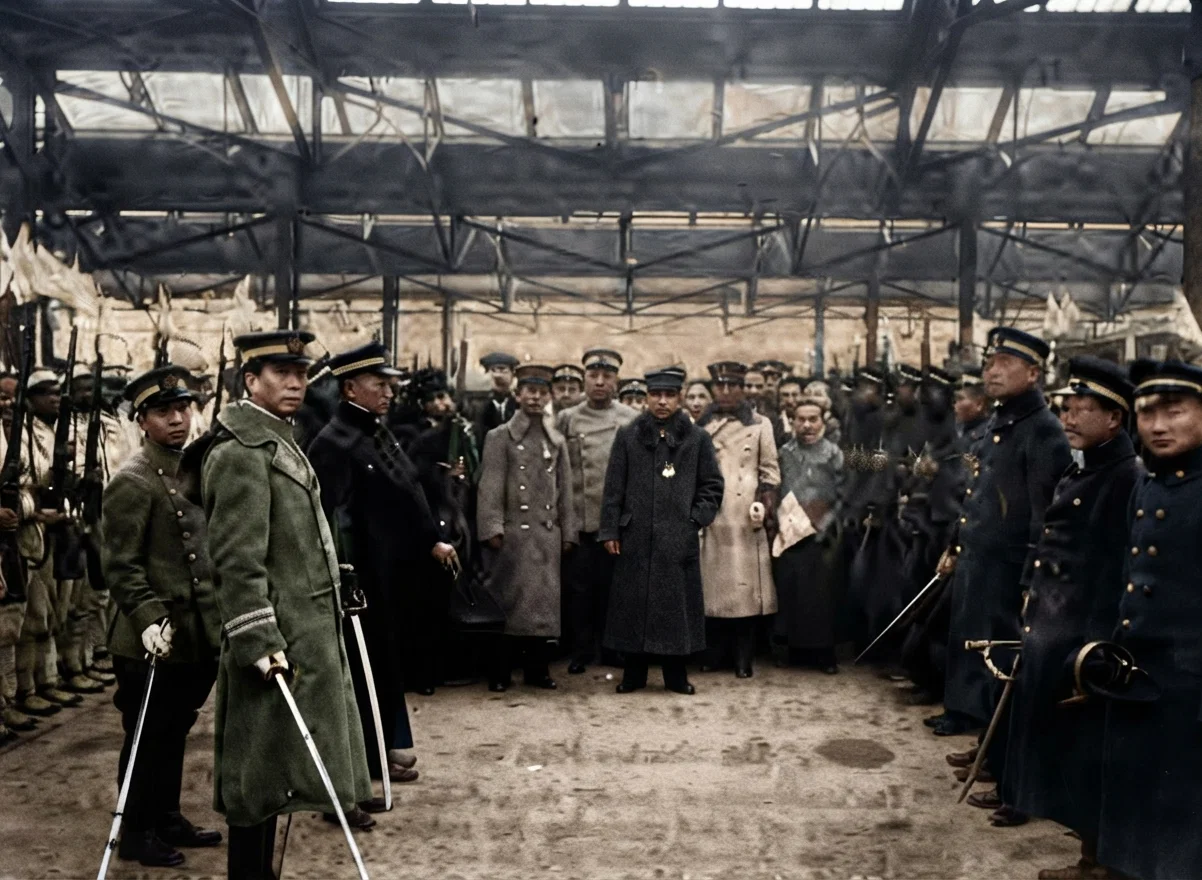
Sun Yat Sen at the railway station in Shanghai, ready to take the train for Nanking to take the oath of office and set up the new government. Dr. Sun is the central figure in dark overcoat.
It further states that the throne is sure the decision of the convention, whatever it may be, will be for the good of the country. This is taken here to mean that the throne is willing to abide by the decision of the convention, and is prepared to abdicate in the event that the congress decides upon a republic.
This has caused general rejoicing among the people, as they understand what the decision will be if a fair representation of the people is attained at the convention.
The Man of the Hour
In the meantime, Sun Yat Sen, the man upon whom the eyes of all the world have been fastened, arrived in Shanghai.
A gunboat had been despatched to meet him, and the forts at Wuzung were to welcome him with a salute of twenty-one guns. But the day was foggy and rainy, and the ship Devanha came in six hours early, so that he quietly reached the jetty before he was discovered. A guard of revolutionary soldiers escorted him to a house in the French concession which had been fixed up for his headquarters, and here he was besieged by a steady stream of visitors.
The next day, a meeting of delegates of the republican provisional government was held at Nanking, and unanimously elected Dr. Sun as president of the new republic of China. Delegates were present from seventeen provinces, so it may be considered to represent fairly public sentiment. Gen. Li Yuan Hung was elected vice-president, and a cabinet was appointed, to take office immediately.
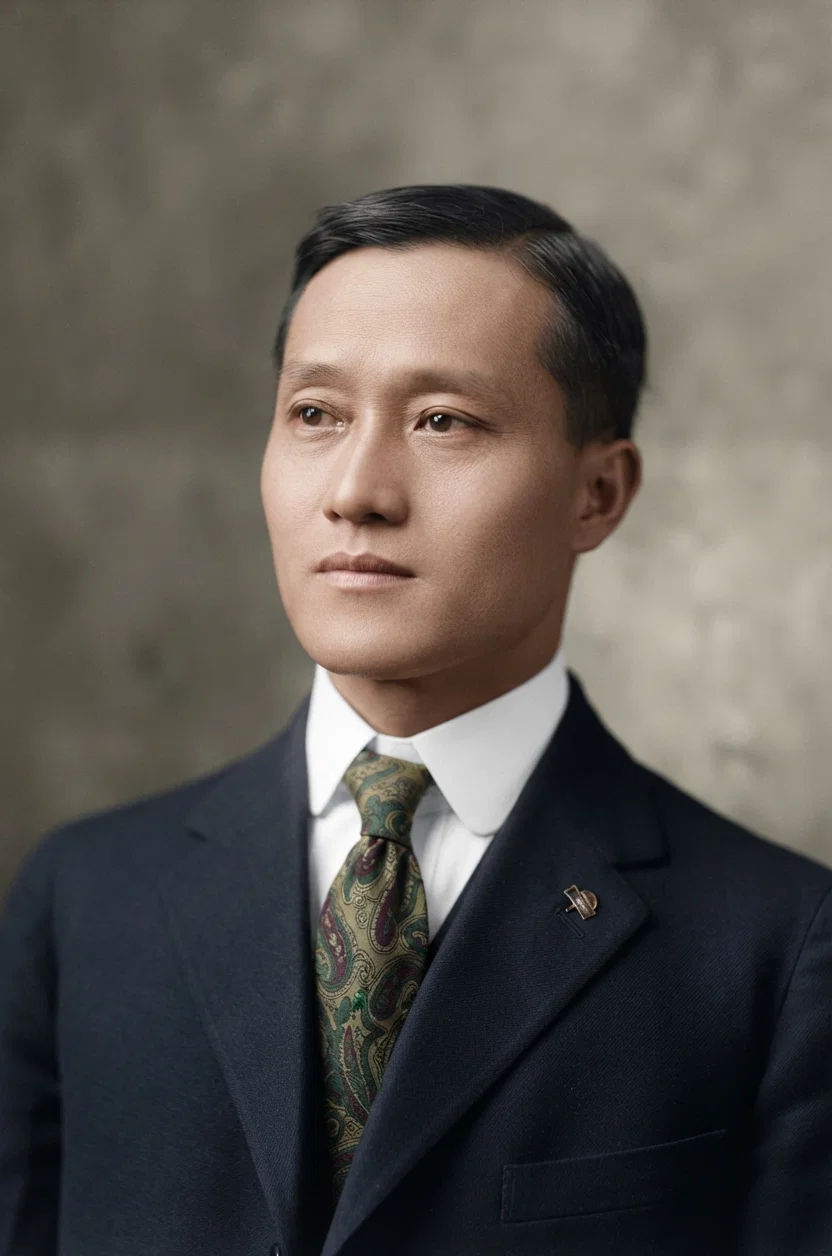
Mr. C. T. Wong, one of the delegates with Wu Ting Fang. He was educated in Japan and America.
This convention does not take the place of that appointed by the peace commissioners, which will convene later, but is merely the completing of the republican government which has been in process of forming ever since the war started. Dr. Sun immediately left for Nanking, and on January 1 he took his inauguration oath, which was as follows:
I respectfully swear to the people that I will overthrow the Manchu absolute government, consolidate the Chinese republic, and work to obtain blessings for the people. I will carry out the people's common wishes in spirit and to the letter in order to be loyal to the State and serve the public. When the absolute government has been overthrown, and the republic is established without disorder, and is recognized by the foreign countries, I will then retire from the provisional presidency.
This oath was dated the 1st day of the year of the new Chinese republic, thus coinciding with the Gregorian calendar in general use all over the world.
President Sun later issued a manifesto to all other nations, as follows:
Manifesto from the Republic of China to All the Friendly Nations
GREETING! The hitherto irremediable suppression of the individual qualities and national aspirations of the people having arrested the intellectual, the moral, and the material development of China, the aid of revolution has been invoked to extirpate the primary cause, and we now proclaim the resultant overthrow of the despotic sway wielded by the Manchu Dynasty, and the establishment of a republic.
The substitution of a republic for a monarchical form of government is not the fruit of a transient passion. It is the natural outcome of a long cherished desire for broad-based freedom making for permanent contentment and uninterrupted advancement. It is the formal declaration of the will of the Chinese nation.
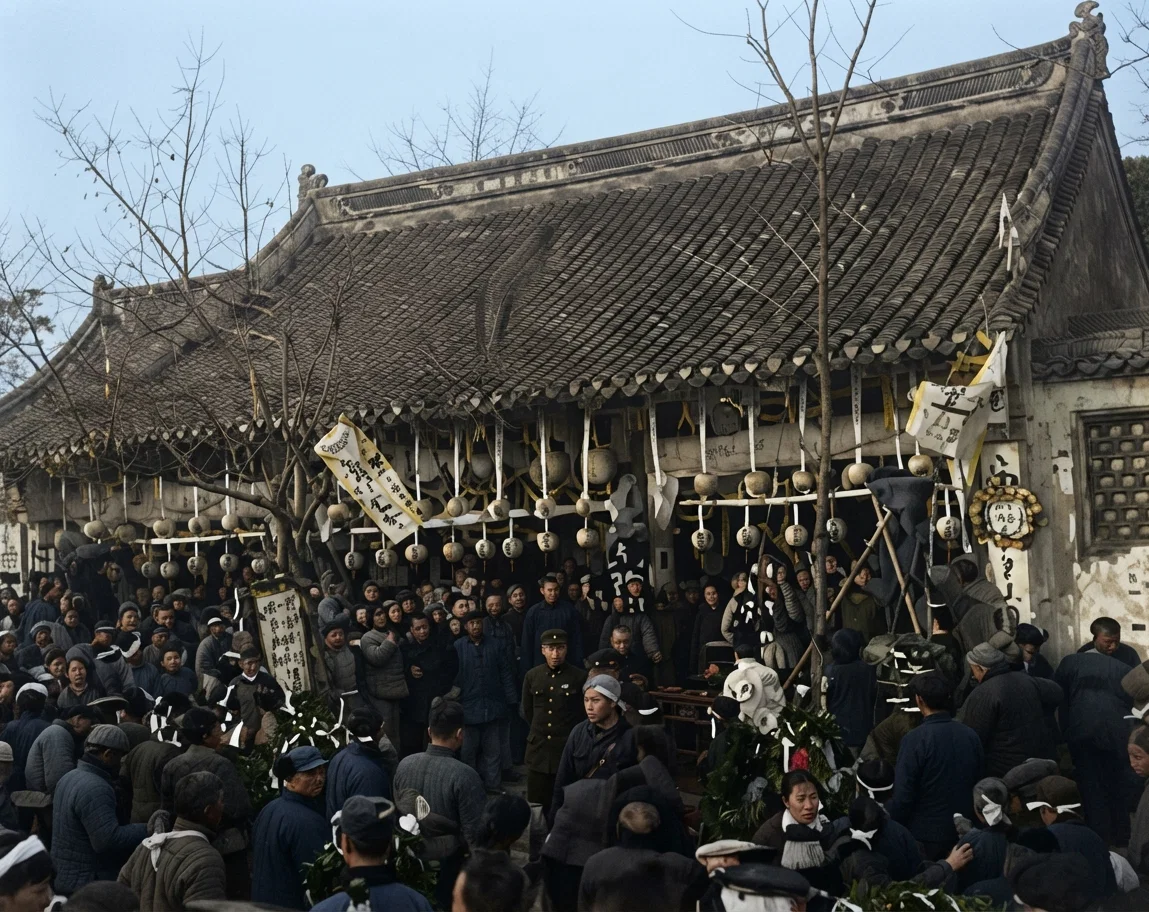
A memorial service in the Shanghai native city, held in honor of those killed during the attack on Nanking
We, the Chinese people, are peaceful and law-abiding. We have waged no war except in self-defense. We have borne our grievances during two hundred and sixty seven years of Manchu misrule with patience and forbearance. We have by peaceful means endeavoured to redress our wrongs, secure our liberty, and insure our progress, but we have failed. Oppressed beyond human endurance, we deemed it our inalienable right as well as our sacred duty to appeal to arms to deliver ourselves and our posterity from the yoke to which we have so long been subjected, and for the first time in our history inglorious bondage has been transformed to an inspiring freedom splendid with the lustrous light of opportunity.11
The policy of the Manchu Dynasty has been one of unequivocal seclusion and unyielding tyranny. Beneath it we have bitterly suffered, and we now submit to the free peoples of the world the reasons justifying the revolution and the inauguration of our present government.
Prior to the usurpation of the throne by the Manchus the land was open to foreign intercourse, and religious tolerance existed, as is evidenced by the writings of Marco Polo and the inscription on the Nestorian tablet of Sian-fu.
Dominated by ignorance and selfishness, the Manchus closed the land to the outer world, and plunged the Chinese people into a state of benighted mentality calculated to operate inversely to their natural talents and capabilities, thus committing a crime against humanity and the civilized nations almost impossible of expiation.
Actuated by a desire for the perpetual subjugation of the Chinese, by a vicious craving for aggrandizement and wealth, the Manchus governed the country to the lasting injury and detriment of our people, creating privileges and monopolies, and erecting about themselves barriers of exclusion in national custom and personal conduct which have been rigorously maintained throughout the centuries.
They have levied irregular and unwholesome taxes upon us without our consent, have restricted foreign trade to treaty ports, placed likin embargoes upon merchandise in transit, and obstructed internal commerce.
They have retarded the creation of industrial enterprises, rendered impossible the development of natural resources, and wilfully neglected to safeguard vested interests.
They have denied us a regular system and impartial administration of justice; inflicted unusual and cruel punishments upon all persons charged with offenses, whether innocent or guilty; and frequently encroached upon our sacred rights without due process of law.
They have connived at official corruption, sold offices to the highest bidder, and have subordinated merit to influence.
They have repeatedly rejected our most reasonable demand for better government, and have reluctantly conceded pseudo-reforms under most urgent pressure, making promises without intention of fulfilling them, and obstructing efforts towards national elevation.
They have failed to appreciate the anguishing lessons taught by the foreign powers in the process of years, and have brought themselves and our people beneath the contempt of the world.
To remedy these evils and render possible the entrance of China to the family of nations, we have fought and formed our government; and lest our good intentions should be misunderstood, we now publicly and unreservedly declare the following to be our promises:
All treaties entered into by the Manchu government before the date of the revolution will be continually effective up to the time of their termination; but any and all entered after the commencement of the revolution will be repudiated.
All foreign loans or indemnities incurred by the Manchu government before the revolution will be acknowledged without any alteration of terms; but all payments made to, and loans incurred by, the Manchu government after the commencement of the revolution will be repudiated.
All concessions granted to foreign nations or their nationals by the Manchu government before the revolution will be respected, but any and all granted after the commencement of the revolution will be repudiated.
All persons and property of any foreign nation within the jurisdiction of the republic of China will be respected and protected.
It will be our constant aim and firm endeavor to build upon a stable and enduring foundation a national structure compatible with the potentialities of our long neglected country.
We will strive to elevate our people, secure them in peace, and legislate for their prosperity.
To those Manchus who abide peacefully within the limits of our jurisdiction we will accord equality and give protection.
We will remodel our laws; revise our civil, criminal, commercial, and mining codes; reform our finances; abolish restrictions to trade and commerce; and insure religious toleration.
The cultivation of better relations with foreign peoples and governments will be ever before us. It is our earnest hope that the foreign nations who have been steadfast in sympathy will hold more firmly the bonds of friendship, that they will bear in patience with us in the period of trial confronting us in our reconstructive work, and that they will aid us in the consummation of the far-reaching plans which we are now about to undertake, and which they have been so long and so vainly urging upon the people of this our country.
With this message of peace and good will the republic of China cherishes the hope of being admitted into the family of nations, not merely to share their rights and privileges, but also to cooperate with them in the great and noble task called for in the upbuilding of the civilization of the world.
(Signed) SUN YAT SEN,
President.
(Countersigned) WU TING FANG,
Minister for Foreign Affairs.
Dated at Nanking, fifth day of the first month of the first year of the republic of China (January 5, 1912).
This action of the republicans has caused great consternation in Peking, and Yuan Shi Kai claims that the revolutionists have broken faith by setting up a new government now, pending the completion of negotiations. However, it is not believed that the imperials can raise any more money, so it is only a matter of a short time until the Manchus and the present emperor must evacuate the capital, and the republicans will then control all Chinese as they do now the territory south of the Yangtze River.
So unless some new, unforeseen element enters into the situation it can safely be said that peace is in sight with a bright prospect ahead for the new government.
We believe that the hand of God has been manifested in controlling these movements, and we feel to thank and praise Him for the quick settlement of so dangerous a situation. We now look forward with great anticipation to the opening of China to the Gospel, and the rapid spreading of the third angel's message to every one of her 400,000,000 people. Who would like to share in this great work?
"The harvest truly is great, but the laborers are few: pray ye therefore the Lord of the harvest, that He would send forth laborers into His harvest."