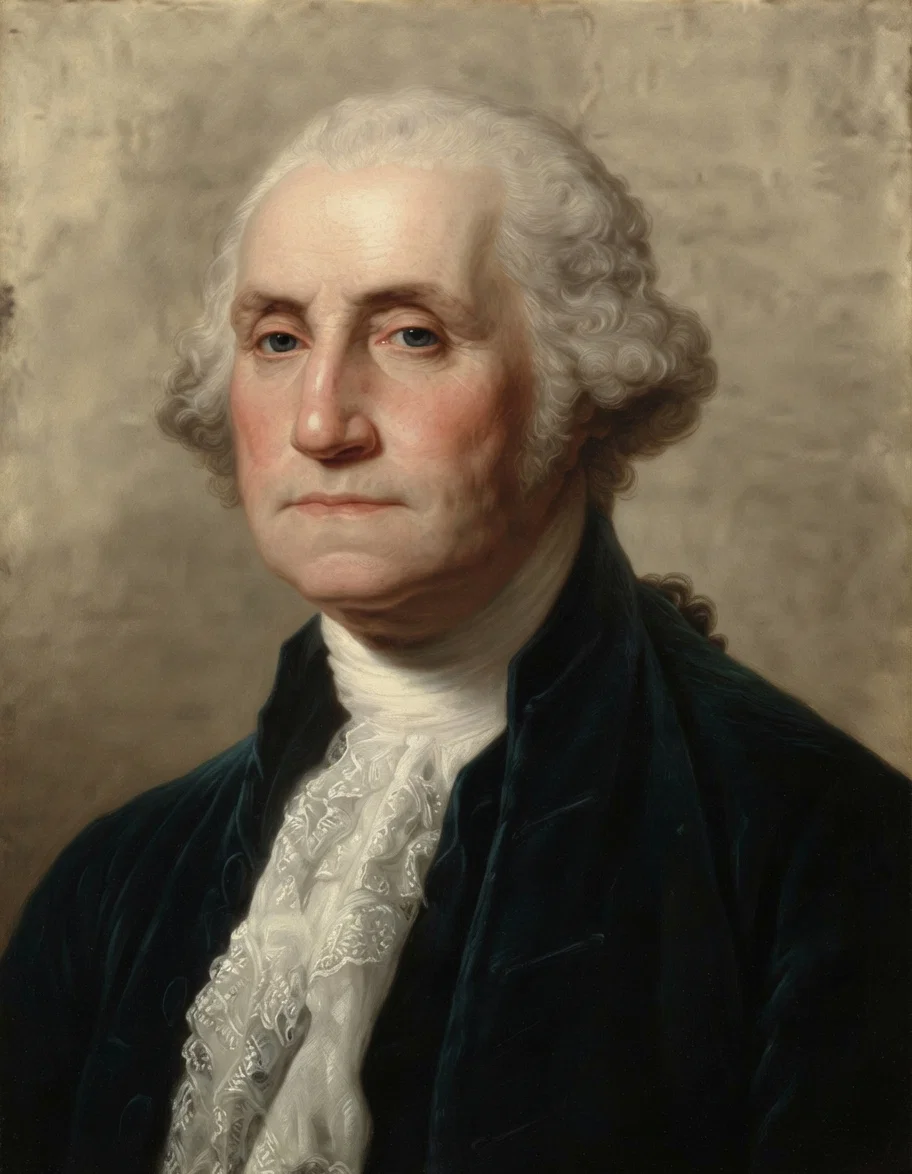
In his "Farewell Address," dated September 19, 1796, Washington expressed the hope that the principles upon which the Government of the United States is founded might be so developed and maintained here as to result in their adoption by every other nation on the earth. Under the choicest tokens of Heaven, and the gracious "auspices of liberty," he said he hoped that the happiness of the people of these States might be made complete, "by so careful a preservation and so prudent a use of this blessing as will acquire to them the glory of recommending it to the applause, the affection, and adoption of every nation which is yet a stranger to it." Until changed by an authentic act of the whole people, the Constitution, he said, is "sacredly obligatory upon all;" and in the interests of the preservation of the Government and a happy State, he gave the following warning:
Toward the preservation of your Government and the permanency of your present happy State, it is requisite not only that you steadily discountenance irregular oppositions to its acknowledged authority, but also that you resist with care the spirit of innovation upon its principles, however specious the pretexts.
Attempted Change
Three years after writing this address Washington died; and only twelve years after his death, began what may be considered the first open and concerted manifestation of the "spirit of innovation" upon the principles of this Government. In 1811, or just one hundred years ago this year, the first attempt was made to induce the national Government to commit itself to religious legislation through the enactment of a Sunday law regarding the postal service. The effort, however, failed, and was not taken up again until after the close of the war of 1812-14, when another attempt was made, but with like results.
The Famous Mail Reports
In 1828 another movement, with more thoro organization and more formidable proportions, was set on foot to accomplish this purpose. Through the plans and activities of "a most respectable committee, composed of gentlemen of different religious denominations," the religious element throughout the country, it seems, was aroused to demand such legislation, and to attempt to secure it by flooding Congress with petitions. From twenty different States, petitions aggregating 467 in number, and representing 420 different cities, towns, and localities throughout the country, rolled in upon the national legislature. It was these petitions, and others following a little later, which called forth those famous and masterly "Sunday Mail Reports" of 1829 and 1830, presented by Col. Richard M. Johnson, and adopted by Congress. By these masterly, superb, and unanswerable reports, this spirit of innovation upon the principles of this Government received such a setback that it did not manifest itself again to any appreciable extent for many long years.
The National Reform Movement
In 1863, during the Civil War, representatives of eleven different denominations met in Ohio, and laid the foundation for a national organization, the chief object of which is to secure such an amendment to the national Constitution as will make this a truly "Christian nation." This organization, known as the National Reform Association, has been steadily growing and persistently disseminating its teachings and anti-American principles; but it has not as yet, during the forty-eight years of its existence, accomplished its object.
With the introduction of the famous Blair National Sunday Rest Bill into Congress in 1888, began another era in the history of this spirit of innovation upon the principles of this Government, against which Washington gave warning. Since the introduction of this bill, over seventy like measures have been introduced in Congress. Nearly sixty of these have been direct demands for Sunday legislation, and forty of the sixty have been measures calling for a Sunday law for the District of Columbia. The latest and most prominent bill of this latter class is what is known as the Johnston Sunday Bill. Senator Johnston, its author, or at least its champion and sponsor, introduced this measure in the two preceding Congresses; but in both of these it failed of passage, tho it twice passed the Senate. On April 6, 1911, he introduced it again into the last Congress, and he has been working assiduously ever since to secure its passage.
Inasmuch as this bill has been kept so prominently before Congress and the people of the whole country, and will in all probability come up at the next session, we purpose to examine it, and to present some reasons why we are opposed to its passage. The bill and some comments on it will appear in our next article.