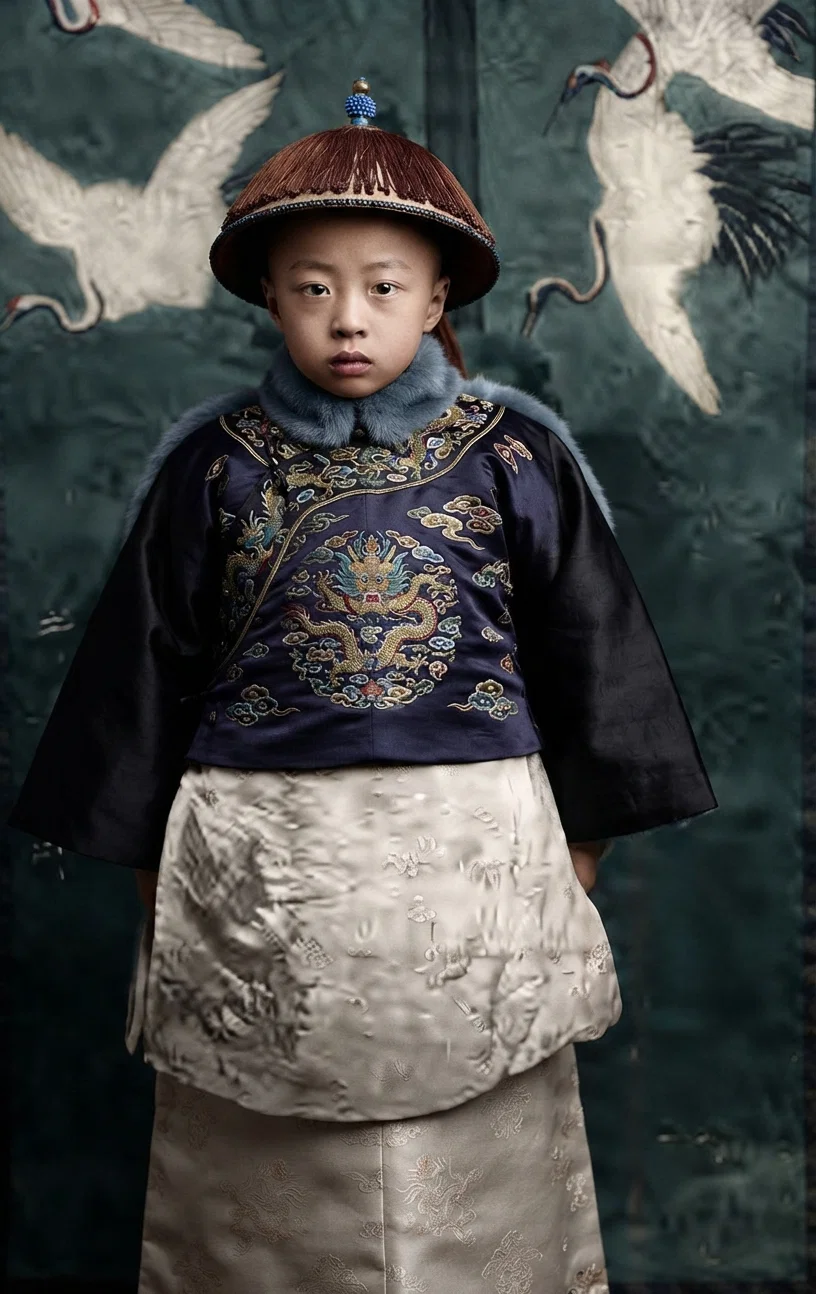
From the latest photograph of the five-year-old baby emperor, PU-YI, of China, whose dynasty seems irretrievably doomed
The Chinese Revolution
By Editor
HIGH authorities in the Chinese revolutionary government, such as Wu Ting Fang, who was at one time Chinese minister to the United States, affirm that the only hope of permanent peace in China is a properly organized republic. It is claimed that the repeated massacres of the imperialists and their continued failure to keep their promises have aroused such a feeling that the only thing that will be accepted will be their complete overthrow.
It is stated that ten provinces have already severed themselves from the throne of the Manchus, and that with but very little effort. This shows that the sentiment of revolt was deep-seated, and that it will be a practical impossibility for the throne to win back these rebels to its tyrannizing and brutally incompetent rule. Thirteen vessels of the imperial fleet went over to the revolutionists on the morning of November 14, and this is another one of the evidences that show how rapidly and strongly the revolution is spreading.
Yuan Shi Kai is looked upon by the imperialists as their last hope, and he is making strong efforts to save the throne. It looks now as if he were trying to bring in complications that will lead the foreign powers to intervene. The November Boxer indemnity has not been paid, and the December indemnity will soon be defaulted. This is causing some uneasiness among the powers; and it is believed that if the imperialists should succeed in recovering the five provinces immediately surrounding the capital, they would still not be able to reorganize their financial administration until other debts will be in arrears. These and other considerations are already causing the powers interested to discuss the idea of intervention.
China is certainly in the midst of a mighty and a phenomenal struggle, and it is impossible to predict what will take place within her borders during the next two or three weeks. But whatever may be the outcome, we believe that when the difficulty is settled China will be freer and more open to the advancements of civilization than ever before. If the Manchus succeed in holding the throne, they will certainly have to be more liberal and free in their administration of government.