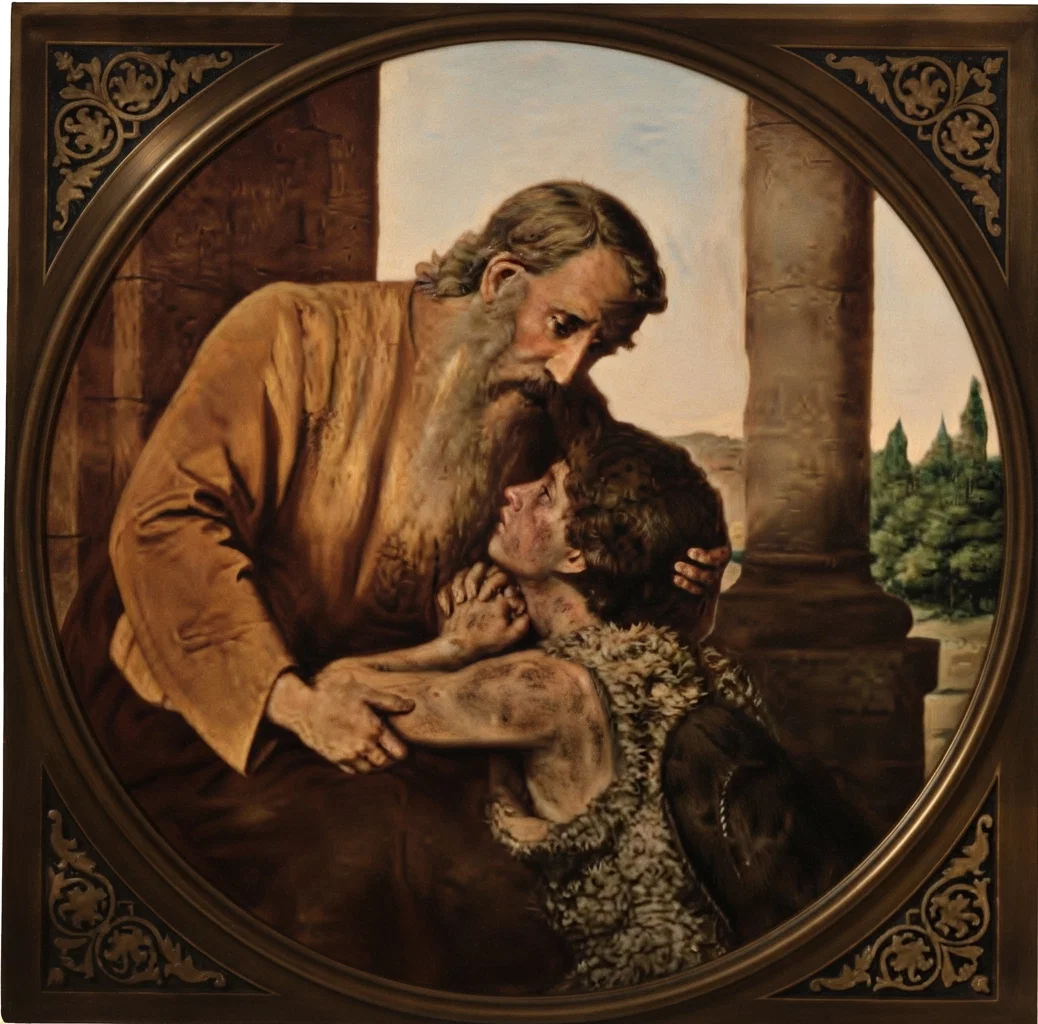
THE fifteenth chapter of Luke contains three instructive parables that were given to show the interest and the love which God has for lost and wandering souls in this dark world of sin. These parables relate to the lost sheep, the lost piece of money, and the lost son, familiarly called the "prodigal son."
It is interesting to note the circumstances under which they were spoken by our Saviour. The publicans and sinners had gathered to hear His gracious words. Verse 1. The scribes and the Pharisees complained because Jesus received sinners and ate with them. Verse 2. This was evidence to them that He was not good and holy like themselves, for they would not associate with the sinful and the vile, and thus be contaminated with evil. This showed clearly that they not only regarded Jesus as a sinner because of the course which He pursued in His relation to the wicked and the outcast, but it also showed that they had very low and incorrect views of God's character. In fact, it showed that they regarded God as altogether such an one as themselves, having no feelings of pity and compassion for the erring and the fallen, but looking upon them as fit subjects of divine wrath, entirely without the pale of God's mercy, and therefore to be shunned by all good people.
To SWEEP away these false views of God and His beneficent character, and show how He regards poor, helpless, and perishing souls, defiled with sin, Jesus utters these parables. The last one, the parable of the "prodigal son," stands forth as one of the most impressive, touching, and encouraging passages to be found in Holy Writ. The vivid portrayal of the son's wandering, his sad condition, his sense of need, his return homeward, his father's greeting, and the rejoicing which followed, is enough to stir every soul, and "break a heart of stone."
“HIS FATHER . . . HAD COMPASSION.”
LET us study together some of the striking features of this wonderful parable. "A certain man had two sons." The younger son asked the father for his portion of the property, and it was given him. He then took it and journeyed to a far country, and spent it all in riotous living. A great famine arose there and "he began to be in want." He hired out to work; and he was sent into the "fields to feed swine." He became so hungry that he would gladly have eaten the carob pods that were given to the swine, but "no man gave unto him."
THE sad condition to which he was now reduced was cause, and gave opportunity, for serious reflection, which would lead him to view things in their true light. So the record says, "And when he came to himself, he said, How many hired servants of my father's have bread enough and to spare, and I perish with hunger!" Yes, "he came to himself." His vision of earthly pleasure and sensual gratification had vanished. He had learned how vain and fleeting and unsatisfying they are. He remembered the bountiful supplies in his father's home. He was sorry for his wayward and sinful course, and made a high resolve that he would forsake it, and lead a different life.
HE recognized that he had no claims on his father, and that he was unworthy to be called his son, yet he decided to return, saying, "I will arise and go to my father." I will tell him the truth. I will confess my sins. I will acknowledge my unworthiness. I will only ask to be as one of his hired servants. He carried out his resolution. He started for home. "But2when he was yet a great way off, his father saw him, and had compassion, and ran, and fell on his neck, and kissed him." Here we see manifested the love, the devotion, and the mercy of the true father. He did not wait for confessions, or to see whether his son was truly sorry for his wicked course. He did not put him on probation to see whether there was a reformation that would prove permanent. He received him with joy. He made him welcome. It is a touching scene. It impresses the mind and softens the heart.
THE wayward, repentant son then confesses his sinful and unworthy course. The father's joy must find expression in a way that could not be misunderstood. He tells his servants to "bring forth the best robe, and put it on him, and put a ring on his hand, and shoes on his feet; and bring hither the fatted calf, and kill it; and let us eat, and be merry; for this my son was dead, and is alive again; he was lost, and is found." Here the cause of rejoicing is clearly set forth. It justifies the preparation and the celebration.
BUT the season of gladness was marred. Another character comes upon the scene. The elder son hears the music and the dancing, and he inquires the meaning. The matter is explained to him, but instead of heartily joining in the celebration, as a true, unselfish brother would have done, "he was angry, and would not go in." Then his father entreated him, but without avail. He rehearsed his own faithfulness and obedience to his father's commands, and then complained that his profligate brother was given greater honor, and more tokens of love and esteem, than had been accorded to him.
THE father answered these complaints by reminding him that he had always shared the blessings and privileges of the home, and they were still his to enjoy. So he had no ground to complain so far as his own treatment was concerned. Then what was the trouble?—He was jealous and envious because his younger brother was receiving attention and honor. The father sets forth the reason and propriety of the rejoicing over the younger son. He says, "It was meet that we should make merry, and be glad; for this thy brother was dead, and is alive again; and was lost, and is found." Verse 32.
THERE are several important lessons taught in this instructive parable. We will note briefly a few of them: The Gentiles—the publicans and sinners—are fitly represented by the younger son, who left home and pursued a wicked course, and then returned to his father with godly sorrow and confession of sin. The publicans and harlots were coming to Jesus, and he received them and ate with them. The scribes and Pharisees murmured or complained against Jesus for doing this. See verses 1, 2. But this is just what the elder son in the parable did. Hence the scribes and Pharisees—the leaders among the Jewish people—are fitly represented by the envious elder brother, who was angry because his brother was honored when he returned home from a life of sin.
THERE are two other practical lessons that should be learned from this parable: (1) How God regards the returning prodigal, and how graciously He receives the wanderer when he returns to his Father's house. He goes to meet him. The welcome is warm; the greeting is affectionate. There is no mistaking the sincerity and whole-heartedness of the reception, and the subsequent rejoicing. Thus Heaven receives and accepts the repentant sinner. How do we receive him? As Jesus did, as the father in the parable received the returning prodigal? Or do we feel as the scribes and Pharisees did, who are so clearly represented by the elder son? (2) If we do not heartily welcome and gladly receive the repentant sinner and the returning wanderer, it is because we have more of the spirit of the Pharisee than we have of the Spirit of Christ. Let us examine ourselves in the light of the Lord, that we may know what manner of spirit we are of. "If any man have not the Spirit of Christ, he is none of His." Rom. 8:9.