Theological Battles in Reformation Times—Geneva Becomes a Mighty Stronghold of Protestantism— The Message of Christ and His Coming Given There with Power—An Appeal That Should Touch Our Hearts
By JEAN VUILLEUMIER
At the request of the local church officers of the city of Geneva, Switzerland, M. Vuilleumier, an old resident of Geneva and now leader in the French evangelistic campaign in Montreal and Quebec, has prepared the English translation of a stirring appeal for help that comes to us in this article. Geneva was truly a light station in the dark days of papal supremacy. All papal France in the old time feared that city, with its testimony to Protestant truth, and again and again plans were laid to move against it and subdue it by force of arms, and again and again the providence of God intervened to frustrate these purposes. The Catholic reaction following the Reformation has won back much that at first seemed gained by the reform movement along the Latin border. Geneva is a strategic outpost, and we thank God for the stirring report that comes in this appeal. The city is one of the beautiful touring centers of Switzerland, and is thronged every summer with visitors from all parts of the world. W. A. S.
I may not be too late to tell the readers of the SIGNS of wonderful developments in connection with our work last winter in the city of Geneva, Switzerland. But before doing so, allow me, dear reader, to go back to the Reformation for a few moments, in order to measure more correctly the importance of this city as a religious center.
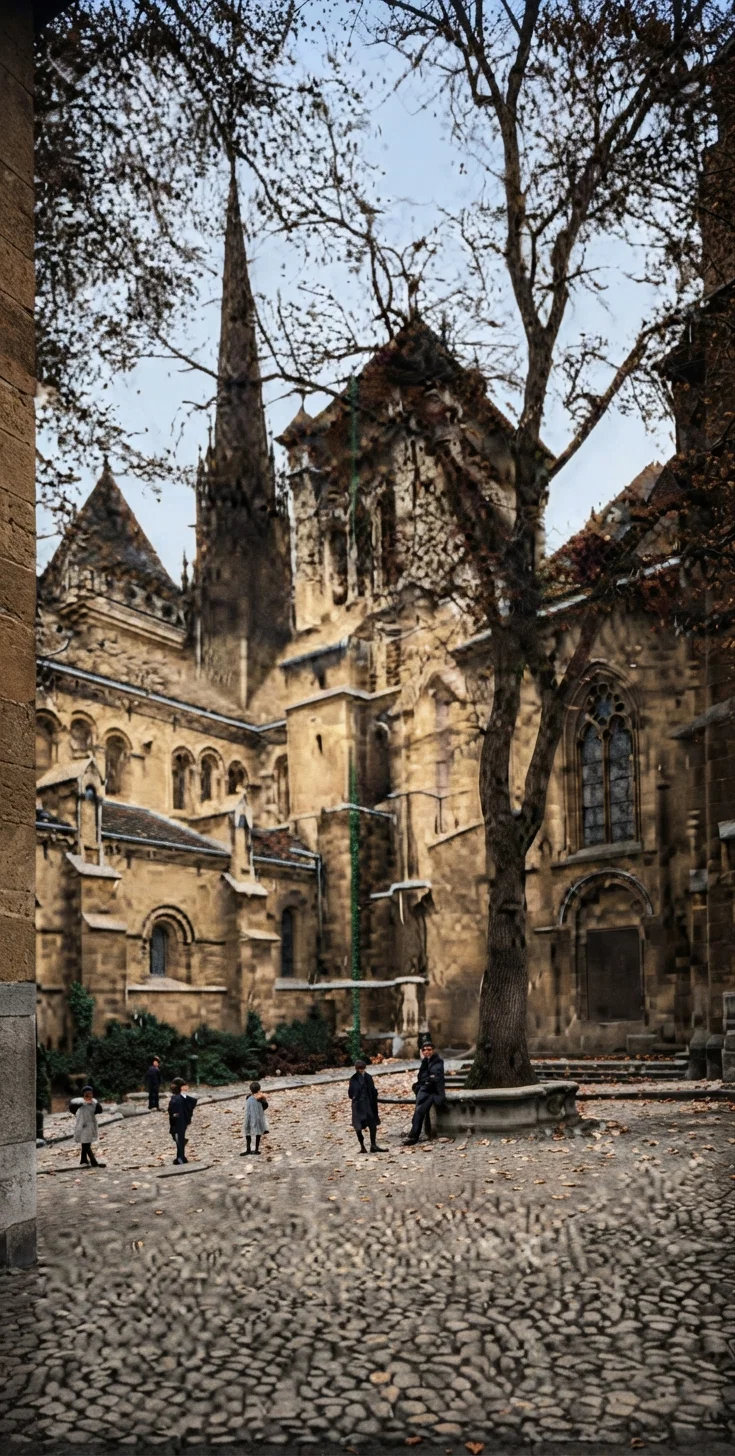
ST. PETER'S CATHEDRAL CALVIN'S OLD CHURCH IN GENEVA
THE SUPERSTITIOUS AND FRIVOLOUS CITY
At the time of the Reformation, Geneva, under its bishop and temporal prince, was a gay, superstitious, and frivolous city. The pure gospel first made an appearance among its people through the New Testament, published in French by Lefevre, a professor of the Paris university. The valiant Farel went there to preach against idolatrous worship, but was expelled. Froment, a school-teacher, made some progress in his quiet manner. Farel came back for the great battles, sustained memorable debates, and had the great joy of seeing the city decide by vote, August 27, 1535, that only the doctrine of the New Testament should henceforth be preached there. The bishop, the priests, the friars, the nuns, all left the city.
But a great work remained to be done for the worldly and dissipated Genevans, if their lives were to be brought into harmony with the gospel which they had nominally adopted.
STAYED THOUGH TERRIFIED BY THE RESPONSIBILITY
Farel, the indomitable pioneer, felt that the task was beyond his strength. Calvin, a young man of twenty-nine, but already well known through his book, “The Institution of the Christian Religion,” happened at that time to pass through Geneva on his way to Basel. Farel, learning of this, ran to his hotel, and terrified the young traveler into the conviction that it was his duty to stay.
But the dissolute elements in the city cared little more for holy living than for a false worship. The Reformers were asked to leave the city. Farel went for good, but Calvin was humbly recalled, and returned, never to leave his work until his death in 1564, having spent in Geneva nearly twenty-five years out of fifty-three. Under his theocratic form of government (none other was known in those days), under his faithful teaching and his pastoral watch-care, the moral condition of the citizens was completely changed. Geneva became a model city, whose good order, austerity, and culture excited the envy and admiration of the world.
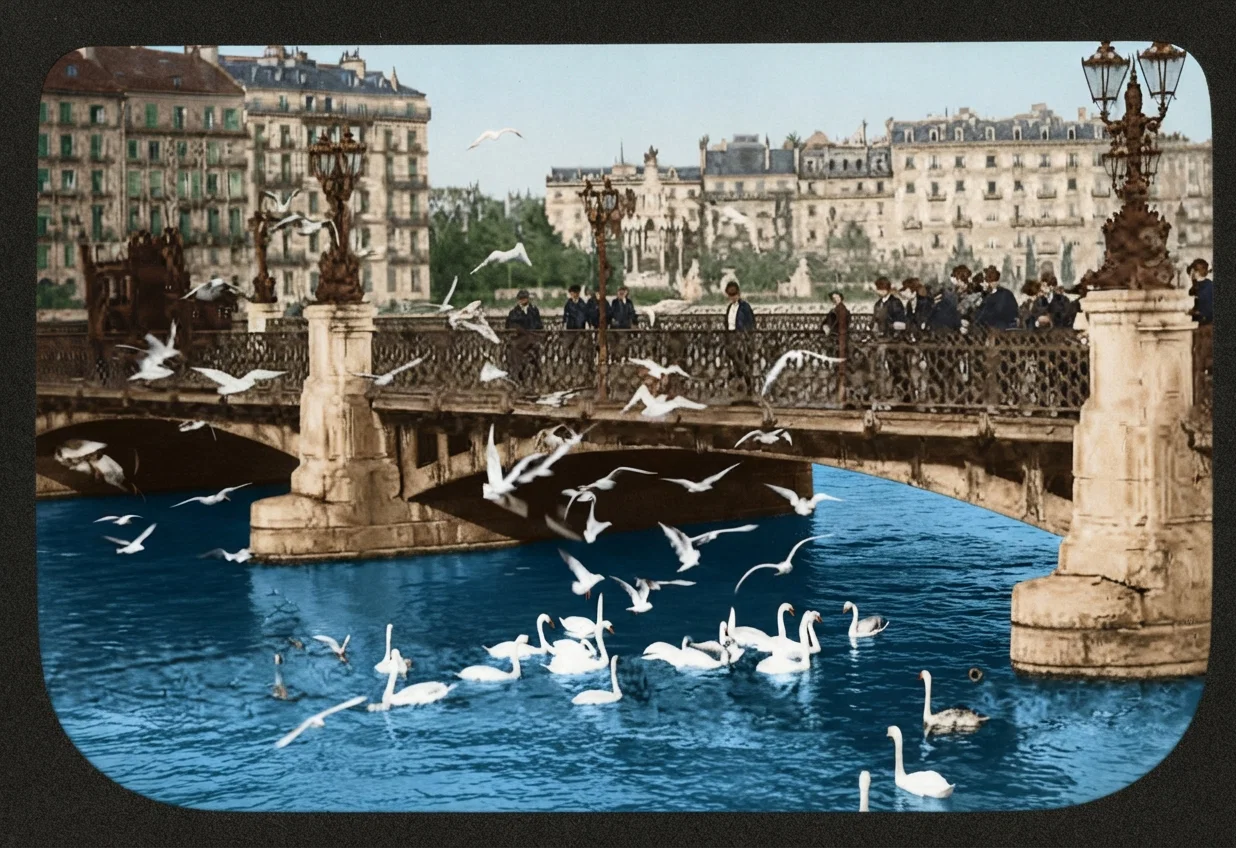
WHERE THE BRIGHT, BLUE-TINTED WATERS OF LAKE GENEVA FLOW OUT TOWARD THE SEA
Theodore de Beza, Calvin’s worthy and distinguished successor, continued and developed the work. Geneva became a learned center, the bulwark of the Protestant cause, and a refuge for the victims of persecution in France. Repeatedly the hand of God was signally manifested in delivering the city from the plots of popes, Savoy, and France. But in time, religious indifference and worldliness again appeared. French incredulity crept in. Voltaire made his residence in the neighborhood, and his poisonous writings had their nefarious effect. At the end of the eighteenth century, Geneva was religiously dead and theologically rationalistic.
EARNEST LABORS RESULT IN A HARVEST OF DISTINGUISHED REFORMERS
About the year 1830, two devout Scotchmen, the Haldane brothers, explained the epistle to the Romans before a circle of theological students. A revival followed, which produced such men as Malan, Guers, Bost (evangelist), Merle d’Aubigne (historian), Gaussen (expounder of the prophecies), Vinet (religious liberty writer), and de Gasparin (advocate of a finished Reformation). This revival was felt and is still felt all through French Protestantism.
But a new decline came on. Instead of receiving the third angel’s message, which corresponds exactly with the principles laid down by the men of 1830, higher criticism and evolution were embraced. Geneva grew more and more worldly, until now the once austere city has become an up-to-date resort, a center of pleasure, Socialism, and infidelity. Many Roman Catholics have settled there, constituting about half of the population, and they hope to rule the city again, and to reintroduce the mass in the old St. Peter cathedral.
MESSAGE OF CHRIST AND HIS COMING IN GENEVA
Our colporteurs entered the city at an early stage. Elders Bourdeau, Alb, J. Curdy, L. P. Tieche, and others labored there in public and in private. One or two camp-meetings held there attracted a great deal of attention. Within a few years, several families from our strong Swiss churches went there to reside. One year ago,93Elder H. H. Dexter, president of the French Swiss Conference, opened a course of Bible lectures in the Casino de St. Pierre. The advertising was done on a large scale. The audiences began with two hundred fifty, and grew from day to day to four hundred, six hundred, finally reaching one thousand. Larger and still larger halls had to be secured. Up to this time, collections have brought in about six hundred dollars, and, best of all, the church has gained about fifty members.
A JOYFUL BUT PERPLEXING RESPONSIBILITY
This, to the Geneva church, has been an unexpected, joyful, and at the same time a solemn experience. The other Swiss churches assisted with their prayers. The city seemed to be stirred by the simple, straightforward preaching, and the startling character of the subjects announced. Cottage prayer-meetings and studies were held to satisfy the inquirers. Elder Dexter was invited into rich parlors and to aristocratic tables.
The popular preachers for a moment feared for their fame, and one of them sought an invitation to a dinner in a wealthy home to meet the 'American preacher.' The story would not be complete did I not say that opposition has not been lacking, and has left nothing untried to defeat the work.
A CRISIS AND AN APPEAL
A crisis awaited the Geneva church at the end of this glorious campaign. The hall in which the regular meetings of the church were held has of course become too small. Larger halls have been used for a time, but they are very expensive. And this is not the worst. Secret influences against our work make these halls difficult to obtain and to retain.
The only solution of the perplexing problem of the Geneva church was, to build. A lot has been secured, for which the church-members, taxing themselves to the utmost limit, have contributed five thousand dollars.
The seller donated eighty square meters.
The building must be erected very soon, or else the congregation and the work will be in a bad plight. But where is the money coming from for the building? A sum of at least six thousand dollars should be raised for this purpose. Where will the Geneva church look for this aid?
WOULD IT NOT BE A PRIVILEGE TO YOU?
Would not the brethren in America feel it a privilege to help in this worthy object, and have a share in rearing a little chapel for the message in the city of Calvin? Will they not remember that the Puritans were the disciples of Knox, who was the associate of Calvin in Geneva, and to his death his intimate friend? The Geneva brethren trust their appeal will be heard, and the opportunity gladly improved. I am writing this at the express request of the local elder and of the secretary of our church in Geneva. All donations should be sent to the treasurer of the Pacific Press Publishing Association, who will see that they reach their proper destination.