THERE are 320,000 acres in California in grape-vines. 170,000 acres are in wine grapes (Board of Agriculture says 160,000), 110,000 acres in raisin grapes, and 50,000 acres in table grapes.
The number of wineries in the state is 187.
The product of the raisin grapes (a short crop 1913) was valued at $4,840,275.
The value of the table grapes was $6,994,850.
The value of the wine grapes in the estimated value of the wine was $15,000,000; but to the wine grape grower, only $6,000,000.
The simple fact is that about the only wine grape vineyards that pay are those owned by the big wine and liquor corporations. These big companies have forced down the price of grapes till the grapes do not pay the individual grower. The wine grape industry has been ruined by the wine men.
This is what Prof. F. T. Bioletti, an authority at the state university, says:
"The average price received by producers [of wine grapes] for a series of years must be very close to the cost of production." This he proves by statistical tables.
He says further concerning the grape grower:
"Often nothing remains, or in other words, he is selling his grapes at cost and receiving nothing for his time and expenditure of energy. Not infrequently an examination of his balance-sheet will show that his profit is a minus quantity. In fact, there are many vineyards in the state, both large and small, which an accurate system of bookkeeping would prove to be conducted at an average annual6loss. This is possible on a large vineyard only by foregoing a reasonable rate of interest on the money invested, or by paying the deficit from some other source, such as the increase of value of the land. On a small vineyard, where the owner does most of the work, this form of unselfishness can be carried still further. He may not only obtain no returns on any capital invested in his place, but he may fail to obtain even current rates of wages for his own time and labor. In other words, he would be better off financially if he gave his vineyard away and worked for the man he gave it to."
—Monthly Bulletins 2 and 3, March and April, 1913, page 483 and onward.
Mr. Frank T. Swett, of Martinez, quoted in the same document, intimates loss. He says:
"The actual cost of growing wine grapes in the interior, on average land, including interest on the investment, and taxes, is probably not less than
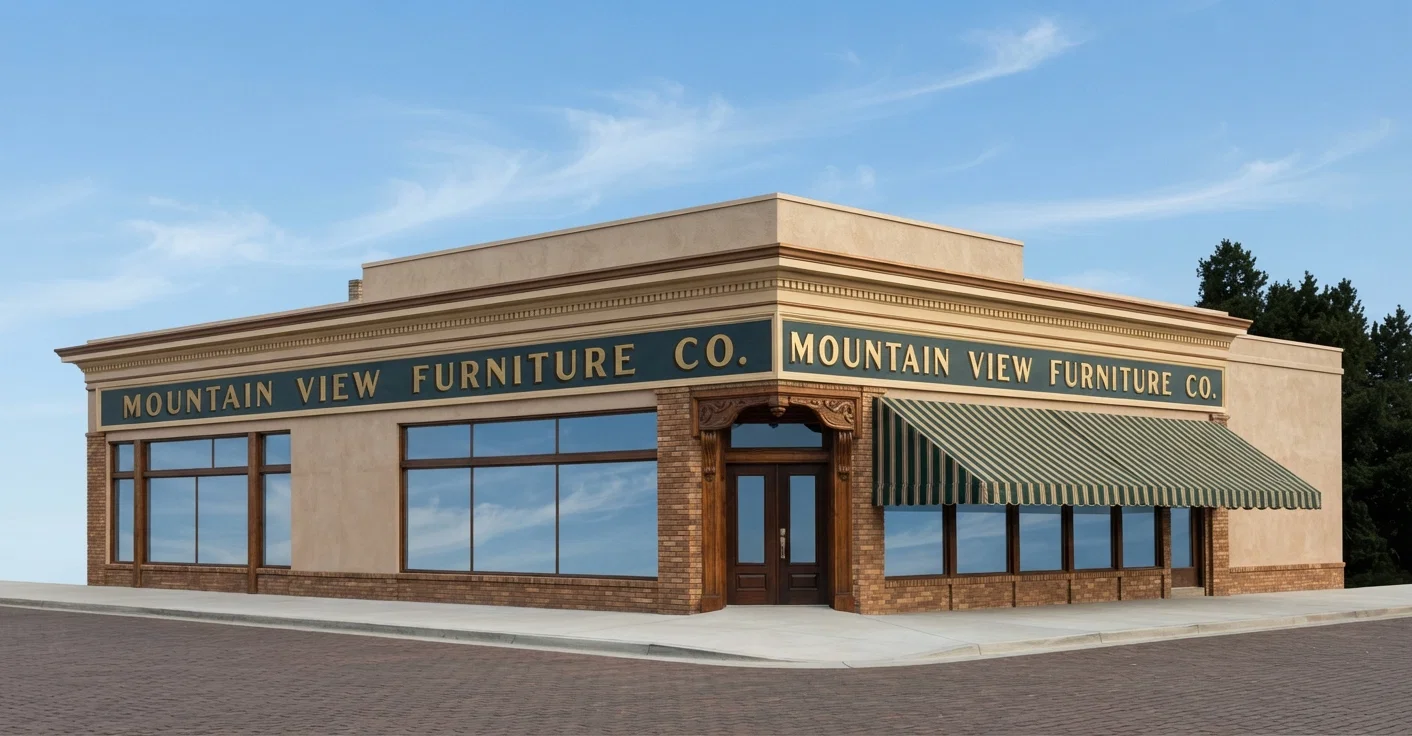
April 8, 1912, Mountain View, California, voted "dry." The saloons closed July 8, 1912. After the election, the leading saloon-keeper displayed in his windows in the above building a coffin draped in black, candles at the head and foot, with the legend, "Mountain View is Dead." The building is now the largest furniture store in town, an establishment which did not exist before. See tract, "Story of a Dry Town," if you wish to learn of its post mortem functions.
$12.00 a ton. At $6.00 a ton, the prevalent price, there is a heavy loss."
He also says (see Bulletin referred to above, page 497) that the grape grower "should hold himself free to dig out his vineyard and substitute some crop that will net a real profit if he decides to do so. If his vineyard bears only average crops, he may do better to gradually reduce his vineyard acreage and work into alfalfa and other lines of production."
Mr. H. F. Stoll, a leading wine man, commissioner at large on the State Board of Viticultural Commissioners, said:7"One of the most serious difficulties which we must overcome if we hope to compete successfully with France, Italy, Germany, Spain, and Portugal in the wine market of the world is the labor problem. This fall, pickers were at a premium in the vineyards; and as a result, prohibitive prices had to be paid to Japs, Hindus, and other available help. But with the opening of the Panama Canal, it is expected that the influx of immigration from southern Europe will help adjust the vexing problem."
According to Mr. Stoll, his hope for wine grapes rests in what has been called pauper labor from Europe. These things were said a little before the "Dry Federation" movement of California had birth.
The wine grape industry is now used as a blind to save the liquor traffic. Do not be misled or deceived by sophistry and false claims.
Mr. C. T. Clark, an old resident of Napa County, one of the greatest wine grape counties in the state, himself a former grower of wine grapes, says:
"The well-informed would not invest in such property to-day. The business is a delusion and a snare. It if was what the wine interests represent, there would be no need to call on the legislature to give $35,000 a year to bolster up the business; and if it was an honest business, the United States revenue office would not be defrauded as it has been."
Wine grapes will make good grape juice or grape sirup. Wine grapes may be dried and fed to hogs at a greater profit than to make them into wine. Wine grape-vines may be grafted with table grapes at a profit. The loss by prohibition will be comparatively small. The gain will be gigantic.