Secretary of North American Conference of Seventh-Day Adventists
I AM told that it is the custom at a certain insane asylum to set the inmates to bailing out a watering-trough into which water is running. If they keep bailing, they are adjudged imbecile; but if they are bright enough to shut off the water, there is hope for them. This illustrates to some extent what is before us in the liquor question.
You ask which side I am on. Go to the willing slaves of drink, the saloon-keepers, the brewers, the distillers, and find out which side they are on, and you can put me down on the other side. Go into the cheerless hovel where, without fire or food, sit the widowed mother and the orphaned children, made such by the curse of drink, and you can put me down on their side.
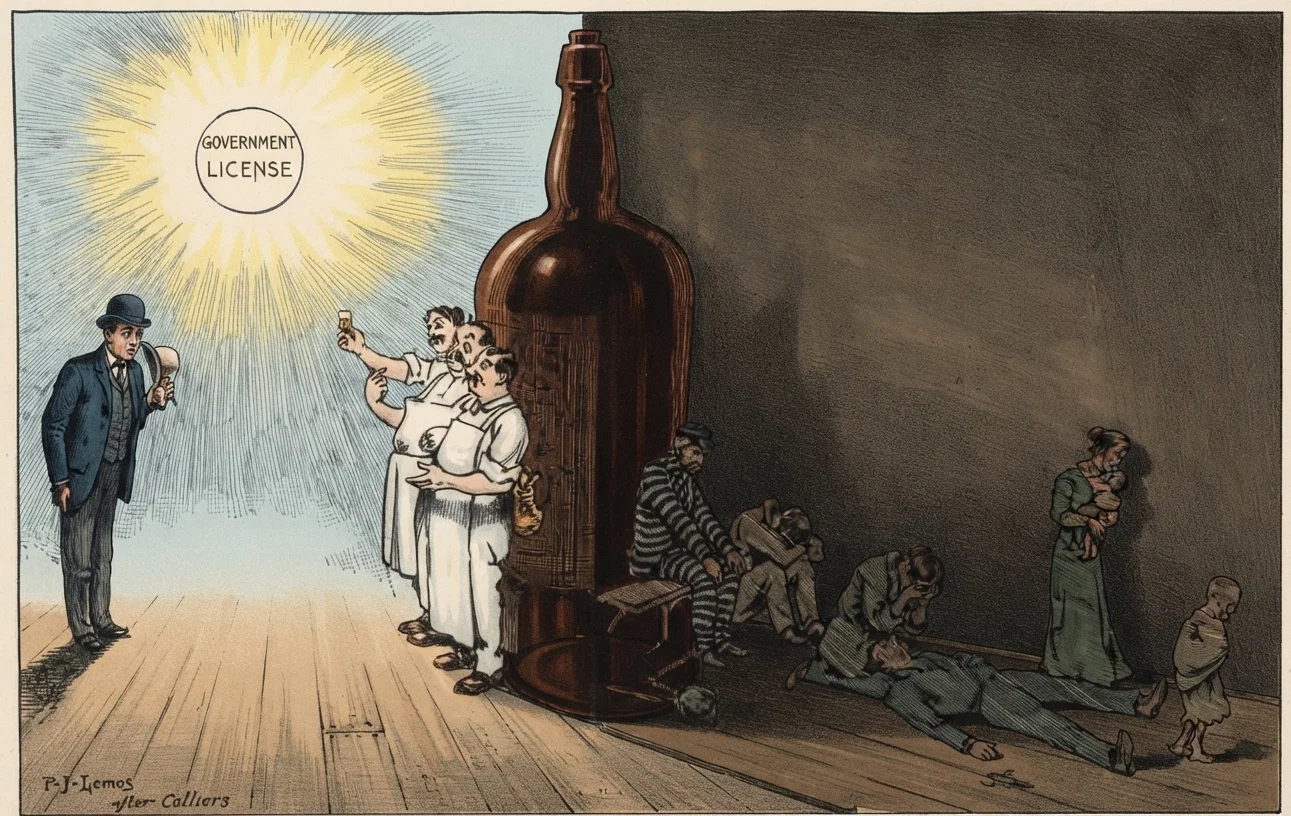
In licensing the sale of intoxicating drink, we are making paupers, beggars, and drunkards. We are sanctioning the sale of that which incites riot, robbery, and bloodshed, that which is increasing disease, making widows and orphans, and transforming loving fathers into fiends. It is filling jails and penitentiaries with convicts, and multiplying the insane and idiots in the land. The question is, Will we keep “bailing,” or will we shut off the supply of intoxicants? So far we have been “bailing.”
Suppose a man should come into your community and open a shop where the brightest and purest of the youth would go, and the proprietor, by making a few passes over them, could transform them into chattering idiots. Would you license him to do this terrible work for a money consideration?—Hardly; yet this is what the licensed saloon is continually doing.
The insatiate monster of intemperance is indeed a terrible tyrant. “Who hath wo? who hath sorrow? who hath contentions? who hath babbling? who hath wounds without cause? who hath redness of eyes?” Through all the years that these startling questions have been propounded by the sacred Book of God, the victims of intemperance stand as the answer.
Intemperance and War
We speak of the horrors of war, and God knows there are horrors enough,—carnage and bloodshed and mutilation. There are crippled men and desolate widows and suffering orphans. It brings enormous debts and grinding taxation. But they fail to compare in their horrors with those of intemperance. The Hon. Richmond P. Hobson, in a speech delivered in Congress, says:
“The Army College at Washington made an investigation of the destructiveness of war. Taking all the wars of the world, from the Russo-Japanese war back to 500 B. C., the War College found that the total number killed and wounded in battle amounts to about 2,800,000, of which it is estimated that about 700,000 were killed, and something over 2,000,000 wounded. The comparative figures show the appalling fact that alcohol is killing off as many Americans every year as all the wars of the world have killed in battle in 2,300 years. Applied to the whole white race, we find that alcohol is killing 3,500,000 white men every year, five times as many as have been killed in war in 2,300 years.”
To all these must be added the degenerates, the imbeciles, the tramps, the paupers, the vagabonds, the epileptics, and the nervous wrecks produced as the result of strong drink.
We shudder, and well we may, at the ravages of a pestilence as it stalks through the land. But the pestilence kills only the body, leaving the soul unharmed. But think of the tramp, tramp, of that ragged army of blear-eyed victims of intemperance who annually reel down into drunkards’ graves, and every one damned to all eternity; for the eternal Judge has declared that no drunkard “shall inherit the kingdom of God.” 1 Cor. 6: 10.
The claim is put forth that the saloon-keeper and the brewer are the revenue producers. But they are not. They merely collect the revenue. The man who drinks the accursed stuff,—the moderate drinker, the bum, the sot,—are the ones who are the real revenue producers. Revenue is blood money. It represents the life, the tears, the agony, of tens of thousands of widows and orphans left to struggle with poverty, the husbands and fathers having gone down prematurely into drunkards’ graves, lost forever.
“Pray for Papa”—One of Many
In a city in the Northwest, as a preacher sat at his breakfast table one Sunday morning, the doorbell rang. He answered it, and there stood a boy twelve years of age. He was on crutches, his right leg being off at the knee. Shivering, he said: “Please, sir, will you come up to the jail and talk and pray with papa? He murdered mama. Papa was good and kind, but whisky did it, and I have to support my three little sisters. I sell newspapers and black boots. Will you go up and talk and pray with papa? And will you come back and be with us when they bring him back? The governor says we can have his body after they hang him.”
The preacher hurried to the jail, and talked and prayed with the man, who had no knowledge of what he had done. He said: “I don’t blame the law, but my heart breaks at the thought that my children must be left in a cold and heartless world. O, sir, whisky, whisky did it!”
The preacher was at the little hut when the undertaker’s wagon drove up. The pine coffin was carried in, and the little boy was led up to it. He leaned over and kissed his father, and sobbed, and said to his sisters: “Come on, sisters. Kiss papa’s cheeks before they grow cold.” And the little hungry, ragged whisky orphans hurried to the coffin, shrieking in agony. Policemen, whose hearts were inured to such sights, buried their faces in their hands and rushed from the house, and the preacher fell on his knees, and lifted his clenched fist and tear-stained face, and took an oath before God, and before the whisky orphans, that he would fight the cursed business until the undertaker carried him out in his coffin.
You can put me down on the side of this little boy peering into papa’s coffin and weeping because of “the shadow of the bottle.” In the name of noble womanhood, of the pure, innocent, defenseless children whose merry laugh is heard about us, we should stamp out the sale of this accursed thing from our midst. We can do it if we will.