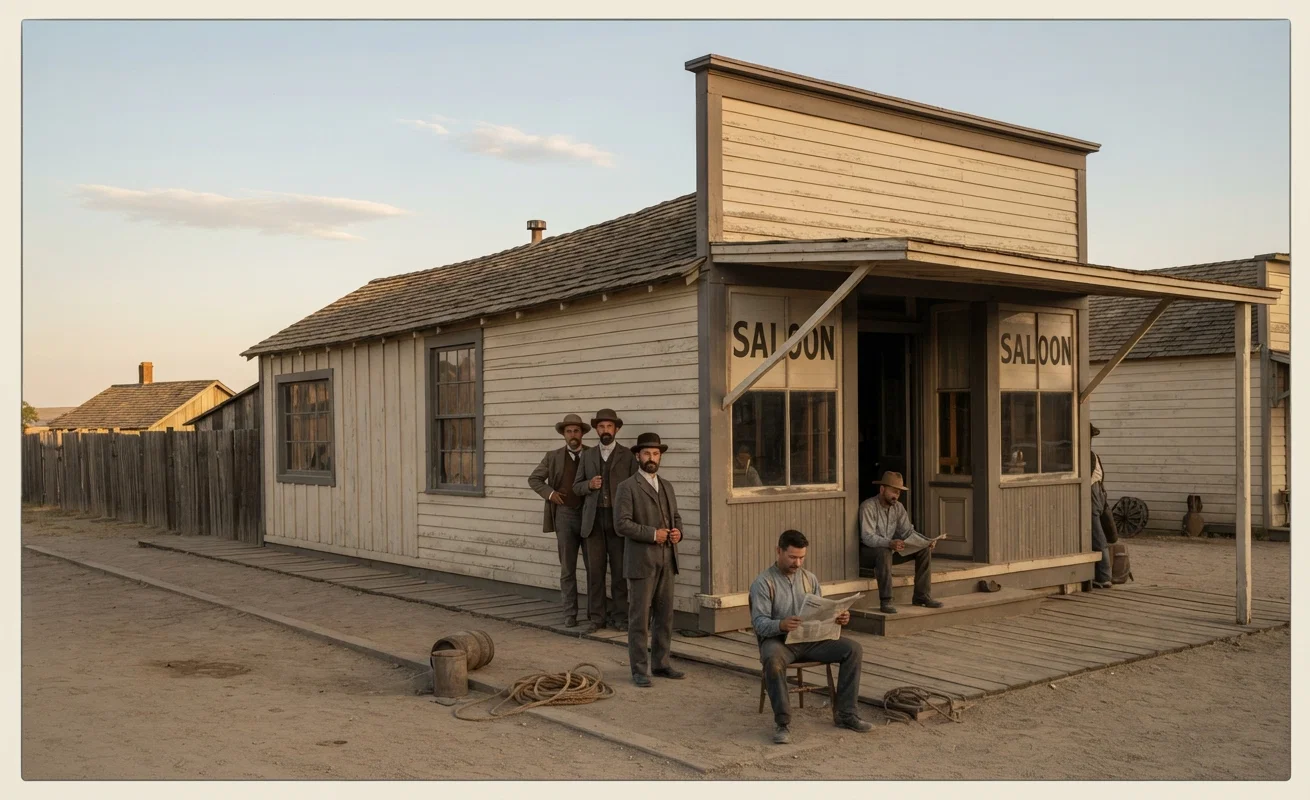
A Story Which Could Be Duplicated in General by Many "Dry" Towns
From Facts Furnished by Mr. W. F. Mixon, Editor of the Woodland Mail
WOODLAND, in Yolo County, California, had in 1910 a population of 3,187. It became "dry" on August 1, 1911, by a majority of 36. In the time between the election and the closing of the saloons, the local option law became effective, and the saloons then called another election. At this time, the women having a right to vote, the "dry" majority was increased to 318. Conditions improved from the very start. More cash business was reported by the business men, and the volume of trade at least was as great. Seventeen saloons were closed, but other lines of business filled vacated buildings. Rents, instead of falling, actually increased. New fronts were put in practically all the business houses, and a general clean-up followed.
In about three years the building inspector reported 300 new structures of one sort or another that had been erected. Two notable ones are the high school and manual training building, costing $110,000, and the new Porter Block, brick and steel, costing $80,000.
Bank Statement, from Published Statements Under Bank Commissioners Law
August 1, 1911, Woodland went "dry." January 7, 1911, all bank deposits in Woodland aggregated $2,843,756.95
February 9, 1912, bank deposits amounted to 3,087,590.67
Increase for 13 months 243,833.72
More than $727 increased deposits for each banking day of the period. The town continued dry, and deposits grew. February 2, 1914, after two years, six months, and two days of no-saloon régime, including two successive droughts and consequent crop failures, the deposits aggregated 3,911,276.98
Increase from February 9, 1912 823,686.31
770 banking days, at nearly $1,100 a day.
To summarize:
Banking resources January 7, 1911 $5,407,890.22
Bank resources December 24, 1913 6,699,982.03
Increase 1,292,091.81
Postal Business
1911 $16,306.12
1913 17,727.82
Population
1910 3,187
Census December, 1912 5,320
Increase, 2,133, or 67 per cent.
City jail practically empty, and used principally for free lodgings for tramps.
Yolo County Prisoners
The annual report of the sheriff of Yolo County for the year ending July 1, 1913, shows the following facts concerning the county prisoners:
From Dunnigan, a "dry" town 2
From Davis, a "dry" town 4
From Winters, a "dry" city 1
From Woodland, a "dry" city (population 5,000) 27
From Broderick, a "wet" town 129
Broderick, a small "wet" town, supplied nearly four times as many prisoners for the county jail as all the remainder of Yolo County. "Booze and crime are twin sisters."