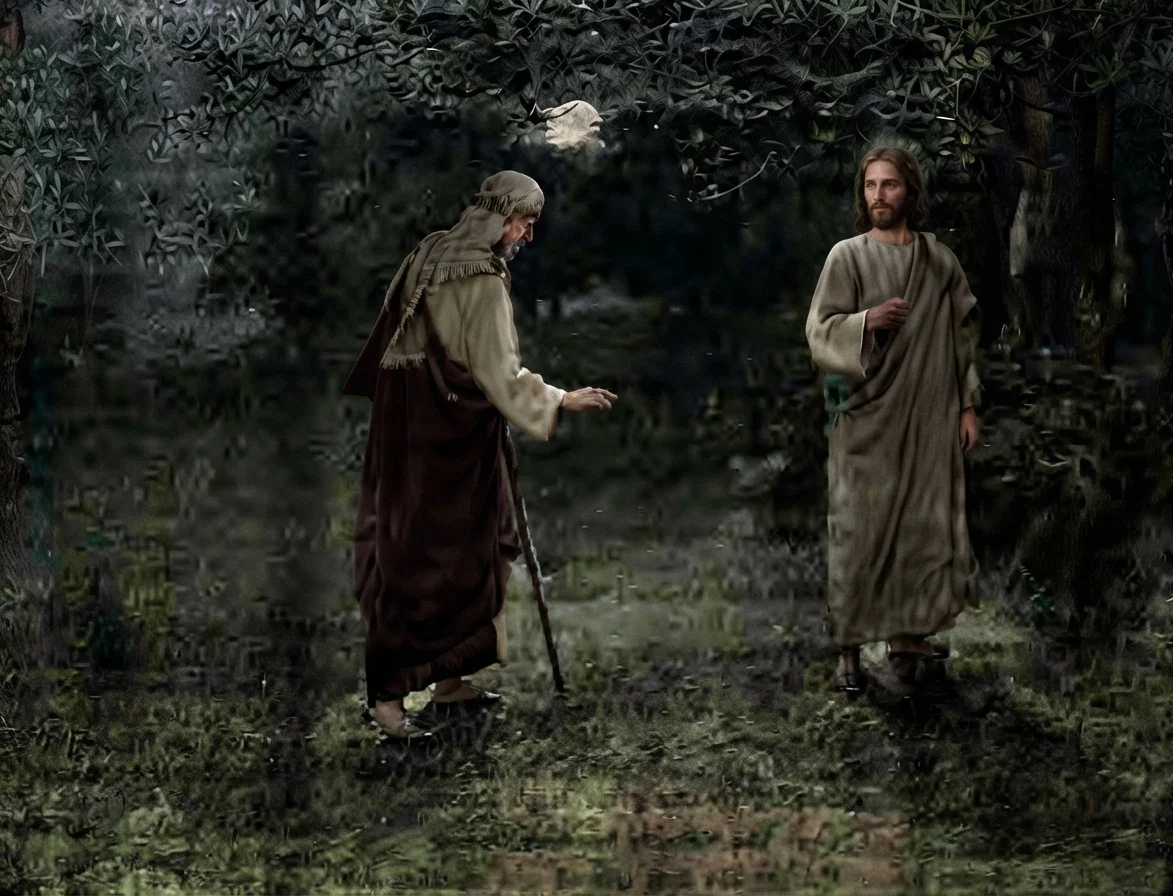
DURING the entire day after Christ had cleansed the desecrated courts of the temple, He was healing the sick and relieving the afflicted. Nicodemus had seen with what pitying compassion He had received and ministered to the poor and the oppressed. With the demeanor of a loving father toward his suffering children, He had wrought cures and removed sorrow. No suppliant was sent unrelieved from His presence. Mothers were made glad by the restoration of their babes to health, and voices of thanksgiving had taken the place of weeping and moans of pain. All day, Jesus had instructed the restless, curious people, reasoning with the scribes, and silencing the caviling of the haughty rulers by the wisdom of His words. Nicodemus, after seeing and hearing these wonderful things, and after searching the prophecies that pointed to Jesus as the looked-for Messiah, dared not disbelieve that He was sent of God.
Affecting Dignity and Composure
When night came on, Jesus, pale with the weariness of His long-continued labors, sought for retirement and repose in the Mount of Olives. Here Nicodemus found Him and desired a conference. This man was rich and honored of the Jews. He was famous throughout Jerusalem for his wealth, his learning and benevolence, and especially for his liberal offerings to the temple to carry out its sacred services. He was also one of the prominent members of the national council. Yet when he came into the presence of Jesus, a strange agitation and timidity assailed him, which he essayed to conceal beneath an air of composure and dignity.
He endeavored to appear as if it were an act of condescension on the part of a learned ruler, to seek, uninvited, an audience with a young stranger at that unseasonable hour of night. He began with a conciliating address, "Rabbi, we know that Thou art a teacher come from God: for no man can do these miracles that Thou doest, except God be with him." But instead of acknowledging this complimentary salutation, Jesus bent His calm and searching eye upon the speaker, as if reading his very soul; then, with a sweet and solemn voice, He spoke, and revealed the true condition of Nicodemus: "Verily, verily, I say unto thee, Except a man be born again, he can not see the kingdom of God."
Here Nicodemus found Him and desired a conference.
Nicodemus Felt the Want of Spirituality
The Pharisee was surprised out of his self-possession by these words, the meaning of which he partially comprehended; for he had heard John the Baptist preach repentance and baptism, and also the coming of One who should baptize with the Holy Ghost. Nicodemus had long felt that there was a want of spirituality among the Jews; that bigotry, pride, and worldly ambition guided their actions in a great measure. He had hoped for a better state of things when the Messiah should come. But he was looking for a Saviour who would set up a temporal throne in Jerusalem, and who would gather the Jewish nation under His standard, bringing the Roman power into subjection by force of arms.
This learned dignitary was a strict Pharisee. He had prided himself upon his own good works and exalted piety. He considered his daily life perfect in the sight of God, and was startled to hear Jesus speak of a kingdom too pure for him to see in his present state. His mind misgave him, yet he felt irritated by the close application of the words to his own case, and he answered, as if he had understood them in the most literal sense, "How can a man be born when he is old?"
The Holy Spirit the Transformer
Jesus, with solemn emphasis, repeated, "Verily, verily, I say unto thee, Except a man be born of water and of the Spirit, he can not enter into the kingdom of God." The words of Jesus could no longer be misunderstood. His listener well knew that He referred to water baptism and the grace of God. The power of the Holy Spirit transforms the entire man. This change constitutes the new birth.
Many of the Jews had acknowledged John as a prophet sent of God, and had received baptism at his hands unto repentance. Meanwhile he had plainly taught them that his work and mission were to prepare the way for Christ, who was the greater light, and would complete the work which he had begun. Nicodemus had meditated upon these things, and he now felt convinced that he was in the presence of that One foretold by John.
Said Jesus, "That which is born of the flesh is flesh; and that which is born of the Spirit is spirit. Marvel not that I said unto thee, Ye must be born again."
The conversion of the soul through faith in Christ was but dimly comprehended by4Nicodemus, who had been accustomed to consider cold formality and rigid services as true religion. The great Teacher explained that His mission upon earth was not to set up a temporal kingdom, emulating the pomp and display of the world, but to establish the reign of peace and love, to bring men to the Father through the mediatorial agency of His Son.
Nicodemus Referred to Prophecies of David and Ezekiel
Nicodemus was bewildered. Said Jesus, 'If I have told you earthly things and ye believe not, how shall ye believe, if I tell you of heavenly things?' If Nicodemus could not receive His teachings illustrating the work of grace upon the human heart, as represented by the figure of the wind, how could he comprehend the character of His glorious heavenly kingdom should He explain it to him? Not discerning the nature of Christ's work on earth, he could not understand His work in heaven. Jesus referred Nicodemus to the prophecies of David and Ezekiel:
'And I will give them one heart, and I will put a new spirit within you; and I will take the stony heart out of their flesh, and will give them an heart of flesh: that they may walk in My statutes, and keep Mine ordinances, and do them: and they shall be My people, and I will be their God.' 'And they shall come thither, and they shall take away all the detestable things thereof and all the abominations thereof from thence.' 'Therefore I will judge you, O house of Israel, every one according to his ways, saith the Lord God. Repent, and turn yourselves from all your transgressions; so iniquity shall not be your ruin. Cast away from you all your transgressions, whereby ye have transgressed; and make you a new heart and a new spirit.' 'Create in me a clean heart, O God; and renew a right spirit within me. Cast me not away from Thy presence; and take not Thy Holy Spirit from me. Restore unto me the joy of Thy salvation; and uphold me with Thy free Spirit. Then will I teach transgressors Thy ways; and sinners shall be converted unto Thee.' 'A new heart also will I give you, and a new spirit will I put within you: and I will take away the stony heart out of your flesh, and I will give you an heart of flesh.'
There must be a new birth, a new mind, through the operation of the Spirit of God, which purifies the life and ennobles the character. This connection with God fits man for the glorious kingdom of heaven. No human invention can ever find a remedy for the sinning soul. Only by repentance and humiliation, a submission to the divine requirements, can the work of grace be performed. Iniquity is so offensive in the sight of God, whom the sinner has so long insulted and wronged, that a repentance commensurate with the character of the sins committed often produces an agony of spirit hard to bear. Nothing less than a practical acceptance and application of divine truth opens the kingdom of God to man. Only a pure and lowly heart, obedient and loving, firm in the faith and service of the Most High, can enter there.