THE WITNESSING OF GOD

3%

Pacific Press Publishing Association · Mountain View, California · Aug 12, 1913

FromSigns of the Times, Vol. 40, No. 31.

Read the full edition

THE WITNESSING OF GOD

THE BASIS OF OUR CONFIDENCE

By the Editor

XIII. His Twofold Witness in His Church
THE SAVIOUR OF MEN
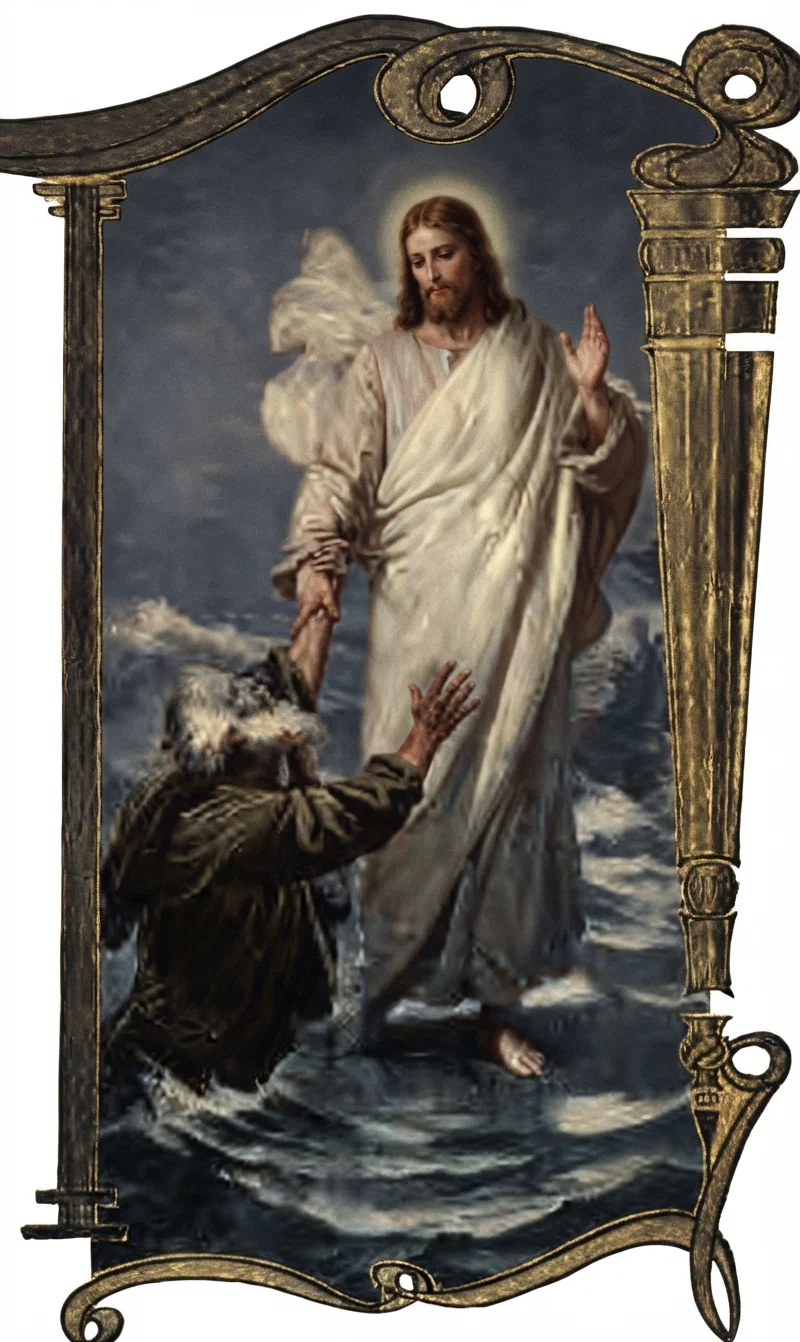
THE SAVIOUR OF MEN
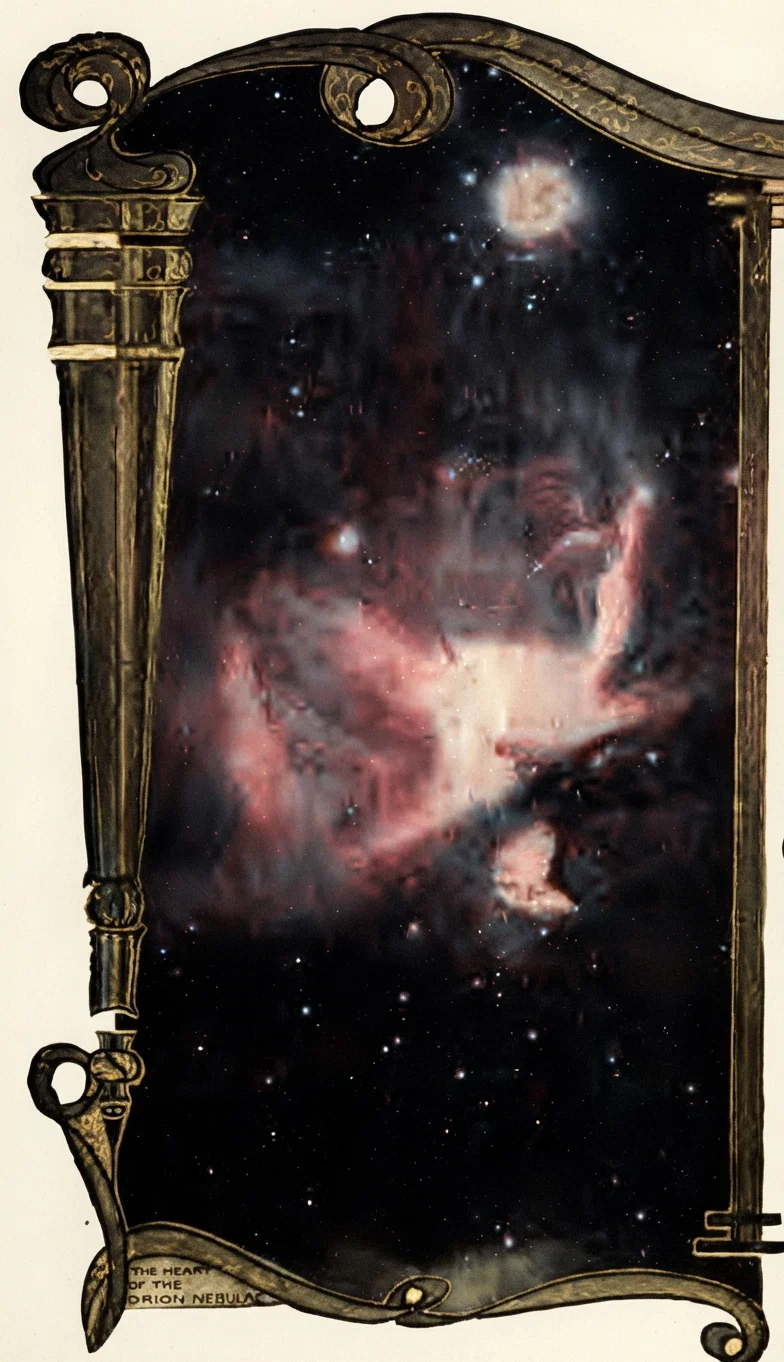
THE HEART OF THE ORION NEBULA
AMONG the Elgin marbles in the British Museum is a cast of a headless body of Iris, the goddess of the rainbow, the messenger of the gods when discord or war was intended. The headless body had been there for years. Later a fragment was found built into a wall of the Acropolis in Athens. The fragment was constituted by the head of a female and one hand holding a coil of hair. It was of interest in itself, but it became of vastly greater interest when some one recalled the headless body in the British Museum. A cast was made of head and hand in Athens, and was sent to London, where it was found to fit the headless body of Iris. The two had come together. So is the witness of God's word. By many prophecies has He foretold events, things, experiences. Men forget them until the event occurs. The experience is manifest, and the devout student recalls the counterpart in the prophetic word.

The Remnant

God gave great promise to that early called-out congregation, the church of the Levitical dispensation, the literal seed of Israel. Promise after promise declares that that people should exist forever. Interpreters, regardless of God's conditions, as clearly and forcibly stated as are the promises, are looking for a return of the Jews, a renewal of the kingdom and of the fleshly seed, which will never come. They forget that that people, great as were all God's promises to them, were only perpetuated through the remnant, the devoted few who were faithful to God. 'If the number of the children of Israel be as the sand of the sea, it is the remnant that shall be saved.' Rom. 9:27, A.R.V. All God's promises were met in that church for that time, in harmony with His conditions expressed in Jer. 18:7-10 and elsewhere. It was not a great, triumphing church during the fifteen centuries of its existence, and the same is true of the church in the Christian dispensation. In fact, there is a wonderful parallel between the two. This is evident from some of the predictions made concerning the church of this dispensation.

The Christian Church

We learned two weeks ago how gloriously she began, how the word in her life met the demand of the written word, and how glorious was the harvest of souls reaped under the greatest difficulties. Would that she might have so continued! But the word, God's primal witness, assures us that there will be a change. Note the predictions.
First, the united church of Christ would become troubled and divided by false teachers. Listen to the apostle Paul in his farewell testimony to the elders of the great church at Ephesus:
'For I know this, that after my departing shall grievous wolves enter in among you, not sparing the flock. Also of your own selves shall men arise, speaking perverse things, to draw away disciples after them. Therefore watch, and remember, that by the space of three years I ceased not to warn every one night and day with tears. And now, brethren, I commend you to God, and to the word of His grace, which is able to build you up, and to give you an inheritance among all them which are sanctified.' Acts 20:29-32.
Again, the apostle testifies to Timothy, and through him to the other ministers of the church of Christ in all ages:
'But the Spirit saith expressly, that in later times some shall fall away from the faith, giving heed to seducing spirits and doctrines of demons, through the hypocrisy of men that speak lies, branded in their own conscience as with a hot iron; forbidding to marry, and commanding to abstain from meats [foods], which God created to be received with thanksgiving by them that believe and know the truth.' 1 Tim. 4:1-3.
Once again he speaks, in that admirable charge to his 'son in the faith,' which has been used so many thousand times since in the setting apart of the minister of Christ:
'I charge thee therefore before God, and the Lord Jesus Christ, who shall judge the quick and the dead at His appearing and His kingdom; Preach the word; be instant in season, out of season; reprove, rebuke, exhort with all long-suffering and doctrine. For the time will come when they will not endure sound doctrine; but after their own lusts shall they heap to themselves teachers, having itching ears; and they shall turn away their ears from the truth, and shall be turned unto fables.' 2 Tim. 4:1-4.
In the third chapter of this same epistle the great thought is emphasized that apostasy will be especially manifest in the last days. Eighteen different sins are mentioned as existing among those who have the 'form of godliness' but deny the power. But the other scriptures which we have quoted, and the one which follows, clearly show that this apostasy did not relate to the last days alone, but was that which would exist to a greater or less extent all through the Christian dispensation, bringing weakness and trouble to the church of God, and a formidable enemy in the apostate church. Referring to the second coming of Christ and the great day of the Lord, the apostle continues:
'Let no man deceive you by any means: for that day shall not come, except there come a falling away first, and that man of sin be revealed, the son of perdition; who opposeth and exalteth himself above all that is called God, or that is worshiped; so that he as God sitteth in the temple of God, showing himself that he is God. . . . And now ye know what withholdeth [restraineth] that he might be revealed in his time. For the mystery of iniquity doth already work: only he who now letteth will let [only there is one that restraineth now], until he be taken out of the way. And then shall that Wicked be revealed, whom the Lord shall consume with the spirit of His mouth, and shall destroy with the brightness of His coming.' 2 Thess. 2:3-8.
Another apostle speaks as follows regarding the apostasy which should enter into and divide the church of Christ:
'But there were false prophets also among the people, even as there shall be false teachers among you, who privily shall bring in damnable heresies, even denying the Lord that bought them, and bring upon themselves swift destruction. And many shall follow their pernicious ways; by reason of whom the way of truth shall be evil spoken of.' 2 Peter 2:1, 2.

Two Pictures

In that wonderful drama of the Scriptures, the Revelation, we have portrayal after portrayal of the church of Christ and the apostasy. The first prophecy of that wonderful book is that of the seven churches, in which the Spirit of God represents the entire Christian church in its various stages and conditions of spirituality by seven churches in Asia Minor. From the early, or desirable, church, Ephesus, which is reproved because its love has grown cold, we pass to the persecuted church under pagan Rome, and from that to the church which existed in the time of apostasy. In the Pergamos condition of the church there come in stumbling-blocks, veneration of idols, spiritual fornication, false doctrines. Following this, apostasy is represented by that woman Jezebel, who is allowed to teach in the true church of Christ. Next the Sardis condition is represented as a church which has a name to live, but is dead. Following this are two other conditions—one, that against which God has no reproof, the Philadelphian church, and the other the Laodicean, concerning which He has no word of approval. The picture of the prophecy does not reveal a strong, continuous, progressive, spiritual church, but one which is weakened by division, torn by apostasy, and stripped of her holiness by worldliness.
In the eleventh chapter of Revelation we have a picture of the two witnesses, a prophecy which we can not develop other than to state that these two witnesses represent the word of God,—the word of God in the time of our Saviour and of the Old Testament, the record of which had been long in existence, and the New Testament, which was being spoken and lived in the lives of Himself and apostles. In the later developments, we have the one witness, the written word; the second witness, that word experienced, lived out, manifested in the church. So it has been, all the way through, God's living witness; and yet we are told that while this is His church and His witness, yet for a thousand two hundred and threescore days of prophetic time—a symbol of the long centuries of the Dark Ages, during which time the truth of God was almost lost sight of, both in word and in living human witness—it was a time of mourning and trial, of sackcloth and ashes.
In the twelfth chapter of Revelation we have another picture of the church of Christ, covering her entire career during the Christian dispensation. She is represented as bringing forth the man child, Christ Jesus; but after He is caught up to God and to His throne, she herself suffers persecution, is driven into wilderness places for one thousand two hundred and sixty years, represented by the symbolic period of a thousand two hundred and threescore days in verse 6, and 'a time, and times, and half a time' in verse 14. She is a persecuted church, a
fugitive church, one not courted by the powers of earth, one seemingly not triumphant. Those were the days during which, as stated in the next chapter, it was given unto the persecutor to make war with the saints, and to overcome them. But the record that God gives of His children during that time is, 'Here is the patience and the faith of the saints.'
In chapter 17 we have a different picture. We have the picture of the apostate church, of the one that sits in the temple of God as God. That church is also represented as a woman,—as a woman seated upon a great, scarlet-colored beast having seven heads and ten horns, as a woman of whom it is said that she has committed fornication with the kings of the earth; that is, a professed church, she has held unlawful connection with the powers of earth. God's church is espoused to Him, and to Him alone. Organic connection or illicit relations between the church and the world, is spiritual fornication. And so this great, apostate church has been guilty of spiritual fornication. She has formed a union of church and state. Resultant of that union have been the great persecutions of the true church of God, and therefore the woman is represented as drunken with the blood of the saints and with the blood of the martyrs of Jesus. She is gorgeously arrayed in gold and precious stones and pearls. She is the paramour of the nations, courted by the kings of the earth, viewed from a worldly standpoint triumphant and glorious; and yet the end marked for her is destruction.
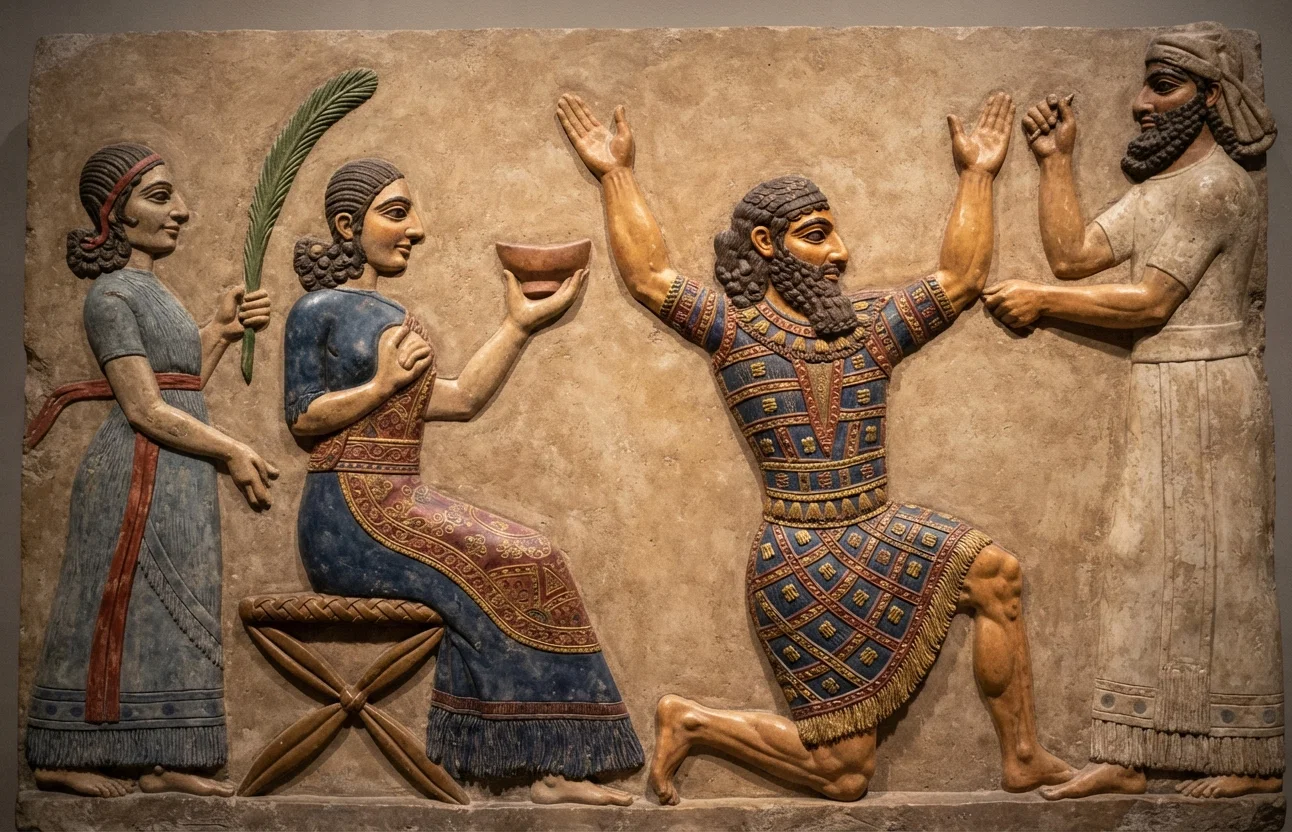
Woman with cup from ancient Babylon. (Kitto's "Biblical Cyclopedia.") That Babylon was a type of modern Babylon,
A remarkable medal struck by Pope Leo XII, on the occasion of the jubilee in 1825. On the one side is his own image, and on the other the Church of Rome, symbolized by a woman, holding in her left hand a cross as a scepter, and in her right a cup, which she offers to the nations, and around her the legend, "Sedet super universum," "The whole world is her seat." How striking is the application of Rev. 17:3-5!
Now these, reader, are the two pictures which we have before us, of a true church and an apostate church. Both of them bear witness to the truth of God's word, one witnessing as His own, the other witnessing for herself and to her own character, but at the same time demonstrating in that apostate, sinful life that the word of God is true. We have the true church represented in the beginning by a company that stood united in God, baptized with His Spirit, filled with His power, going forth conquering and to
conquer. We have the sure word of prophecy declaring that there should be a departure, that division would come in, that the church itself would become weakened, that persecution would follow; that following that persecution, there would be a time of seeming triumph, in which the church would grow to some extent popular, as it did in the days of Constantine; that following this comes greater apostasy, in which false doctrines are taught in the church, and those remaining true are persecuted during the long period of the Dark Ages. Out of that comes a reviving again, until we are brought down to the last days.
On the other hand, the apostate church is represented as popular with the world, having control over its outward spiritual destinies in friendship with the powers of earth; nay, more, uniting with them in church and state governments, the persecutor of those who would not yield to the legalized demands, dogmas, institutions, etc., which grew out of such union, triumphant for the long period of twelve hundred and sixty years, and then receiving a deadly wound, or, in other words, its power to persecute was checked.
Now we wish to ask the reader to look upon these two pictures. Which is the true church? Which is the one that has been witnessing for God?—the one who in their persecutions, and their backslidings even, endeavored to be faithful, loving not their lives even unto the death, wandering, beaten, driven into the wilderness, and yet holding fast their faith? or the one that professed to be the church of God, sitting in the temple of God as God, and yet departing from the word of God? It seems to us that, looking at it in the light of the Word, apart entirely from human creed and dogma, we can come to but one conclusion, and that is that the great Roman Catholic Church, which makes the claims that she does, is not the church of Christ; while the persecuted remnants, scattered here and there through the centuries of the past, meet the specifications of the Word, witnessing, in their own experience, what God had said in the prophecy should come.